


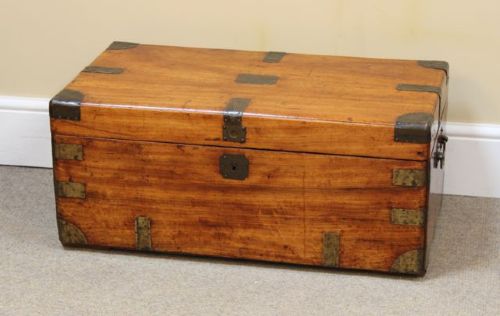
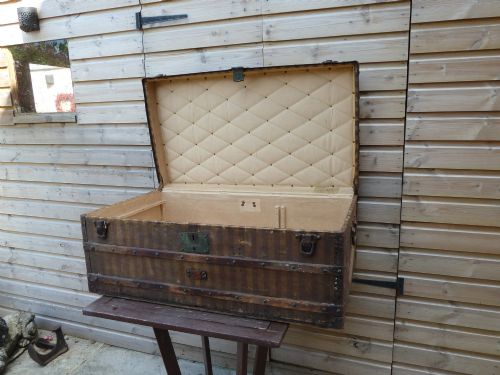
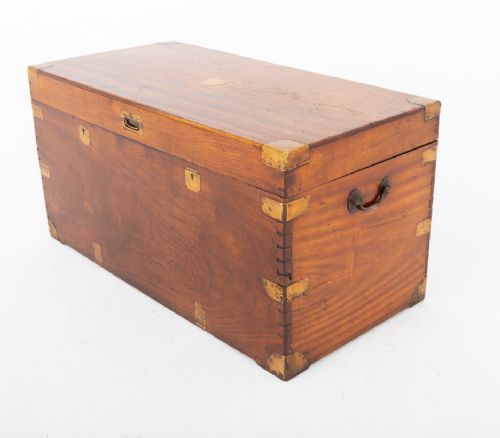
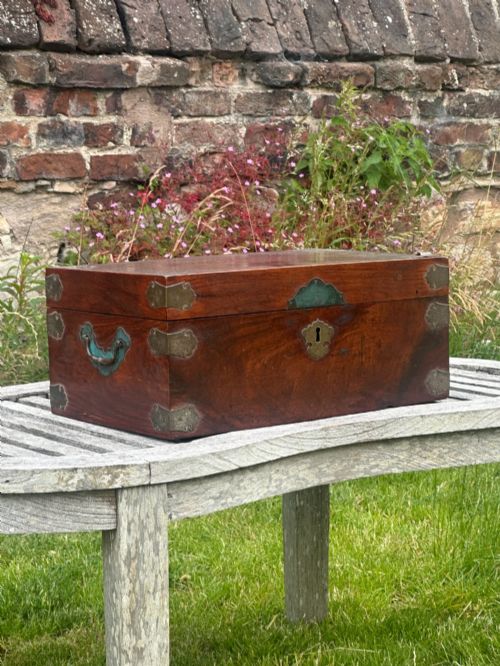

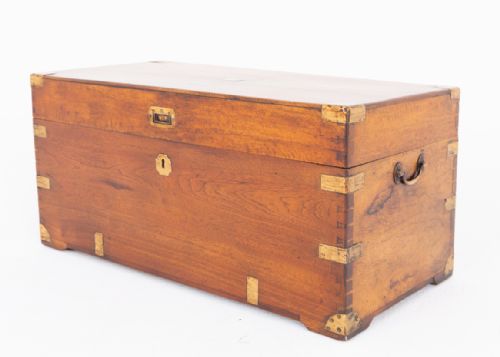
Victorian Brass Bound Chest
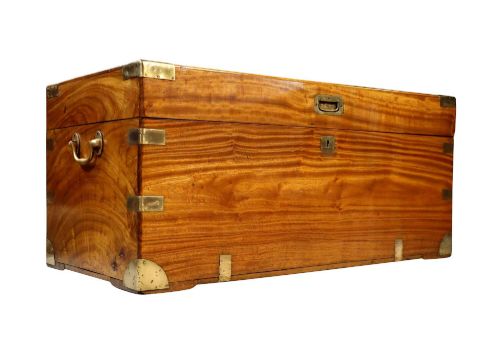
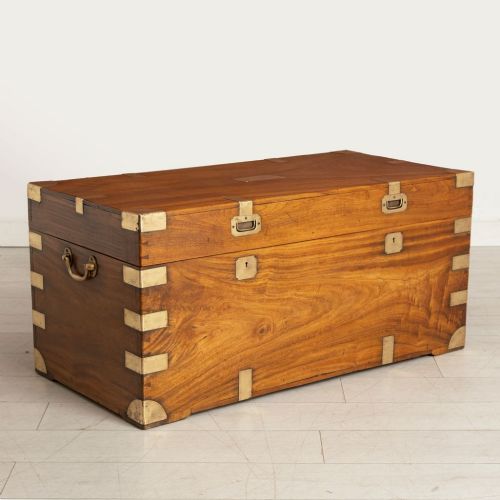
A victorian brass bound chest is a sturdy portable container designed for military travel, fitted with metal corners and handles.
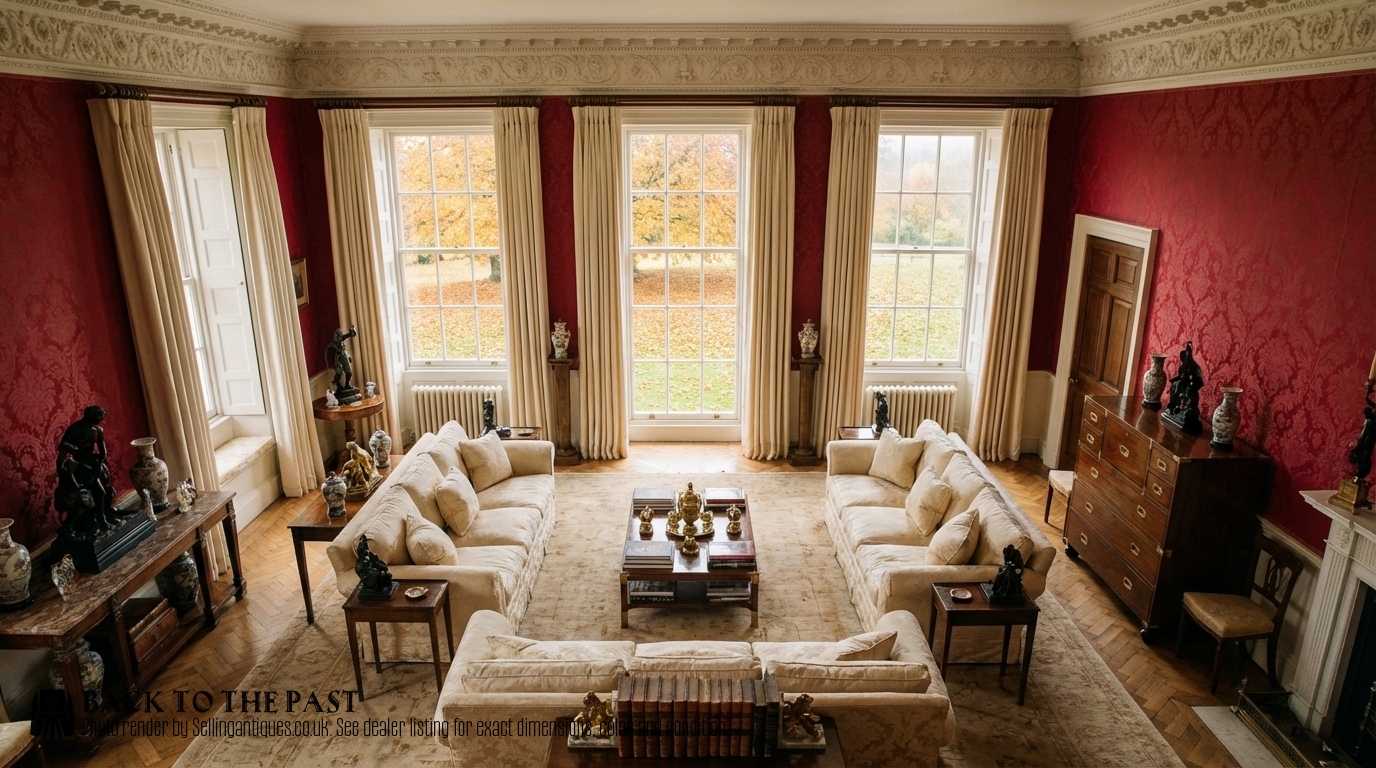
Victorian Brass Bound Chest
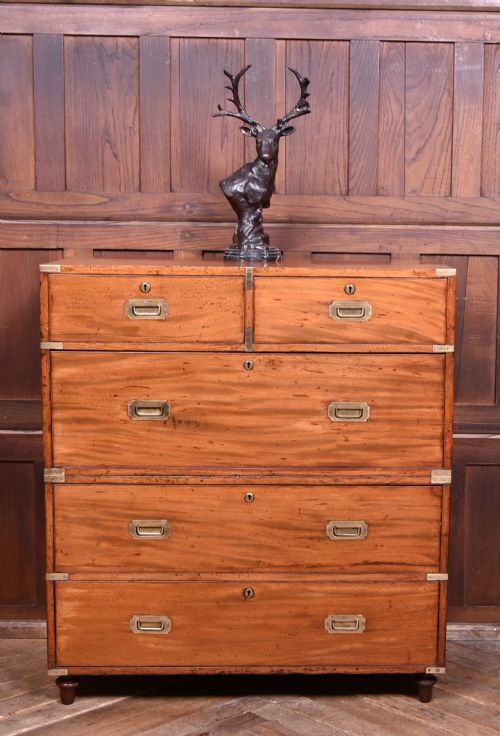
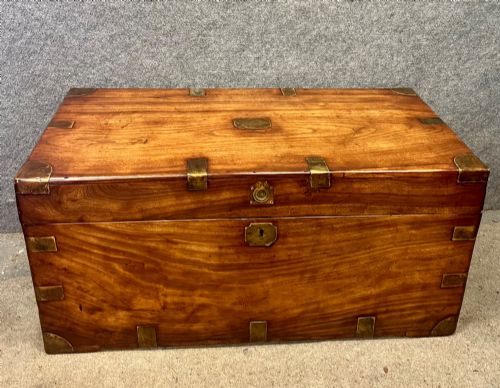
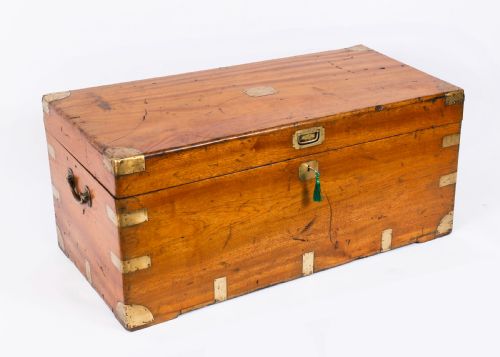
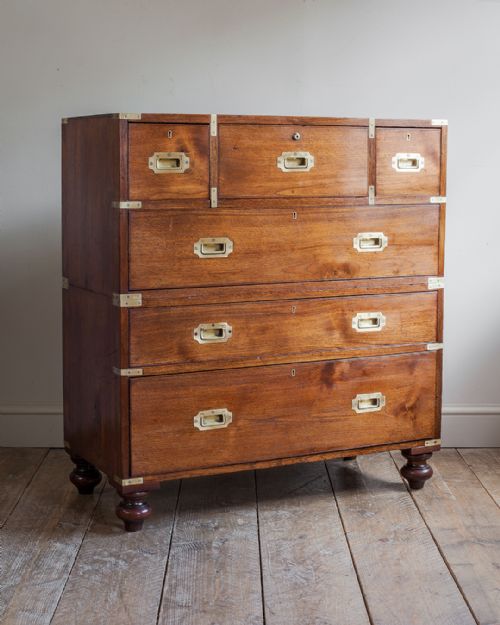
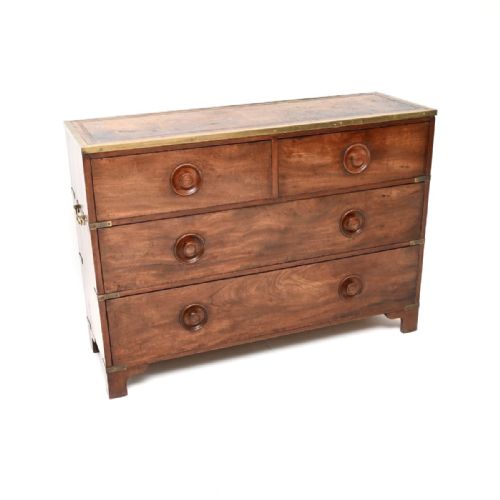
A victorian brass bound chest encompasses both single-piece trunks and multi-part drawer units made for officers on the move. The inventory relies heavily on solid timber boxes designed to withstand rough transit across oceans and land.
Camphor wood, teak and mahogany form the backbone of these pieces, alongside regional variations in oak and walnut. Most examples date from the nineteenth century, reflecting the peak era of British military expansion and travel.
Formats range from simple hinged trunks to sophisticated two-part chests of drawers with integrated writing desks. Buyers encounter both plain utility models and refined domestic adaptations featuring fitted interiors and secret compartments.

Materials and construction
Cabinet makers constructed these pieces in two sections to aid lifting, joining the halves with recessed brass corners and strapwork. Brass banding protected vulnerable edges from impact during loading and unloading.
Timbers like camphor wood served a practical purpose by repelling insects from uniforms, while dense tropical hardwoods such as teak and mahogany resisted humidity. Flush-fitting brass drop handles ensured no protruding parts could catch or snap off in transit.
Victorian Brass Bound Chest Retail Price Guide 2026
Typical asking prices for victorian brass bound chest among the pieces listed under this phrase on Sellingantiques today, from the lower quarter to the upper quarter. They describe what is for sale here now, not the wider market.
Listings feature nineteenth-century camphor wood, teak and mahogany across modular campaign chests and hinged storage trunks.
What separates the grades
Quality rests on the integrity of the timber selection and the precision of the brass work. Superior pieces display hand-cut dovetail joints, thick gauge brass reinforcement, and original recessed hardware that sits flush with the wood surface.
Internal complexity also dictates the tier, moving from basic open storage trunks to elaborate secretaire drawers with secret compartments and leather-lined writing surfaces. The presence of maker stamps on the brass or drawer edges elevates a piece significantly.
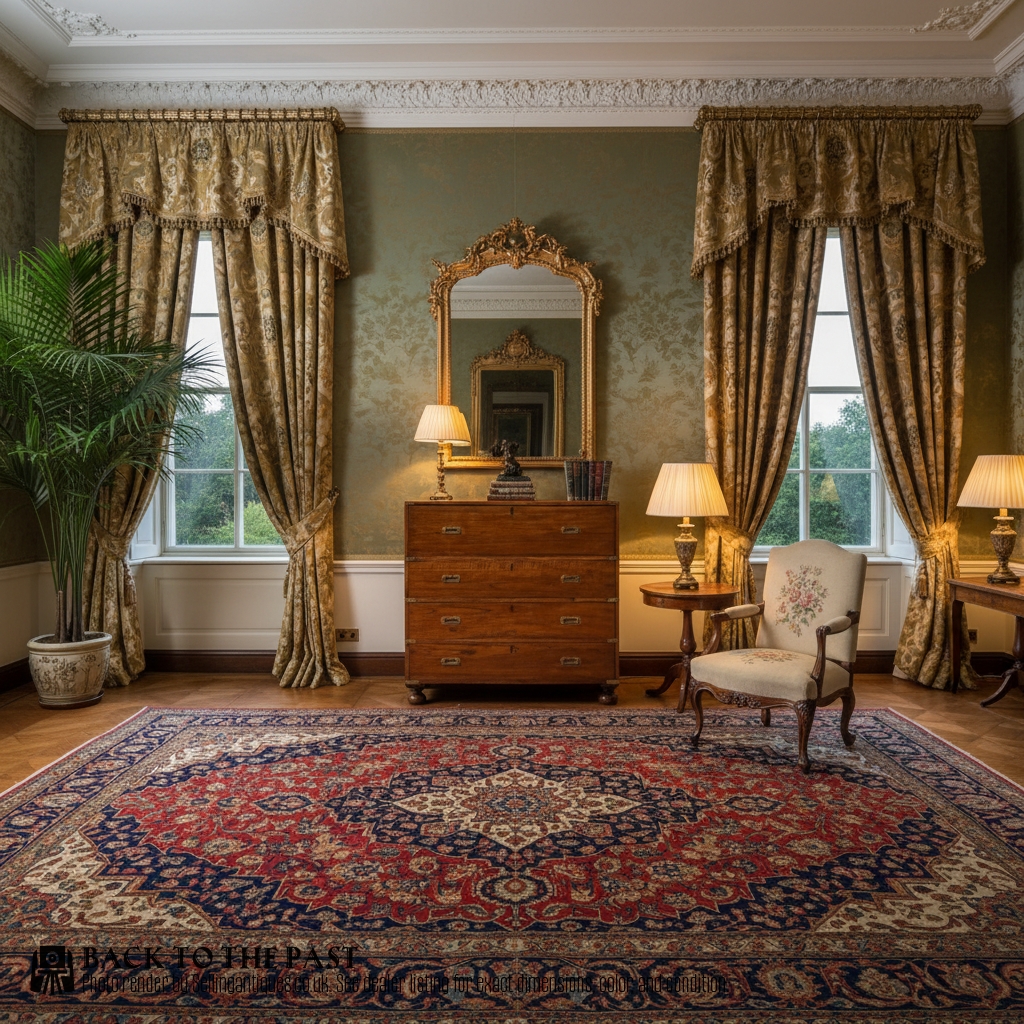
S. W. Silver & Co. London & Liverpool·Ross & Co.·Army & Navy
The Victorian Brass Bound Chest Glossary
- Campaign chest
- A modular chest of drawers built in two or more stacking sections for ease of transport during military deployment. These units utilise removable feet and inset brass handles.
- Secretaire
- A cabinet or chest containing a fitted pull-out writing drawer with pigeonholes and small compartments. The fall-front often includes a leather or baize writing surface.
- Camphor wood
- An aromatic hardwood native to Asia, utilised for trunks to protect stored garments from moths and dampness. The timber retains its distinct natural scent for decades.
- Brass bound
- Furniture reinforced with brass corners, straps and edging to prevent damage during transit. This method protected structural joints from heavy impacts.
- Two-part chest
- A modular configuration where the upper carcase stacks securely onto the lower carcase using brass locking pins or brackets. This division reduced the weight for carriers.
Victorian Brass Bound Chest: Frequently Asked Questions
Why do these chests have brass corners?
Brass reinforcement protected the vulnerable wood edges and corners from severe impacts during military transport and rough handling at sea. The metal strips also held the timber tight against humidity and temperature shifts.
Cabinet makers recessed all brass hardware flush with the wood surfaces so the chests remained smooth and stackable. This prevented straps or ropes from catching during loading.
How do I care for a camphor wood chest?
Keep the wood away from direct heat sources and radiators to prevent the natural oils from drying out and splitting the timber. Regular dusting with a dry cloth maintains the surface finish.
Avoid using heavy liquid polishes on antique camphor wood as they can clog the grain and dull the aroma. Allowing the wood to breathe preserves its natural insect-repellent properties.
How are two-part chests separated?
The upper and lower sections separate by releasing internal brass hooks or side brackets located inside the carcase walls. Lifting the top section straight up clears the alignment pins.
When reassembling, align the guide pins on the lower section before lowering the top half into place. Ensure the locking mechanisms engage fully to secure both halves together.
What is the difference between a trunk and a chest?
Trunks feature a single hinged lid on top that opens to a deep open storage well for bulky clothing and equipment. They rely on side drop handles for lifting.
Chests contain horizontal drawers accessed from the front rather than a top lid. They often include internal stationery compartments and modular stacking designs for office use.