






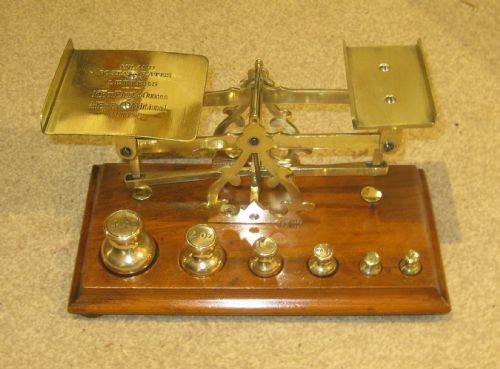


Victorian Brass Balance
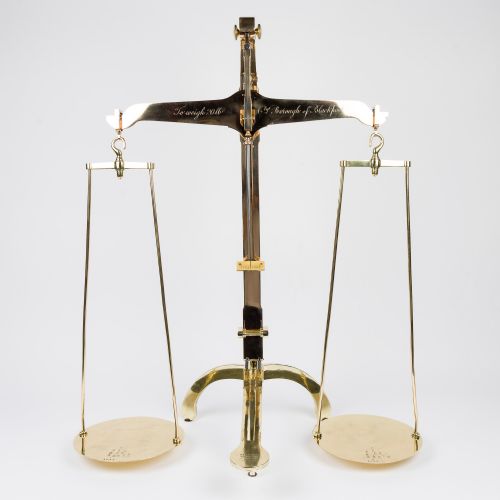
A victorian brass balance brings heavy metal beams and polished plates into a study or kitchen, offering precise historical utility.
Victorian Brass Balance
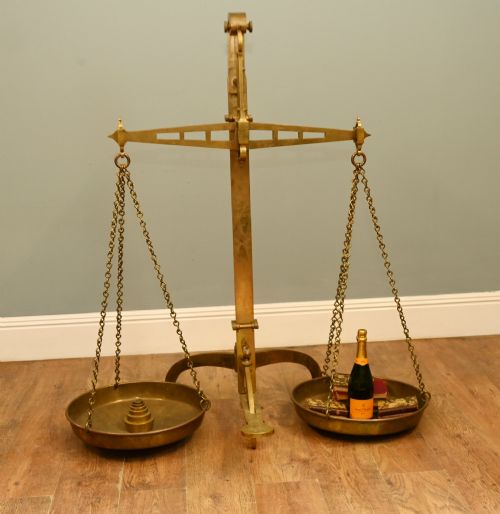
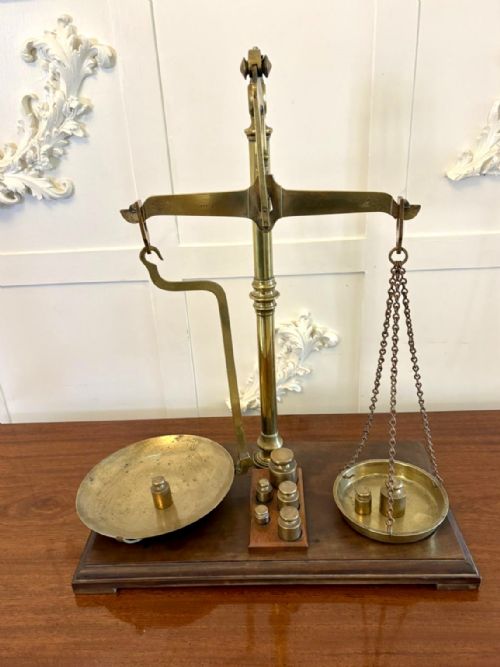
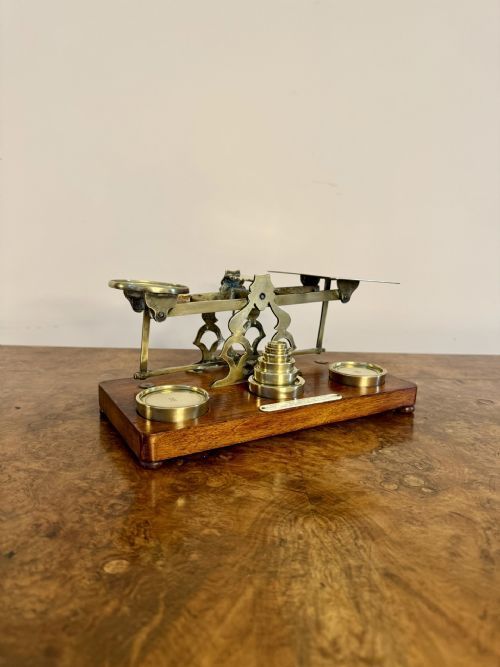
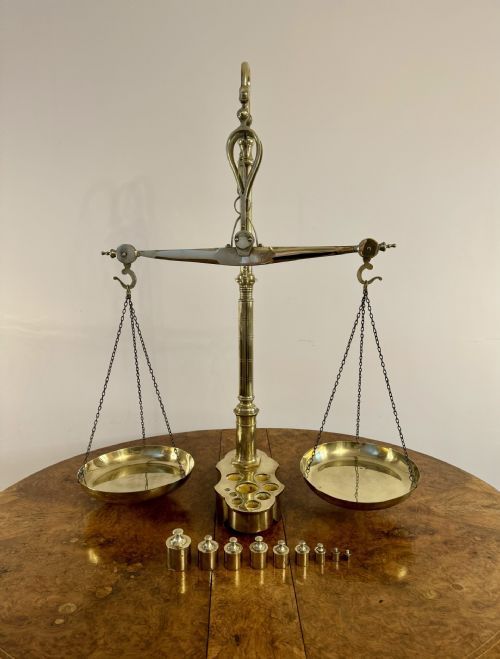
A victorian brass balance encompasses diverse weighing instruments ranging from small letter scales to large floor-standing butcher and grocer models. Buyers seeking a victorian brass balance will frequently encounter postal scales mounted on mahogany, walnut, or oak bases, often accompanied by matching brass weights.
The selection includes specialised instruments such as apothecary balance scales, verification balances used by city authorities, and personal weighing scales with brass mountings. Most examples date from the later nineteenth century, though related pieces extend into the Edwardian era and the early twentieth century.
Origin and purpose dictate the form, with domestic letter scales featuring delicate brass beams and decorative marble or wooden plinths, while commercial scales display robust metal frames designed for daily trade.
Materials and Construction
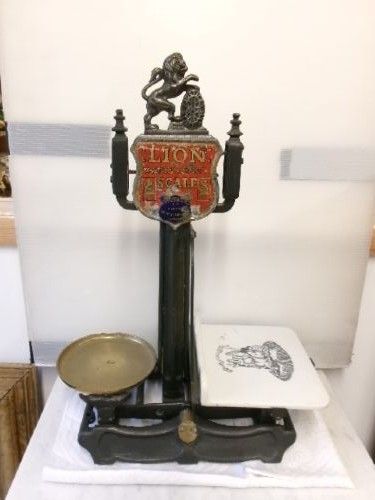
Makers constructed these balances primarily from polished brass, combining the gleaming alloy with dense hardwoods such as mahogany, oak, and walnut for the supporting bases. Iron structural elements provide foundational strength in larger floor-standing butcher and shop scales, while glass and marble occasionally appear in specific platform surfaces or decorative panels.
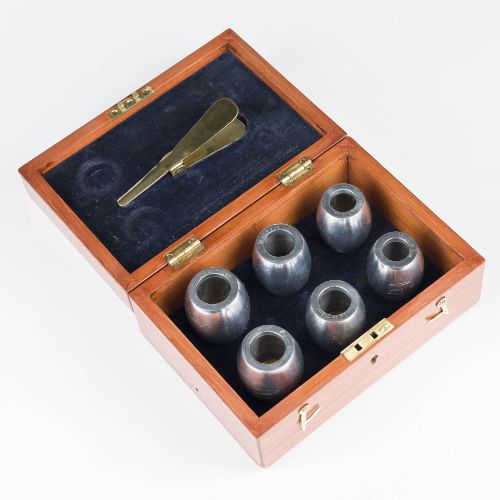
Precision engineering governs the pivot points and beam construction, ensuring accurate movement across the metal components. Velvet linings frequently cushion the fitted compartments where matching brass weights or bell weights rest securely within their wooden blocks.
Victorian Brass Balance Retail Price Guide 2026
Typical asking prices for victorian brass balance among the pieces listed under this phrase on Sellingantiques today, from the lower quarter to the upper quarter. They describe what is for sale here now, not the wider market.
Listings feature balances spanning the Victorian era through the 1940s, constructed from brass, mahogany, iron, oak, glass, and marble.
Quality and Distinction
Quality rests upon the crispness of the original maker markings and the structural integrity of the brass beam and supporting base. Finer examples retain their complete, matching sets of weights, whether flat Troy ounce discs or heavy brass bell weights.
The sophistication of the timber plinth and the presence of verified municipal inscriptions elevate certain pieces from standard utility items to distinguished works of scientific and commercial heritage.
De Grave Short And Co·S Mordan And Co·Day And Millward·Parnall And Sons·Bartlett And Sons·Hunt And Co·Ratcliff Birmingham
The Victorian Brass Balance Glossary
- Beam scale
- A weighing device consisting of a horizontal lever suspended from a central fulcrum with equal arms. This classic mechanical design ensures accurate comparison between an object and standard weights.
- Bell weight
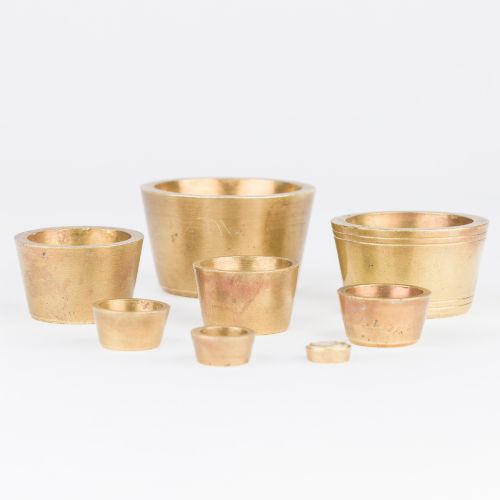
- A heavy brass weight shaped like a small bell with a vertical loop handle at the top. These pieces were standard for commercial butcher and grocer scales.
- Postal scale
- A specialised compact balance designed for weighing letters and parcels to calculate correct postage. They frequently incorporate stepped platforms to hold multiple flat brass weights.
- Verification balance
- A high-precision instrument utilised by local government inspectors to check commercial weights and measures. These scales bear official regional stamps or inscriptions.
- Apothecary balance
- A sensitive instrument employed by chemists and pharmacists for measuring medical doses. They often feature enclosed glass cases to prevent air currents from disrupting the delicate brass beam.
Victorian Brass Balance: Frequently Asked Questions
How do I use a victorian brass balance today?
These historical instruments remain fully functional for domestic weighing tasks when placed on a completely level surface. Collectors often utilise smaller postal scales for decorative display or letter sorting on a desk.
Larger shop and butcher scales serve as striking focal points in contemporary kitchens or dining spaces, where their heavy brass beams and aged timber bases contrast with modern interiors.
Were all these scales used in post offices?
Postal scales represent only one category within a diverse range of weighing instruments produced during the period. Other types served entirely different commercial and scientific functions.
The inventory includes grocers scales, apothecary balance scales for chemists, dairy balances, and official verification instruments used by city authorities to inspect local trade standards.
How do I match weights to my balance?
Original sets typically relied on specific weight systems corresponding to the scale's intended commercial or domestic purpose. Letter scales utilised flat brass weights or stacked pillar weights that fit neatly onto wooden bases.
Larger trade scales required heavy brass bell weights or sets of Troy ounce weights. Matching the correct period material and sizing ensures historical consistency for the display.
How can I tell the age of a brass balance?
Dating relies on stylistic clues, construction techniques, and maker signatures stamped into the metal beams or inscribed on wooden bases. Mid-Victorian pieces often feature simpler mahogany plinths, while later nineteenth-century examples display more elaborate casting.
Official verification stamps, municipal inscriptions, and patent dates provide precise chronological markers that help distinguish 1880s items from Edwardian or 1930s productions.