
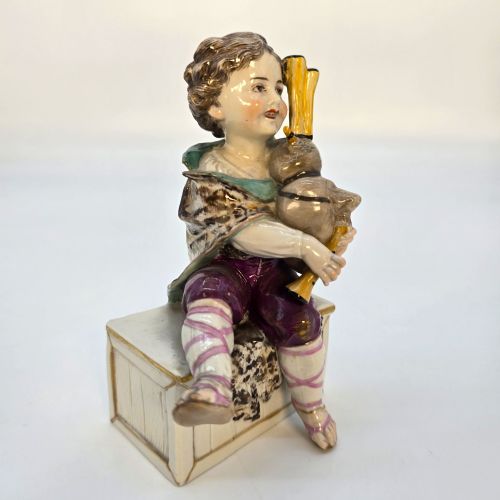


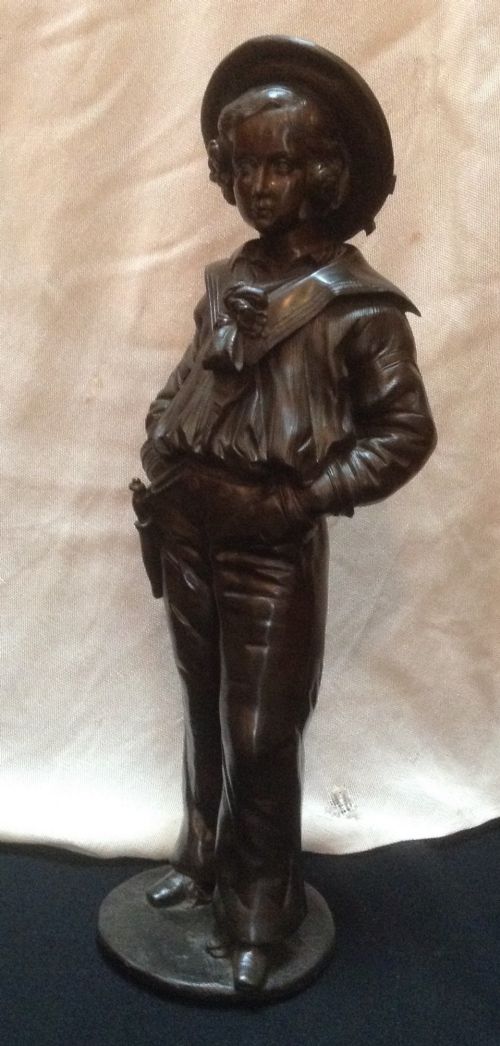
Victorian Boy Statuette
These Victorian boy statuette figures capture nineteenth-century childhood in cast bronze and hand-painted porcelain.
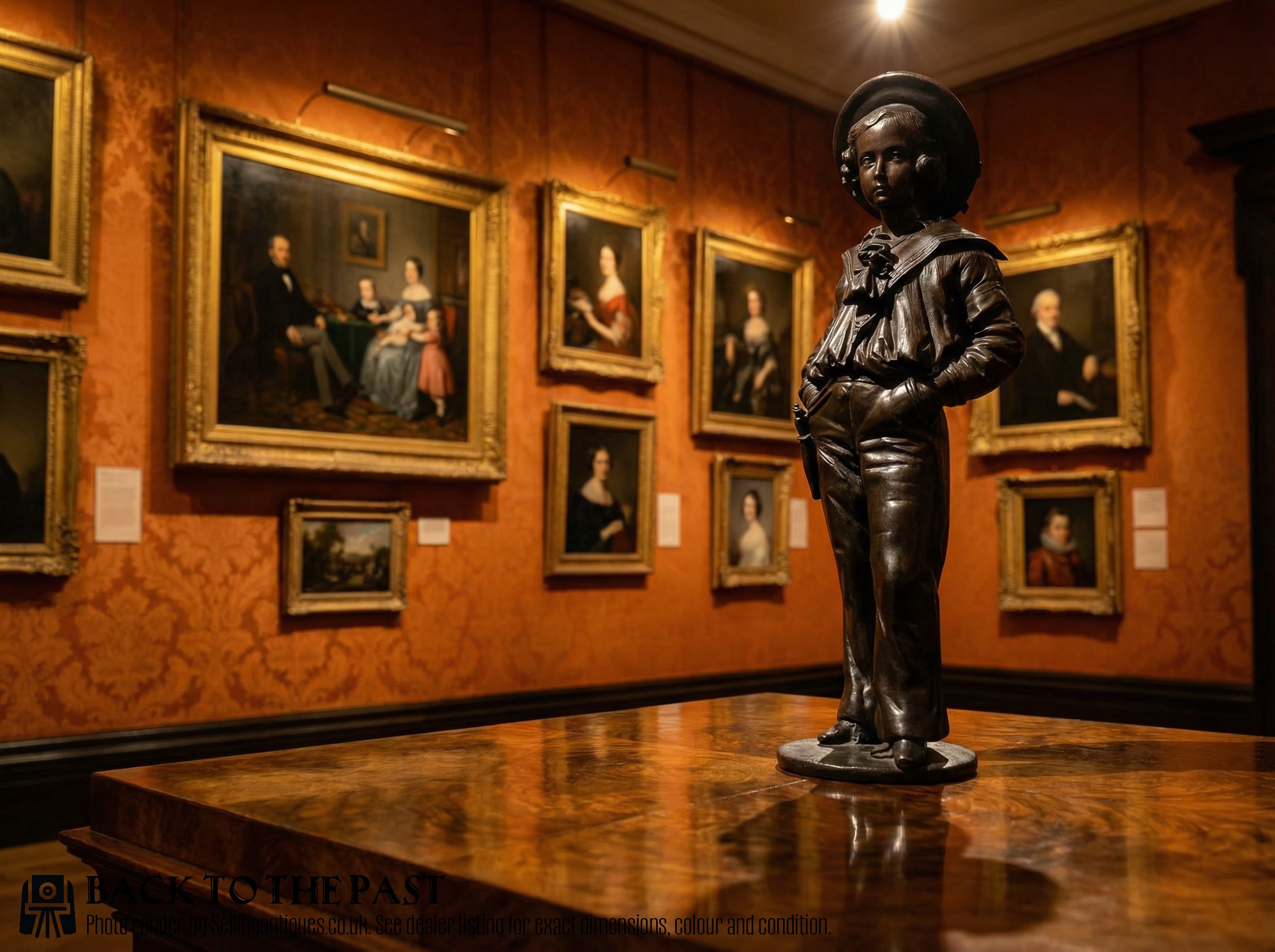
Victorian Boy Statuette
A victorian boy statuette represents youthful subjects ranging from schoolboys and skaters to shepherd boys and snake charmers, modelled across the nineteenth century. Buyers searching for a victorian boy statuette encounter standing and seated figures cast in bronze or formed from ceramic, bisque porcelain, and majolica.
The objects on this page span several decades of production from the eighteen-fifties to the early twentieth century. German porcelain factories and British silversmiths created these pieces in styles that include Rococo Revival, Orientalist, and nineteenth-century realism.
Most examples function as decorative table pieces, figurines, or cabinet sculptures. They portray children in various narrative poses, often equipped with books, birds, or musical instruments.
How they were made
Makers shaped these pieces using traditional casting and ceramic fabrication methods appropriate to each medium. Bronze sculptures were cast from metal alloys, while porcelain and ceramic examples relied on moulded clay finished with hand-painting, enamel, and occasional gold leaf details.
Bisque porcelain pieces required unglazed firing to achieve a matte, biscuit-like texture resembling carved marble. Glazed ceramic and porcelain figures received surface pigments and transparent coatings before secondary kiln firings to set the colours.
Listings feature works from the 1850s to the early 20th century in bronze, sterling silver, enamel, and multiple forms of porcelain.
What varies in quality
Surface decoration determines visual impact. Hand-painted enamels, precise gilding, and carefully applied polychrome pigments separate finely finished examples from basic commercial output.
Volkstedt Rudolstadt Factory·Edward & John Barnard·Volkstedt Triebner Ens Eckert·Ernst Bohne Söhne·Sitzendorf·Helena Wolfsohn·Royal Worcester·Emile victor BLAVIER
The Victorian Boy Statuette Glossary
- Bisque porcelain
- Unglazed ceramic fired to a porous, matte white finish that mimics marble. It allows fine surface detail on figurative sculptures.
- Majolica
- A colourful lead-glazed earthenware developed during the nineteenth century. It produces vibrant, glossy surfaces on ceramic figures and vessels.
- Sterling silver
- A silver alloy containing ninety-two point five percent pure silver by mass. Used by silversmiths for solid cast figures.
- Bronze
- A metal alloy of copper and tin used for durable cast sculptures. It takes patination well to show surface texture and shadow.
Victorian Boy Statuette: Frequently Asked Questions
How are these statuettes cleaned?
Dust porcelain and bisque pieces gently with a soft, dry brush. Avoid water on unglazed surfaces.
Bronze sculptures benefit from occasional wiping with a dry microfiber cloth to remove surface particles.
Where should I display them?
Place figures on stable mantelpieces, bookshelves, or enclosed cabinets away from direct sunlight. Consistent indoor temperatures protect delicate porcelain and painted finishes.
Ensure bronze and silver pieces sit securely on flat surfaces to prevent accidental tipping.
How do I identify porcelain factories?
Examine the base of the piece for maker marks, impressed numbers, or painted crests. Different German and British potteries used distinct stamps.
Compare the style of the modelling and the type of glaze with known factory production records.
What materials are most common?
Ceramic and bisque porcelain appear frequently among the listed pieces. These materials allowed factories to produce detailed figurative sculptures.
Bronze is also common for standalone sculptural works depicting boys in various narrative roles.