


Victorian Bottle Stands
Victorian bottle stands are hardworking table and sideboard accessories designed to hold drinks and condiments, bringing period character to any dining arrangement.
Victorian Bottle Stands
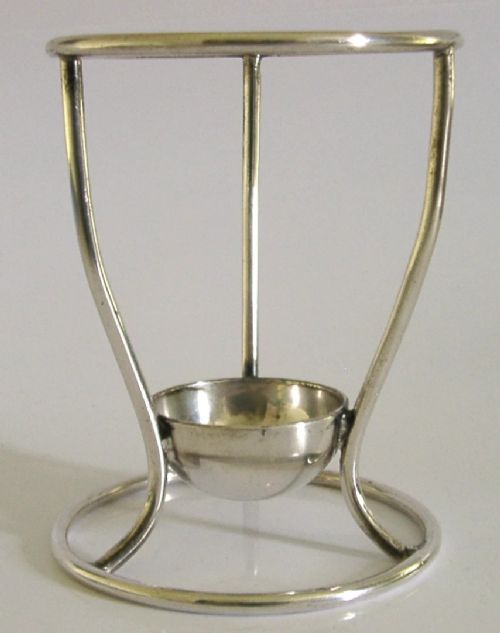
When you search for victorian bottle stands, you encounter a diverse selection of dining and entertaining equipment spanning the nineteenth and early twentieth centuries. These pieces encompass everything from single wine coasters and bottle holders to multi-bottle cruet sets, decanter stands, and locking tantalus frames.
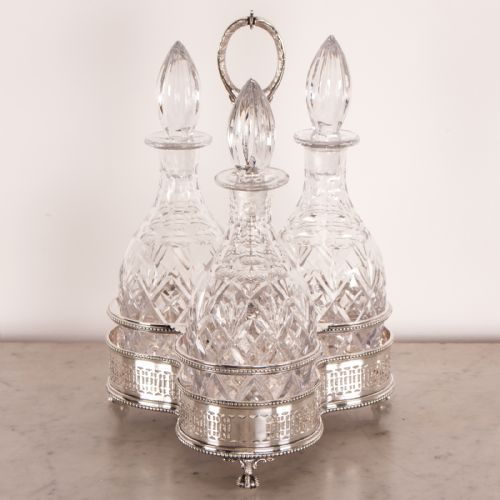
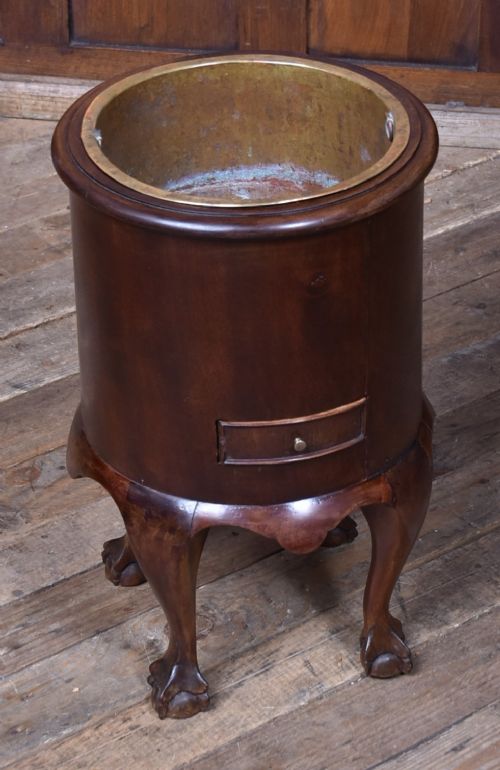
The most common examples on this page date from the Victorian and Edwardian periods, constructed to serve beverages and sauces during formal meals and after-dinner gatherings. They range from simple mahogany and rosewood coasters to ornate silver-plated frames fitted with cut glass bottles.
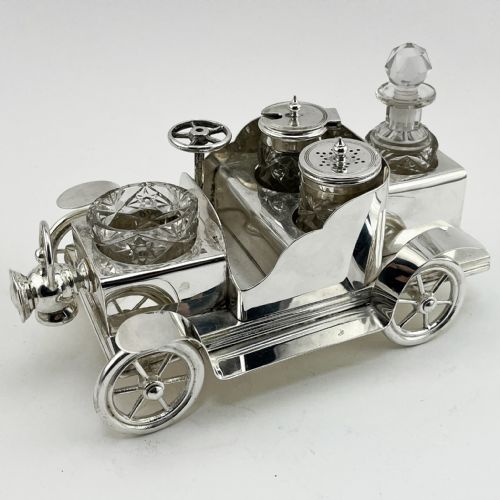
Beyond standard dining accessories, the evidence shows related forms such as inkwells, inkstands, and specialised novelty designs. These functional containers demonstrate the era's taste for organising desk spaces and dining tables with equal craftsmanship.
Materials and Construction
Makers utilised a combination of durable metals and woods, frequently pairing silver plate and sterling silver with cut glass and cut crystal inserts. Oak, mahogany, and rosewood form the structural bodies of many coasters and tantalus frames, sometimes enhanced with brass mounts, marquetry stringing, or treen turning.
Metalwork techniques such as silver plating over a base metal allowed workshops to produce elaborate, ornate frames at scale. Cut glass and crystal bottles were heavily faceted to catch the light on the dining table, while brass fittings provided secure rims and locking mechanisms for spirit decanters.
Listings feature items spanning the Victorian, Edwardian, and Georgian periods, alongside materials like silver plate, cut glass, oak, and brass.
Assessing Craftsmanship
The distinction between standard examples and superior pieces rests on the weight of the metal, the crispness of the glass cutting, and the joinery of the wood. Finer stands feature thick silver plating that has endured decades of polishing without wearing through to the base metal.
Details such as matched original bottles, hand-cut crystal facets, and robust brass locking hardware elevate a piece from a utilitarian holder to a high-status dining accessory. Superior cabinetwork in oak and mahogany frames ensures the stand remains rigid and stable when fully loaded.
Walker & Hall·Elkington & Co·James Cartland & Sons
The Victorian Bottle Stands Glossary
- Tantalus
- A locking drink stand that secures decanters behind a metal bar to prevent unauthorized access while displaying the contents. The frame typically uses wood or silver-plated metal.
- Cruet set
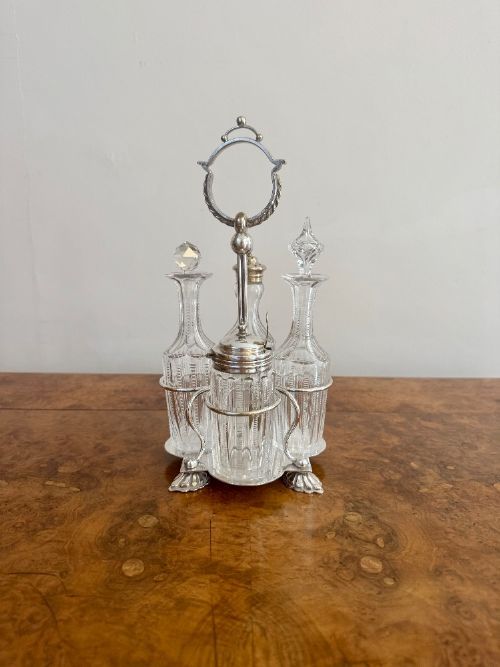
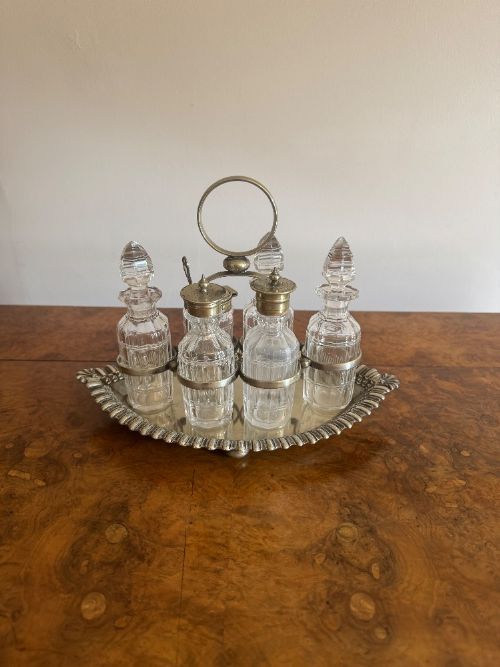
- A matched collection of glass bottles for holding condiments, oils, vinegars, and sauces, held together in a central stand. These sets often sit on a silver-plated base with a central carrying handle.
- Wine coaster
- A small circular tray, often wheeled, designed to hold a wine bottle and protect the dining table from condensation and drips. They are commonly made of wood, silver plate, or brass.
- Treen
- Small handmade wooden household objects and utensils produced by turning on a lathe. Examples in this category include turned wooden bottle coasters.
- Silver plate
- A thin layer of silver applied to a base metal, such as copper or Britannia metal, widely used in nineteenth-century manufacturing for decorative tableware.
Victorian Bottle Stands: Frequently Asked Questions
How did Victorians use bottle stands?
These stands served practical roles on the dining table and sideboard, keeping wine bottles, sauces, and spirits organised during meals.
Hosts used coasters to pass wine bottles around the table smoothly without marking polished wooden surfaces.
What is the difference between a tantalus and a cruet set?
A tantalus specifically holds spirit decanters under a locking metal bar to secure expensive contents.
A cruet set consists of multiple open bottles designed to hold table condiments and seasonings during meals.
How do I care for silver-plated bottle stands?
Clean silver plate gently using a specialised soft cloth and mild polish to preserve the thin metallic layer.
Avoid harsh abrasurs that can wear away the plating and expose the underlying base metal.
Are the glass bottles usually original?
Many pieces retain their matched cut glass or crystal decanters, which were manufactured specifically for the frame.
Replacements do occur over time, so checking the fit and glass quality helps determine originality.