
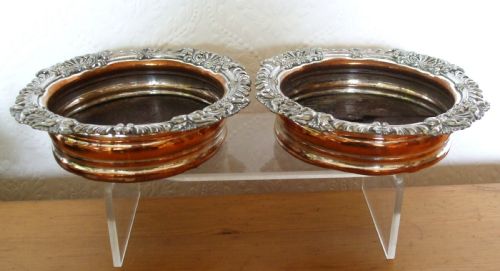


Pair of Wine Coasters
When you set a formal table, a pair of wine coasters protects the cloth and keeps the bottle moving smoothly between guests.

Pair of Wine Coasters
A pair of wine coasters is designed to hold bottles and decanters securely while preventing condensation or spills from marking the dining table. These table accessories appear frequently in Georgian, Regency, and Victorian iterations.
The objects take the form of small, circular trays or stands, often sized specifically for standard wine bottles or wider magnum formats. Examples range from simple turned wood circles to heavily pierced silver vessels.
Buyers encounter versions spanning the nineteenth and twentieth centuries, including mid-century modern pieces and earlier traditional designs. They remain practical additions to a dining room as well as decorative display items.
Materials and Construction
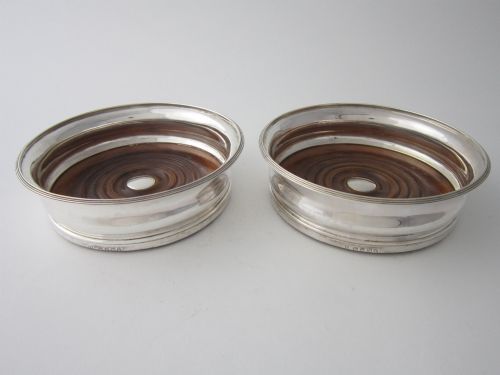
Makers utilised a combination of metals and timber, pairing sterling silver and Old Sheffield Plate with turned mahogany, oak, or rosewood bases. Many metal examples incorporate a wooden inset at the base to cushion the bottle.
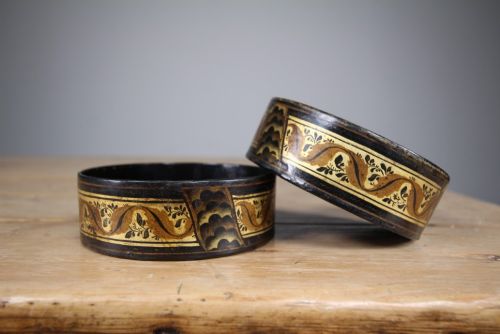
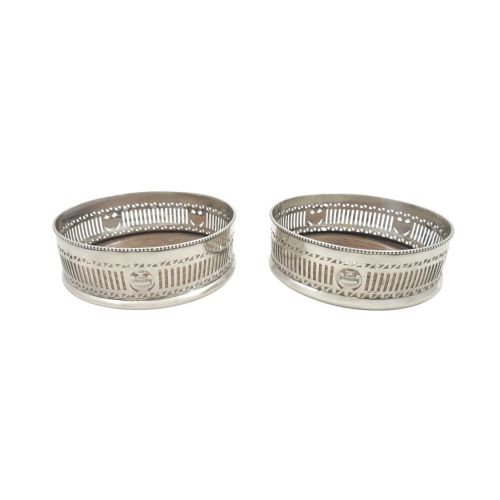
Papier-mâché and lacquer provided a lightweight alternative during the Regency period, often finished with painted or gilded decoration along the rims. Silver-plated and solid silver versions frequently display pierced galleries or applied vine motifs around the border.
Assessing Quality and Craftsmanship
The weight of the metal and the crispness of any pierced work or chased decoration dictate the standard of silver and plated items. Finer examples retain clear hallmarks or maker marks on the rim or base, indicating the workshop of origin.
Wooden and papier-mâché pieces rely on the integrity of the turned frame and the preservation of the painted or polished surface. Coasters that retain their original baize lining at the base show a higher degree of completeness.
Matthew Boulton·John and Thomas Settle·Hawksworth Eyre and Co·Mappin and Webb·J Parkes and Co·J B Chatterley and Sons
The Pair of Wine Coasters Glossary
- Old Sheffield Plate
- A method of fusing a thin sheet of silver to a thicker copper base before shaping the metal into the desired object. This technique predates modern electroplating.
- Papier-mâché
- A composite material made from paper pulp or layers of paper reinforced with glue, then baked and painted. It was popular for lightweight Regency tablewares.
- Gallery
- The decorative upright rim encircling the edge of the coaster to keep the bottle in place. Galleries are often pierced or cast with floral motifs.
- Vermeil
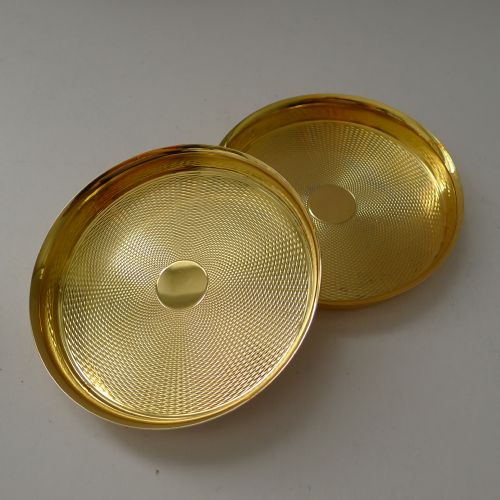
- Sterling silver coated with a thin layer of gold. This finish gives the metal a warm yellow tone.
- Treen
- Small handmade wooden household objects. In this context, it refers to turned wooden bases and stands.
Pair of Wine Coasters: Frequently Asked Questions
How do I clean a pair of wine coasters?
Use a soft cloth and appropriate metal polish if the pieces are silver or silver-plated, taking care around wooden bases. Avoid submerging wooden or papier-mâché items in water.
Regular dusting keeps the surfaces bright without wearing away thin plating or delicate painted decoration.
Are these coasters suitable for modern wine bottles?
Most standard nineteenth-century coasters accommodate modern wine bottles comfortably, though wider champagne and magnum bottles require larger dedicated sizes. Check the internal diameter if you plan to use them daily.
Traditional coasters were made specifically for the bottle shapes of their respective periods.
How can I tell old silver plate from solid silver?
Solid silver pieces carry official hallmarks indicating the assay office, standard, and date of manufacture. Silver-plated items often bear maker marks or stamps denoting the plating method rather than purity hallmarks.
Examining the rim edges can sometimes reveal the copper base showing through worn plate.
Why do many coasters feature wooden bases?
The wooden insert cushions the base of a glass bottle and dampens the sound when placing it down on a polished mahogany table. It also adds necessary weight to keep the stand stable.
Oak, mahogany, and rosewood were chosen for their durability and grain pattern.