
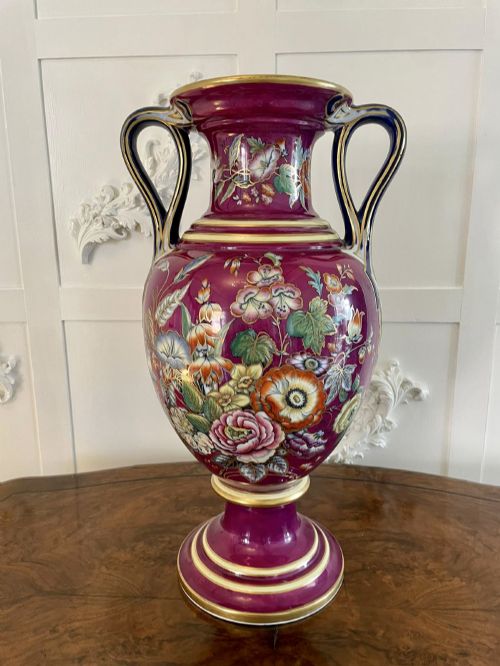


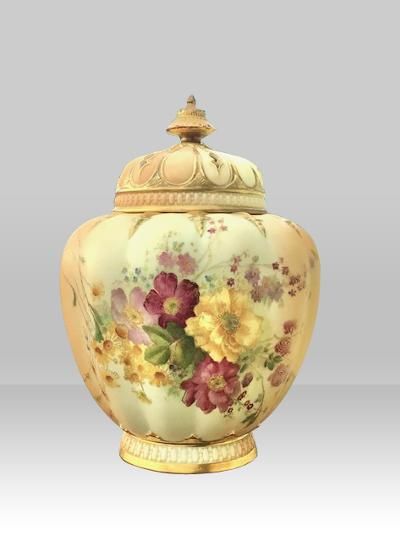

Victorian Botanical Urn
A victorian botanical urn brings plant life and classical form together, offering a decorative vessel for flowers and foliage.
Victorian Botanical Urn
When you search for a victorian botanical urn, you are looking at ornamental vessels designed to hold plants or simply to stand as sculptural centrepieces in a room. The versions most likely to meet you on this page take the form of porcelain vases, lidded pails and ceramic jardinieres.
These pieces draw on a mix of styles, from strict Victorian and Neoclassical designs to Aesthetic Movement and Art Nouveau expressions. Originating largely from English potteries and continental makers, they range from modest domestic pieces to large display urns.
The category also encompasses metal planters and occasional oil paintings or lamp conversions that share the botanical and urn motif. Each object reflects the nineteenth century fascination with bringing floral decoration and classical silhouettes into the domestic interior.
How They Were Made
Makers utilised ceramic bodies such as porcelain, earthenware and faience, shaping them on the wheel or casting them in moulds. Surface decoration was frequently applied by hand, utilising enamels, gilding with gold leaf, and painted botanical panels.
Metal vessels in this group rely on cast iron, copper and bronze, often finished with patination or gilded details. Wood stands and panels employ carved rosewood and oil paint on canvas to support the botanical theme.
The aesthetic range extends from Neoclassical and Regency formality to the organic curves of Art Nouveau and Arts and Crafts.
What Varies In Quality
The distinction between ordinary and exceptional examples rests upon the crispness of the modelling and the skill of the hand-painted decoration. Finer pieces display finely detailed botanical motifs executed with precision, whereas simpler examples rely on standard transfer printing or minimal surface treatment.
Material choice and finishing also separate the tiers, with heavy cast metal, rich glaze depth and generous application of gold leaf marking out the superior productions. Maker attribution to known factories further elevates a piece, as does the survival of original matching pairs and lids.
Tunnicliffe·Minton·Spode·Doulton Lambeth·Ernst Wahliss·Royal Worcester
The Victorian Botanical Urn Glossary
- Jardiniere
- A large ornamental pot or stand designed to hold a plant or flower arrangement. These pieces sit on floors or tables.
- Faience
- Tin-glazed earthenware or pottery decorated with opaque coloured glazes. This technique allows for rich painted surface designs.
- Majolica
- A type of earthenware coated with an opaque tin glaze and painted with bright metal oxide colours. It gained widespread popularity in the Victorian era for garden and table wares.
- Blush Ivory
- A specific ceramic finish developed by Royal Worcester featuring a soft cream ground with tinted floral decorations and gilt highlights. It mimics the warmth of ivory.
- Pedestal Ewer
- A jug-shaped vessel raised on a footed base, often created for ornamental display rather than practical pouring.
Victorian Botanical Urn: Frequently Asked Questions
What is a botanical urn used for?
These vessels were primarily created to display cut flowers, hold potted plants, or serve as decorative ornaments on mantelpieces and pedestals.
In Victorian interiors, they functioned as both practical jardinieres for indoor ferns and purely aesthetic objects that brought classical motifs into the home.
How do I identify a Victorian piece?
Identification relies on observing characteristic nineteenth century materials, such as majolica glazes, blush ivory porcelain, or heavy cast iron forms. Stylistic cues like Aesthetic Movement asymmetry or Neoclassical symmetry help place the object in its period.
Maker marks stamped or painted on the base often confirm the exact factory and approximate decade of manufacture.
Where should I place an urn at home?
Large ceramic or cast iron jardinieres work well on sturdy floor stands or hearths to hold leafy indoor plants. Smaller porcelain vases and pot pourri urns find a natural home on side tables, mantels or enclosed cabinets.
Consider placing them where natural light can catch hand-painted botanical details and gilded surfaces.
Are pairs common in these pieces?
Matching pairs do appear among ceramic vases and pedestal ewers, designed to balance mantelpieces or console tables symmetrically. Single pieces are equally common, particularly larger jardinieres and oil paintings.
When a pair survives intact, it generally originates from a formal decorative commission.