





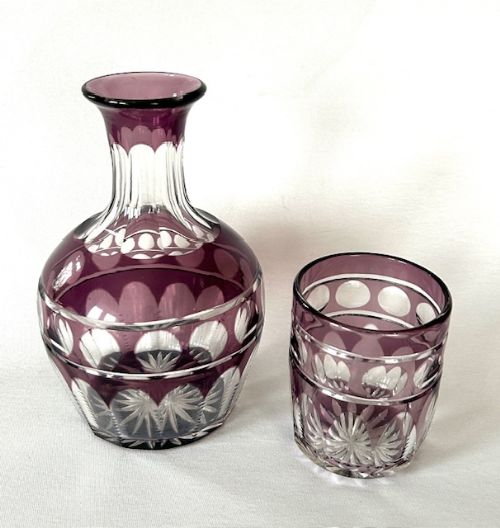


Victorian Bohemian Glassware
Victorian bohemian glassware brings rich colour and heavy gilding to a room, offering striking centrepieces and fine drinking vessels from the nineteenth century.
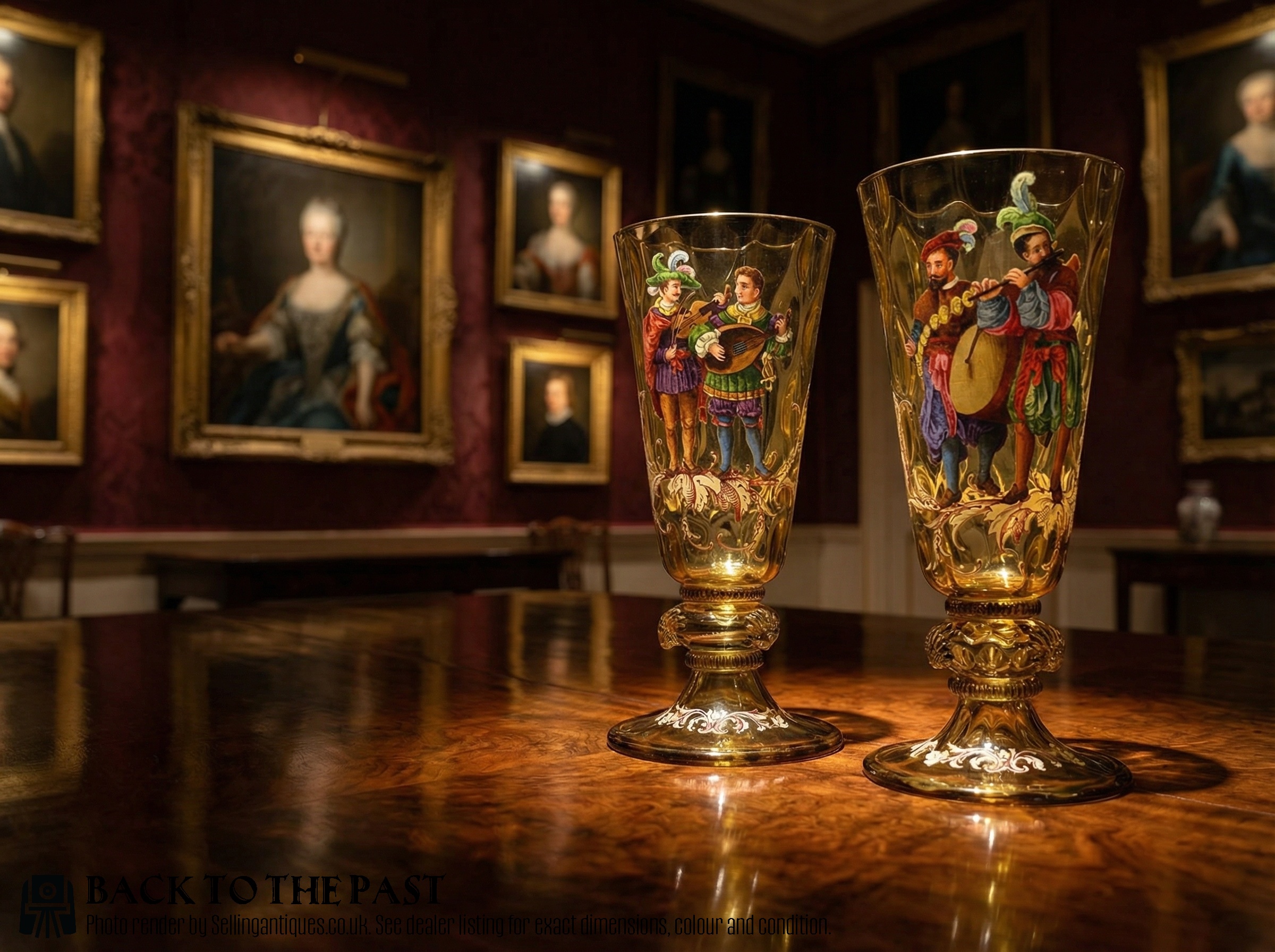
Victorian Bohemian Glassware
Victorian bohemian glassware encompasses a diverse range of decorative objects and tableware, with vases, wine glasses, and decanters appearing most frequently. These pieces often feature bold jewel tones such as ruby, cranberry, green, and blue, reflecting the decorative tastes of the nineteenth century.
Buyers will encounter various forms ranging from matched pairs of vases and garniture sets to individual goblets, carafes, and tea sets. The selection leans heavily toward objects produced during the Victorian era and the broader nineteenth century, showcasing distinct regional craftsmanship.
Vessels are frequently enriched with hand-painted enamel scenes, gold leaf gilding, or overlaid glass panels that create striking visual depth. Whether used for display or formal dining, these items demonstrate the ornate aesthetic associated with bohemian glasshouses of the period.
Materials and production techniques
Makers utilised high-quality crystal and coloured glass as the base for these pieces, employing techniques such as hand-blowing, cutting, and engraving. Coloured glass varieties like cranberry, ruby, and amber were achieved through specific mineral additions during the melting process.
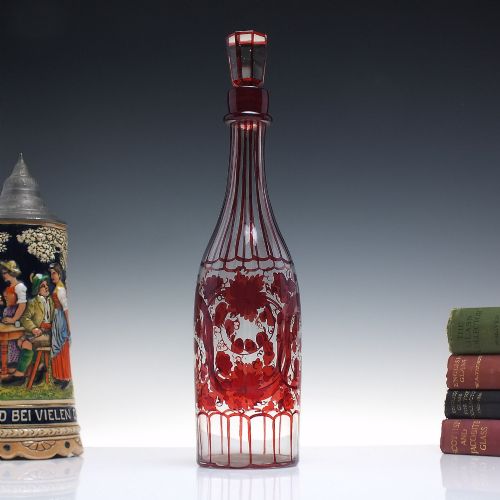
Decoration often involved detailed hand-painting with enamels, delicate gilding with gold leaf, and surface overlay where a coloured layer was cut away to reveal clear or contrasting glass beneath. Skilled artisans applied these intricate finishes by hand, ensuring each vessel received individual attention.
Victorian Bohemian Glassware Retail Price Guide 2026
Typical asking prices for victorian bohemian glassware among the pieces listed under this phrase on Sellingantiques today, from the lower quarter to the upper quarter. They describe what is for sale here now, not the wider market.
A green glass vase on this page captures a lively fox hunting scene rendered entirely in enamel paint.
Assessing quality and craftsmanship
Quality in these objects is determined by the crispness of the glass cutting, the precision of the engraving, and the finesse of the hand-painted enamel work. Superior pieces exhibit well-defined motifs, smooth polished pontil marks, and securely applied gilding that has retained its original brilliance.
The weight of the crystal and the balance of the form also indicate higher standards of production, distinguishing workshop output from mass-manufactured items. Details such as polychromatic enamelling and complex armorial designs require advanced skill, elevating the standing of the piece.
Moser·Fritz Heckert·Lobmeyer
The Victorian Bohemian Glassware Glossary
- Mary Gregory glass
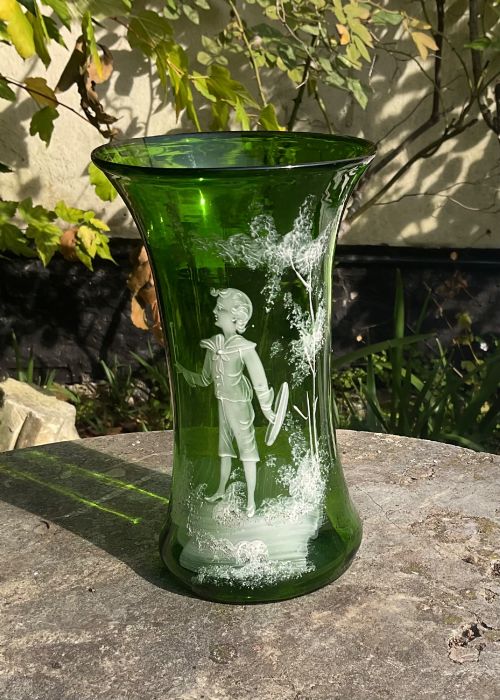
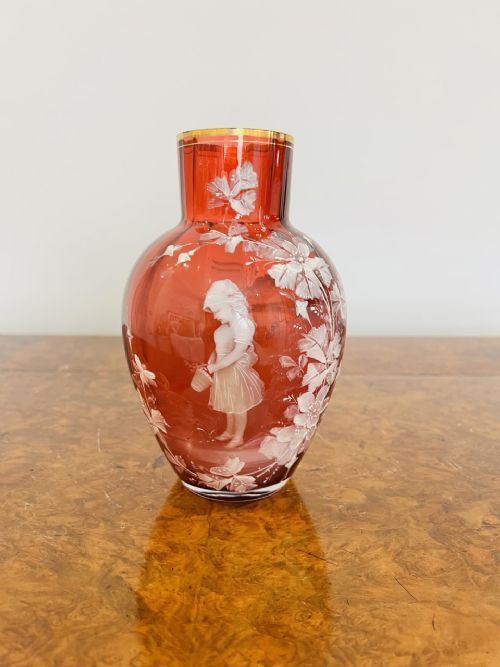
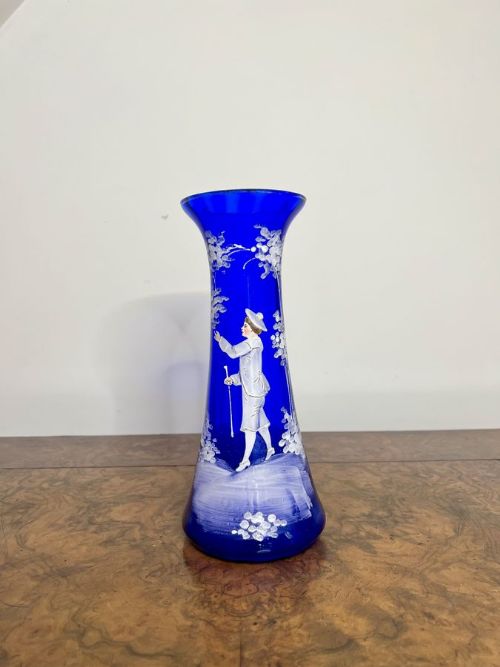
- A style of glassware featuring white enamel silhouettes of children, usually set within garden landscapes. This technique was widely utilised on cranberry and green glass vessels during the Victorian period.
- Roemer
- A traditional Germanic wine glass featuring a wide bowl resting on a cylindrical stem decorated with applied prunts. These glasses frequently appear in green or amber glass.
- Tazza
- A shallow ornamental cup or plate mounted on a stem and foot, used for display or serving sweetmeats. They are often rendered in brightly coloured glass with extensive gilding.
- Garniture set
- A matched group of three or more vases or vessels designed to be displayed together on a mantelpiece or sideboard. They share coordinated decorative motifs and colour schemes.
- Pontil mark
- A scar left on the base of a blown glass vessel where the punty rod was attached during manufacture. Its presence or absence of polishing helps inform the age of the piece.
Victorian Bohemian Glassware: Frequently Asked Questions
What is Mary Gregory glass?
Mary Gregory glass refers to Victorian pieces decorated with white enamel figures of children engaged in outdoor activities. The style is most commonly found on cranberry, green, and blue glass.
While named after an American artist, most pieces were actually produced in Bohemia and England during the late nineteenth century as decorative vases, jugs, and jars.
How do I identify a roemer glass?
A roemer is a large wine glass characterised by a rounded bowl supported on a stem covered in applied glass blobs known as prunts. They typically appear in shades of green or amber glass.
Originating in Germanic and Bohemian regions, these glasses were designed for white wine and often feature fine wheel engraving.
Were these items used daily?
Many pieces served functional roles in the dining room and parlour, including wine glasses, decanters, carafes, and complete tea sets. Other items like garniture vases were strictly decorative.
Because of their delicate gilding and enamel work, tableware sets were likely reserved for formal dinner parties and special summer garden events rather than routine daily dining.
How can I tell the period?
Dating relies on stylistic clues such as the depth of glass cutting, the specific mineral colours used, and the nature of the enamel painting. Pieces from the mid to late nineteenth century often reflect Victorian historicism and Biedermeier influences.
Examining the base for a polished pontil mark and checking the wear on the gold leaf provide further indicators of nineteenth-century manufacture.