

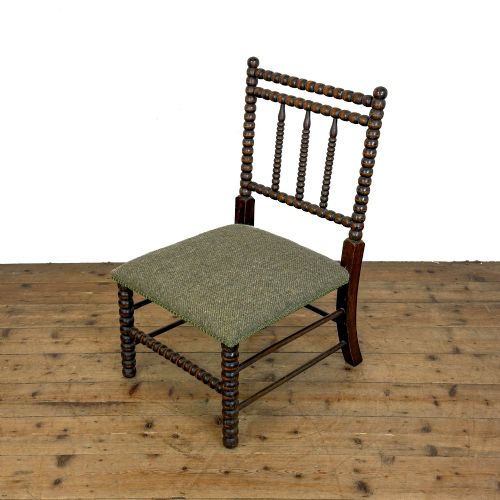


Victorian Bobbin Turned Chair
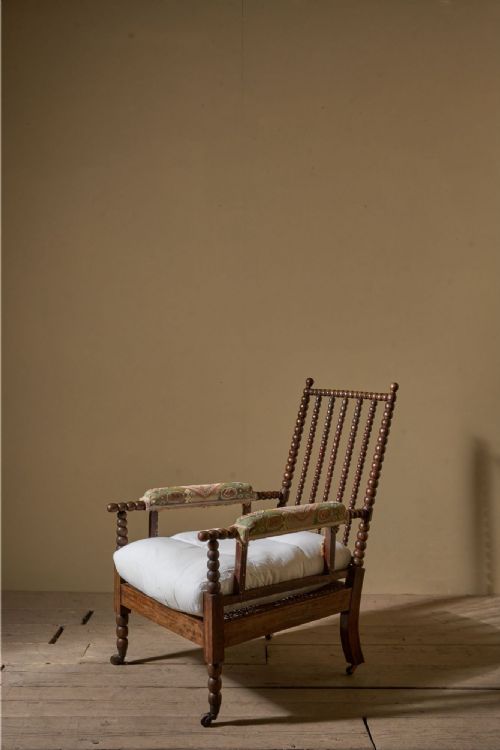
A Victorian bobbin turned chair offers rhythmic wooden spool turnings that bring instant texture and warmth to any interior.
Victorian Bobbin Turned Chair
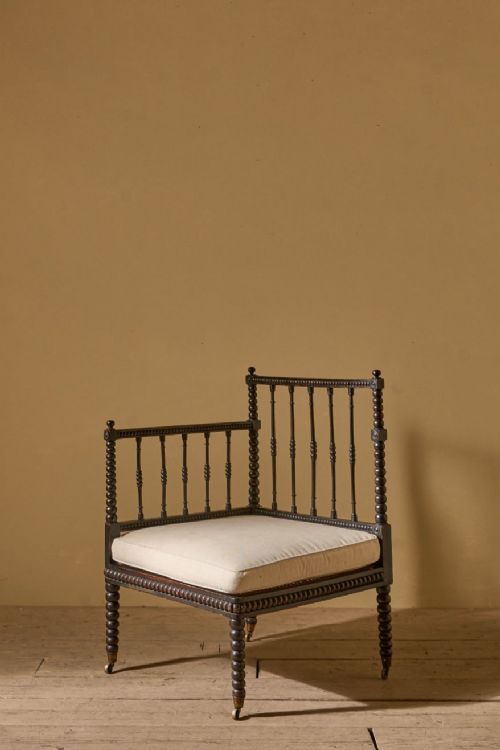
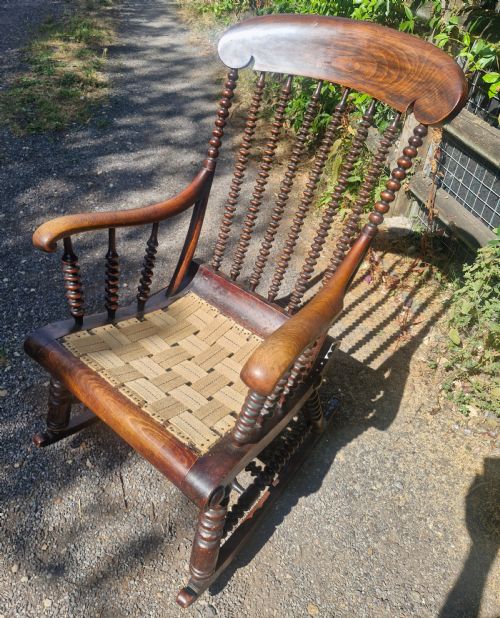
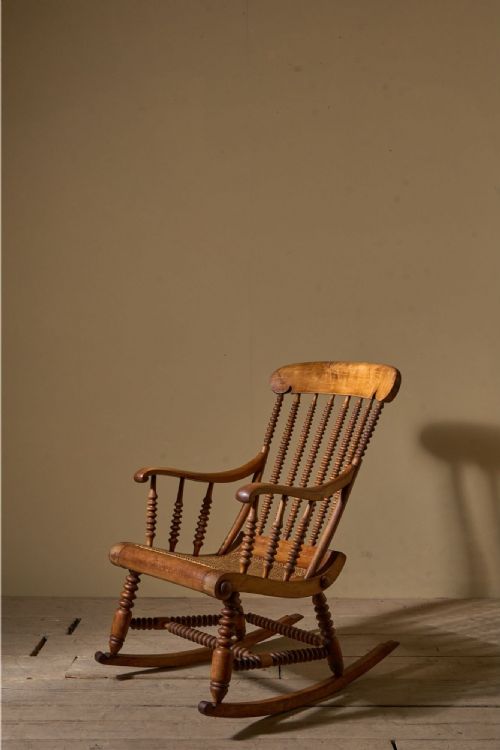
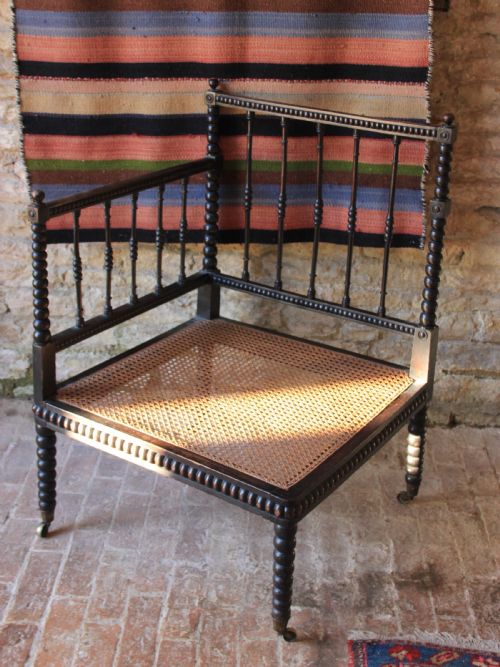
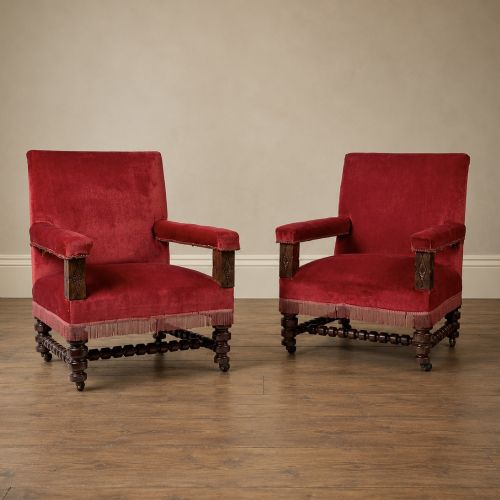
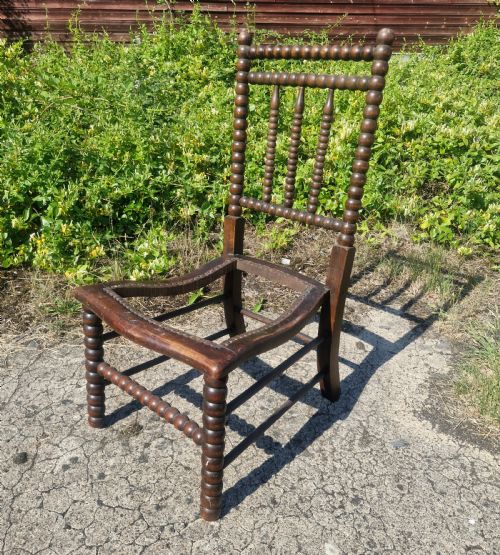
A Victorian bobbin turned chair is a seating form defined by turned woodwork resembling a string of bobbins or spools, emerging primarily across the nineteenth century. Buyers searching for a Victorian bobbin turned chair encounter diverse forms ranging from compact corner seats and low bedroom chairs to substantial rocking chairs and library armchairs.
The material palette spans native and exotic timbers, with oak, walnut, rosewood, and ebonised wood appearing frequently alongside beech. Many examples incorporate textured seats made from cane, leather, fabric, or textile cushions.
Regional styles in the evidence range from English country and Scottish vernacular pieces to revival designs like Victorian Gothic, Jacobean, and Moorish, demonstrating the broad appeal of turned woodwork across domestic interiors.
What varies in quality
The distinction between standard and superior pieces rests on the precision and uniformity of the spool turnings across the frame. Master turners maintained crisp, sharply defined shoulders on each bobbin element, whereas lesser examples present softer, hurried lathe work.
Timber selection dictates endurance, with dense hardwoods like oak and figured rosewood retaining structural integrity better than softer secondary woods. Original upholstery materials and intact cane work elevate the integrity of a surviving piece.
These bouncy spool frames invite guests to trace every single wooden bobbin with their fingertips while chatting.
Liberty and Co
The Victorian Bobbin Turned Chair Glossary
- Bobbin turning
- A form of woodturning characterised by a sequence of rounded swellings and collars resembling thread spools. This technique became popular during the seventeenth century and saw revivals in the nineteenth century.
- Ebonised wood
- Timber stained or treated to imitate ebony. This dark, uniform finish gained widespread favour during the Victorian period for dramatic contrast.
- Bergere
- A closed armchair with a cane panelled back and sides. It often includes a loose upholstered seat cushion.
- Turner's chair
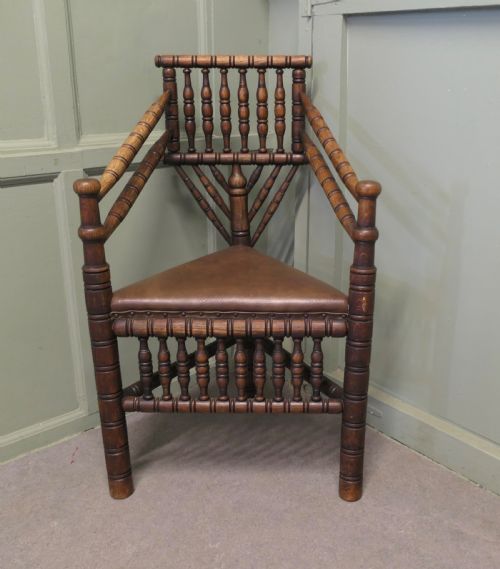
- A sturdy chair constructed entirely from turned wooden spindles and posts. Historically rooted in medieval designs, these pieces enjoyed revival interpretations in the nineteenth century under names like Old Saxon chairs.
Victorian Bobbin Turned Chair: Frequently Asked Questions
What is a bobbin turned chair?
A bobbin turned chair is seating constructed with wooden frames shaped on a lathe to resemble a series of bobbins or spools. These pieces emerged in various forms during the nineteenth century, drawing inspiration from earlier seventeenth-century furniture styles.
They appear in domestic spaces as armchairs, rocking chairs, corner seats, and low bedroom chairs, utilising woods like oak, walnut, and ebonised timber.
How do I date a bobbin chair?
Dating relies on examining the timber species, construction joints, and stylistic context within the nineteenth century. Oak and mahogany frames often align with specific revival movements, while secondary woods help narrow the period.
Comparing the turning profile with dated archival examples and studying the wear on feet and seat rails provides further chronological clues.
Where were bobbin chairs used?
Victorian households placed these decorative chairs in libraries, bedrooms, drawing rooms, and hallways as functional seating or aesthetic accents. Their distinct silhouettes suited both formal reception rooms and relaxed country interiors.
Smaller variants like corner chairs and low bedroom seats were designed for specific domestic corners and dressing spaces.
How do I care for wooden bobbin frames?
Preserving the turned frame involves dusting regularly with a soft cloth and applying a microcrystalline wax periodically to nourish the wood surface. Avoiding direct sunlight and stable humidity levels prevents the timber from drying and splitting.
Care should be taken around protruding spool edges during movement to prevent chips to the turned details.