




Victorian Blush Ivory Urn
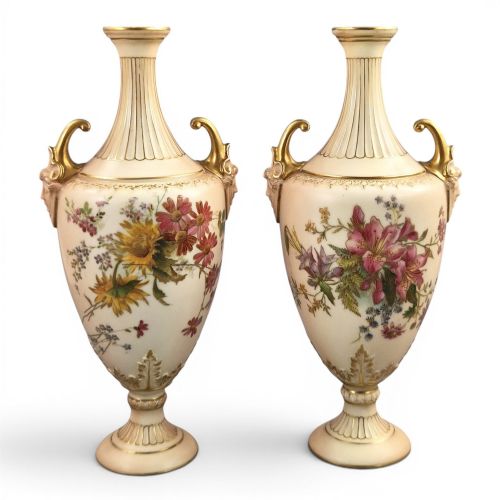
These victorian blush ivory urn pieces bring soft palette ceramic artistry to a room, offering tactile handles and painted floral details.
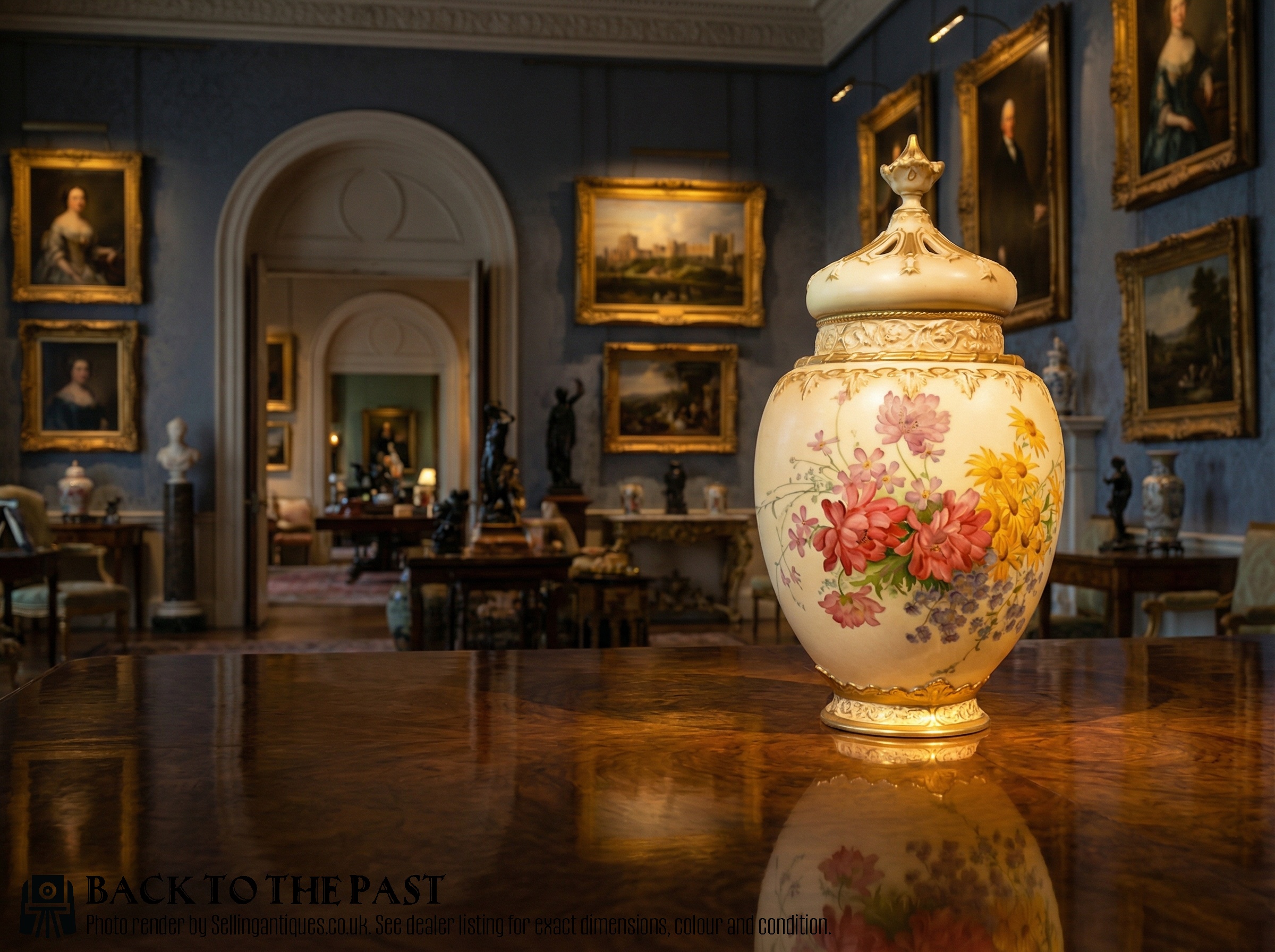
Victorian Blush Ivory Urn
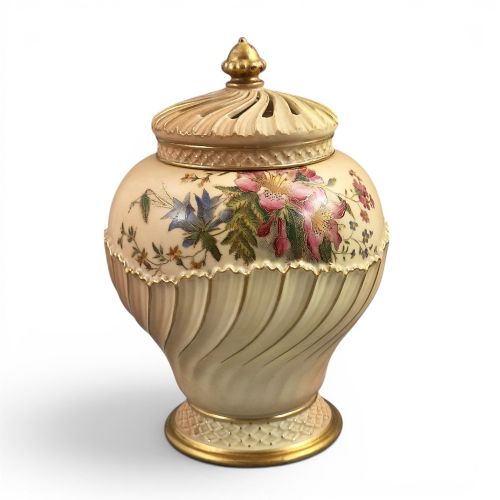
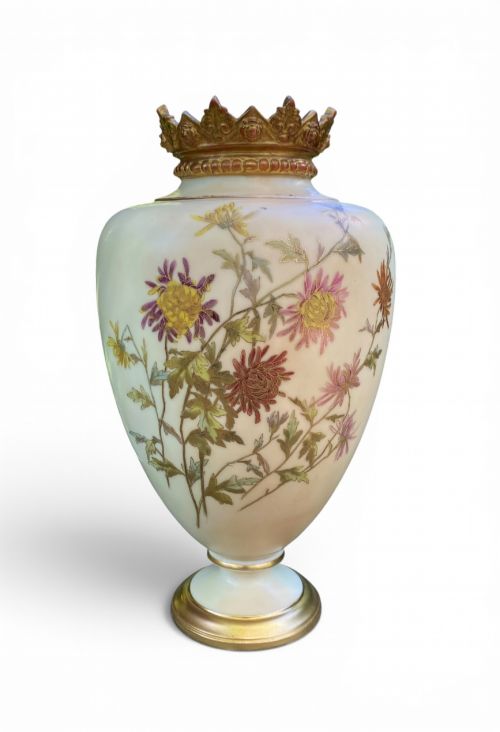
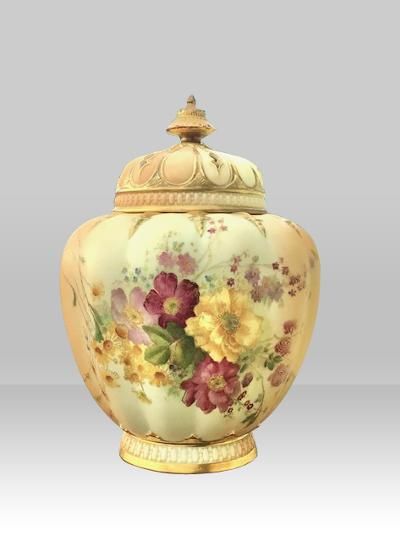
When you search for a victorian blush ivory urn, you are looking at nineteenth and early twentieth century ceramic vessels created primarily as decorative objects for domestic interiors. These pieces appear in forms such as ovoid vases, pedestal jars, pot-pourri containers with crown covers, and ewers.
The version you are most likely to meet on this page is porcelain produced by Royal Worcester, dating from the late nineteenth century into the Edwardian period. Such pieces display characteristic softly tinted grounds paired with painted floral motifs and metallic highlights.
Makers utilised specific pattern numbers and registered shapes to categorise these ornamental vessels, resulting in matching pairs and single display pieces. Their scale ranges from compact cabinet items to substantial pedestal centrepieces designed for mantels and console tables.
How they were made
Potters formed these items using porcelain bodies, applying a pale, matte glaze that created the signature soft ivory surface tone. Artisans then hand-painted floral subjects, including chrysanthemums and roses, directly onto this prepared ground using coloured enamels.
Finishing touches involved the application of gilding, gold leaf, and gold gilt to handles, rims, and pierced details. Workers fired the ceramics multiple times to set the enamel pigments and secure the metallic accents against the glazed porcelain.
Listings span the late nineteenth century through to the Edwardian period and the 1920s, featuring porcelain materials and gilding.
What varies in quality
The distinction between standard production and superior examples lies in the complexity of the hand-painted decoration and the presence of specialised forms. Hand-painted floral studies by named artists or intricate pierced gilt handles elevate an item above simpler decorated bodies.
Subtlety in the gradation of the ivory glaze and the crispness of the moulded details, such as crown covers on pot-pourri jars, determine the refinement of the finished vessel. Pairs showing balanced symmetry and matching decorative schemes also command greater attention.
Royal Worcester·E Raby
The Victorian Blush Ivory Urn Glossary
- Blush ivory
- A soft, matte ceramic ground colour developed to imitate ivory tones, serving as the backdrop for painted floral decoration.
- Pot-pourri jar
- A covered vessel pierced to allow scent to diffuse from dried aromatic plant materials placed inside.
- Ewer
- A large jug with a wide spout and scroll handle, often produced as an ornamental pair alongside standard vases.
- Gilding
- The application of gold leaf, gilt, or gold paint to highlight rims, handles, and moulded decorative motifs.
- Ovoid
- An egg-shaped ceramic body form that provides a curved surface for painted floral scenes.
Victorian Blush Ivory Urn: Frequently Asked Questions
What is a blush ivory urn?
A blush ivory urn is a porcelain decorative vessel featuring a matte pale ground and hand-painted floral motifs.
These pieces typically date from the late nineteenth and early twentieth centuries, created primarily for interior display.
How were pot pourri jars used?
Pot pourri jars held dried scented plant materials inside domestic rooms.
Their pierced covers allowed fragrance to diffuse while concealing the contents from view.
Are these pieces hand painted?
Many items feature hand-painted floral subjects applied directly onto the glazed porcelain surface.
Artists often rendered specific botanical studies such as chrysanthemums and roses by hand.
How do I date these ceramics?
Dating relies on recorded manufacturing periods, factory marks, and registered pattern numbers.
Styles span from late Victorian production into the Edwardian era and the early twentieth century.