




Victorian Blue Jasperware
Victorian blue jasperware brings neoclassical relief into nineteenth-century domestic spaces through stoneware and ceramic forms.
Victorian Blue Jasperware
Victorian blue jasperware comprises nineteenth-century ceramic and stoneware pieces featuring classical white bas-reliefs against blue bodies. These objects range from tea sets and biscuit barrels to jardiniere planters, trinket boxes, and brooches.
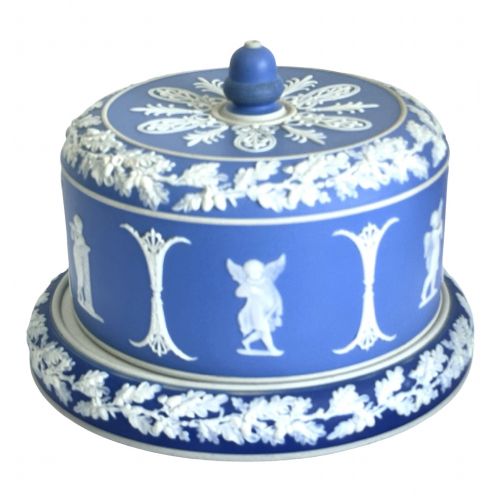
Buyers seeking this phrase encounter items spanning the 1870s, 1880s, and 1890s, with a strong presence of Wedgwood production alongside pieces by William Adams and Sons. The forms balance decorative urns and vases with functional serveware and cheese domes.
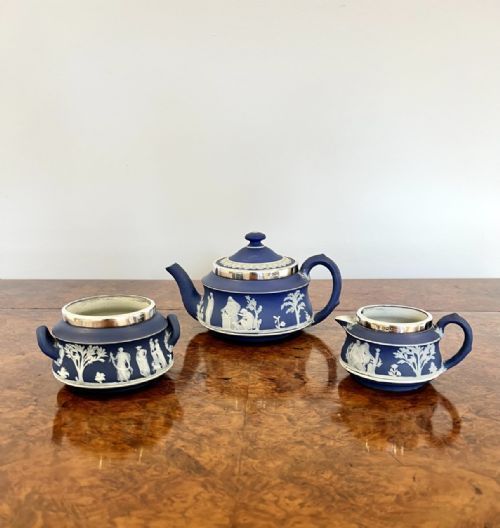
Neoclassical style dominates the aesthetic, reflecting Victorian revivals of earlier classical motifs applied to everyday household items. Pieces frequently incorporate silver plate, brass, or silver mountings alongside the core ceramic body.
Assessing quality and execution
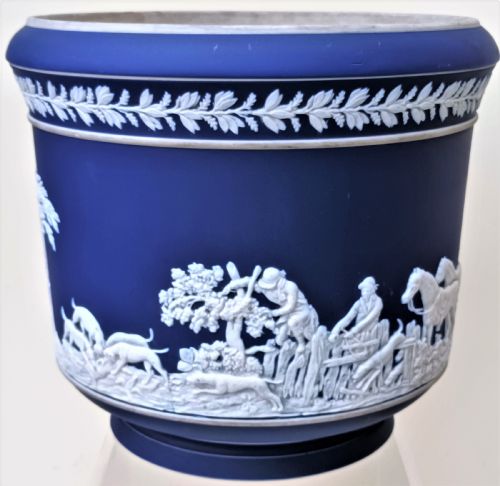
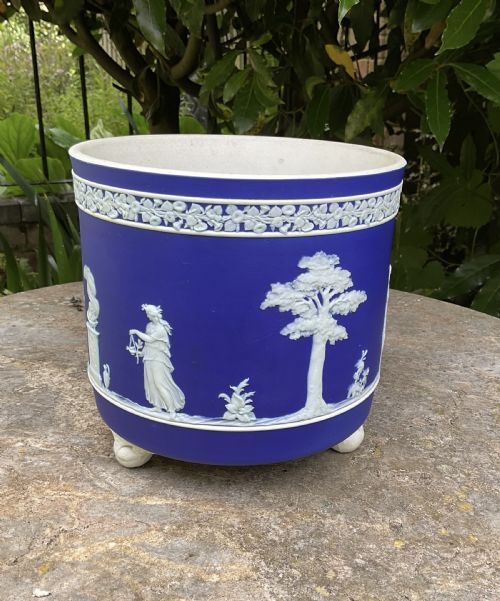
Quality rests in the crispness and undercut detail of the white sprigged reliefs against the matte blue ground. Superior pieces display sharp definition in the classical figures and foliage without blurring at the edges where the relief meets the body.
The integration of metal hardware, whether silver plate, brass, or silver mounts, influences the overall standard of the piece. Well-fitted mounts and balanced proportions between ceramic bodies and metal elements distinguish finer production.
Even a cheese dome required classical dignity when resting on a Victorian dining table.
Wedgwood·William Adams and Sons
The Victorian Blue Jasperware Glossary
- Jasperware
- A type of fine stoneware developed with a matte surface, capable of taking coloured body stains. It was famously perfected by Wedgwood and widely produced during the nineteenth century.
- Bas-relief
- A sculptural technique where figures and ornaments project slightly from a flat background. In these pieces, white clay figures stand out against the contrasting blue body.
- Jardiniere
- A large ornamental pot or stand designed to hold growing plants or flowers. Victorian examples often incorporate classical reliefs and sometimes rest on feet.
- Campana urn
- A bell-shaped vessel with a flared rim and pedestal base, originating from classical antiquity. Victorian ceramicists adapted this form for decorative display pieces.
Victorian Blue Jasperware: Frequently Asked Questions
What is Victorian blue jasperware?
Victorian blue jasperware is a type of fine stoneware or ceramic produced during the nineteenth century, characterised by its distinctive blue body and applied white classical reliefs.
These pieces include decorative vases, tea sets, biscuit barrels, and jewellery, combining functional utility with neoclassical ornamentation.
How do I date a piece?
Dating relies on maker marks, stylistic details, and accompanying metal mounts typical of the nineteenth century. Many items carry specific date ciphers or impressed factory stamps from periods around the 1870s and 1880s.
The presence of silver plate or specific Victorian brass fittings also helps anchor the production era within the broader nineteenth-century timeline.
Were these items used daily?
Many forms, such as biscuit barrels, cheese domes, and tea sets, were designed for active use in Victorian dining and entertaining. Other items like brooches and trinket boxes served personal adornment and small storage functions.
Their survival often depends on how carefully the ceramic bodies and metal mounts were handled and maintained across generations.
What styles influence these designs?
Neoclassical style heavily influences the decoration, drawing on ancient Greek and Roman motifs popularised during earlier revivals. Victorian makers reinterpreted these classical figures and foliage patterns on everyday household objects.
This aesthetic creates a formal symmetry and elegance that defines the appearance of the blue and white surfaces.