




Victorian Blue Ceramic Dish
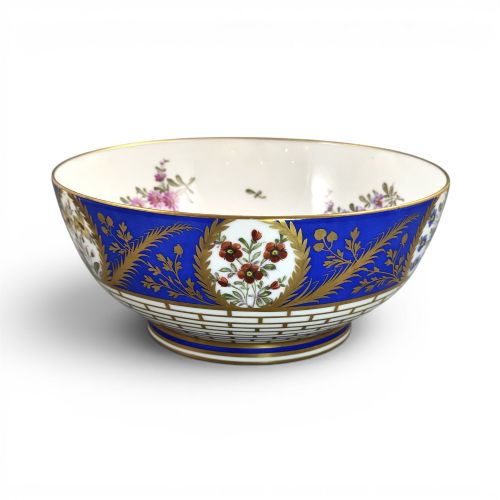
A victorian blue ceramic dish brings nineteenth-century transfer printing and majolica glaze work straight to the table.
Victorian Blue Ceramic Dish
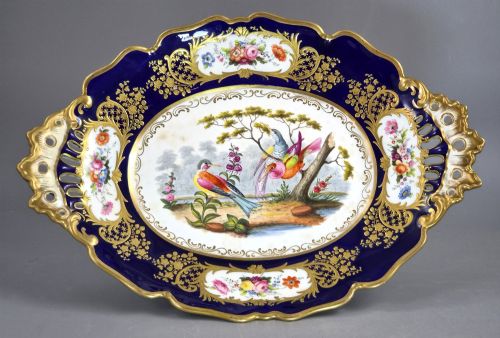
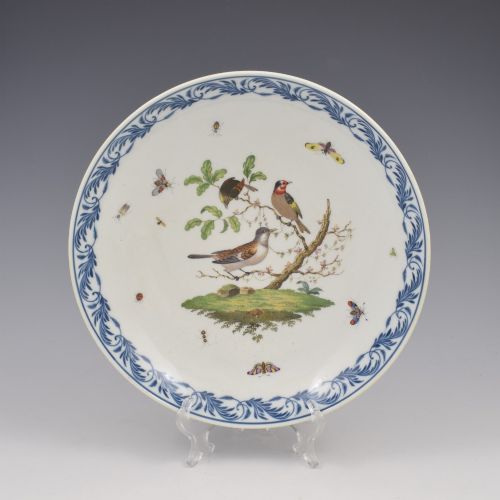
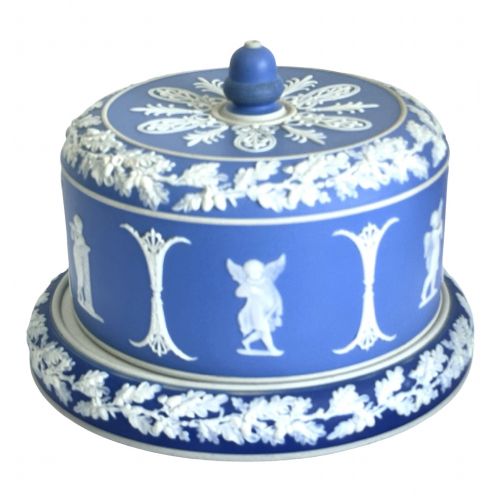
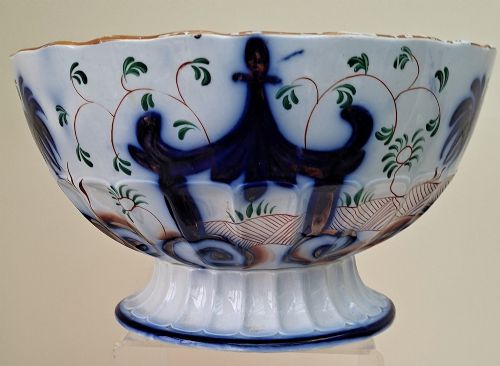
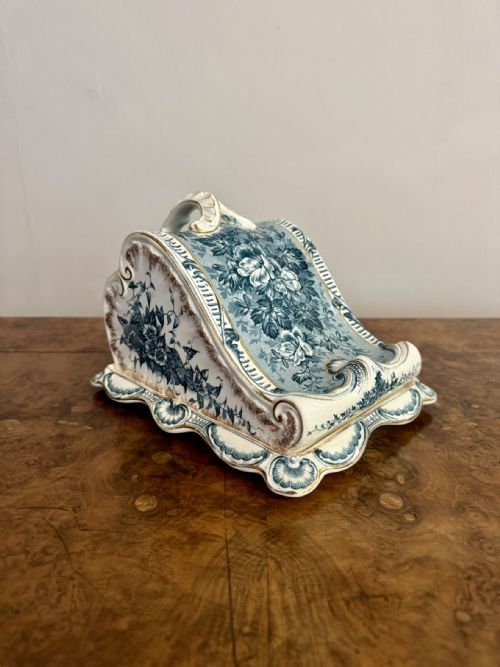
A victorian blue ceramic dish encompasses a broad range of utilitarian and decorative objects shaped from earthenware, porcelain, and stoneware during the nineteenth century. Buyers searching this phrase encounter substantial meat platters, vegetable tureens with covers, cheese domes, and decorative cabinet plates.
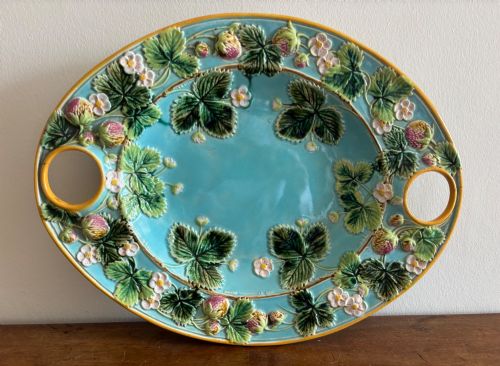
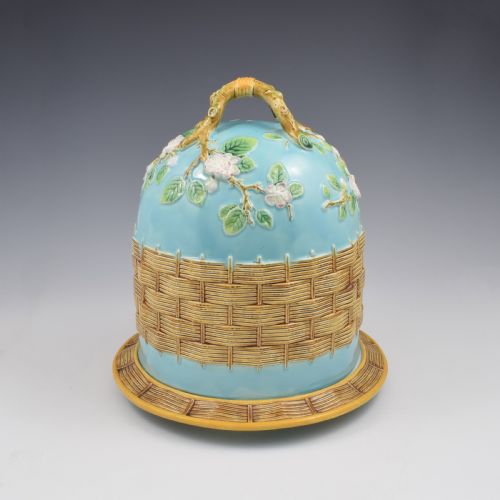
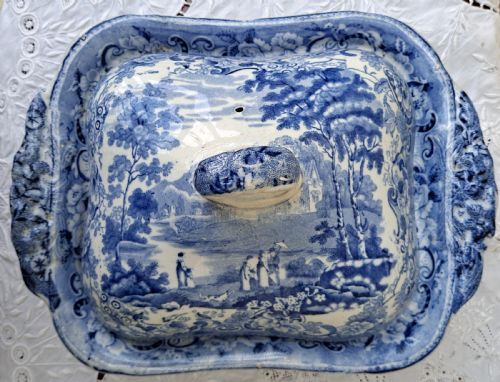
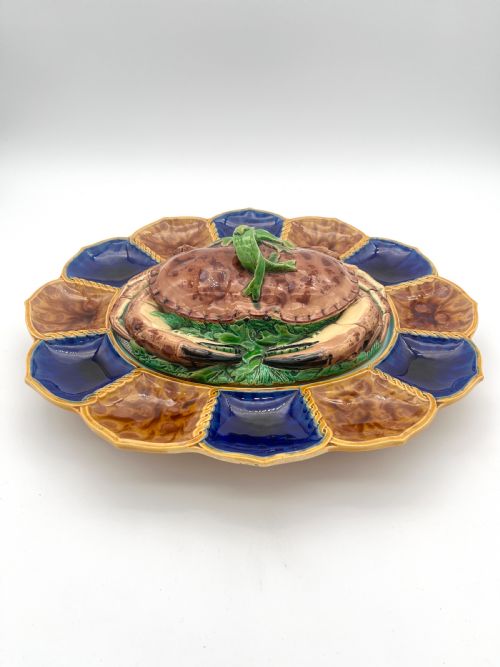
The most frequent examples on this page are blue and white transfer-printed earthenware meat platters and serving dishes bearing pastoral or scenic patterns. Majolica cheese dishes and strawberry dishes also appear regularly, alongside porcelain dessert plates and bowls originating from English and continental potteries.
Materials and Techniques
Potters shaped these pieces from earthenware, stoneware, and porcelain before applying cobalt blue pigments beneath or over the glaze. Transfer printing allowed factories to transfer intricate copperplate engravings onto ceramic surfaces with remarkable consistency.
Majolica pieces received opaque coloured glazes fired directly onto earthenware body forms, creating rich relief textures. Artisans frequently added hand-painted details, enamel highlights, and gilt accents over the fired glaze to enhance pictorial depth.
Serving platters, cheese domes, vegetable tureens, and cabinet plates represent the primary forms found in nineteenth-century blue ceramics.
Judging Quality
The distinction between ordinary utility wares and exceptional pieces rests upon the crispness of the transfer print and the control of the blue pigment during firing. Superior examples display deep, even cobalt tones without blurring or running at the edges of the design.
Moulding definition dictates the success of majolica and relief-moulded serving pieces, where sharp, clean lines separate leaves, blossoms, and architectural motifs. The finesse of hand-painted enamel additions and the preservation of gilt detailing further elevate finer cabinet plates and tureens.
Coalport·George Jones·Wedgwood·James Wallace and Co·Samson Paris·Minton·Royal Crown Derby·Pucher Deroche·Doulton Burslem·John Ridgway·Royal Vienna·Doulton Lambeth·Meissen
The Victorian Blue Ceramic Dish Glossary
- Transfer print
- A decorative technique where an engraved copper plate transfers a design onto paper, which is then applied to the ceramic body before glazing. This method enabled factories to produce detailed pictorial scenes in cobalt blue across large quantities of tableware.
- Majolica
- A type of earthenware covered with an opaque tin-lead glaze and brightly coloured metallic oxide paints. Introduced in the mid-nineteenth century, it is known for vivid hues and heavy relief moulding representing natural forms.
- Imari
- A style of ceramic decoration featuring rich underglaze blue combined with iron red and gilt highlights, inspired by Japanese export wares. European potteries frequently adapted these colourful schemes during the Victorian period.
- Tureen
- A deep covered vessel designed for serving soups, vegetables, or sauces at the dining table. Nineteenth-century examples often include matching ceramic ladles and fitted stands.
- Jasperware
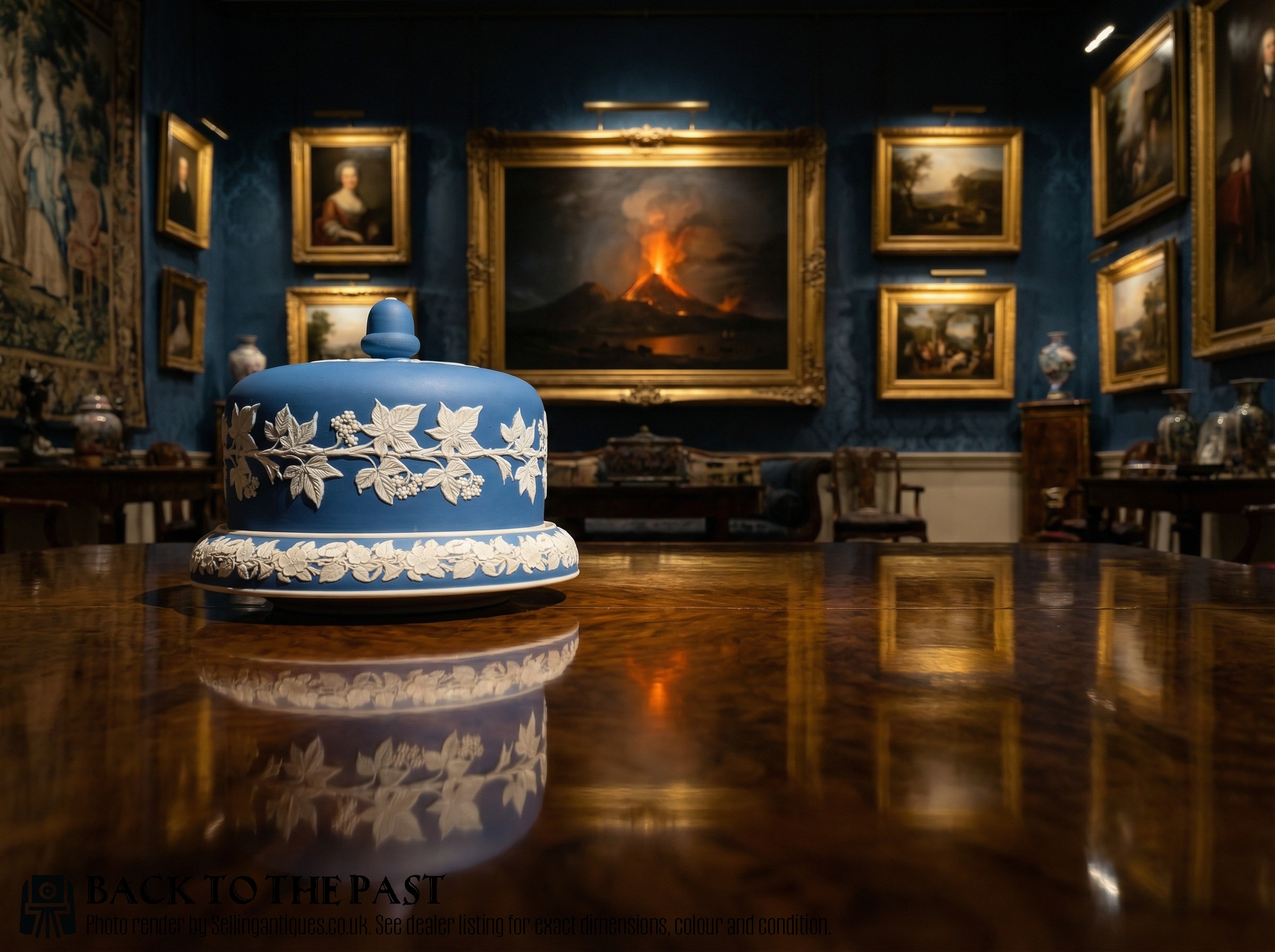
- A fine-grained, unglazed stoneware developed by Josiah Wedgwood, characterised by contrasting raised white cameo figures against coloured ceramic bodies such as blue.
Victorian Blue Ceramic Dish: Frequently Asked Questions
Were these dishes used for daily dining?
Many large platters, vegetable tureens, and meat plates saw heavy service on Victorian dining tables for family meals and formal dinner parties. Heavy earthenware and ironstone bodies were specifically manufactured to withstand everyday handling.
Cabinet plates and delicate porcelain dessert dishes, however, remained largely decorative or served light sweets on special occasions.
What is the difference between earthenware and porcelain?
Earthenware is a porous, opaque pottery body fired at lower temperatures, commonly used for transfer-printed meat platters and majolica cheese domes. It requires a glazed surface to remain impervious to liquids.
Porcelain is a vitrified, dense ceramic material fired at much higher temperatures until non-porous, often appearing translucent when held to the light. It forms the basis for finer decorative cabinet plates and painted boxes.
How can I date a blue and white transfer platter?
Examine the base of the dish for impressed factory marks, registry diamonds, or printed maker names that indicate specific production years. The tone of the blue transfer, the weight of the ceramic body, and the style of the border pattern also provide strong clues to the decade of manufacture.
Early nineteenth-century pieces often display deeper, richer cobalt shades on heavier ironstone or earthenware bodies, while later Victorian wares exhibit lighter, crisper printing.