




Victorian Black Slate Clock
A victorian black slate clock brings substantial architectural presence to a room, cast in heavy stone and built to keep time reliably for generations.
Victorian Black Slate Clock
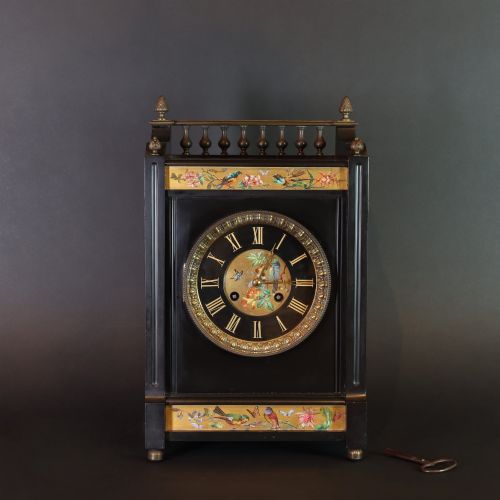
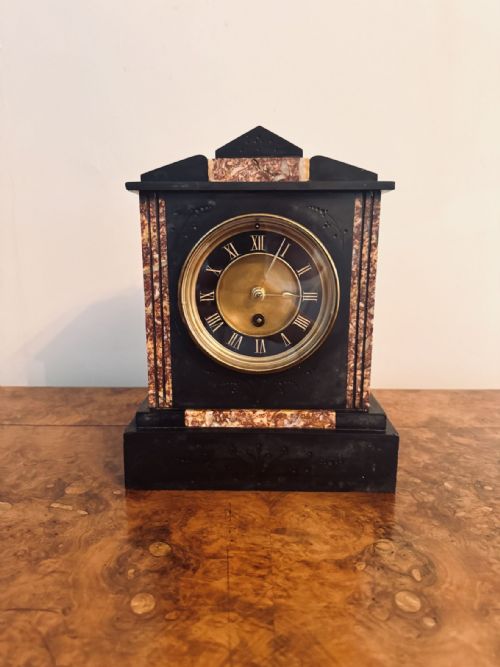
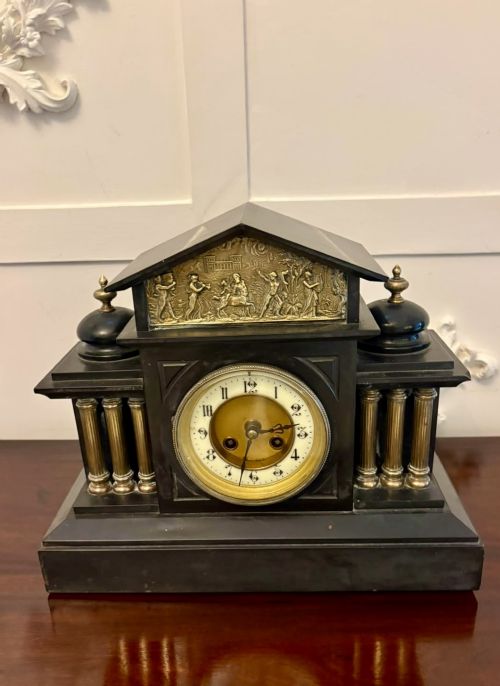
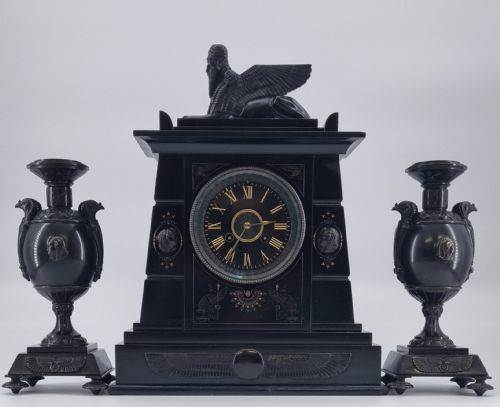
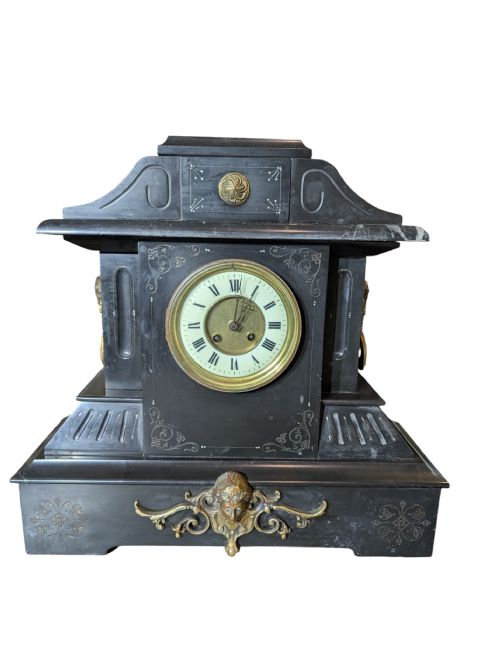
When you search for a victorian black slate clock, you encounter heavy mantelpieces shaped in architectural, classical revival, and Egyptian revival styles. These items span the nineteenth century, with many examples originating from French workshops alongside domestic British production.
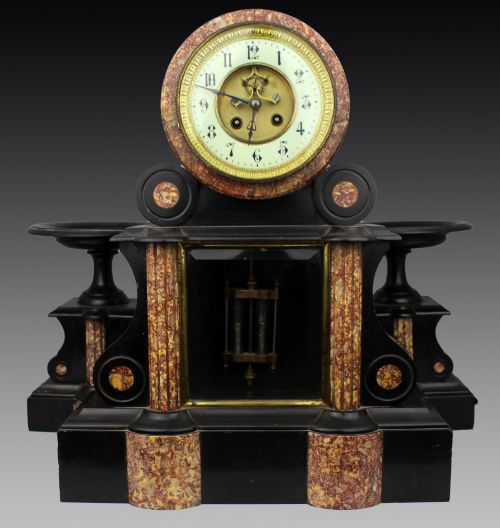
The objects take the form of substantial mantel clocks and garniture sets, often pairedside garniture urns or sidepieces. The material presence is dominated by black slate, frequently combined with contrasting marble or bronze details.
Materials and construction
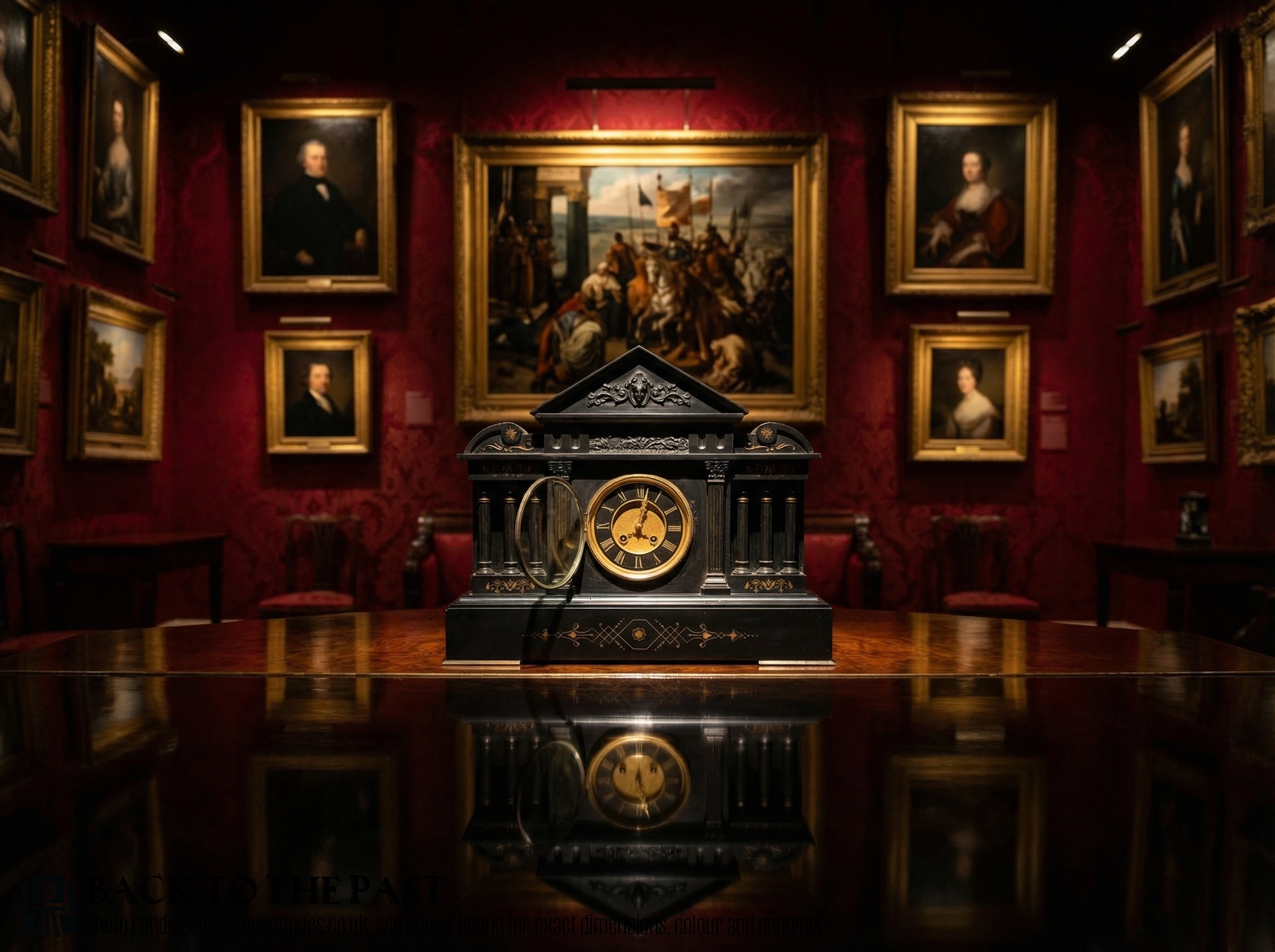
The bodies are cut from dense black slate and marble, occasionally given faux finishes or inlaid with contrasting stones. Mechanics rely on brass movements, including eight-day systems, chain fusees, and visible escapements behind glass dials.
Gilding, bronze mounts, and enamel dials complete the construction, bringing metallic warmth to the dark stone cases. Craftspeople utilised architectural motifs inspired by classical and Egyptian forms to build the imposing structures.
Victorian Black Slate Clock Retail Price Guide 2026
Typical asking prices for victorian black slate clock among the pieces listed under this phrase on Sellingantiques today, from the lower quarter to the upper quarter. They describe what is for sale here now, not the wider market.
Listings demonstrate a strong presence of Egyptian revival designs alongside standard architectural forms in black slate and marble.
Factors of quality
Quality rests in the architectural ambition of the case and the sophistication of the movement inside. Finer examples display crisp bronze mounts, complex perpetual calendars, or signed mechanisms from known makers.
The harmony between the slate body and contrasting marble inlays dictates the visual success of the piece. Superior items maintain intact enamel dials and precise proportions without crude repairs to the stone.
Japy Frères·Philippes Paris·Baby and Jannings·D. Munsey·Achille Brocot·Barraud & Lund London
The Victorian Black Slate Clock Glossary
- Garniture set
- A mantel clock accompanied by matching side ornaments, such as urns or vases, designed to sit together on a fireplace. These sets create a symmetrical display.
- Fusee
- A conical pulley used in clock movements to maintain even force on the gear train as the mainspring unwinds. This mechanism improves timekeeping precision.
- Visible escapement
- A dial design that allows the ticking balance wheel or escapement to be seen through a glazed aperture on the face. It adds kinetic interest to the static stone case.
- Enamel dial
- A clock face made by fusing powdered glass onto a metal base at high heat, resulting in a smooth, glossy surface. These dials hold numerals clearly.
Victorian Black Slate Clock: Frequently Asked Questions
How heavy is a slate clock?
These clocks are exceptionally heavy due to the solid blocks of slate and marble used in their construction. They require a sturdy mantelpiece or shelf capable of supporting significant weight.
Moving them requires care, typically lifting from the base rather than projecting architectural elements to prevent damage to the stone.
Where did these clocks originate?
Production centred in Britain and France during the nineteenth century, drawing on diverse stylistic influences from classical antiquity to Egyptian revival.
Many high-movement pieces were manufactured in French workshops and imported to British markets alongside domestic production.
Do these clocks require special care?
Maintenance involves professional servicing of the brass movement every few years and gentle cleaning of the stone surfaces with a dry cloth. Avoid harsh chemical cleaners on the slate and marble.
Keeping the clock level on a stable surface ensures the pendulum swings evenly and the movement keeps accurate time.
What is a garniture set?
A garniture set consists of the central clock accompanied by matching side ornaments, traditionally placed across a mantelpiece. These matching pieces repeat the slate and marble materials of the main clock.
They provide a balanced, unified decorative arrangement popular in Victorian interiors.