
Victorian Black Marble
Victorian black marble objects bring solid architectural weight and polished stone surfaces to nineteenth-century interiors.
Victorian Black Marble
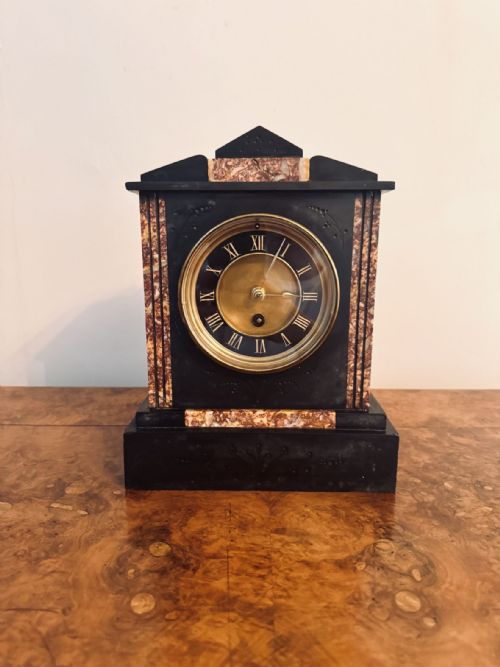
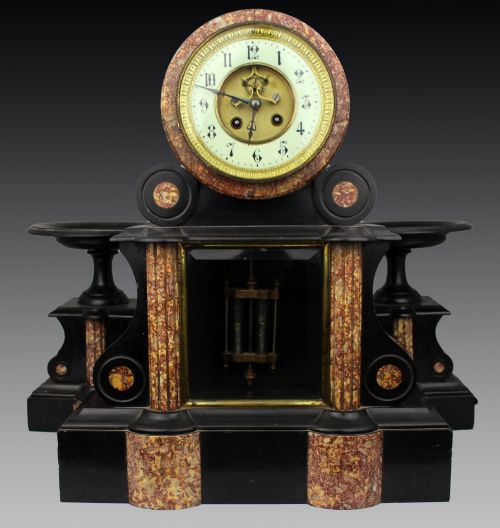
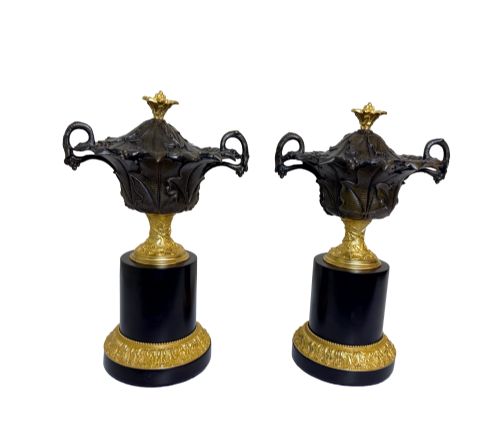
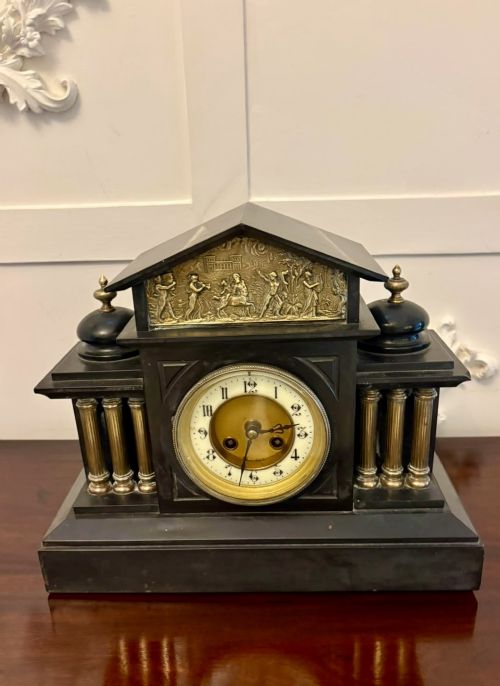
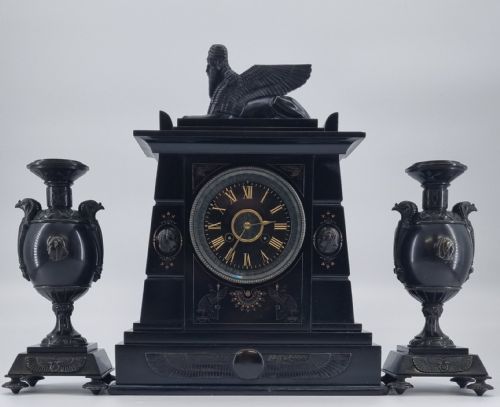
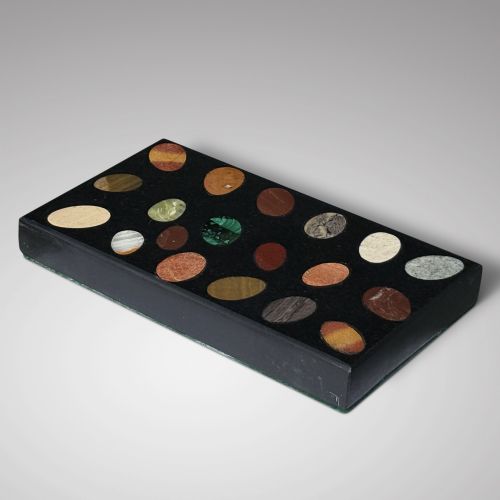
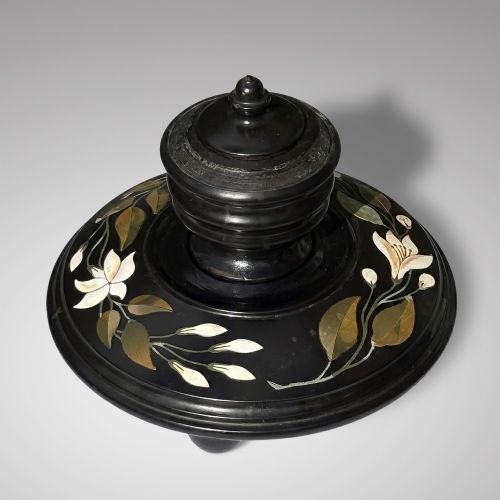
Victorian black marble pieces span domestic timepieces, garniture sets, inkwells, and ornamental obelisks formed during the nineteenth century. These objects frequently combine dense dark stone with contrasting highlights of brass, gilt bronze, or inlaid specimen minerals like pietra dura. Architectural mantel clocks dominate the selection, often accompanied by matching side pieces or architectural details.
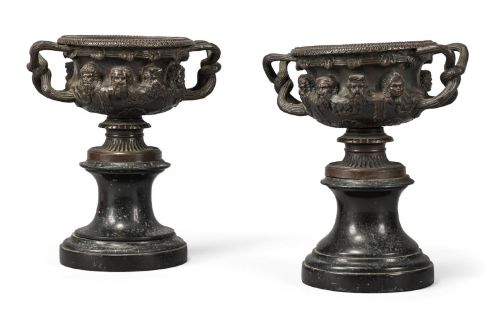
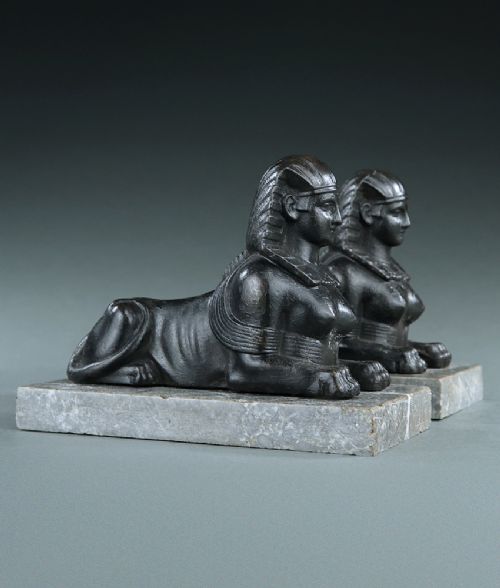
Makers utilised both native British stones and continental marbles, incorporating regional varieties such as Ashford black marble alongside French black marble and slate. Pieces range from austere neoclassical forms to elaborate Egyptian revival designs featuring patinated bronze sphinxes or hieroglyphic motifs. Smaller desk accessories and decorative tazzas represent the portable end of this solid stone tradition.
Materials and Construction
Stonemasons shaped dense blocks of black marble, black slate, and Ashford black marble using heavy cutting and polishing equipment to achieve smooth, reflective surfaces. Architectural clock cases and obelisks required precise slab assembly, frequently housing mechanical movements behind heavy stone doors or brass bezels.
Metal elements such as gilt brass, cast bronze, and patinated mounts were cast separately and pinned or screwed directly into the stone body. Inlaid work involved recessing contrasting mineral specimens, including coral marble and blue John, into surface channels to create geometric or pictorial motifs.
Listings feature nineteenth-century materials including black marble, black slate, cast iron, brass, and Ashford black marble.
Assessing Quality
Quality depends upon the depth of the stone polish, the crispness of architectural mouldings, and the precision of inlaid specimen work such as pietra dura. Superior examples exhibit tightly fitted stone joints, heavy bronze or brass mounts with sharp chased details, and robust mechanical movements.
Lighter or simpler items rely on plain slate or uniform black marble without secondary metal embellishments or mineral inlays. The presence of signed clock movements by established makers elevates the technical standard of a piece far above standard domestic timepieces.
Japy Frères·Philippes Paris·Selim Bright
The Victorian Black Marble Glossary
- Ashford Black Marble
- A dark limestone from Derbyshire inlaid with coloured mineral specimens using the pietra dura technique. It was widely used for nineteenth-century boxes, inkwells, and obelisks.
- Garniture Set
- A matching centrepiece clock accompanied by twin side ornaments such as urns, vases, or candelabra. These decorative groups balanced nineteenth-century mantelpieces.
- Pietra Dura
- An Italian technique of inlaying cut and fitted polished coloured stones into a contrasting background slab. It creates smooth pictorial or geometric surface designs.
- Tazza
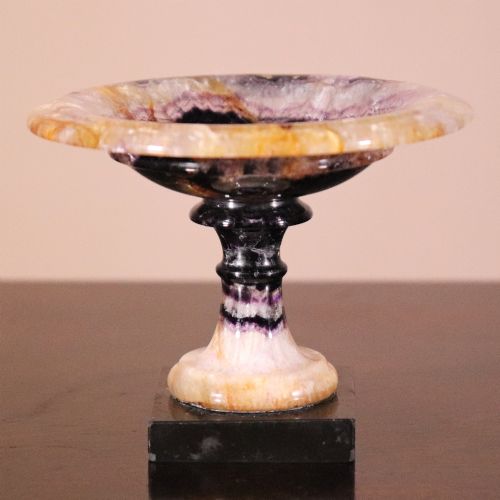
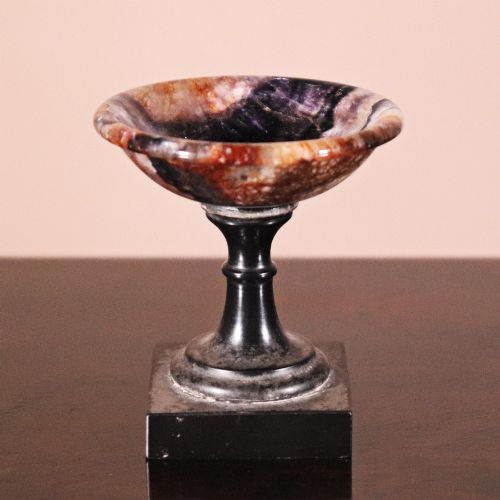
- A shallow ornamental cup or bowl raised upon a stem and footed base. They were frequently carved from decorative marbles during the grand tour period.
- Obelisk
- A tall, four-sided tapering monument ending in a pyramidal apex. These decorative stone objects were popular souvenirs of nineteenth-century travel.
Victorian Black Marble: Frequently Asked Questions
What is Victorian black marble?
Victorian black marble refers to nineteenth-century decorative objects and clock cases fashioned from dense polished dark stone, slate, or Ashford limestone. These items often incorporate contrasting brass mounts and colourful mineral inlays.
Craftsmen shaped the heavy stone into architectural forms, obelisks, and desk accessories to suit formal Victorian interiors.
How do you clean black marble?
Cleaning polished black marble requires a soft, dry cloth to remove dust without scratching the reflective surface. Harsh chemical cleaners can dull the stone and damage metallic mounts.
Water should be used sparingly, and any moisture must be dried immediately to protect internal iron components or paper dials.
Where were these pieces made?
These pieces originated in British workshops, particularly in Derbyshire for Ashford marble, as well as in French Parisian factories producing clocks and bronze mounts. Grand tour souvenirs were also manufactured in Italy using local stones.
Makers combined regional stonemasonry skills with imported continental materials and mechanical movements.
How heavy are these items?
Objects made from solid black marble and slate possess significant weight due to the density of the stone. Mantel clocks and large architectural garnitures require sturdy placement surfaces.
Lighter decorative items include small inkwells, tazzas, and miniature specimen tables.