



Antique Stone Obelisk
An antique stone obelisk brings classical monumental form into a room, shaped from rich marbles and serpentines as a lasting souvenir of past travels.
Antique Stone Obelisk
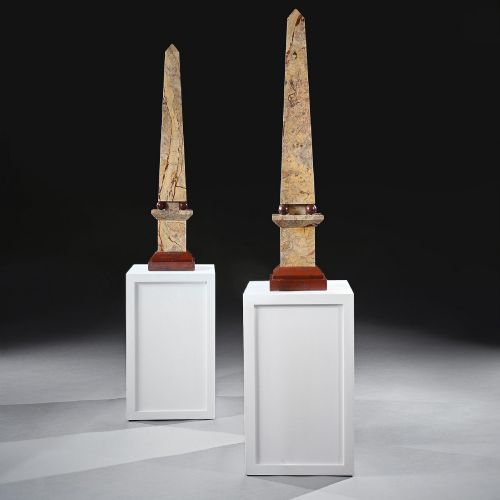
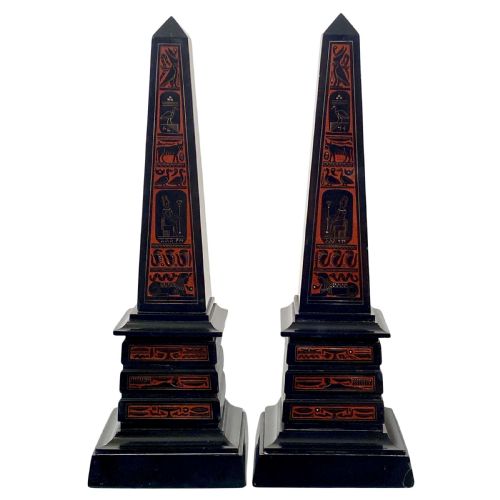
When you search for an antique stone obelisk, you encounter decorative objects and desk ornaments that echo the monolithic architecture of ancient Egypt and classical Rome. These pieces span the nineteenth century through the early twentieth century, drawing on Grand Tour, Egyptian Revival, and Neoclassical styles.
How they were made
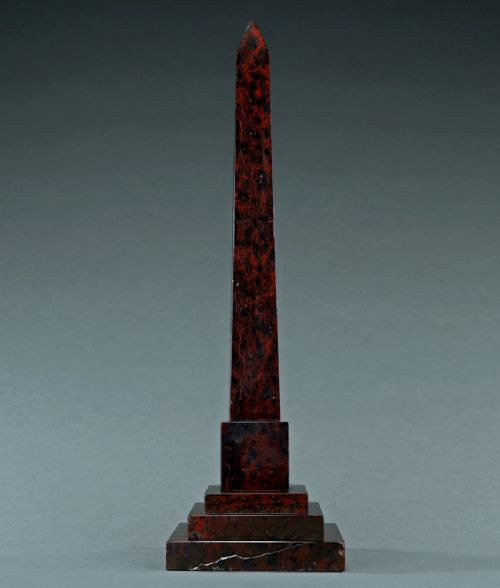
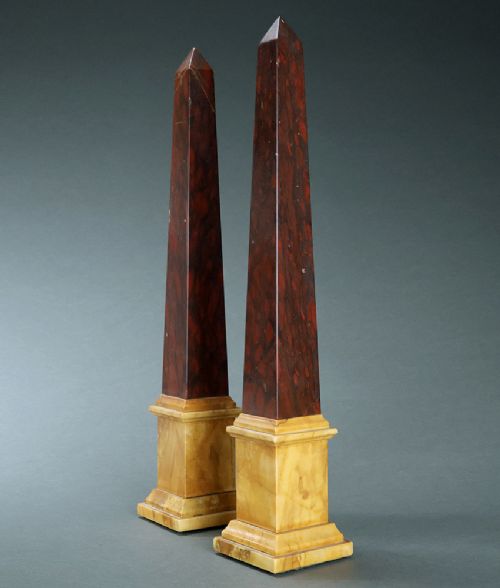
Masons shaped these pillars from dense natural stones, utilising varieties such as black marble, Portasanta marble, rosso antico, and green Egyptian onyx. The turning and polishing of these hard materials required steady lathe work and hand finishing to achieve sharp corners and flat faces.
Certain pieces incorporate intricate pietra dura work, inlaying contrasting stones into the marble surface to form geometric or floral motifs. These decorative details demanded precise cutting and fitting of thin stone sections into recessed beds.
Grand Tour travellers hauled heavy multi-tonne marble pillars across European borders just to ensure their mantelpiece looked properly educated.
What varies in quality
Quality rests upon the selection and variety of the stone employed, with specimen marble and pietra dura examples demonstrating greater artisanal ambition than plain monochrome stones. The choice of striking geological colours and complex inlaid panels elevates the visual impact of the carving.
Proportion and crispness of edge define the success of the execution. Sharply defined pyramidal tips and cleanly tapered shafts reflect superior stonemasonry compared to softer lines and rounded corners.
The Antique Stone Obelisk Glossary
- Grand Tour
- A cultural journey undertaken by wealthy young Europeans through France and Italy, collecting art and antiquities. Souvenirs such as marble obelisks were commonly purchased during these travels.
- Pietra dura
- An Italian technique of inlaying cut and fitted polished coloured stones to create pictures or decorative patterns. This painstaking work appears on select nineteenth century marble pieces.
- Portasanta marble
- A distinctive multi-coloured ancient marble featuring red, white, and grey patches. It was frequently utilised for decorative architectural objects during the nineteenth and early twentieth centuries.
- Rosso antico
- A deep red marble prized since antiquity for its rich tone and smooth polishing qualities. Stonemasons utilised it to create striking contrast within neoclassical decorative objects.
- Serpentine
- A compact green mineral group often resembling marble and utilised for carved decorative items. Its mottled appearance provides a robust alternative to standard black or white stone.
Antique Stone Obelisk: Frequently Asked Questions
How were these obelisks used?
Historically, these carved pillars served as decorative ornaments displayed upon mantelpieces, desks, and tables within period interiors. Travellers brought them home as tangible reminders of classical sites visited abroad.
Today, they are collected as sculptural objects that introduce architectural form, natural geological colour, and classical gravitas to modern interior settings.
What stones are used for these pieces?
Masons utilised a wide variety of decorative stones, including black marble, Portasanta marble, rosso antico, and green Egyptian onyx. Some examples incorporate pietra dura work with inlaid contrasting mineral specimens.
Each stone variety imparts a distinct palette and texture, ranging from deep monochrome blacks to variegated reds, greens, and multi-coloured brecciated marbles.
How do I date an antique stone obelisk?
Dating relies upon stylistic markers such as Grand Tour provenance, Egyptian Revival motifs, Art Deco geometry, or Victorian manufacturing methods. The specific marble types and inlay techniques also point towards nineteenth or early twentieth century production.
Examining the base, turning marks, and overall patination of the stone helps distinguish nineteenth century examples from later twentieth century interpretations.
Are these obelisks found in pairs?
Pairs of obelisks frequently appear in stone and marble, often manufactured as symmetrical mantel garnitures or desk ornaments. These matched pieces share identical stone materials and proportional scaling.
Single obelisks also occur regularly, carved as standalone decorative sculptures or converted into table lamps during the early twentieth century.