

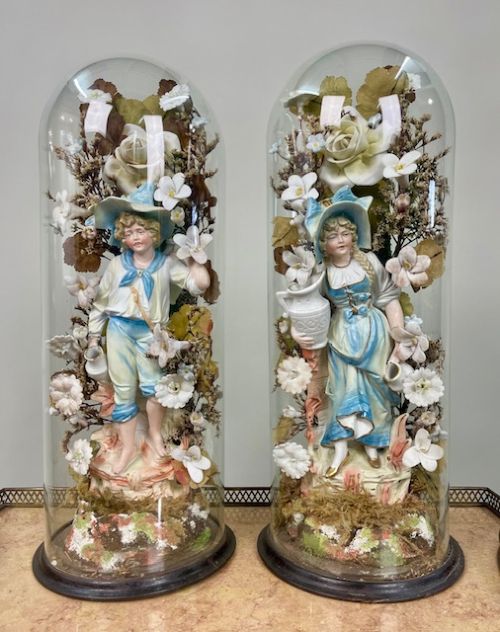
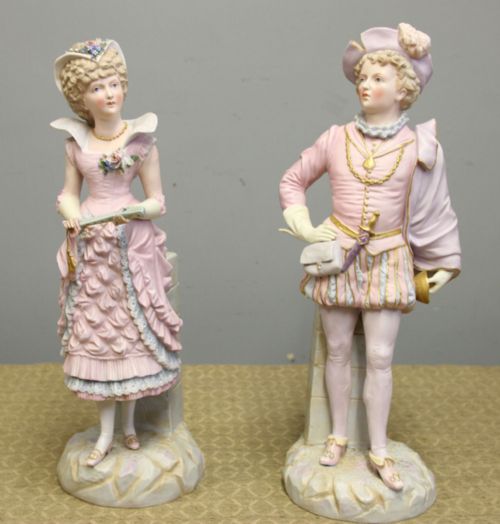


Victorian Bisque Porcelain Pair
These victorian bisque porcelain pair pieces are unglazed ceramic figures capturing the detailed, matte elegance favoured by nineteenth-century interior decorators.
Victorian Bisque Porcelain Pair
A victorian bisque porcelain pair consists of unglazed ceramic figures produced in matched left and right orientations for mantelpieces and parlour displays. You will most frequently encounter nineteenth-century figurines depicting romantic figures, fisher folk, and children.
The selections span English, French, and Bohemian workshops, ranging from large cabinet pieces to piano babies and wall plaques. These ornaments rely on sculptural form and delicate surface work rather than glossy glazes to create their visual impact.
Makers utilised both standard bisque and parian porcelain to achieve different surface textures and levels of finish. Most pieces date from the mid-nineteenth century through to the early twentieth century, reflecting shifting revivalist tastes.
How They Were Made
Many items incorporate gold leaf, enamel, paint, and pigment applied over the fired bisque body to highlight costume details and accessories. Gilt accents were often added and refired at a lower temperature to secure the metallic finish against the matte ceramic.
Victorian Bisque Porcelain Pair Retail Price Guide 2026
Typical asking prices for victorian bisque porcelain pair among the pieces listed under this phrase on Sellingantiques today, from the lower quarter to the upper quarter. They describe what is for sale here now, not the wider market.
Listings feature pieces from the nineteenth century through to the early twentieth century, spanning Victorian, Art Nouveau, and Rococo Revival styles.
What Varies in Quality
The crispness of the modelling sets the standard for these figures, separating sharp hand-tooled details from softened forms born of worn production moulds. Superior examples retain fine anatomical definition and delicate texturing in fabrics and foliage.
Painted and gilded ornamentation varies considerably, with finer pieces displaying precise brushwork and controlled use of gold leaf rather than heavy, slapdash colour application. The complexity of the subject, such as multi-figure groups or intricate lace work, also dictates the original maker's skill level.
Letu and Mauger Paris·Minton·Royal Dux·Vion et Baury
The Victorian Bisque Porcelain Pair Glossary
- Bisque porcelain
- Unglazed ceramic ware fired once to vitrify the body and leave a matte, porous surface resembling marble. This finish was widely favoured in the nineteenth century for portrait busts and decorative figures.
- Parian porcelain
- A fine-grained type of biscuit porcelain developed to imitate carved marble. It contains a higher proportion of feldspar, which melts during firing to create a translucent, creamy appearance.
- Piano baby
- A small ceramic figure, frequently made of bisque porcelain, designed to sit on the drape of a grand piano in Victorian parlours. These figures often depict infants or children in playful poses.
- Gilt
- A thin layer of gold applied to the surface of porcelain as decoration. It adds metallic contrast to the matte white bisque body.
Victorian Bisque Porcelain Pair: Frequently Asked Questions
What is bisque porcelain?
Bisque porcelain is unglazed ceramic ware that has been fired once to create a matte, porous surface. It lacks the shiny finish of traditional glazed pottery.
This material allows fine sculptural details to remain crisp and distinct without being obscured by glossy coatings.
How do I clean these figures?
Clean these delicate figures gently with a soft, dry brush to remove dust from the unglazed crevices. Avoid using water or liquid cleaners, which can stain the porous ceramic surface.
Take care around painted or gilded highlights, as harsh friction can wear away surface pigments.
Were these always sold in pairs?
Many nineteenth-century decorative figures were produced as matched pairs to flank fireplace mantels, mirrors, or credenzas. Manufacturers designed them to mirror each other in composition and subject matter.
Single figures and group pieces were also common, but matched pairs formed a staple of Victorian interior display.
How do I date a bisque figure?
Dating relies on stylistic clues such as costume details, base markings, and the specific manufacturing technique used. Victorian examples often show softer Rococo Revival influences or naturalistic nineteenth-century attire.
Factory stamps or incised numbers on the underside can sometimes narrow down the period of manufacture.