

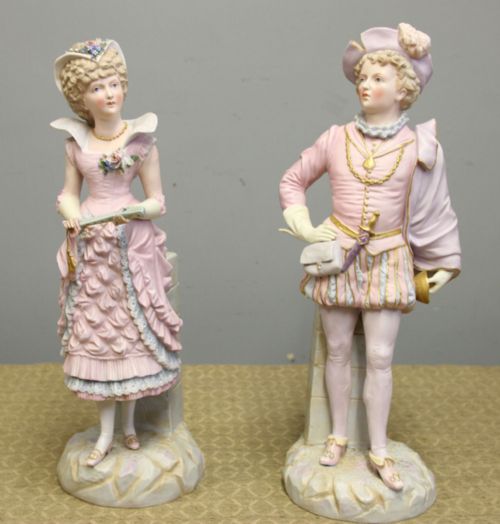


Pair Pastel Ceramic Figures
Pair pastel ceramic figures bring nineteenth-century figurative charm to a mantelpiece, offering delicate porcelain modelling and soft washes of historic colour.
Pair Pastel Ceramic Figures
When searching for pair pastel ceramic figures, a buyer encounters nineteenth-century porcelain and bisque figurines, sculptures, candlesticks, and vases. These objects typically depict pastoral subjects such as fisher folk, shepherds, shepherdesses, and gentlefolk in historical attire.
The versions most frequently met on this page originate from nineteenth-century France and Germany, encompassing Victorian and Rococo Revival styles. Makers such as Sitzendorf and Vion and Baury dominate the selection, often presenting symmetrical pairs designed for domestic display.
Forms range from standard figurines to functional pieces like figural candlesticks and chariot vases. The overarching aesthetic relies on soft enamel palettes, polychrome decoration, and occasional touches of gold leaf.
How they were made
Surface decoration involved the application of enamel paint and polychrome pigments, sometimes accented with gilt or gold leaf. Firing kilns set the colours and glazes, creating the characteristic soft pastel finish found across the nineteenth-century examples.
Pair Pastel Ceramic Figures Retail Price Guide 2026
Typical asking prices for pair pastel ceramic figures among the pieces listed under this phrase on Sellingantiques today, from the lower quarter to the upper quarter. They describe what is for sale here now, not the wider market.
Periods represented on this page stretch from around eighteen-seventy through the early twentieth century.
What varies in quality
The distinction between standard examples and the finest pieces lies in the crispness of the modelling and the delicacy of the hand-painted details. Superior items retain fine facial expressions, intricate fingers, and elaborate moulded elements without blurring or heavy-handed paint application.
The presence of established factory marks, such as those from continental European potteries, adds tangible weight to a piece's provenance. Scale also plays a role, with larger, more ambitious sculptures demonstrating greater technical mastery by the potter.
Volkstedt Porcelain·Vion and Baury·Sitzendorf
The Pair Pastel Ceramic Figures Glossary
- Bisque porcelain
- Unglazed white porcelain that has been fired once, offering a matte, marble-like texture ideal for detailed figurative sculpture. This finish absorbs light differently than glazed ceramics.
- Polychrome
- Decoration employing multiple distinct colours, typically applied by hand to ceramic surfaces. This technique brings depth and realism to historical garments and natural settings.
- Rococo Revival
- A nineteenth-century design style emulating the ornate, asymmetrical curves and shell motifs of the eighteenth-century French Rococo movement. It frequently appears on ornamental bases and scrolling cartouches.
- Gilt
- A thin layer of gold applied to the surface of porcelain or metal mounts for ornamentation. It highlights specific architectural or sculptural details.
- Figural candlestick
- A decorative candlestick incorporating human or animal figures into its structural support. These items served both functional lighting and ornamental purposes in period interiors.
Pair Pastel Ceramic Figures: Frequently Asked Questions
What subjects do these figures show?
The listings feature pastoral and domestic themes, including fisher folk, shepherds with shepherdesses, gardeners, and ladies with gentlemen. These subjects reflect nineteenth-century romanticised views of rural life.
Such figures were designed to add narrative interest and decorative elegance to formal rooms, mantelpieces, and display cabinets in Victorian homes.
How do I identify French and German pieces?
Continental European pieces often reveal their origins through distinct modelling styles and factory marks impressed or painted on the base. French works from makers like Vion and Baury frequently utilise bisque porcelain for monumental effect.
German factories such as Sitzendorf and Volkstedt tend toward colourful Rococo Revival designs incorporating elaborate floral bases and gilt highlights.
Were these figures purely decorative?
While most pieces function as standalone figurines or sculptural ornaments, some were integrated into useful objects. Examples include figural candlesticks for illumination and chariot vases for floral displays.
This combination of utility and sculptural artistry made them popular centrepieces for nineteenth-century interior decoration.
What distinguishes bisque from glazed porcelain?
Bisque porcelain is fired without a glaze, leaving a matte, porous surface that resembles carved marble. Glazed porcelain receives a glassy coating before firing, producing a reflective and sealed finish.
Nineteenth-century makers often chose bisque to highlight subtle anatomical details and facial expressions in sculptural groups.