



Pink Bisque Porcelain Figurines
Pink bisque porcelain figurines bring charming nineteenth-century character to a room, offering unglazed surfaces and delicate Victorian subjects.
Pink Bisque Porcelain Figurines
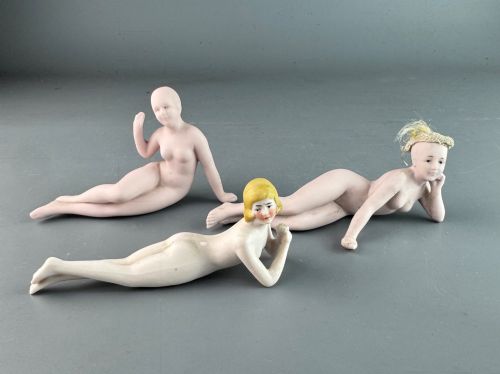
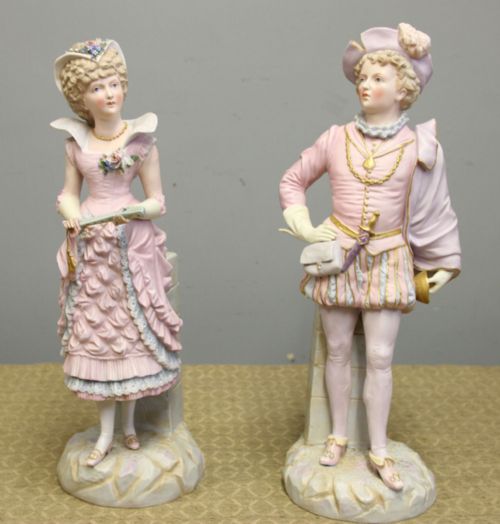
When you search for pink bisque porcelain figurines, you are looking at decorative figures and centrepieces shaped during the Victorian era and the early twentieth century. These pieces predominantly take the form of young girls, water carriers, and large groups dressed in historic or orientalist attire.
The versions you are most likely to meet on this page hail from the late nineteenth century up to nineteen-ten, spanning Victorian, Art Nouveau, and Rococo Revival styles. They appear singly or in pairs, often displaying soft pink tones alongside enamel and gold leaf accents.
How they were made
Workshops utilised moulds to cast these large figures and centrepieces, capturing intricate folds in clothing and elaborate hairstyles before firing the ceramic material at high temperatures.
Pink Bisque Porcelain Figurines Retail Price Guide 2026
Typical asking prices for pink bisque porcelain figurines among the pieces listed under this phrase on Sellingantiques today, from the lower quarter to the upper quarter. They describe what is for sale here now, not the wider market.
Several young girls on this page carry heavy water jugs uphill without spilling a drop of porcelain.
What varies in quality
The distinction between ordinary and superior pieces rests upon the crispness of the moulding and the delicacy of the hand-painted details on the bisque surface. Finer examples display cleanly rendered facial expressions and precise application of enamel and gold leaf.
Scale and ambition also divide the range, as monumental groups and large paired centrepieces demand greater technical skill in firing unglazed ceramic without distortion than smaller single figurines.
Vion et Baury·Royal Dux
The Pink Bisque Porcelain Figurines Glossary
- Bisque porcelain
- Unglazed ceramic fired once to vitrify the body while retaining a porous, matte texture. This finish absorbs light differently than glossy glazes, highlighting sculptural contours.
- Enamel
- Opaque vitreous composition fused to the surface of the porcelain. It provides vibrant colour blocks on garments and accessories.
- Gold leaf
- Extremely thin sheet metal applied to highlights on the figures. It adds metallic contrast to the matte pink bisque body.
- Rococo revival
- A nineteenth-century design style drawing on eighteenth-century French motifs. It favours asymmetrical curves, floral garlands, and theatrical poses.
- Centrepiece
- A large decorative object designed for the middle of a table or sideboard. These often incorporate shell motifs or multiple figures.
Pink Bisque Porcelain Figurines: Frequently Asked Questions
How do I clean pink bisque porcelain?
Cleaning requires dry methods because the unglazed bisque surface easily absorbs moisture and dirt into its porous body. A soft, clean artist's brush gently sweeps away dust without damaging delicate fingers or painted details.
Water and liquid cleaners should be avoided entirely to prevent staining the matte ceramic material and lifting any applied enamel or gold leaf.
Where were these figures displayed?
Victorian households placed these decorative items on mantelpieces, central tables, and large sideboards where guests could admire them. Pairs of figures often balanced the decor of a formal drawing room.
Larger centrepieces served as focal points for dining tables, sometimes incorporating shell shapes or multiple interrelated characters in elaborate scenes.
How can I tell the period?
Dating relies on stylistic clues, manufacturer marks stamped into the ceramic base, and the characteristic palette of the era. Victorian and Rococo Revival pieces feature ornate, flowing drapery and classical poses.
Items from nineteen hundred onwards often incorporate Art Nouveau curves or specific factory identifiers like those associated with Bohemian and French workshops.