

Victorian Bird Artwork
Victorian bird artwork brings together detailed studies and natural history illustrations that capture the fascination with wildlife and ornithology.
Victorian Bird Artwork
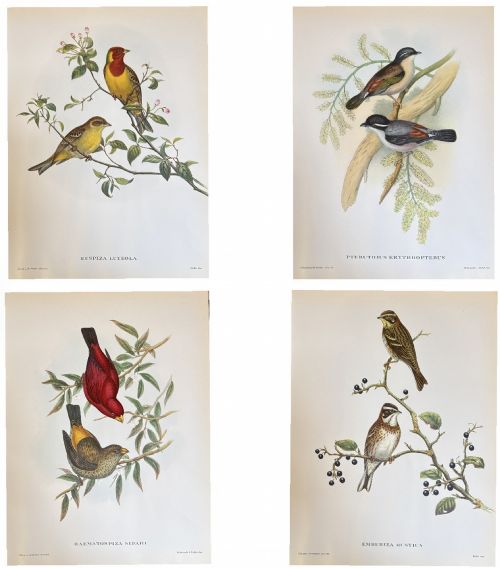
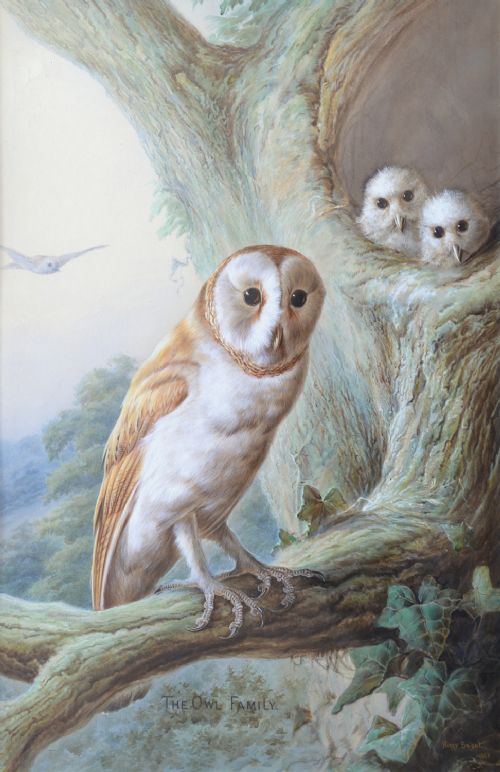
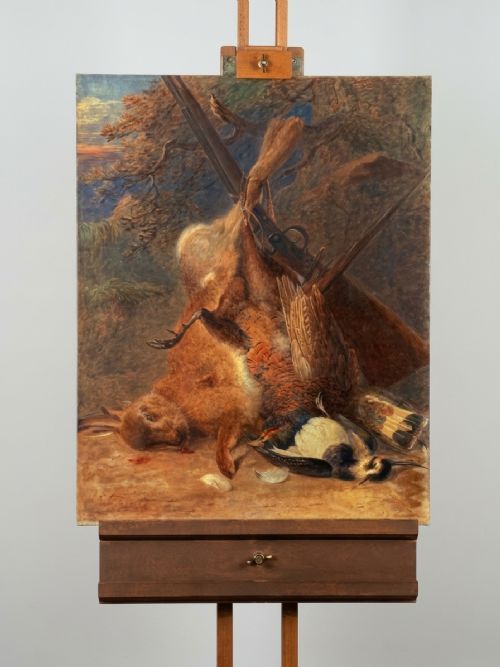
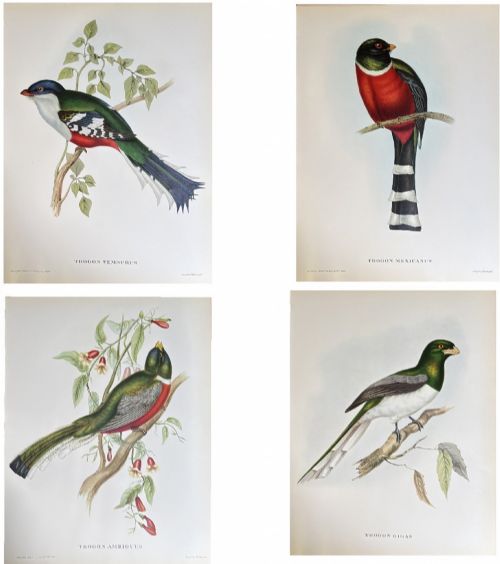
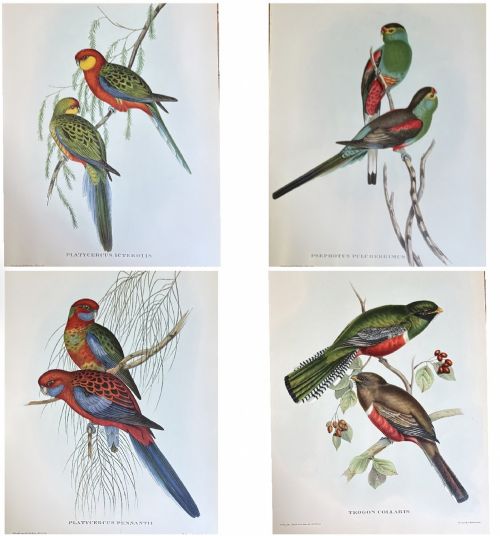
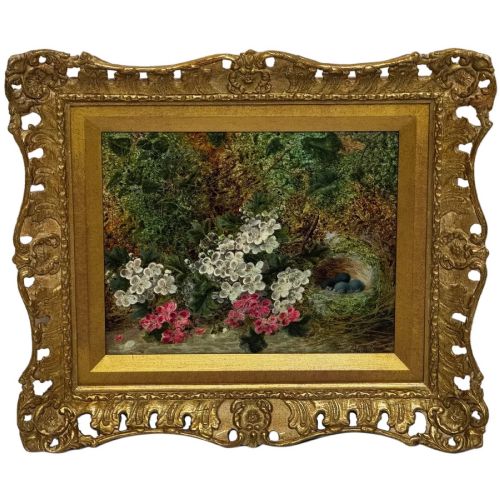
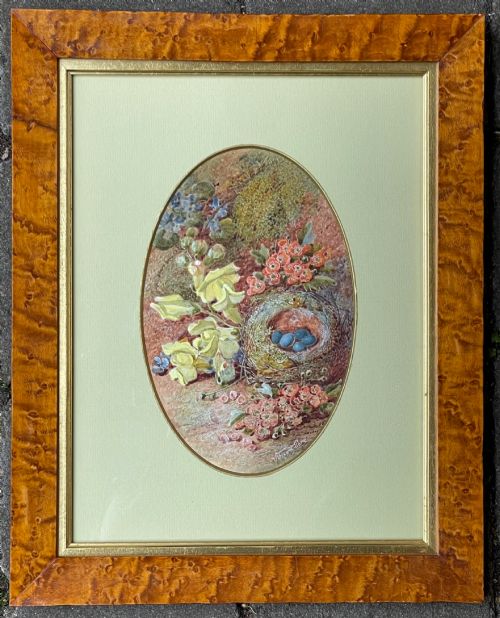
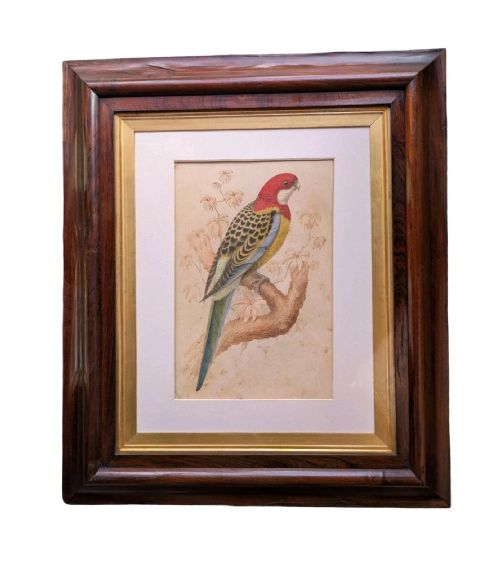
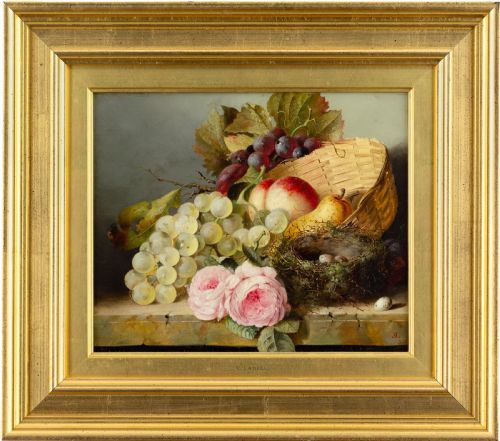
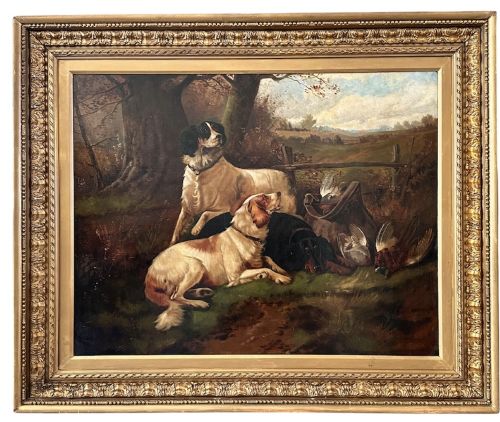
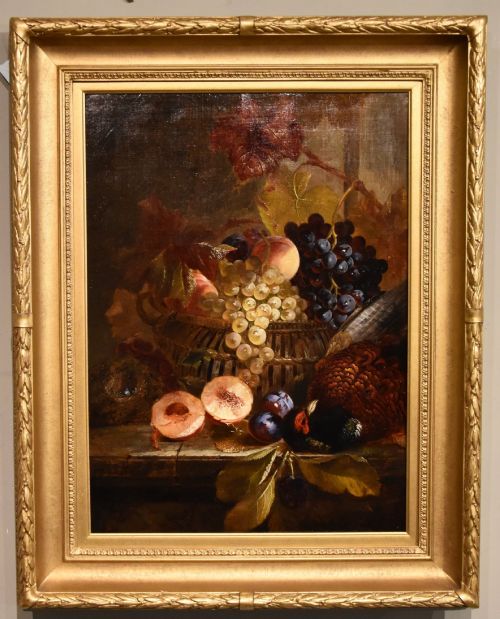
Victorian bird artwork encompasses a variety of forms, ranging from detailed ornithological prints and lithographs to intimate watercolour paintings and oil canvases. Buyers searching this phrase will find natural history plates, sporting art, and still life compositions featuring nests and plumage.
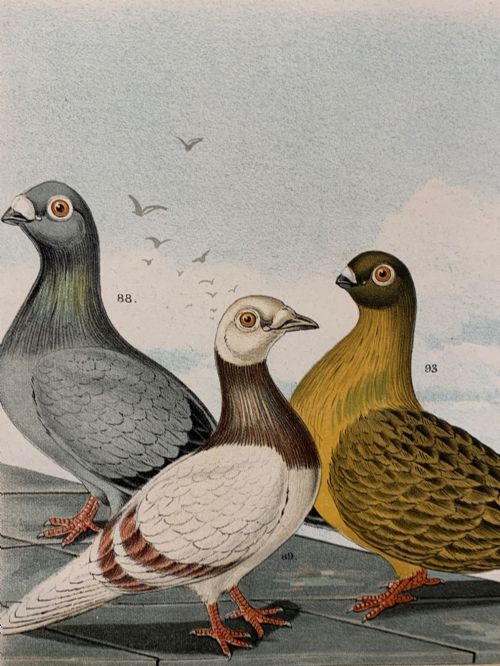
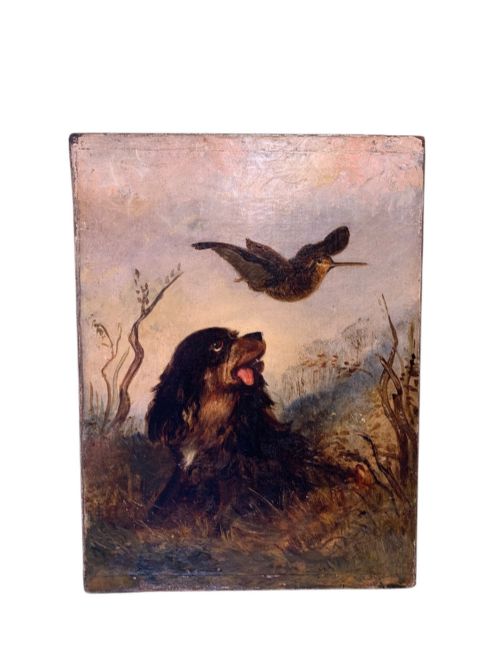
The pieces on this page lean heavily towards nineteenth-century watercolours and framed prints, alongside oils depicting game birds, pigeons, and exotic species like parrots and macaws. These works reflect both scientific curiosity and domestic decoration during the period.
Materials and methods
Artists and illustrators of the period utilised paper, card, and canvas as supports, applying mediums such as watercolour, bodycolour, ink, and oil paint. Many prints employ lithography or engraving techniques to reproduce detailed plumage and ornithological studies.
Framing often involves wood, sometimes finished with gold leaf or gilt, protecting works on paper under glass while oil paintings remain on canvas or panel.
Several pieces combine avian subjects with unexpected companions, including monkeys, fruit baskets, and sprawling game bags.
Judging the work
Quality in these pieces rests upon the precision of the draughtsmanship and the accuracy of the anatomical and botanical observation. Skilled handling of colour in feathers and foliage distinguishes finer watercolours and oils from more basic decorative output.
The prominence of the artist, the crispness of the printing in lithographs and engravings, and the preservation of the original paper or canvas surface also dictate the standing of a piece.
George Sydney Shepherd·Oliver Clare·Vincent Clare·Edward Ladell·Michelangelo Meucci·John Sargent Noble·William Henry Ward·Frederick Tatham·William Andrews Nesfield·Harry Bright·Eloise Harriet Stannard·William Stephen Coleman·Thomas Blinks·Arthur Wardle·Edward Lear·John Sherrin·George Lance
The Victorian Bird Artwork Glossary
- Lithography
- A planographic printing process utilising stone or metal plates to produce multiple impressions. It became widely used for colour prints and natural history plates in the nineteenth century.
- Bodycolour
- Watercolour mixed with a dense white pigment to create an opaque finish. This technique allows for heavier highlights on feathers and flowers.
- Ornithological study
- A scientific or artistic rendering of birds intended to record species characteristics. These works often show detailed attention to plumage and beak structure.
- Still life
- An artwork depicting inanimate subject matter, frequently incorporating natural elements such as bird's nests, eggs, fruit, and blossoms upon a mossy bank.
Victorian Bird Artwork: Frequently Asked Questions
What subjects appear in Victorian bird artwork?
These works display a wide range of subjects, including scientific illustrations of tropical birds, game birds associated with sporting art, and still life scenes featuring nests and eggs.
Artists also recorded domesticated varieties like racing pigeons alongside exotic parrots and native garden species.
How were these bird artworks originally displayed?
Many works on paper were gathered into bound volumes or portfolios before being separated and framed for domestic interior decoration.
Oil paintings and larger watercolours were typically framed in wood, often with gilt details, to hang in Victorian reception rooms and parlours.
Are these pieces original paintings or prints?
The category includes both unique hand-painted works in oil and watercolour and mechanical reproductions such as lithographs and engravings.
Multi-plate sets of prints were common for natural history publications, whereas watercolours and oils represent singular creations by individual artists.
How do I care for antique bird prints and paintings?
Works on paper require protection from direct sunlight to prevent fading of the watercolour pigments and printed inks.
Maintaining stable humidity levels helps preserve both the paper supports and the wooden frames housing the artwork.