


Victorian Architectural Print
A victorian architectural print brings nineteenth-century drawing offices, ancient ruins and grand buildings straight onto the wall.
Victorian Architectural Print
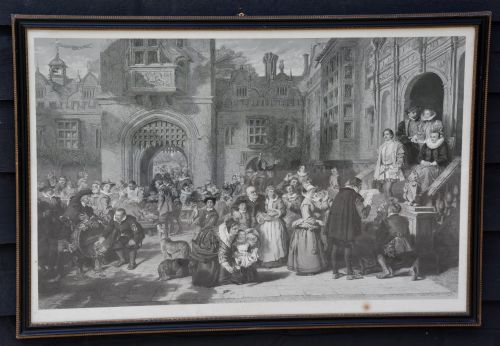
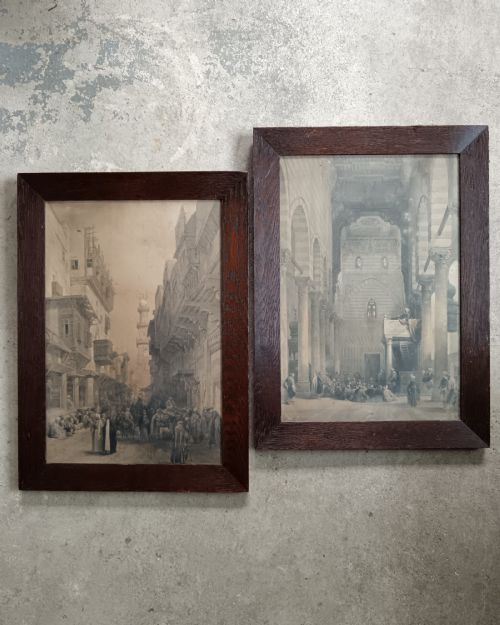
A victorian architectural print captures buildings, plans and historic facades created during the nineteenth century. These works appear as lithographs, engravings and hand-coloured etchings, often mounted behind glass within original wooden frames such as gilt wood or Hogarth styles.
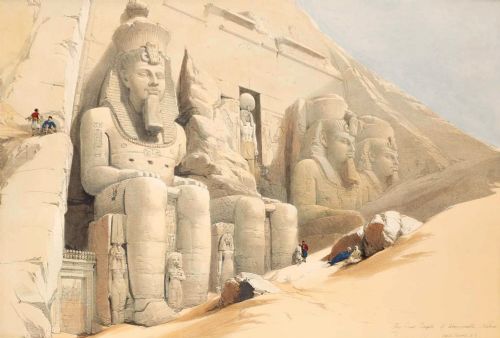
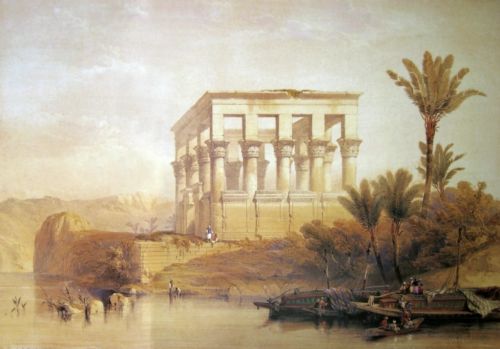
Subjects range from precise French industrial lithograph plans and school design exercises to expansive views of cathedrals, palaces and foreign antiquities. The selection also includes original pen and ink drawings of churches alongside watercolour streetscapes.
Most pieces derive from the nineteenth century, spanning decades from the eighteen-sixties through to eighteen-ninety. They offer a direct window into historical draughtsmanship and topographical recording.
Materials and techniques
Works rely on paper supports carrying ink, watercolour or lithographic ink, sometimes enhanced with hand-colouring. Engravings and etchings require metal plates incised with fine lines, whilst lithographs use prepared stone surfaces to transfer complex architectural details.
Frames are constructed from timber including oak, pine and gilt wood, frequently incorporating gold leaf finishes and protective glass panels. These surrounds range from simple mouldings to dedicated cabinetmaker housings.
One school drawing preserves the precise architectural efforts of H. H Wyatt, recorded as aged seventeen at the South Kensington School.
Assessing quality and execution
Quality rests upon the precision of the draughtsmanship and the crispness of the impression on the paper. Finer prints exhibit sharp architectural lines and controlled hand-colouring that respects the underlying ink work without obscuring fine details.
The integrity of the framing also influences the overall standard. Original period frames, such as designated Hogarth mouldings or maker-stamped surrounds, preserve the historical context far better than later replacements.
David Roberts RA·Louis Haghe·T.A Prior·H. H Wyatt·Samuel Sidley·R.P. Phillimore·Tom M. Hemy·Benjamin Taylor & Sons·John Scott Russell·Joseph Hansom·Edward Burrows·H. Alden & Co.
The Victorian Architectural Print Glossary
- Lithograph
- A print produced by drawing on a limestone or metal plate with a greasy medium so that ink adheres only to the drawn areas. This technique allowed for faithful reproductions of detailed architectural plans and drawings.
- Engraving
- A print made by cutting lines directly into a metal plate with a sharp tool called a burin. The resulting impressions are exceptionally sharp and durable.
- Etching
- A print created by using acid to cut into the unprotected parts of a metal plate to hold the printing ink. Artists used this method to achieve fluid, expressive architectural lines.
- Gilt wood
- Wood coated with a thin layer of gold leaf or metallic paint. This finish frequently appears on nineteenth-century picture frames to add decorative prominence.
- Hogarth frame
- A distinctively profiled wooden picture frame with a rounded inner edge, popular during the eighteenth and nineteenth centuries. These frames often feature dark, polished finishes.
Victorian Architectural Print: Frequently Asked Questions
What is a victorian architectural print?
A victorian architectural print is a nineteenth-century paper artwork depicting buildings, technical plans or urban landscapes. These pieces include engravings, lithographs and etchings produced during the Victorian era.
They record everything from grand Gothic cathedrals and royal palaces to precise French industrial designs and foreign antiquities.
How should I hang these prints?
These works require hanging away from direct sunlight to protect the paper and any watercolour pigments from fading. Using sturdy picture hooks suited to the weight of the wood frame ensures secure wall placement.
Pairing them with appropriate wall space allows the fine ink lines and original frames to stand out clearly.
Are the frames original?
Many listings retain their period frames, such as original Hogarth mouldings, gilt wood surrounds or maker-stamped housings from the nineteenth century. These housings often show age-appropriate wear that matches the paper artwork inside.
Checking the listing details confirms whether a piece retains its historic mount or frame.
How do I date a print?
Dating relies on visible publication dates, artist signatures, paper types and stylistic clues tied to the nineteenth century. References to specific periods like the Gothic Revival or specific years provide a clear chronological window.
Inscribed details on the paper, such as student ages or exhibition years, also help pinpoint the exact era.