





Victorian Architectural Mantel Clock
A Victorian architectural mantel clock builds miniature stone and metal facades for the antechamber or parlour.
Victorian Architectural Mantel Clock
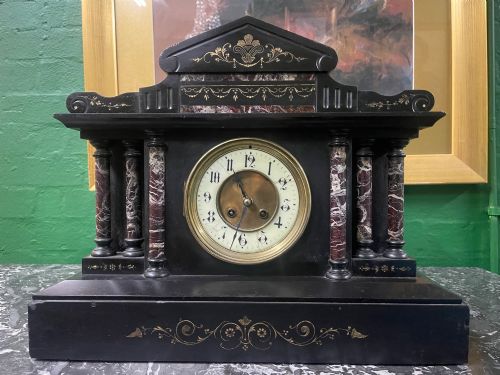
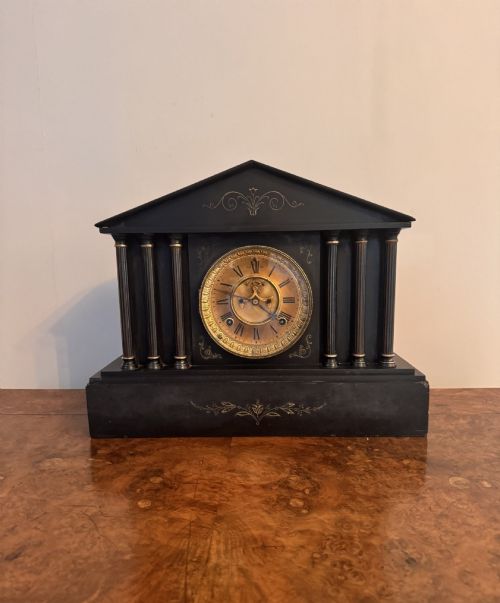
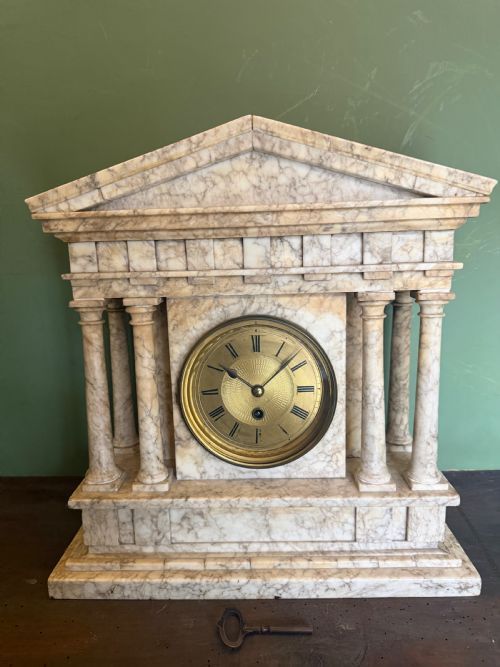
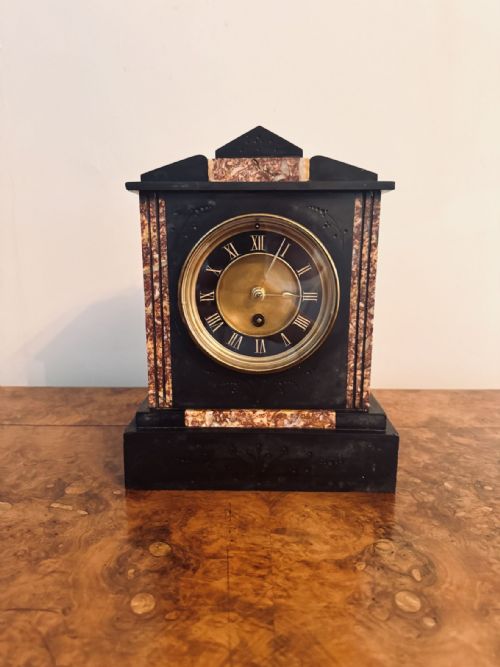
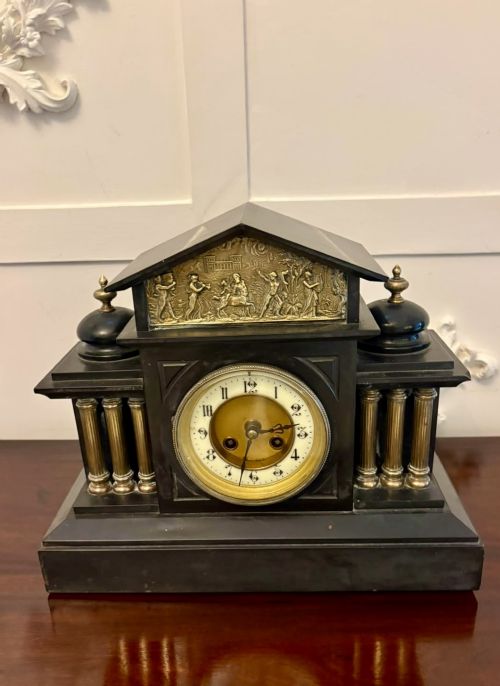
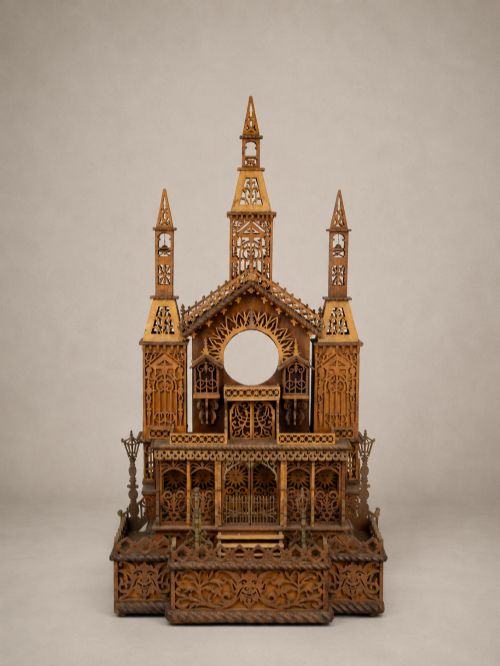
A Victorian architectural mantel clock takes the vocabulary of classical, Gothic, or Egyptian revival building design and scales it down to sit upon a fireplace. These heavy case forms draw inspiration from porticos, cathedrals, and monumental masonry rather than simple domestic cabinetry.
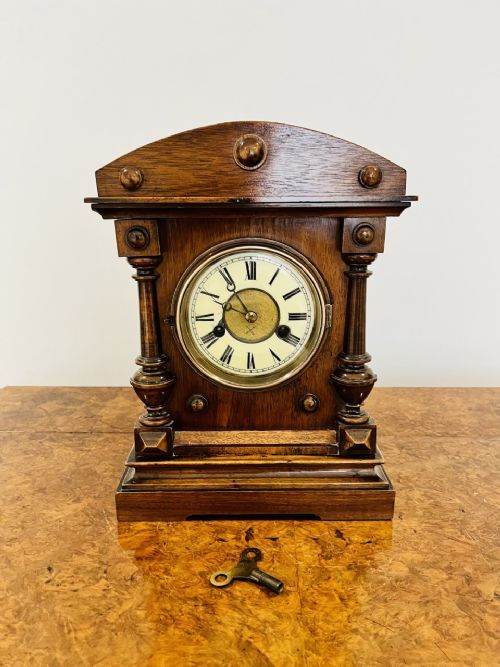
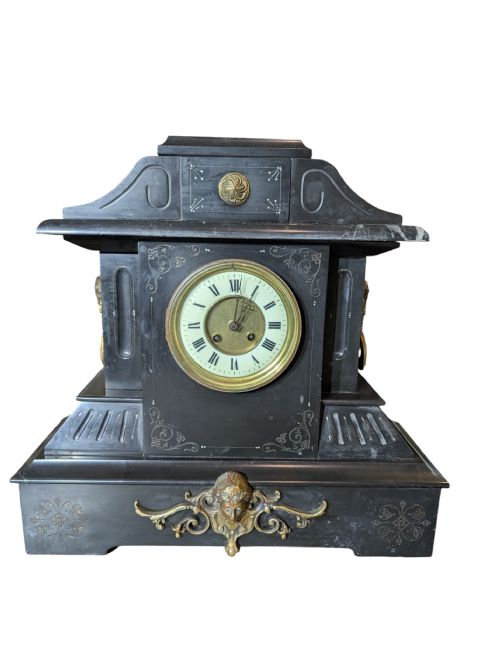
The versions most commonly found here pair solid stone bodies with patinated bronze mounts, enamel dials, and glass bezels. Makers construct these heavy housings from dense materials like black slate, rouge marble, and walnut to mimic solid masonry and timber construction.
The selection ranges from restrained geometric portico timepieces to elaborate multi-piece garnitures complete with matching side ornaments. These pieces belong firmly to the nineteenth century, spanning decades from the eighteen-sixties through to the turn of the twentieth century.
How they were made
Craftsmen cut, polished, and assembled heavy slabs of natural black slate, Belgian slate, and variegated marble to build the primary carcass of the clock. They mounted cast bronze, gilt brass, and enamel details onto these stone housings to echo architectural friezes and pediments.
Makers housed mechanical eight-day movements, twin fusee systems, and striking mechanisms behind glass panels and heavy hinged bezels. Skilled workers also applied intricate inlay, wood veneers, and ebonised finishes to walnut and oak cases where stone was absent.
Victorian Architectural Mantel Clock Retail Price Guide 2026
Typical asking prices for victorian architectural mantel clock among the pieces listed under this phrase on Sellingantiques today, from the lower quarter to the upper quarter. They describe what is for sale here now, not the wider market.
The selection includes architectural forms inspired by classical revival, Gothic design, and Aesthetic movement sensibilities.
What varies in quality
The standard of a Victorian architectural mantel clock rests upon the crispness of its stonework, the depth of its marble polish, and the heft of its metal mounts. Superior pieces display finely chiseled bronze enrichment and balanced proportions that truly resemble grand buildings.
Internal mechanics separate standard production from exceptional workshop output, with robust twin fusee movements and signed dial plates marking the upper tiers. The integration of complex calendar functions, striking trains, and original matching garniture urns elevates the standing of a piece.
Philippes Paris·Baby and Jannings·D. Munsey of Cambridge·L.Donne Birchin Lane·Ferdinand Barbedienne
The Victorian Architectural Mantel Clock Glossary
- Architectural mantel clock
- A timepiece whose case mimics the structural facade of a building, temple, or cathedral. These items utilise pediments, columns, and heavy stone plinths.
- Garniture
- A matching set of ornamental pieces designed to sit together on a mantelpiece, usually comprising a central clock flanked by two matching vases or urns.
- Slate
- A fine-grained metamorphic rock used extensively for Victorian clock cases due to its ability to take a smooth, matte black polish that imitates high-grade basalt.
- Fusee
- A conical pulley used in clock movements to maintain equal power as the mainspring unwinds. This mechanism improves the timekeeping accuracy of the movement.
Victorian Architectural Mantel Clock: Frequently Asked Questions
How do I wind a Victorian mantel clock?
Insert the appropriate winding key into the dial holes and turn gently until resistance is felt. Care must be taken not to over-wind the mainspring.
Most mechanical movements require this attention every eight days to maintain accurate timekeeping and striking functions.
Where should I place an architectural clock?
These heavy marble and slate objects require a sturdy, level surface capable of supporting considerable weight. Mantelpieces and heavy sideboards provide suitable foundations.
Avoid areas subject to direct sunlight or damp conditions to protect the delicate enamel dials and metal patination.
What is a twin fusee movement?
A twin fusee movement utilises two separate conical drums and chains to power the timekeeping train and the striking train independently. This complex mechanism delivers even force to the gears.
Clocks featuring this setup represent a higher tier of nineteenth-century horological craftsmanship.
How do I date a marble mantel clock?
Dating relies on stylistic clues, case materials, and signatures stamped on the movement backplates or dials. The prevalence of specific revivals, such as Gothic or Egyptian motifs, points to particular decades.
Makers' marks and registration stamps further narrow the period of manufacture across the nineteenth century.