


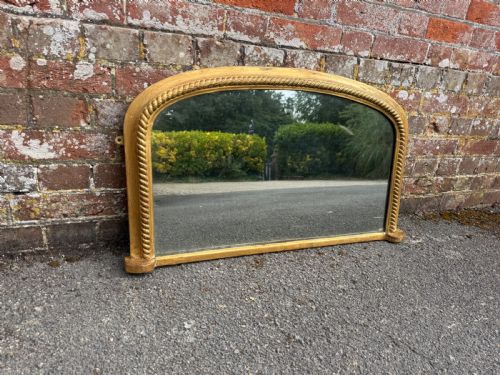
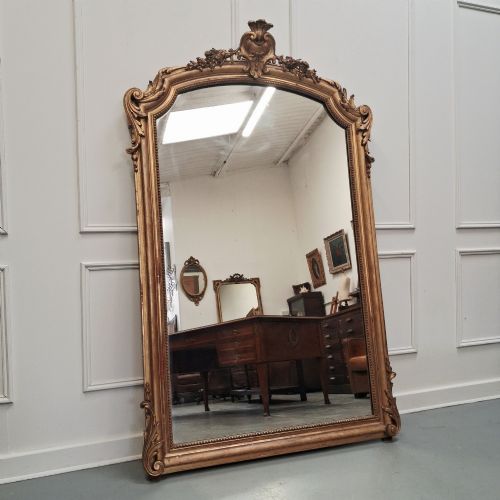
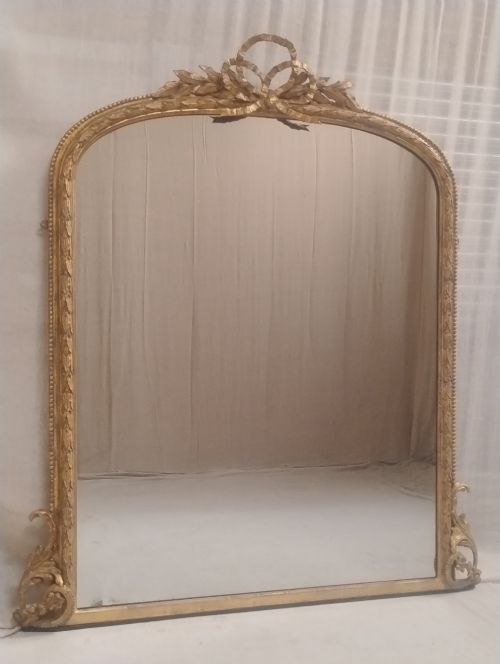
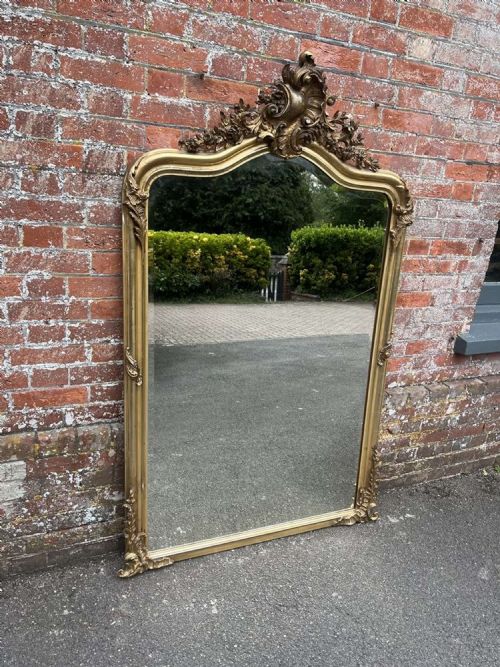
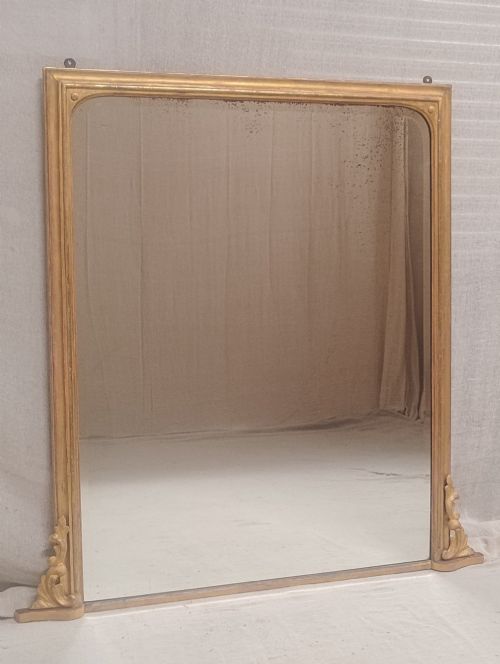
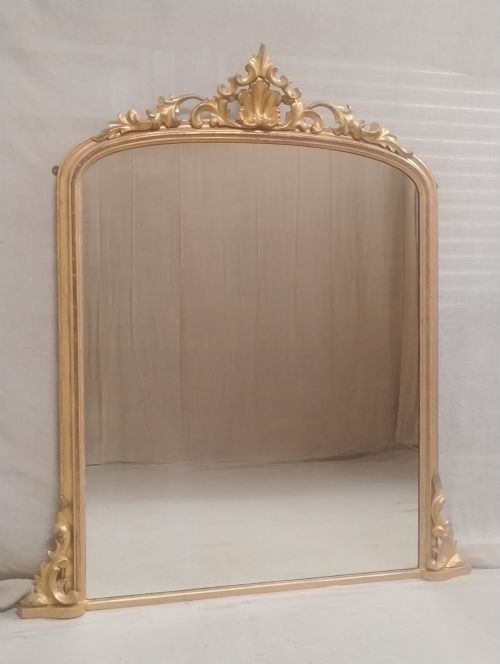
Victorian Arched Overmantel
When you search for a victorian arched overmantel, you are looking at substantial wall mirrors designed to sit directly above a fireplace mantel.
Victorian Arched Overmantel
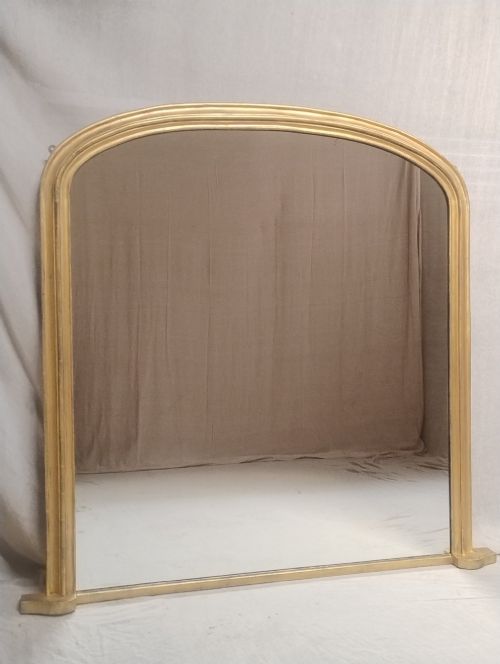
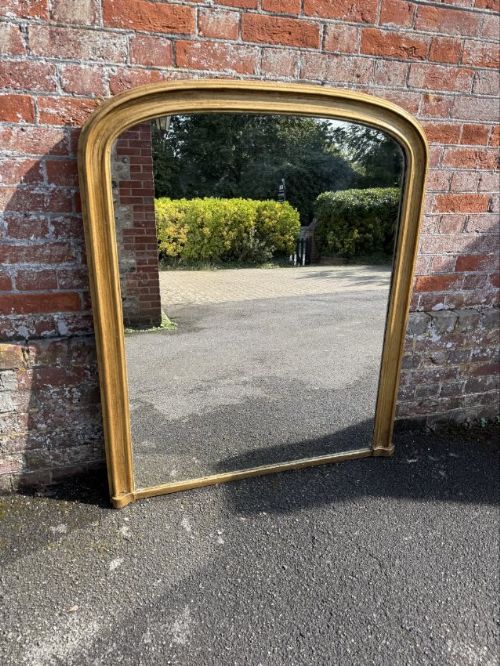
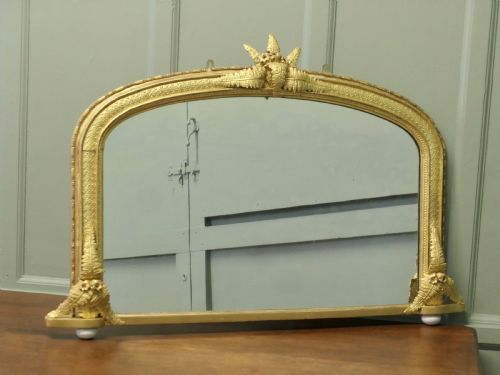
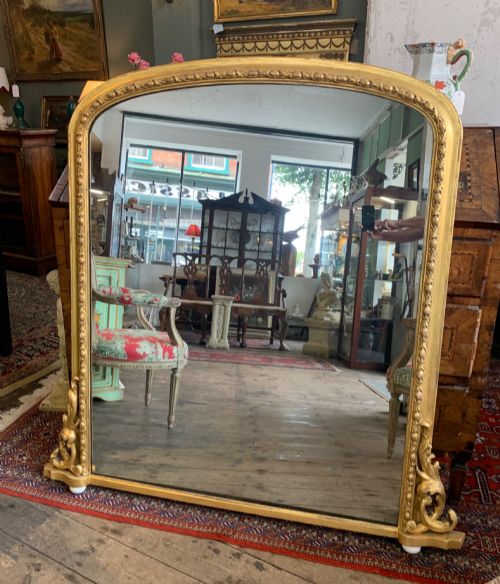
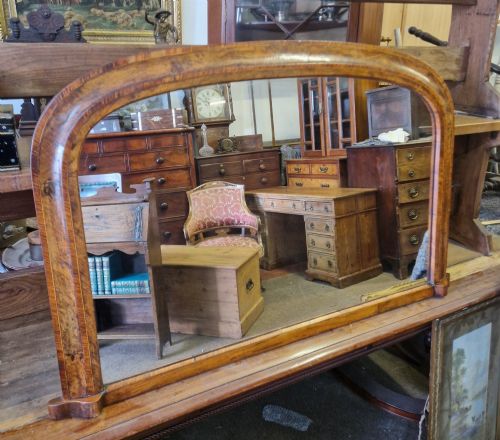
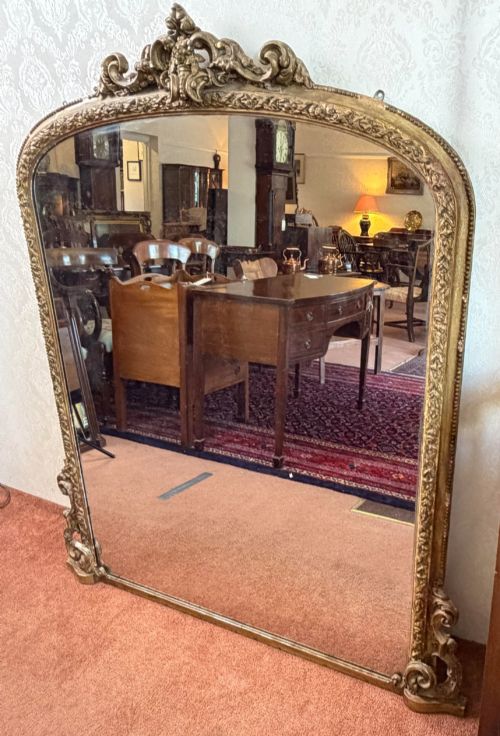
A victorian arched overmantel is a large wall mirror created during the nineteenth century, most frequently encountered in styles spanning from the 1850s to the 1900s. These pieces include English and French designs, often featuring distinctive arched, shaped, or crested tops intended to draw the eye upwards in a reception room.
The objects seen here range from large giltwood statements to walnut and oak framing, with many examples originating from the 1860s, 1870s, and 1880s. They function primarily as overmantel mirrors or large wall mirrors designed to reflect light and amplify the sense of space within an interior.
How they were made
Makers constructed these frames from carved wood such as oak or walnut, frequently applying layers of gesso to build up complex relief ornamentation. This foundation received finishes of gold leaf, giltwood, or paint to achieve the bright reflective surfaces characteristic of the period.
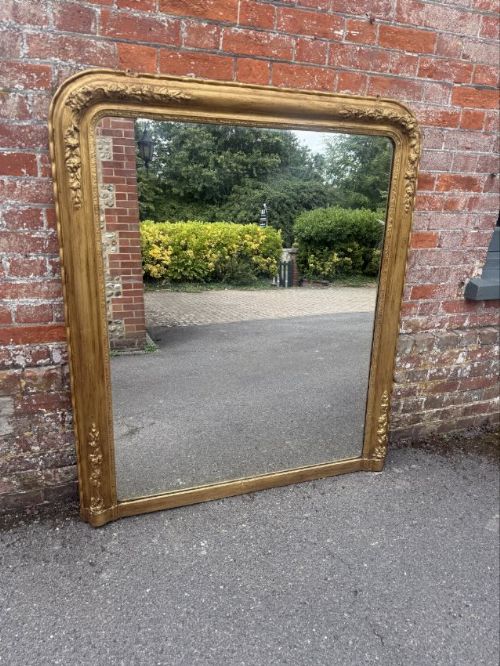
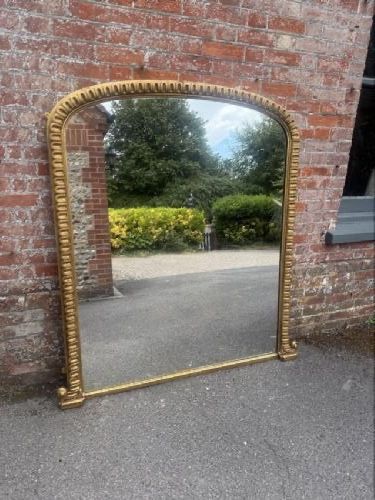
Glaziers set mirror glass into the timber and gesso frames, occasionally incorporating decorative elements like rope twist, tulip, or fern leaf carvings directly into the wooden mouldings.
Listings feature mirror glass, gesso, giltwood, and wood across periods from the 1850s to 1900, with French Chateau and Rococo Revival styles.
What varies in quality
The distinction between standard examples and the finest pieces lies in the crispness of the hand-carved wood and the depth of the gesso relief work. Superior items display finely articulated details such as rope twists or botanical motifs that remain sharp beneath the gilding.
The treatment of the frame corners and the original state of the gilding and mirror glass further separate ordinary production from exceptional statement pieces of the nineteenth century.
The Victorian Arched Overmantel Glossary
- Gesso
- A plaster-like mixture applied to wooden frames as a smooth base for gilding. It allows artisans to shape intricate relief decorations before applying gold leaf.
- Giltwood
- Timber coated with gold leaf or a gold-coloured finish. This material defines the bright, reflective appearance typical of nineteenth-century decorative mirrors.
- Overmantel
- A mirror or painting specifically scaled to hang on the wall directly above a fireplace mantelpiece. They were central fixtures in Victorian drawing rooms.
- Rope Twist
- A carved wooden moulding resembling the spiral strands of a rope. It adds a textured, nautical element to the frame border.
- Louis Philippe
- A French nineteenth-century style characterised by restrained, elegant curves and simpler frames than the heavier Rococo Revival.
Victorian Arched Overmantel: Frequently Asked Questions
Where should an overmantel mirror be hung?
These mirrors are traditionally positioned directly above a fireplace mantelpiece, where their generous proportions reflect light across the room.
They can also serve as large wall mirrors or leaner mirrors in principal reception spaces.
How do I date a Victorian mirror?
Dating relies on stylistic clues, framing materials, and construction techniques recorded across the nineteenth century. Details like gesso thickness and carving styles help distinguish 1850s work from later 1900 pieces.
Evidence from the period often points to specific decades such as the 1870s based on framing patterns.
What is the difference between giltwood and painted finishes?
Giltwood involves applying gold leaf over gesso and wood to create a bright, reflective metallic surface. Painted frames utilise pigments directly on the wood or gesso base for a more subdued tone.
Both finishes were utilised concurrently throughout the Victorian era.
Are these mirrors heavy?
Yes, due to their large wooden frames, thick gesso layers, and substantial mirror glass, these pieces possess considerable weight. Proper wall fixings are essential for secure installation.
Their substantial construction requires anchoring directly into wall studs or masonry.