



Victorian Amboyna Table
A victorian amboyna table brings distinctive burr-figured grain and rich golden-brown warmth to a room through refined nineteenth-century craftsmanship.
Victorian Amboyna Table
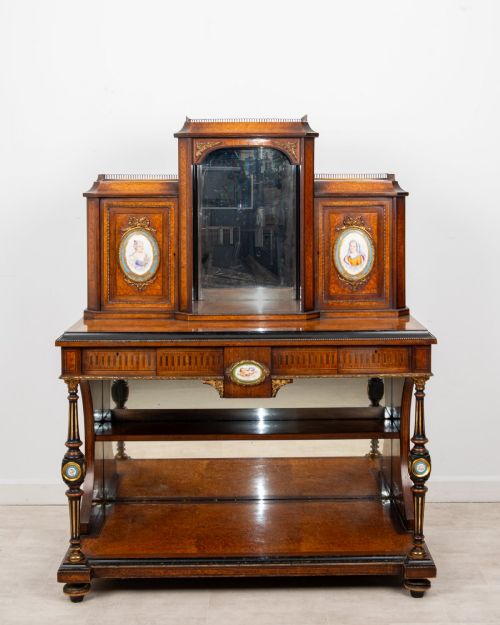
A victorian amboyna table encompasses a variety of forms designed for nineteenth-century domestic life, including centre tables, side tables, occasional tables, and writing desks. These pieces span from the mid-nineteenth century through the aesthetic movement and later decades of the era.
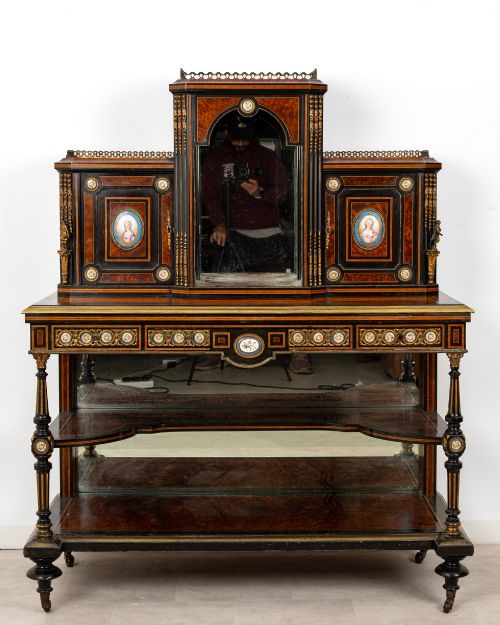
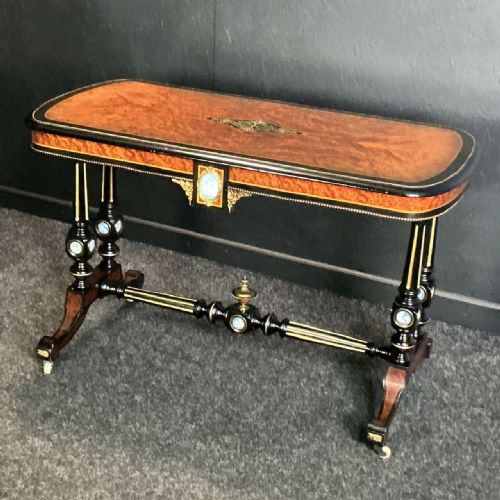
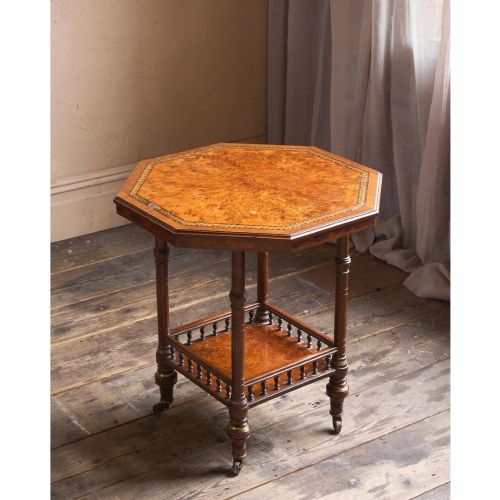
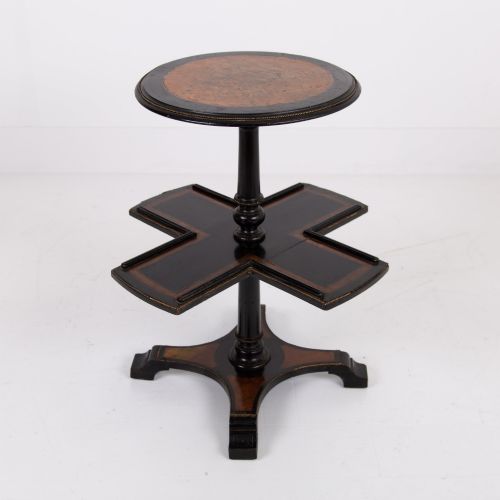
The version most frequently met on this page is the compact occasional table or freestanding lamp table, often combined with ebonised wood or parcel gilt details. Centre tables and card tables with veneered amboyna surfaces also appear regularly among the records.
Originating predominantly from British workshops alongside French furniture makers of the period, these tables showcase the high status of exotic timber imports during the Victorian age. The rich, mottled grain serves as the primary visual focus for each piece.
How they were made
Cabinet makers utilised amboyna primarily as a veneer, slicing the highly figured burr wood into thin sheets to display the characteristic mottled pattern over a secondary timber substrate. This veneer was frequently paired with ebonised wood frames to heighten the contrast of the golden-brown grain.
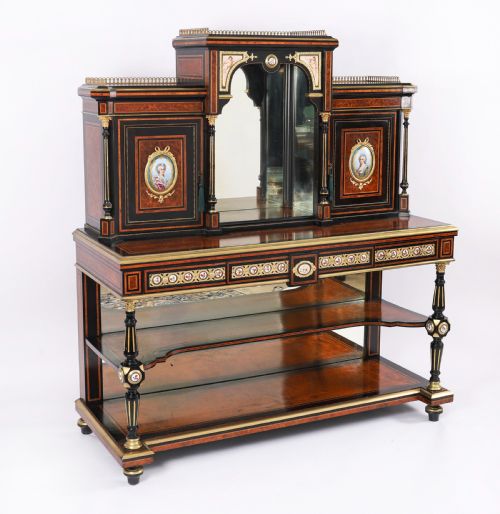
Metal mounts in brass and ormolu, alongside porcelain plaques and mother-of-pearl inlay, were integrated into finer examples following French revival and aesthetic movement tastes. Parcel gilt highlights and marquetry details completed the decorative schemes on tables produced by notable cabinet makers.
Some nineteenth-century card tables hid secret music boxes inside, turning an evening game into an impromptu concert.
What varies in quality
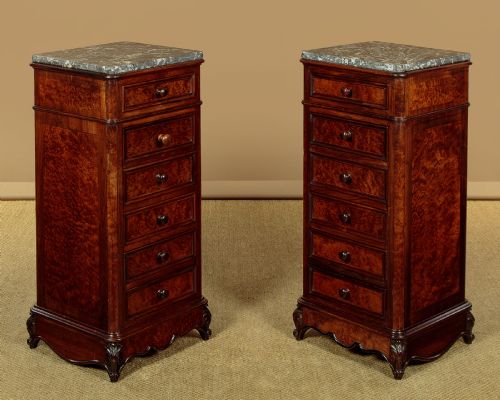
The selection of the amboyna veneer dictates the visual impact of the piece, with tightly packed, evenly distributed burr figuring marking the upper tier of production. Lesser examples rely on plain grain or show uneven veneer matching across the surface.
The integration of secondary materials such as hand-painted porcelain plaques, finely chased brass ormolu, and precise ebonising separates standard production furniture from exhibition-quality cabinet work attributed to prominent London and provincial makers.
Gillows·Edward’s And Robert’s·Lamb of Manchester·Gregory and Co·Holland and Son·Miles and Edwards
The Victorian Amboyna Table Glossary
- Amboyna
- An exotic, highly prized tropical timber known for its dense, mottled burr figuring and warm golden-brown colour. It was sliced into veneers for nineteenth-century luxury furniture.
- Ebonised
- Wood treated with a dark finish to imitate ebony, frequently used by Victorian cabinet makers to frame panels of figured amboyna and brass inlay.
- Ormolu
- Gilt bronze mounts cast and chased to decorate the corners, legs, and aprons of fine nineteenth-century tables.
- Bonheur du Jour
- A small lady's writing desk featuring a tiered superstructure with drawers, pigeonholes, or a cabinet above the main writing surface.
- Marquetry
- The art of applying pieces of veneer to a structure to form decorative patterns, often incorporating contrasting woods on table tops.
Victorian Amboyna Table: Frequently Asked Questions
What is amboyna wood?
Amboyna is an exotic hardwood harvested from the narra tree, celebrated for its intricate burr formation and rich golden-brown hue. It remains one of the most decorative veneers utilised during the nineteenth century.
Cabinet makers valued it for bespoke salon furniture where the dramatic grain pattern served as the primary ornament.
How do I care for an amboyna table?
Maintain the polished finish by keeping the timber away from direct sunlight and consistent heat sources which can dry out nineteenth-century veneers. Dust gently with a dry, soft cloth.
Avoid commercial silicone sprays or excessive moisture to preserve the delicate balance of the wood and its ebonised or gilt mounts.
Where were these tables used?
Victorian amboyna tables served specific social functions in the home, acting as display surfaces for lamps and ornaments in drawing rooms or providing writing spaces in private boudoirs. Card tables accommodated evening parlor games.
Freestanding centre tables occupied the middle of grand reception rooms to display the figured veneer from every angle.
How do I identify a Victorian piece?
Examine the construction methods, secondary timbers, and stylistic markers such as ebonised framing or aesthetic movement brass details. Nineteenth-century cabinet work often employs mahogany or pine as carcase woods beneath the amboyna veneer.
Documentation, attribution marks, and historical design revivals help anchor the piece within the Victorian period.