
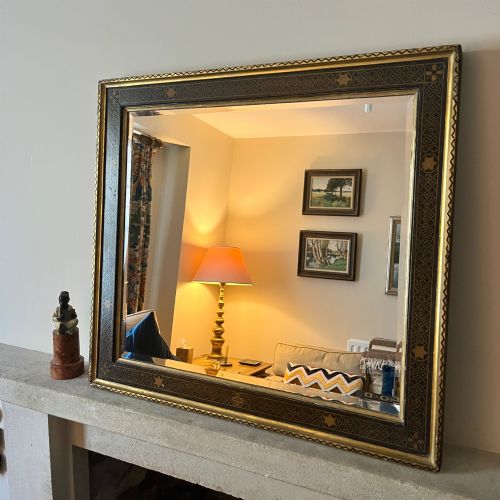
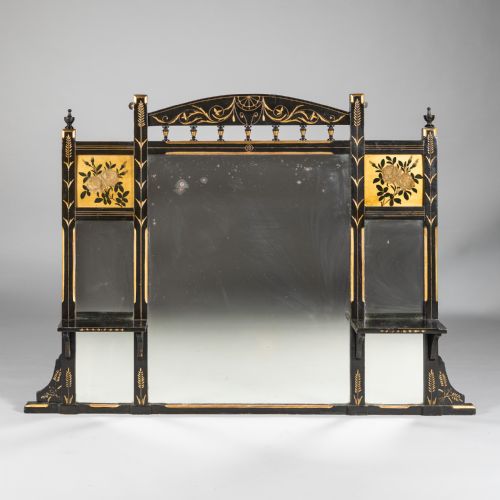


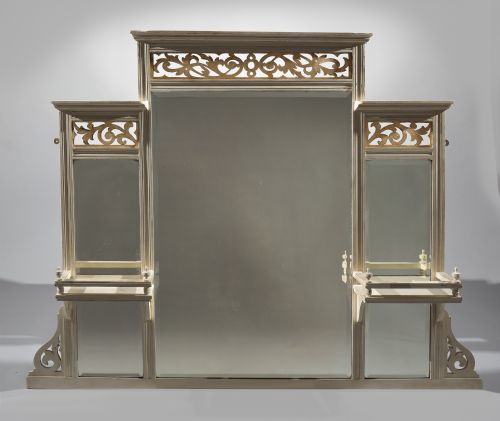


Victorian Aesthetic Overmantel Mirror
These victorian aesthetic overmantel mirror pieces bring architectural weight and striking dark finishes to a chimney breast, offering both deep reflectivity and the characteristic geometry of the nineteenth century.
Victorian Aesthetic Overmantel Mirror
A victorian aesthetic overmantel mirror is a substantial wall piece designed specifically to sit above a fireplace, combining the heavy proportions of the nineteenth century with the refined decorative principles of the Aesthetic Movement. The versions most frequently met on this page date from around eighteen eighty and eighteen ninety, spanning the Victorian era and the Arts and Crafts transition.
The primary form is the overmantel mirror itself, though the evidence also records related wall mirrors, display cabinets, and occasional variants in walnut, oak, and mahogany. These items range from large, wide formats with parcel-gilt highlights to decorative painted panels, reflecting the varied tastes of English workshops during the period.
Materials and Techniques
Makers utilised woods such as ebonised mahogany, walnut, oak, and general ebonised wood to build the heavy carcass, often applying gold leaf or parcel-gilt highlights to catch the light. Paint and parcel-silvered finishes also appear across the surviving pieces, giving the surfaces their characteristic dark contrast.
Glass and mirror glass form the central reflective surface, framed by carved mouldings and architectural details typical of Victorian Gothic, Neoclassical, and Arts and Crafts styles. Construction methods rely on traditional joinery suited to large wall-hanging furniture.
Materials recorded across the inventory include glass, ebonised wood, gold leaf, paint, gilt, mirror glass, giltwood, walnut, oak, and mahogany.
Judging Quality
The distinction between ordinary and superior pieces rests on the crispness of the carving, the depth of the ebonised finish, and the application of gold leaf or parcel-gilt. Stronger examples display deliberate proportion and integrated decorative schemes rather than simple applied ornamentation.
The integration of the mirror glass within the heavy wood frame also marks the grade of the piece, with better work showing careful joinery and substantial timber selection across oak, walnut, or mahogany.
The Victorian Aesthetic Overmantel Mirror Glossary
- Overmantel Mirror
- A large mirror designed to hang or stand specifically on the mantelpiece above a fireplace. These items anchor the room by reflecting light and repeating architectural lines.
- Ebonised
- Wood treated to resemble expensive ebony through staining or painting. This dark finish is central to the Aesthetic Movement aesthetic.
- Parcel-Gilt
- A technique where only specific portions of a surface are gilded with gold leaf. It creates contrast against the darker ebonised wood underneath.
- Aesthetic Movement
- A nineteenth-century design movement that emphasised visual beauty and decorative refinement over strict narrative or moral purpose. It drew inspiration from various historical and international styles.
Victorian Aesthetic Overmantel Mirror: Frequently Asked Questions
How do I hang a heavy overmantel mirror?
These large mirrors carry significant weight due to their timber frames and thick glass. They require secure wall fixings tied directly into structural studs or masonry.
Professional installation is recommended to ensure the frame remains stable and level over a heat source.
Where should an overmantel mirror be placed?
Traditionally, these pieces sit directly above a drawing room or dining room fireplace to bounce natural light around the space. They also function successfully on large feature walls without a mantel.
Ensure the proportions match the width of the fireplace or console table below it.
How do I clean ebonised wood and gilt?
Dust the frame gently with a dry, soft cloth to protect the delicate ebonised surface and gold leaf highlights. Avoid harsh chemical polishes that can strip the dark stain or damage the gilding.
Clean the mirror glass with a mild glass cleaner applied to a cloth rather than sprayed directly onto the surface.
What is the difference between Victorian and Aesthetic styles?
Standard Victorian design often incorporates heavier historical revivals like Gothic and Neoclassical motifs. The Aesthetic Movement shifts toward stylised decoration and visual harmony.
Pieces from this era frequently blend these approaches through dark ebonised finishes and gilt highlights.