
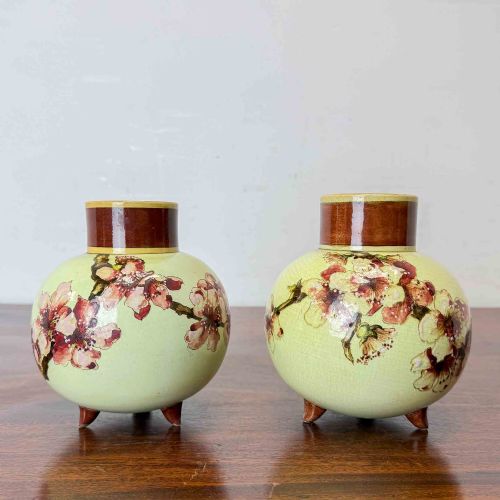


Victorian Aesthetic Movement Vase
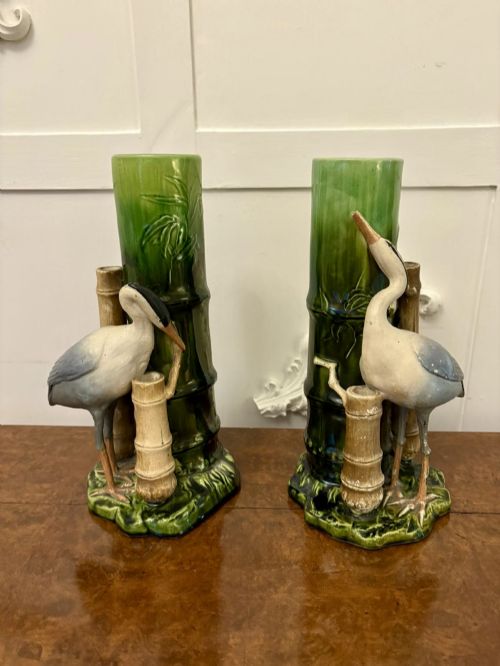
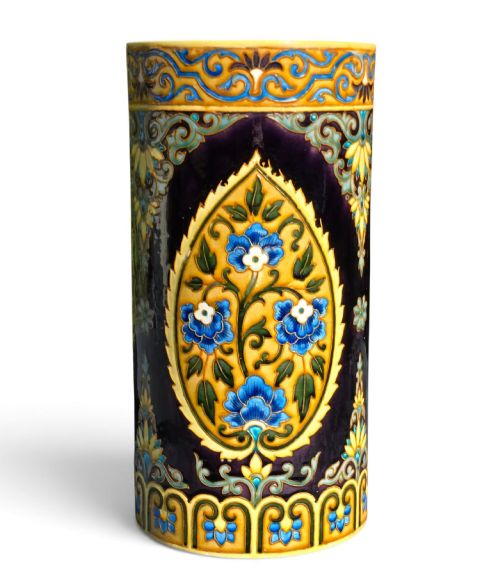
These nineteenth century objects of art display the Japonisme and global decorative influences that define a victorian aesthetic movement vase.
Victorian Aesthetic Movement Vase
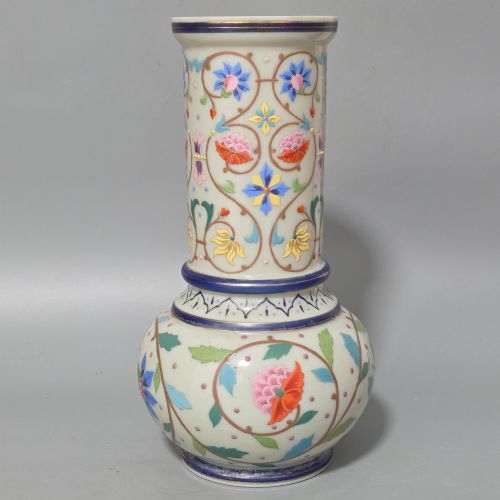
A victorian aesthetic movement vase encompasses ceramic vessels, earthenware ewers, and art glass pieces produced during the nineteenth century. Makers applied diverse global motifs, spanning Japanese cherry blossoms, Persian patterns, and Iznik revival designs, onto these decorative objects.
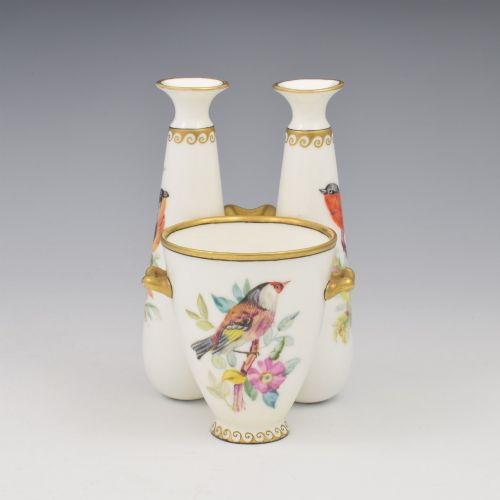
Vessels on this page range from tall umbrella stands and handled ewers to pedestal vases and urns. Porcelain and earthenware dominate the forms, frequently enriched with raised gold decoration and hand-painted ornithological or floral scenes.
The aesthetic style emerged alongside related Victorian and Arts and Crafts movements, capturing a period of intense experimentation in British pottery and glass manufacturing.
Materials and methods
Pottery production relied on porcelain and earthenware bodies shaped into vases, ewers, and jugs, then finished with elaborate glazes. Makers employed techniques such as pate-sur-pate, reticulation, and Slater's patent texturing to build layered surface relief.
Glass pieces utilised opaque glass, crystal glass, and Burmese ware, decorated with enamel and hand-painted details. Gilding, gold leaf, and raised gold decor added metallic contrast to both ceramic and glass surfaces.
A crystal peacock vase proves that even Victorian birds appreciated a good outfit.
Distinctions in execution
Quality rests in the precision of the hand-painted decoration, from delicate floral branches to intricate bird studies and Persian motifs. Skilled execution appears in the handling of pate-sur-pate layering and reticulated porcelain work.
The distinction between standard production and exceptional work also involves the complexity of the form and the application of raised gold leaf or enamel detailing.
Théodore Deck·Royal Worcester·Thomas Webb·Doulton Lambeth·Christopher Dresser·Bretby·Stuart·Royal Crown Derby·Wedgwood·Minton
The Victorian Aesthetic Movement Vase Glossary
- Pate-sur-pate
- A ceramic decoration method where liquid clay is applied layer by layer to create a raised cameo effect. This technique requires significant skill to achieve subtle translucent relief against a contrasting ground.
- Reticulation
- An openwork pottery technique involving pierced patterns cut into the clay before firing. Grainger Worcester pieces frequently demonstrate this delicate lattice effect.
- Ewer
- A large jug with a wide spout and shaped handle, originally designed for pouring water but often produced as a purely decorative vase. These vessels allowed makers to display complex stylistic influences.
- Burmese ware
- A shaded art glass that transitions from pale yellow to pink, patented in the late nineteenth century. Thomas Webb & Sons produced notable examples of this shaded glass.
- Faience
- Tin-glazed earthenware used by potteries like Doulton Lambeth for hand-painted decorative wares. The surface accepts colourful enamel pigments readily.
Victorian Aesthetic Movement Vase: Frequently Asked Questions
What defines a victorian aesthetic movement vase?
These vessels combine nineteenth-century manufacturing methods with design influences drawn from Japanese, Persian, and Middle Eastern art. Makers focused on asymmetrical compositions and natural motifs like birds and cherry blossoms rather than traditional classical revival styles.
Porcelain, earthenware, and glass pieces from this group showcase specialised techniques such as enamel painting, gilding, and pate-sur-pate relief work.
How were these vases used originally?
Many examples served as ornamental display pieces on mantelpieces, pedestals, or in drawing rooms rather than as functional containers for fresh flowers. Large forms like umbrella stands and decorative ewers were designed to anchor grand interior spaces.
The inclusion of specific designer names and patents indicates these items were luxury art objects intended for discerning Victorian collectors.
How do I identify different nineteenth-century potteries?
Maker marks stamped or painted on the underside provide the primary identification method for pieces by factories like Doulton, Royal Worcester, and Minton. Stylistic signatures also help, such as Christopher Dresser's distinct geometric influence or Thomas Allen's Persian-inspired designs.
Specific techniques like Slater's patent texturing or Hadley's floral subjects further point to particular studio hands and workshop origins.