
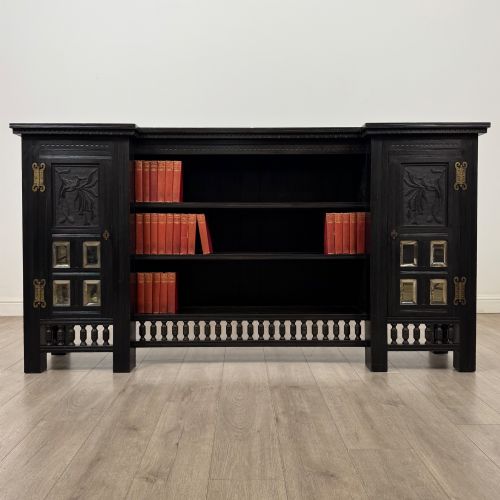
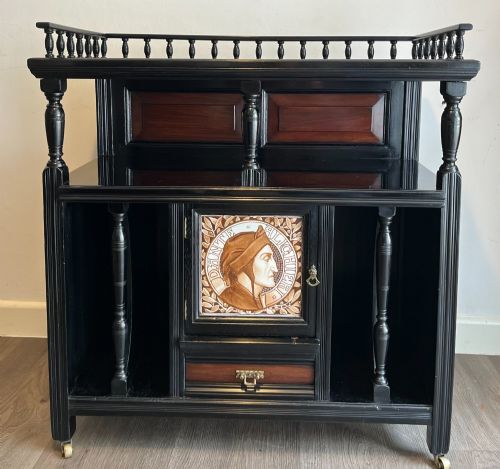
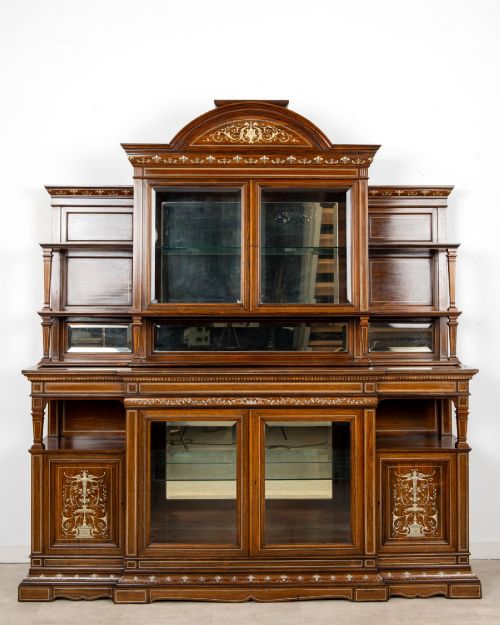
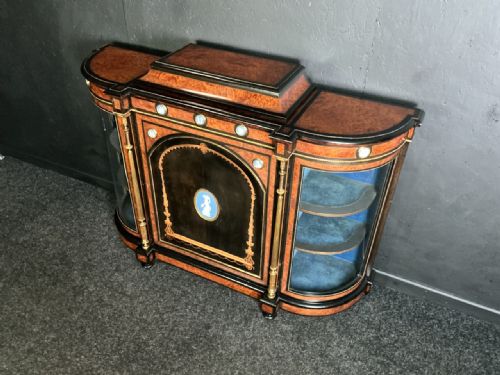
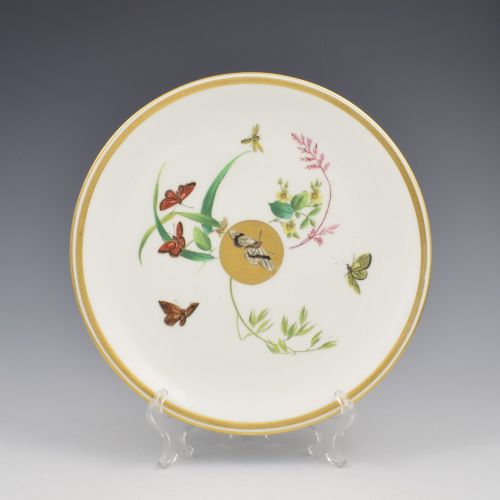


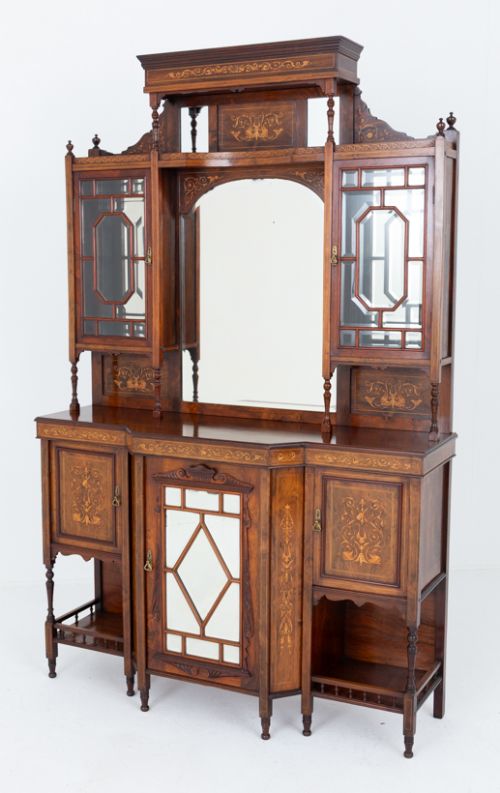


Victorian Aesthetic Display Cabinet
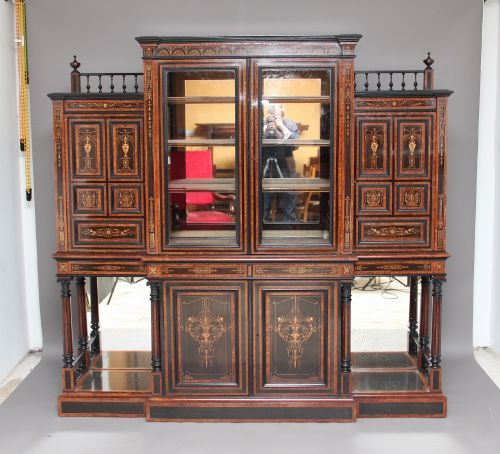
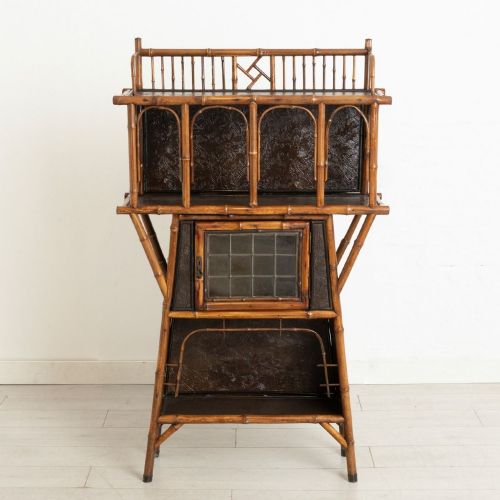
These pieces, properly known as a victorian aesthetic display cabinet, bring together disciplined geometry and Japonisme to show off porcelain and curios.
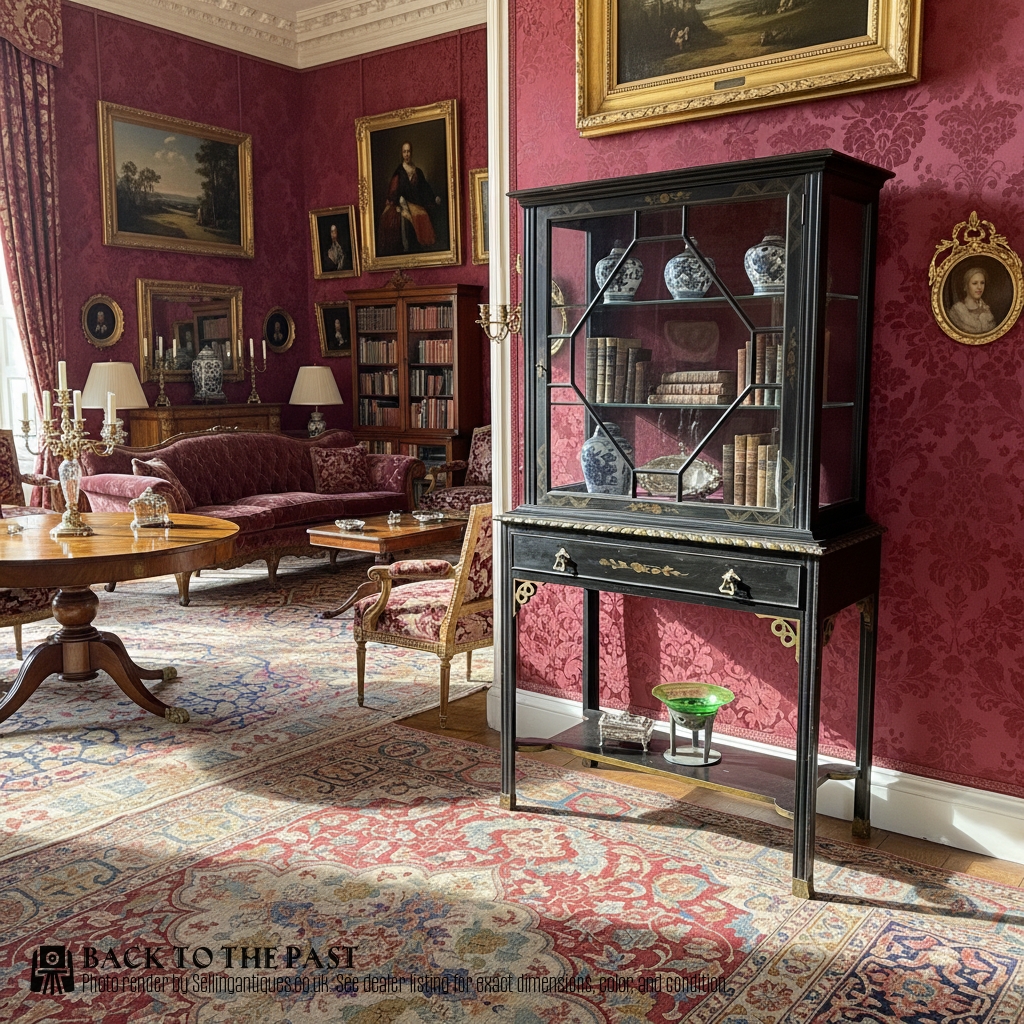
Victorian Aesthetic Display Cabinet
A victorian aesthetic display cabinet emerges from the late nineteenth century as a response to heavy Victorian design, favouring lighter proportions and eclectic influences. The selections encountered here span wall cabinets, pier cabinets, and credenzas built to house ceramics and decorative objects.
Makers of the period draw on Anglo-Japanese motifs, Anglo-Moorish details, and bamboo structures alongside traditional timber carcasses. Pieces appear in rosewood, walnut, and ebonised wood, frequently incorporating glazed doors and mirrored backs to catch the light.
How they were made
Workshops construct carcasses in timbers such as mahogany, walnut, and rosewood, or apply dense ebonised finishes to mimic exotic hardwoods. Surfaces receive gilt highlights, painted panels, and intricate marquetry or brass mounts.
Glazing is fitted into slender timber frames, while interiors often incorporate mirror glass to multiply reflections behind display shelves.
Listings feature walnut, rosewood, ebonised wood, and bamboo alongside porcelain panels and mirror glass.
What varies in quality
The distinction lies in the ambition of the design and the precision of the cabinetmaker's hand, from plain ebonised carcases to densely inlaid and gilded surfaces. Superior examples demonstrate refined proportions and considered integration of painted panels, porcelain plaques, or specialised brass hardware.
Carving and marquetry execution separate standard production from workshop pieces bearing attribution to notable makers or retailers.
Collinson & Lock·Lamb of Manchester·Liberty and Co·Garnett & Sons·John Moyr Smith·Leonard Wyburd·W.S. Coleman
The Victorian Aesthetic Display Cabinet Glossary
- Aesthetic Movement
- A design philosophy from the late nineteenth century prioritising beauty and craftsmanship over moral or narrative purpose.
- Ebonised
- Timber treated with a dark stain or finish to imitate ebony, widely utilised across the period for sharp contrast against gilt highlights.
- Pier Cabinet
- A narrow display cabinet designed specifically to stand against the wall space between windows.
- Marquetry
- Decorative veneer work arranged in pictorial or geometric patterns across the exterior surfaces of furniture.
- Credenza
- A low sideboard or cabinet, frequently featuring glazed central doors flanked by curved display compartments.
Victorian Aesthetic Display Cabinet: Frequently Asked Questions
What is an aesthetic display cabinet?
An aesthetic display cabinet is a late nineteenth-century piece designed to showcase ceramics and decorative objects, distinct from earlier heavy Victorian styles through its lighter proportions and global influences.
These cabinets often feature glazed doors, mirrored backs, and ebonised or inlaid timber surfaces influenced by Japanese design.
How do I date a Victorian cabinet?
Dating relies on identifying stylistic shifts, construction methods, and materials recorded across the period from eighteen-seventy to nineteen-hundred.
Earlier pieces often lean towards heavy walnut and amboyna, while later examples embrace ebonised finishes, bamboo, and explicit Aesthetic Movement motifs.
Where were these cabinets placed?
They served as reception room and drawing room furniture intended for the display of imported porcelain, decorative plates, and curiosities.
Pier cabinets occupied narrow wall spaces between architectural openings, while larger credenzas anchored main reception walls.
What woods were used?
Workshops employed a range of native and imported timbers, including mahogany, walnut, rosewood, and coromandel.
Ebonised wood and bamboo also appear frequently, providing dark or exotic backdrops for gilded details and majolica panels.