





Vernacular Oak Desk
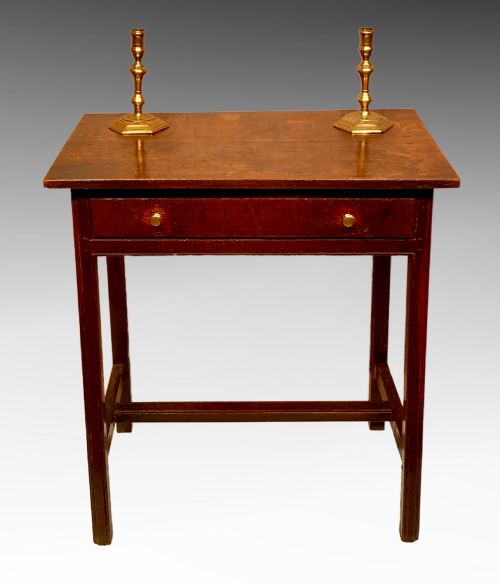
These vernacular oak desk pieces bring honest country craftsmanship and robust timber straight into a working room.
Vernacular Oak Desk
A vernacular oak desk represents the honest utility of British country furniture made by local makers rather than urban workshops. When you search for a vernacular oak desk, you encounter pieces that prioritise function and local timber traditions over fashionable metropolitan styles.
The pieces on this page span the seventeenth, eighteenth, and nineteenth centuries, including regional bureau forms and related country seating or tables. Welsh vernacular pieces feature prominently alongside English country examples, showing regional variations in construction.
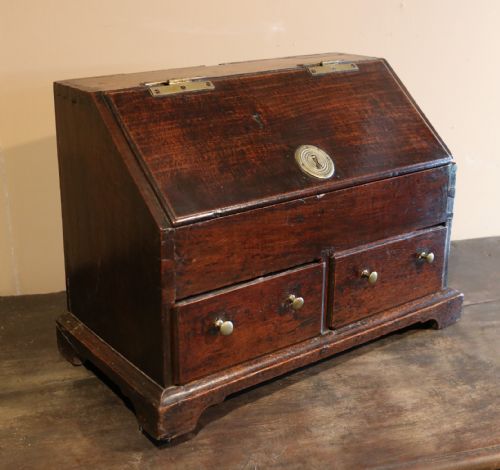
Bureau desks and miniature bureaux form the core of the desk offerings, often incorporating oak alongside secondary woods like ash, elm, and poplar. These items show how domestic writing furniture developed outside the major court and trade guilds.
How they were made
Makers built these pieces primarily from solid oak, frequently combining it with elm, ash, beech, and fruitwood inlay for contrast and structural strength. Timber selection depended entirely on local woodland availability rather than standardised commercial supply chains.
Construction relies on traditional joinery methods suited to domestic workshops, utilising pegged joints, dovetailed drawer construction, and solid board carcases. Secondary timbers like poplar or pine often appear in concealed areas such as drawer linings and interior partitions.
Vernacular Oak Desk Retail Price Guide 2026
Typical asking prices for vernacular oak desk among the pieces listed under this phrase on Sellingantiques today, from the lower quarter to the upper quarter. They describe what is for sale here now, not the wider market.
Listings feature oak alongside elm, ash, beech, and fruitwood inlay across eighteenth and nineteenth century periods.
What varies in quality
The quality of a piece rests on the integrity of its original timber selection and the restraint of subsequent repairs. Pieces retaining their original patination and uncompromised structural joints stand above those with heavily replaced timber or scrubbed surfaces.
Proportion and regional character dictate distinction, as regional vernacular pieces demonstrate local handwork traditions. A well-proportioned bureau with considered wood selection and sound regional detailing outshines a plain, heavy-handed utility piece.
The Vernacular Oak Desk Glossary
- Vernacular
- Furniture made by local craftsmen for regional use rather than to metropolitan designs. These items reflect the materials and traditions immediately available to the maker.
- Bureau
- A sloping desk with a hinged writing flap that covers a fitted interior of pigeonholes and small drawers. It often sits above a chest of drawers.
- Comb back
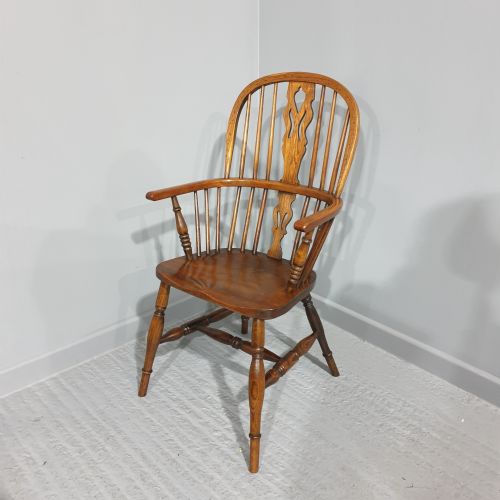
- A Windsor chair variation where the vertical spindles extend through a horizontal crest rail to form a comb-like top. This design provides extra back support.
- Broad arm
- A Windsor chair featuring one exceptionally wide armrest designed for writing or working. This functional addition turns the seating piece into a portable writing station.
- Fruitwood inlay
- Decorative contrasting wood inserts using species like apple, pear, or plum. Craftsmen used this technique to embellish plain oak surfaces with geometric or floral patterns.
Vernacular Oak Desk: Frequently Asked Questions
What is a vernacular oak desk?
A vernacular oak desk is a regional writing piece made by local country craftsmen using native timber. These items focus on utility and regional building traditions rather than fashionable city designs.
They often include bureau forms, drop-front writing compartments, and robust solid oak construction combined with secondary woods like elm or ash.
How do I date a vernacular oak desk?
Dating relies on examining construction methods, hardware, and timber characteristics. Hand-cut dovetails, original brasses, and specific regional design traits help place pieces within the seventeenth, eighteenth, or nineteenth centuries.
Regional variations also offer clues, as Welsh and English country makers retained certain structural habits long after city workshops moved to new styles.
How were these desks used originally?
These desks served as domestic writing and storage hubs for households outside major urban centres. The sloping flap folded down to provide a stable writing surface, while interior compartments kept ledgers, letters, and ink safe.
Lower drawer sections stored household papers, textiles, or valuables, making the bureau an essential piece of administrative furniture for country homes and farms.
How do I care for antique oak furniture?
Maintaining antique oak requires stable environmental conditions away from direct heat sources and dramatic humidity swings. Excessive dryness causes timber to shrink and split, while dampness encourages woodworm and rot.
Clean the surface gently with a soft cloth and apply traditional beeswax sparingly to nourish the finish without building up greasy residue that attracts dust.