

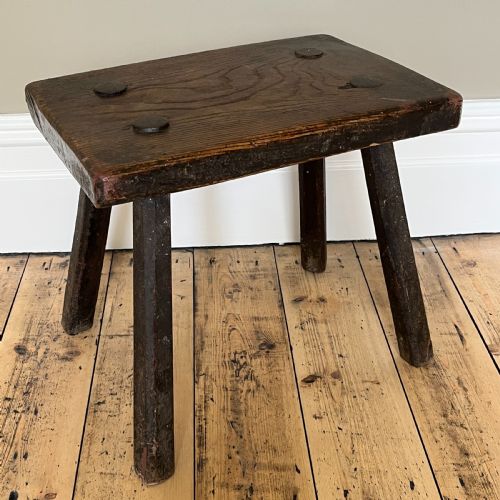


Vernacular Country Stool
A vernacular country stool is a utilitarian seat shaped by local hands, offering honest character and direct connection to historical rural life.
Vernacular Country Stool
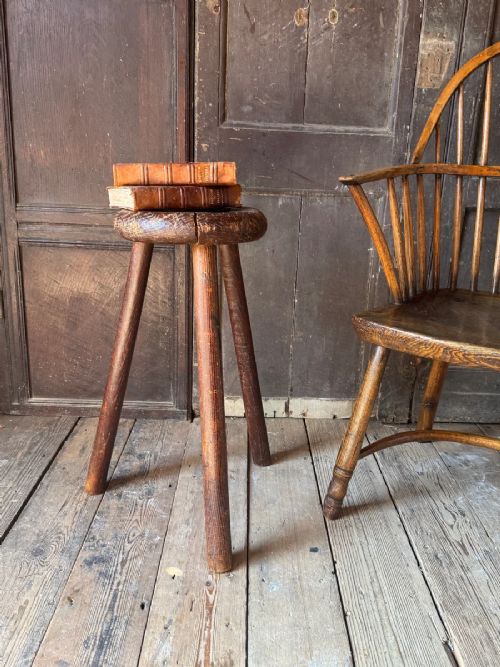
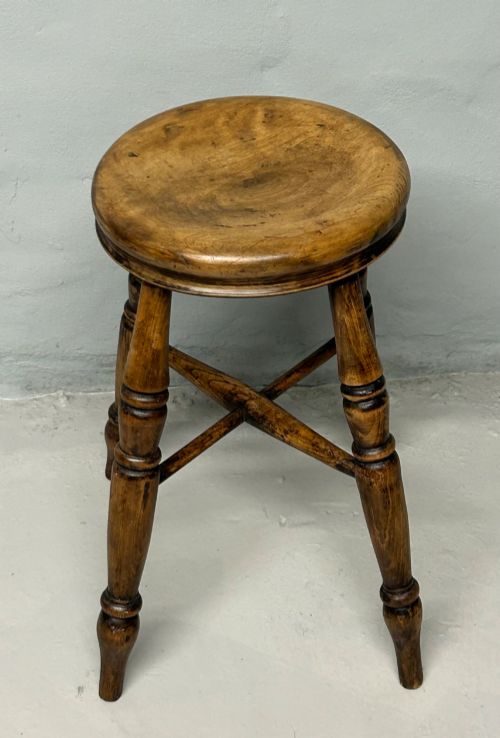
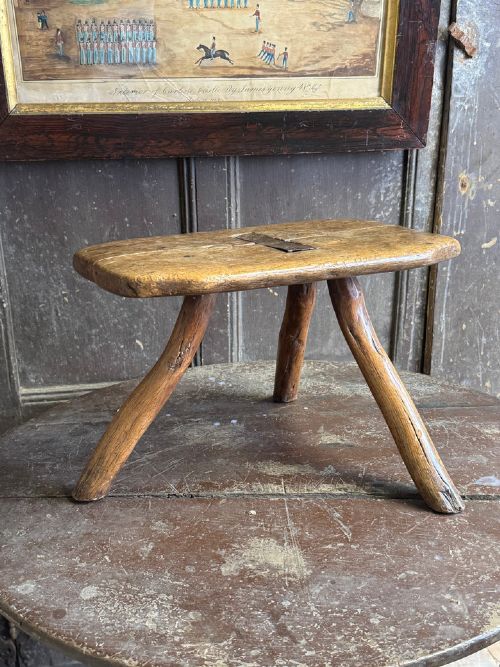
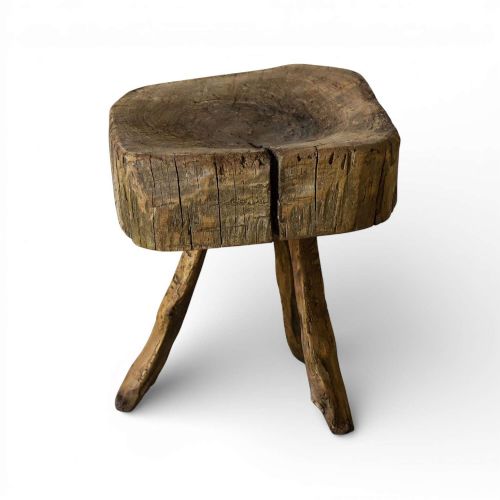
A vernacular country stool represents utilitarian domestic and agricultural seating shaped by local traditions rather than metropolitan design. These pieces include milking stools, dairy stools, hearth stools, and tavern stools originating from the eighteenth and nineteenth centuries.
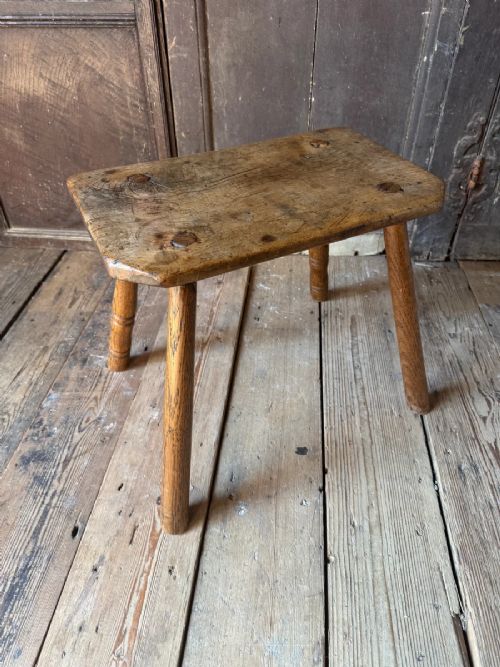
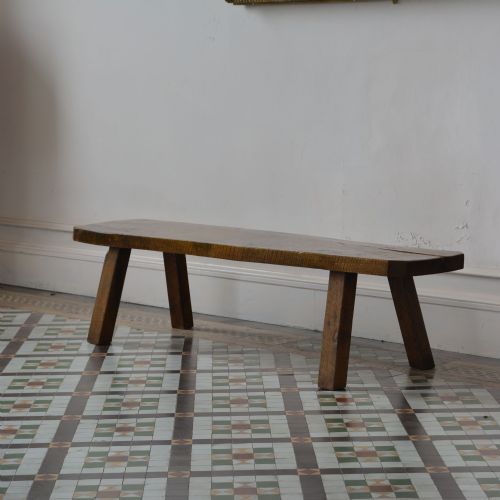
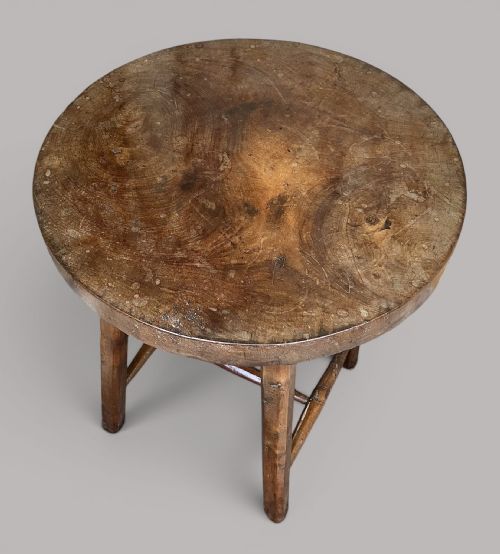
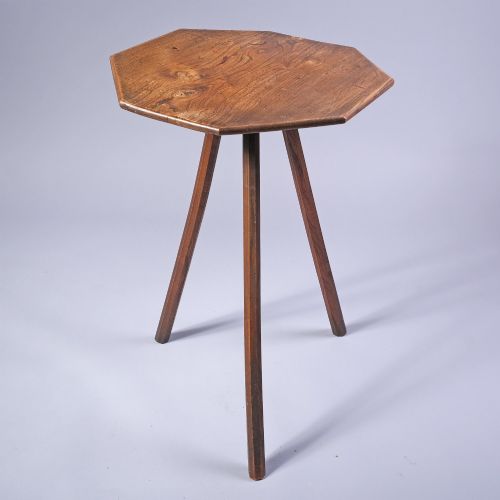
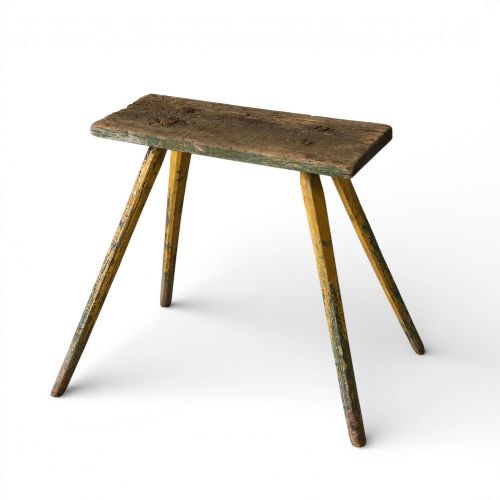
The most common version met on this page is a nineteenth-century elm or ash stool featuring splayed legs and a solid timber top. Alongside traditional stools, the selection includes related forms such as benches, chopping blocks, and occasional tables.
Makers shaped these items from native hardwoods for daily use in cottages, dairies, and workshops rather than formal reception rooms. Their plain construction reflects the practical demands of rural life across Georgian and Victorian periods.
How they were made
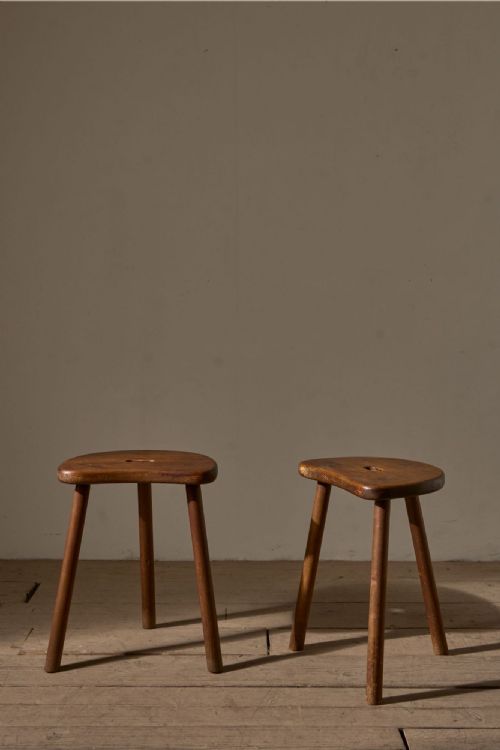
Local artisans constructed vernacular country stools using native timbers like elm, ash, oak, pine, and sycamore. Woodworkers often turned legs on a bodger's pole lathe and wedged them directly into bored seats.
Construction techniques prioritized strength and utility over decorative refinement. Blacksmith repairs and original paint surfaces frequently appear alongside exposed peg joints and natural live edges.
What varies in quality
Quality rests in the balance of proportion, the character of the timber grain, and the integrity of the original structure. A well-proportioned seat with harmonious splayed legs demonstrates superior rural design.
Surfaces bearing genuine age, such as untouched patination or original paint, elevate an example above one stripped or heavily restored in later decades.
The Vernacular Country Stool Glossary
- Vernacular
- An object made by local craftspeople using regional traditions and materials, rather than following academic architectural styles. These pieces serve immediate practical needs.
- Splayed legs
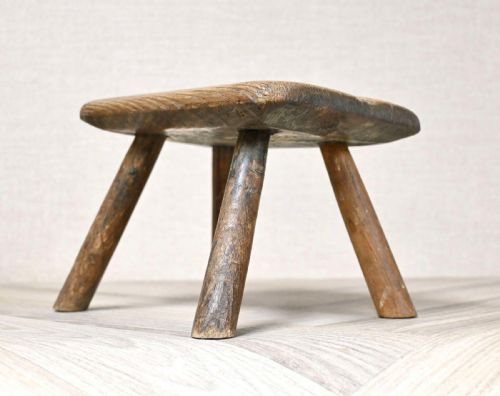
- Legs angled outwards from the centre to provide stability on uneven floors. This technique appears frequently on milking and dairy stools.
- Joint stool
- A sturdy wooden stool constructed with mortise and tenon joints held together by wooden pegs. They date predominantly from the seventeenth and eighteenth centuries.
- Milking stool
- A small, usually three-legged seat designed for use while tending livestock. Their single-leg or three-leg format prevented rocking on dairy floors.
Vernacular Country Stool: Frequently Asked Questions
What is a vernacular country stool?
A vernacular country stool is a simple, unpretentious seat made by local makers for specific rural or agricultural tasks. They reflect regional woodworking traditions using whatever native timber was close at hand.
These pieces were built for use in dairies, kitchens, and workshops rather than formal parlours. Their modest forms prioritize function and durability above all else.
How were milking stools used?
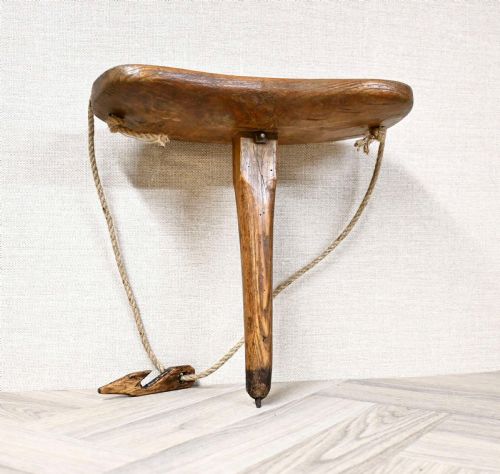
Milking stools were designed to be strapped to the milker or carried easily around the farmyard for daily milking chores. Their compact size and stable base made them practical for outdoor work.
Many examples feature three legs to remain steady on uneven ground or farm floors. They double today as small side tables or decorative display surfaces.
How do I date an old wooden stool?
Dating relies on examining the timber species, tool marks, construction methods, and signs of wear. Eighteenth-century examples often feature heavy oak or ash construction with pegged joints.
Nineteenth-century pieces frequently utilise elm seats combined with turned legs and simpler joints. Blacksmith repairs and original paint layers also offer clues to an object's age.
Can I use antique stools daily?
Most antique country stools remain structurally sound and suitable for everyday seating in modern homes. Solid hardwood construction ensures they withstand regular use.
Placing them in stable indoor environments prevents the old timber from drying out or splitting. Avoid exposing them to extreme temperature fluctuations.