
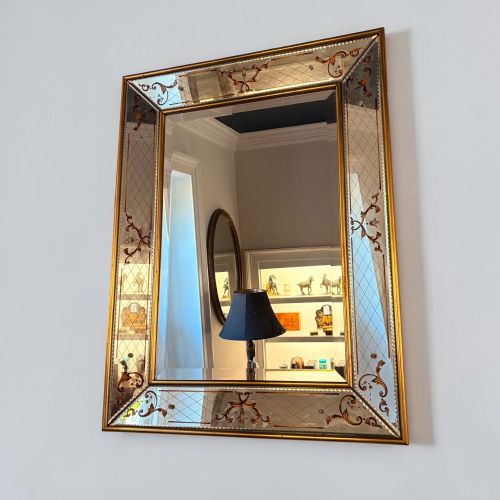
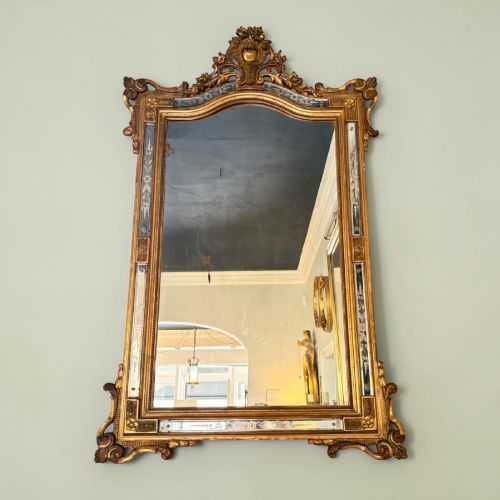
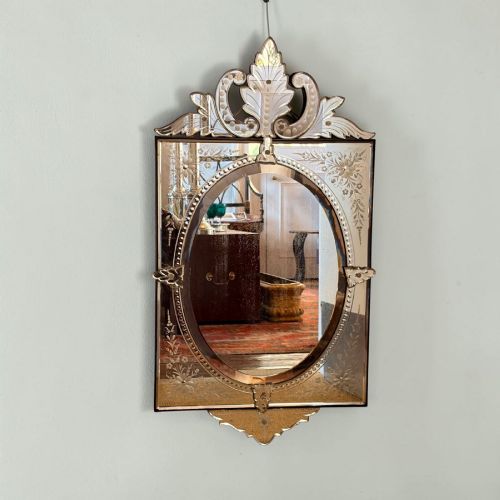
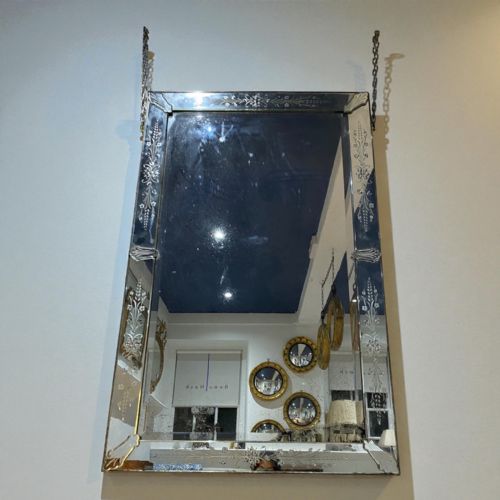

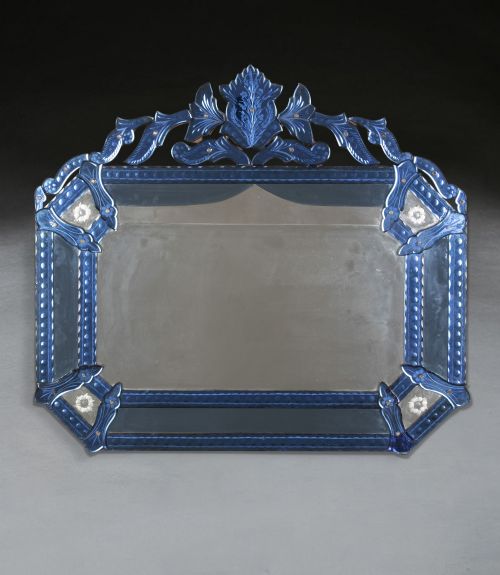

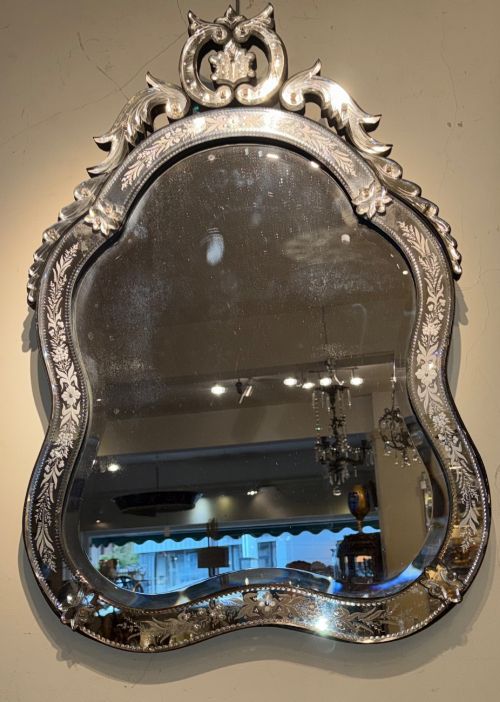
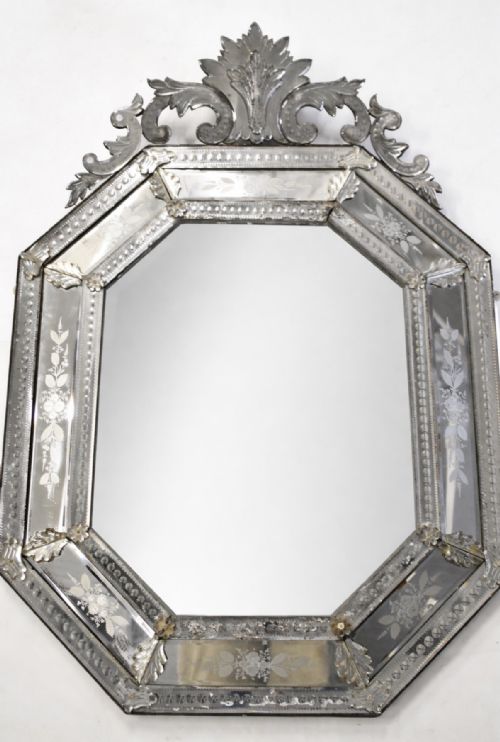


Venetian Etched Wall Mirror
These venetian etched wall mirror examples bring shimmering depth and intricate glasswork to an interior.
Venetian Etched Wall Mirror
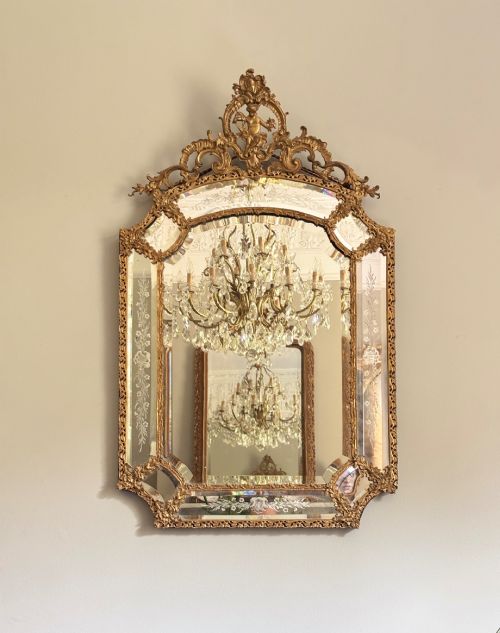
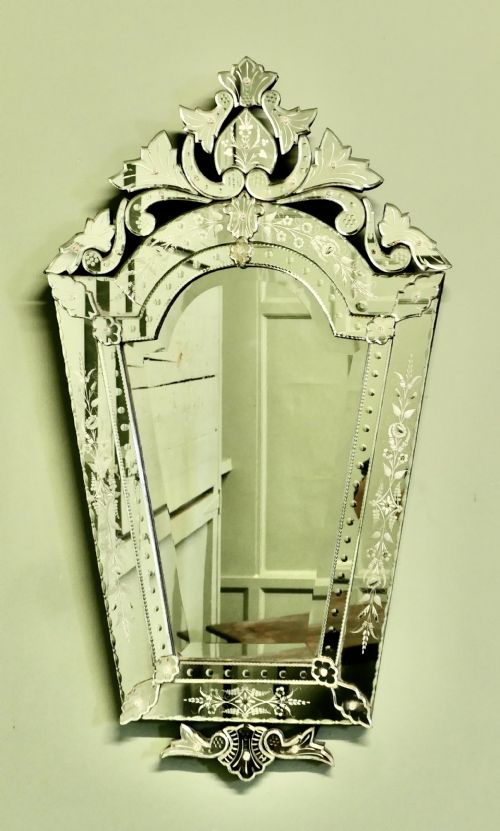
A venetian etched wall mirror is an ornamental looking glass defined by engraved glass plates, decorative frames formed of shaped glass sections, and floral or scroll motifs. These items emerge across the eighteenth, nineteenth, and twentieth centuries, spanning periods from the Victorian era and Edwardian times through to Art Deco.
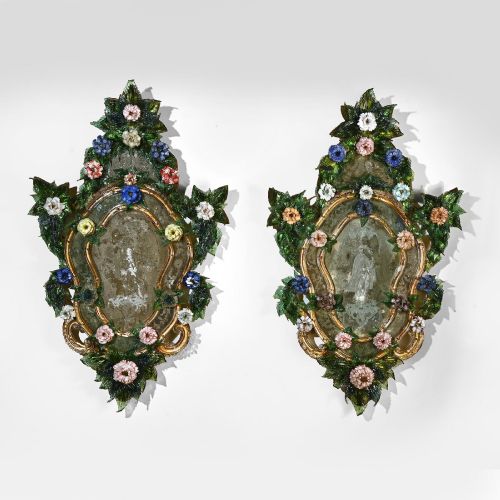
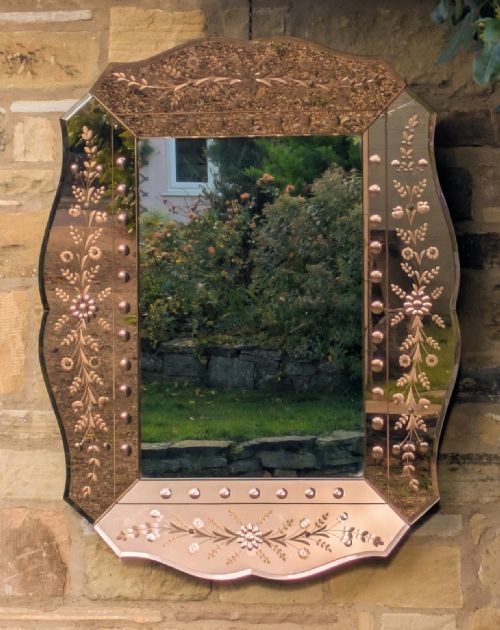
The pieces recorded here include large cushion mirrors, overmantle formats, paired wall sconce girandoles, and coloured glass variations featuring ruby red or blue borders and peach tones. Buyers frequently encounter nineteenth century and early twentieth century examples that display traditional Italian craftsmanship and carved giltwood or polychrome elements.
How they were made
Makers constructed these looking glasses using mirrored glass, silvered glass, and glass plates set into timber frames of gilt wood or ebonised wood. Metal fittings secure the structural components while holding the fragile glass elements together safely.
Artisans applied cut and etched decoration directly onto the glass surface, often incorporating bevelled edges and engraved plates alongside carved wooden supports and giltwood frames.
Listings feature items spanning from the eighteenth century through the Art Deco era of the 1930s and 1950s.
What varies in quality
Quality rests upon the crispness of the glass engraving, the complexity of the cut glass frame pieces, and the depth of the overall design. Superior examples display finely detailed wheel-cut floral motifs and well-preserved silvering across the plates.
The integration between the glass components and the underlying wooden or metal structure dictates the structural integrity of the piece. Master craftsmanship shows in the precision of the mitred glass borders and the harmonious proportion of the frame.
The Venetian Etched Wall Mirror Glossary
- Cushion mirror
- A looking glass with a convex profile where the outer frame sections curve outward toward the edge. This form creates an additional plane that catches light from multiple angles.
- Etched plate
- A glass panel decorated by applying acid or mechanical tools to bite designs into the surface. It produces frosted patterns that contrast with the reflective areas.
- Gilt wood
- Timber coated with a thin layer of gold leaf or metallic powder. It provides a luminous surround that complements the reflective qualities of the glass.
- Overmantle mirror
- A wide looking glass designed to hang directly above a fireplace mantelpiece. These substantial items serve as a focal point within a reception room.
- Girandole
- A wall mirror featuring attached candle sconces or arms that project forward. The candles reflect in the glass plate to multiply the available light.
Venetian Etched Wall Mirror: Frequently Asked Questions
How do I hang a heavy venetian mirror?
These mirrors require secure wall fixings distributed across the structural backing frame to support the combined weight of the glass and wood. Professional installation is advisable for larger pieces.
Ensure the fixings anchor directly into solid masonry or substantial wall studs rather than relying on plaster alone.
How should I clean the etched glass?
Use a soft microfiber cloth and a mild, ammonia-free glass cleaner applied to the cloth rather than directly onto the mirror. This prevents moisture seeping behind the plate.
Avoid abrasive materials that might scratch the delicate surface or damage the historic silvering.
What causes foxing on old mirrors?
Foxing appears as small dark spots or cloudiness within the glass where moisture has interacted with the silvered backing over decades. It is a natural sign of ageing.
Many collectors prize this patina because it confirms the genuine antique nature of the piece.
Where do coloured glass borders come from?
Makers added tinted elements such as ruby red, blue, or peach glass sections to frames during production to enhance visual contrast. Venetian workshops utilised these coloured accents in various periods.
These hues help indicate specific regional styles and manufacturing dates.
Can these mirrors go in bathrooms?
High humidity and fluctuating temperatures can accelerate degradation of the silvered glass backing and harm wooden or gilt frames. Placing them in dry rooms preserves the materials.
Bathrooms present risks to antique silvering unless humidity is strictly controlled.