
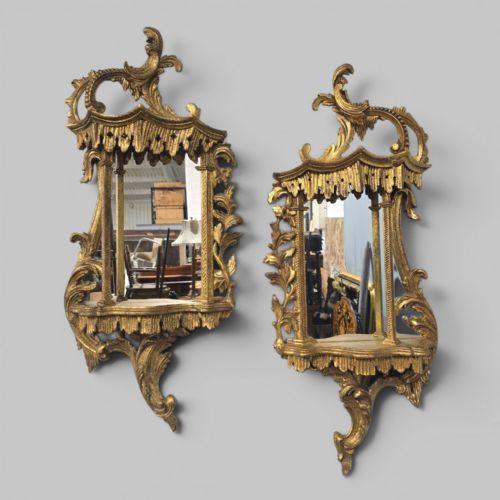
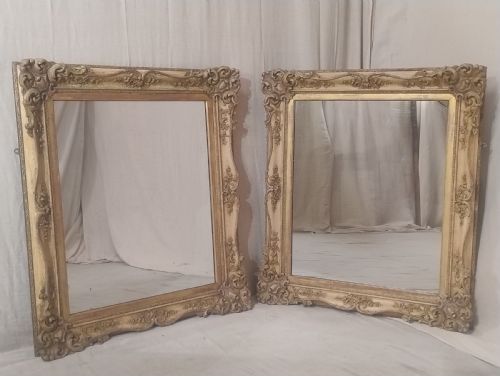
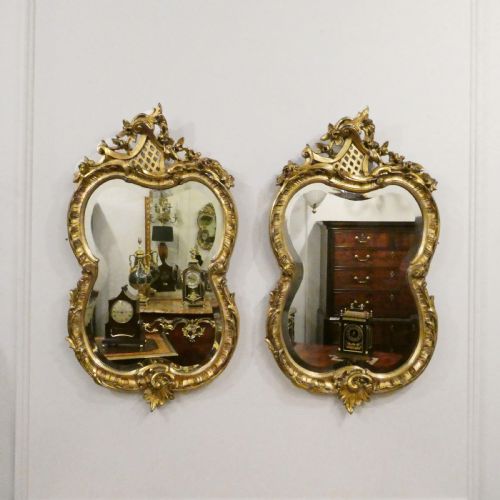


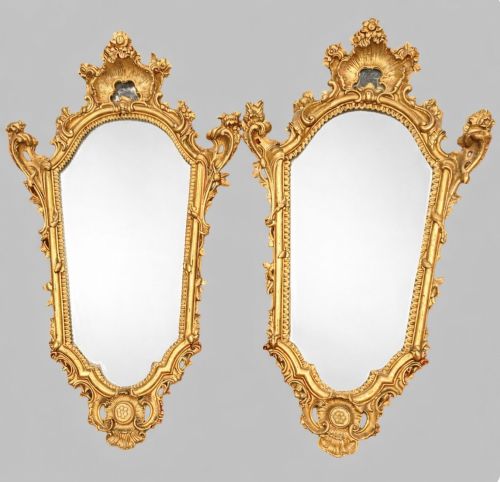


Pair Ornate Gold Mirrors
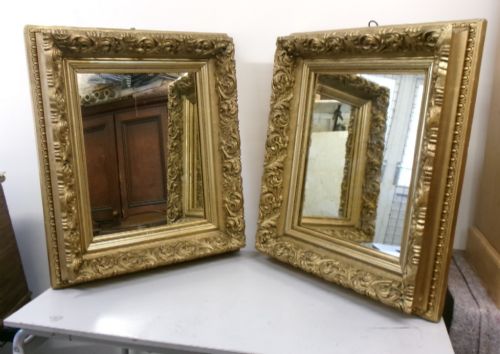
These pair ornate gold mirrors bring symmetry and reflective light to a room, spanning 18th century Italian workshops to Victorian drawing rooms.
Pair Ornate Gold Mirrors
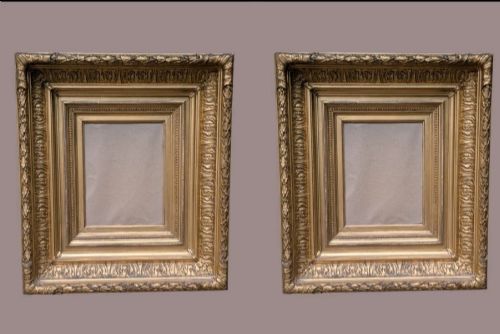
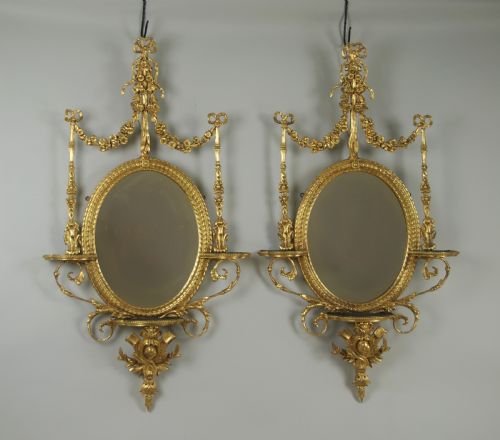
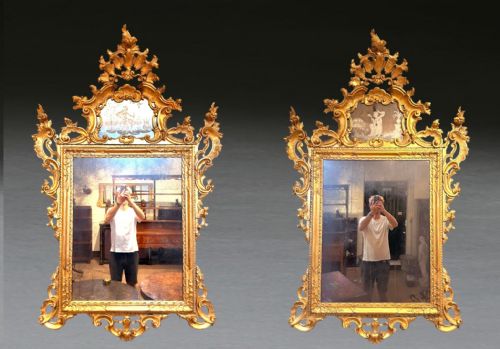
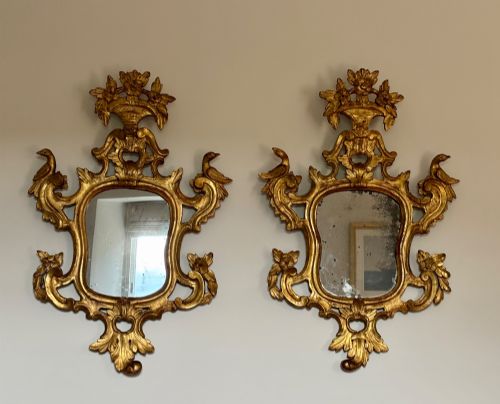
When you search for pair ornate gold mirrors, you encounter dual hanging looking glasses united by elaborate framing and shared decorative schemes. These objects function primarily as wall-mounted decor in rooms that benefit from doubled luminosity and formal balance.
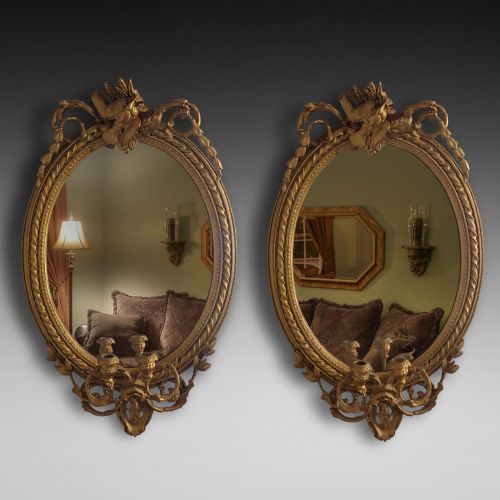
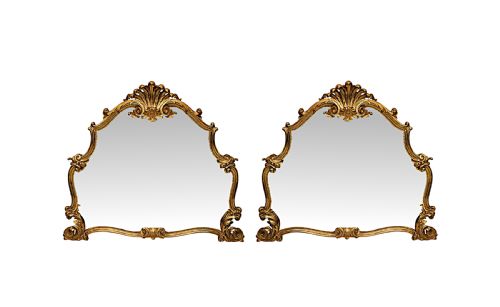
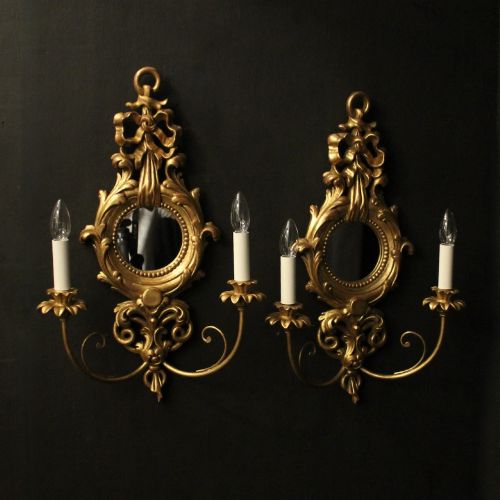
The selections span wall mirrors, girandoles with candle arms, overmantel pier mirrors, and display shelves from the 18th, 19th, and early 20th centuries. Victorian and Italian Rococo Revival examples dominate the selection, alongside French chateau pieces and Chinese Chippendale forms.
How they were made
Makers built the structural carcases using timber, wood, and brass, applying gesso and plaster layers to build up high-relief ornamentation before applying gold leaf or gilt paint. Artisans carved intricate motifs into the wood and gesso grounds to achieve the deep, sculptural profiles seen on Italian and French frames.
Mirrored glass plates are set within these gilded frames, sometimes accompanied by brass candle sconces or display brackets. Parcel gilt and painted surfaces appear alongside traditional gold leaf, reflecting the varied workshops of England, France, Italy, and China.
Listings feature materials including glass, giltwood, gesso, gold leaf, brass, mirror glass, wood, and plaster across multiple centuries.
What varies in quality
The depth and crispness of the carved ornamentation separate heavier, deeply sculptural frames from simpler moulded examples. Pierced foliage, scrollwork, and figural details show the hand of the carver more clearly in superior pieces.
The integrity of the gilding and the preservation of the original gesso and mirror glass define the upper tier. Period glass with authentic foxing or clear, heavy plates within robust wooden frames indicate careful preservation over centuries.
The Pair Ornate Gold Mirrors Glossary
- Giltwood
- Wood that has been coated in gold leaf or gilt paint. This material forms the primary structure of most traditional ornate wall mirrors.
- Gesso
- A plaster-like mixture applied to wood frames to create a smooth surface for carving and gilding. Artisans model this compound into elaborate scrollwork and floral motifs.
- Girandole
- A decorative wall mirror featuring attached candle branches or sconces. These fixtures double the ambient light from candles within the room.
- Pier Glass
- A large tall mirror designed to hang on the wall space between windows. These pieces often feature display brackets or console tables beneath them.
- Rococo Revival
- A 19th-century design style reviving the asymmetrical scrolls, shells, and C-curves of the 18th century. It heavily influences the ornamentation found on Victorian frames.
Pair Ornate Gold Mirrors: Frequently Asked Questions
Where should I hang pair ornate gold mirrors?
These mirrors suit symmetrical placement on either side of a fireplace, doorway, or large piece of furniture. Their matching design creates visual balance and reflects light across the room.
Ensure the wall structure supports the combined weight of heavy wooden frames and glass plates. Secure fixings into wall studs or use appropriate heavy-duty anchors.
How do I date these mirrors?
Dating relies on stylistic clues like Rococo Revival curves, Neoclassical symmetry, or Victorian proportions, combined with construction methods visible on the reverse. Examining the backing boards, screw types, and composition of the gesso helps narrow the era.
Earlier 18th-century pieces often feature hand-carved wooden frames with distinct joinery, while 19th-century examples frequently utilise moulded plaster and machine-cut fixings.
What is a girandole mirror?
A girandole is a wall mirror equipped with integrated candle arms or sconces attached to the frame. They were designed to multiply the flickering light of candles in dim rooms.
Many surviving examples from the 19th century retain their original brass or gilt-wood arm attachments, used for holding taper candles.
Are the mirror plates original?
Many antique mirrors retain their original glass, which often displays age spots, minor silvering loss, or slight distortion known as foxing. These natural imperfections confirm the age of the piece.
Some mirrors have received replacement glass plates over the centuries to maintain a clearer reflection while preserving the antique frame.