
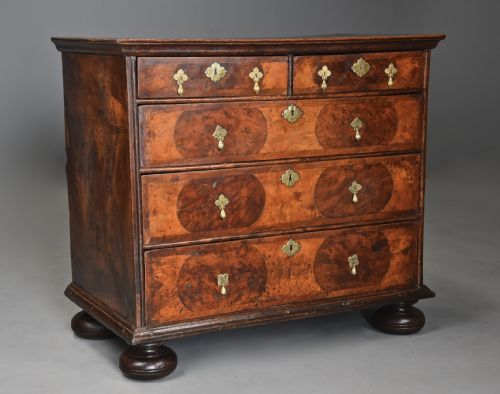

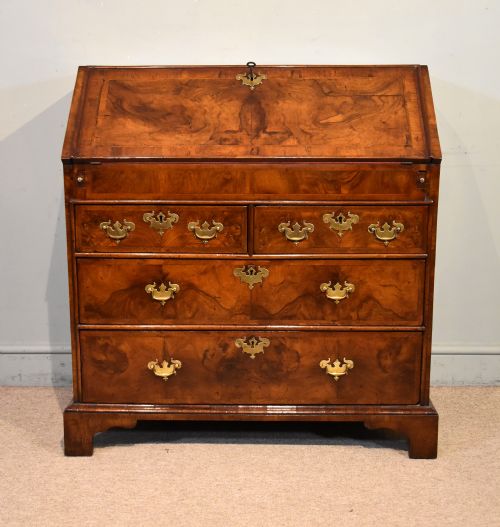
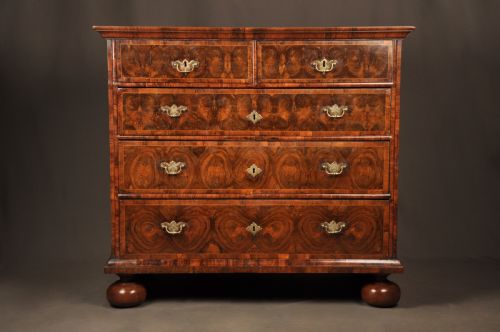
Veneered Walnut Drawers
Veneered walnut drawers bring warmth and intricate grain patterns into a room, spanning periods from late seventeenth-century oyster work to Art Deco bedside pieces.
Veneered Walnut Drawers
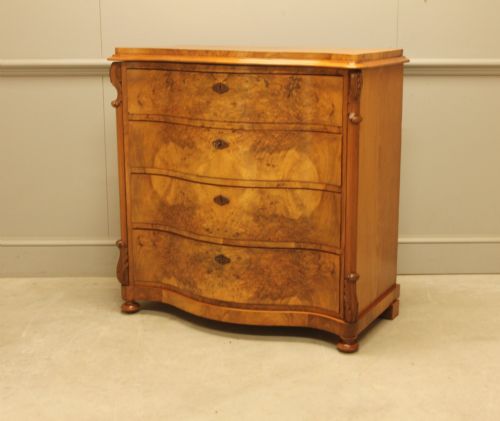
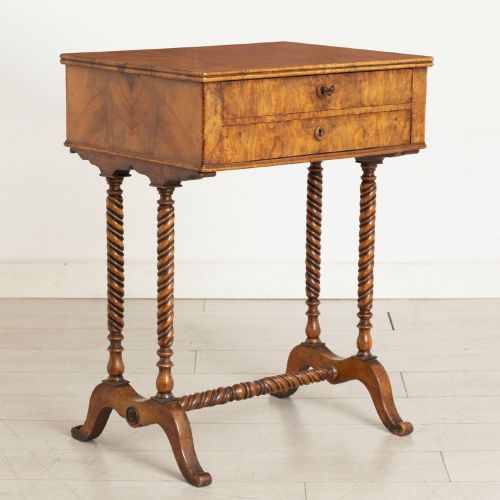
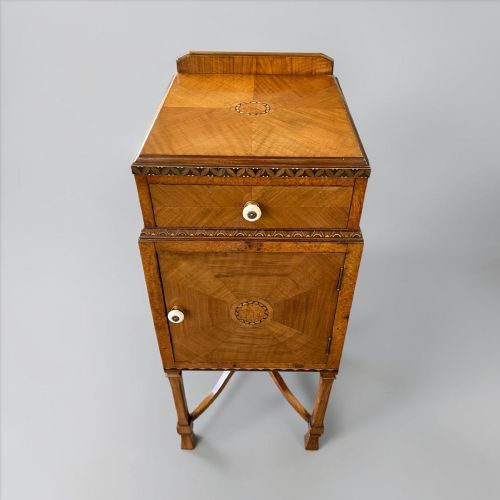
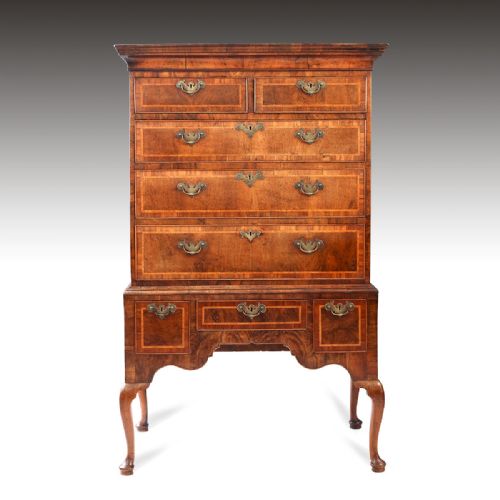
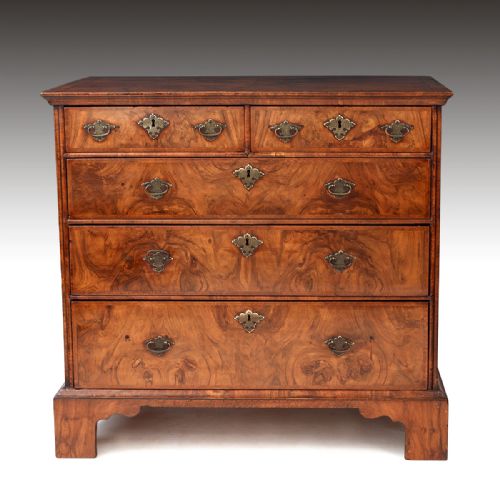
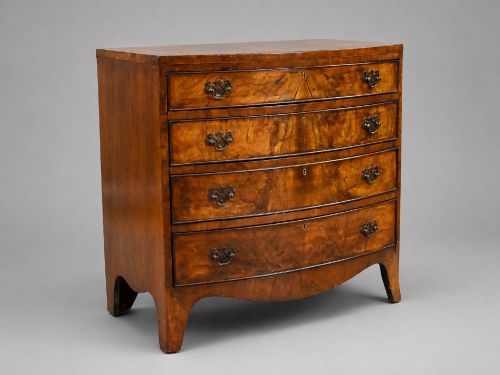
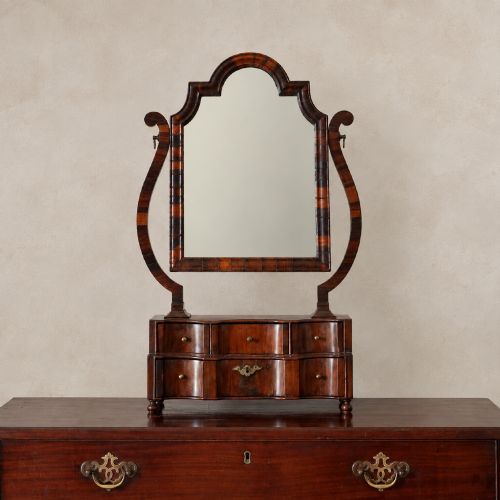
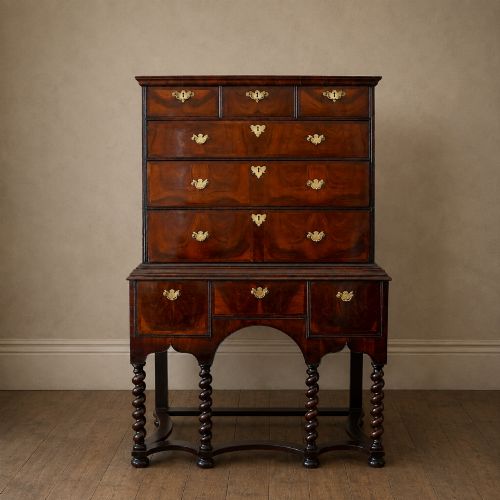
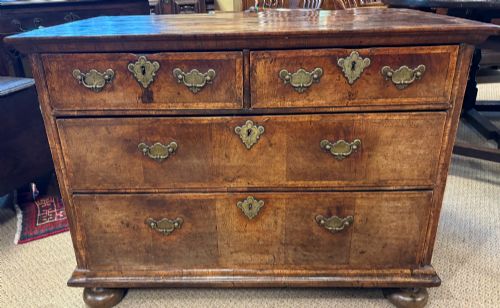
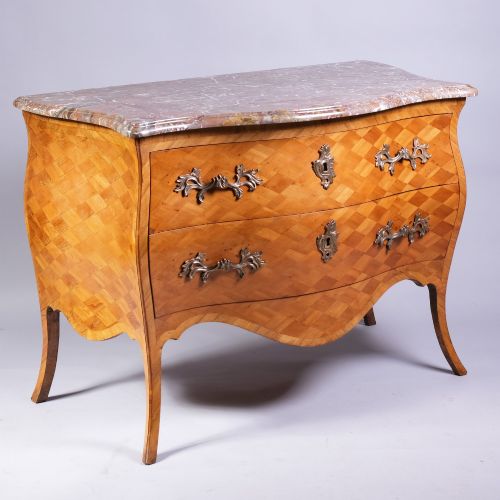
Veneered walnut drawers appear across multiple centuries, ranging from seventeenth-century William and Mary chests on stands to Georgian bureaus and twentieth-century Art Deco cabinets. The pieces on this page are predominantly chests of drawers, bedside tables, and chests on stands originating from British, French, and continental workshops.
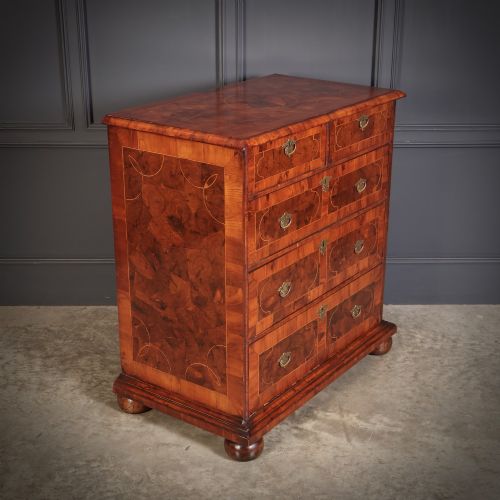
The material vocabulary relies heavily on walnut, burr walnut, and oyster veneer, often combined with secondary woods such as oak and pine. Craftsmen utilised intricate cutting techniques to lay thin sections of timber onto carcass structures, creating symmetrical patterns across drawer fronts and tops.
Buyers will encounter formal period furniture alongside streamlined twentieth-century designs, including Biedermeier commodes and blonde figured-walnut bedside chests. These items served functional storage roles in bedrooms and studies, evolving from elevated stands to floor-standing drawer units.
Judging Quality
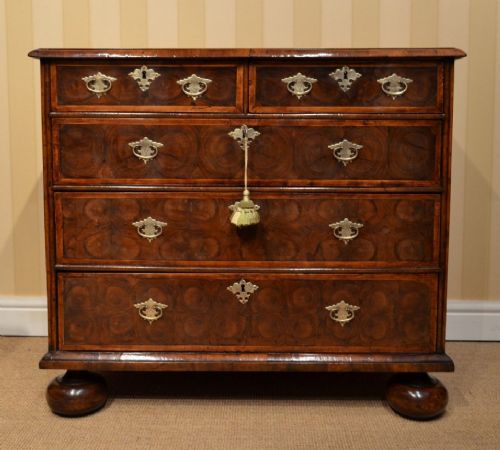
The sophistication of the veneer layout dictates much of the visual success, particularly where quarter-matching or symmetrical bookmatching creates harmonious patterns across large surfaces. Early examples rely on precise alignment of oyster cuts and intricate inlay work, where uneven spacing or mismatched grain disrupts the decorative rhythm.
Surface preservation and timber selection separate standard domestic items from exceptional commissions. Burr walnut and figured walnut display complex natural movement within the grain, and pieces retaining a warm, undisturbed polish demonstrate superior historical care compared to heavily stripped equivalents.
Seventeenth-century makers turned humble tree branches into prized oyster patterns, proving that even small twigs deserve a grand stage.
Bowman Brothers
The Veneered Walnut Drawers Glossary
- Oyster veneer
- Slices cut transversely from small branches to show circular or oval growth rings. This technique was popular during the late seventeenth century on William and Mary cabinets.
- Burr walnut
- Timber taken from the abnormal growths on walnut trees, yielding highly contorted and swirling grain patterns. It is typically reserved for principal display surfaces.
- Featherbanding
- Narrow strips of wood cut diagonally and laid in a herringbone pattern to edge drawer fronts. It frames the central veneered panel.
- Chest on stand
- A tall drawer section raised on a separate frame with legs, common in late seventeenth and early eighteenth-century designs. It offers elevated storage.
- Biedermeier
- A Central European style from the nineteenth century prioritising clean lines and blonde figured veneers over heavy ornamentation.
Veneered Walnut Drawers: Frequently Asked Questions
How do I date an old walnut chest?
Dating relies on examining construction methods, hardware types, and carcass proportions alongside the veneer style. Early pieces from the late seventeenth century often feature walnut oyster work on stands, while eighteenth-century items incorporate graduated drawers and bracket feet.
Secondary timbers inside the drawers also provide clues, with oak typically appearing in early British pieces and softwoods in later continental examples. Comparing the overall silhouette to documented period forms helps narrow down the decade of manufacture.
What is oyster veneering?
Oyster veneering involves slicing small branches across the grain to create small, circular pieces resembling oyster shells. Cabinet makers arranged these discs closely together across drawer fronts and tabletops during the late seventeenth century.
The resulting surface creates a dense mosaic pattern that highlights the natural growth rings of walnut, olive, or laburnum. It requires precise fitting to ensure the background timber or banding complements the circular motifs.
Where should I place a walnut chest?
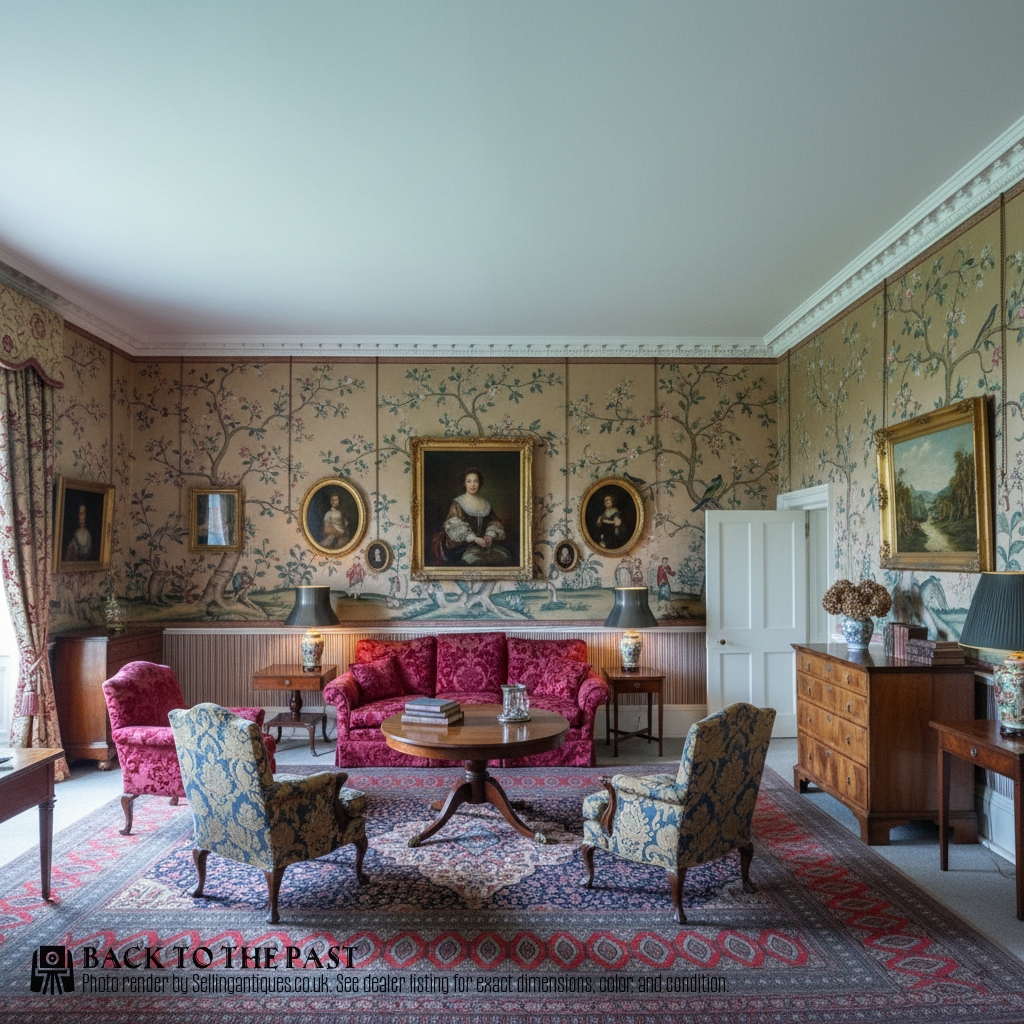
Walnut furniture thrives in rooms with stable humidity and away from direct sunlight, which can bleach the warm tones of the timber. A bedroom, hallway, or drawing room provides a suitable environment where the piece can function as storage or a display surface.
Keeping the piece away from direct heat sources prevents the timber beneath the veneer from drying out and lifting. Regular dusting with a soft cloth maintains the finish without needing aggressive cleaning agents.
Are Biedermeier chests different from British ones?
Biedermeier chests, produced during the nineteenth century in Central Europe, favour smooth, blonde figured-walnut surfaces with minimal architectural ornamentation. They emphasise the natural grain of the wood over applied decorative mouldings or complex brass hardware.
In contrast, British pieces from earlier periods often incorporate contrasting bandings, quarter-veneered panels, and structured bracket feet. The continental aesthetic leans toward functional simplicity and lighter tonal palettes.