
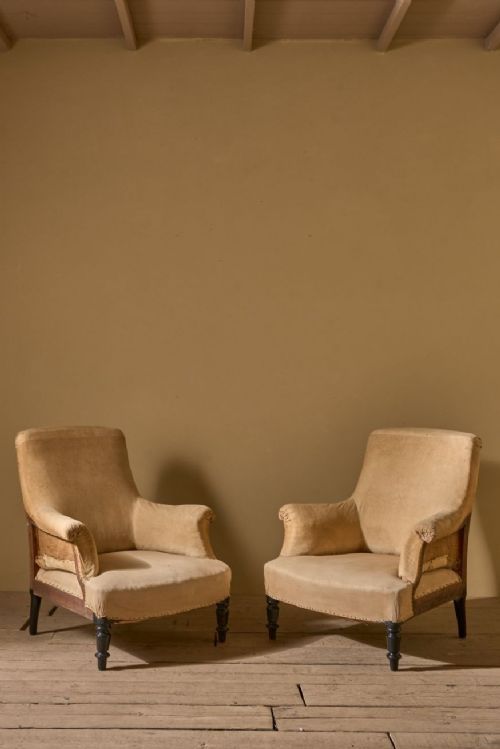


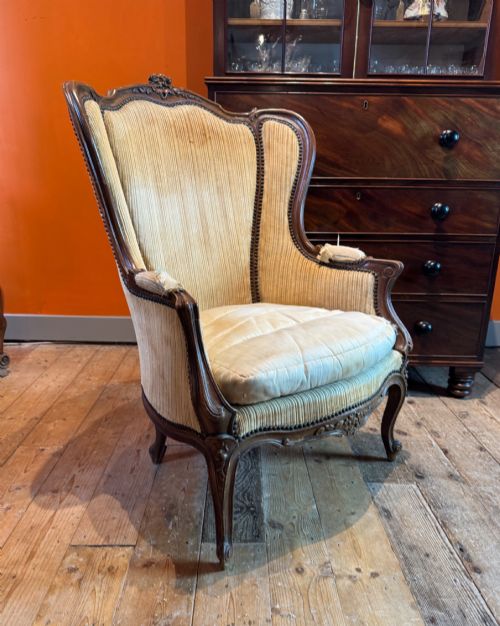
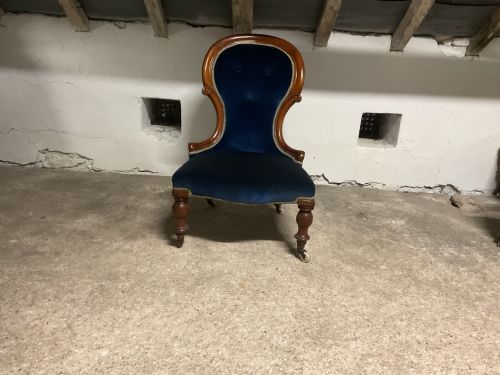
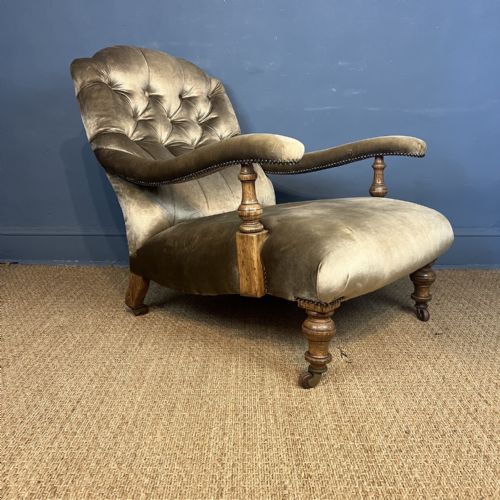
Velvet Fireside Armchair
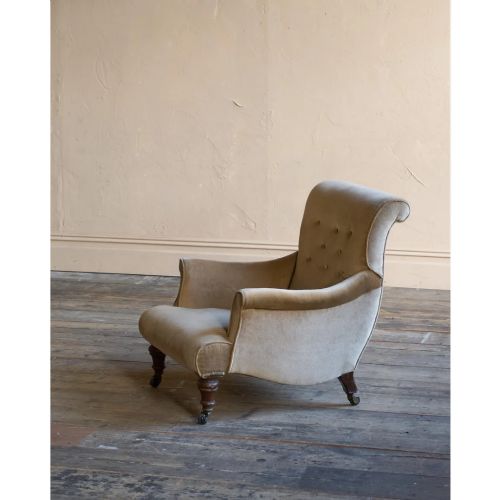
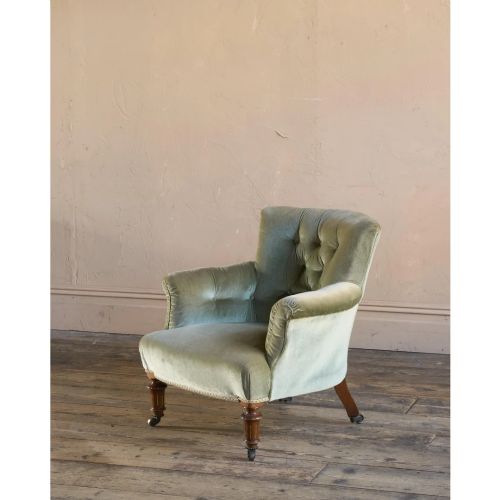
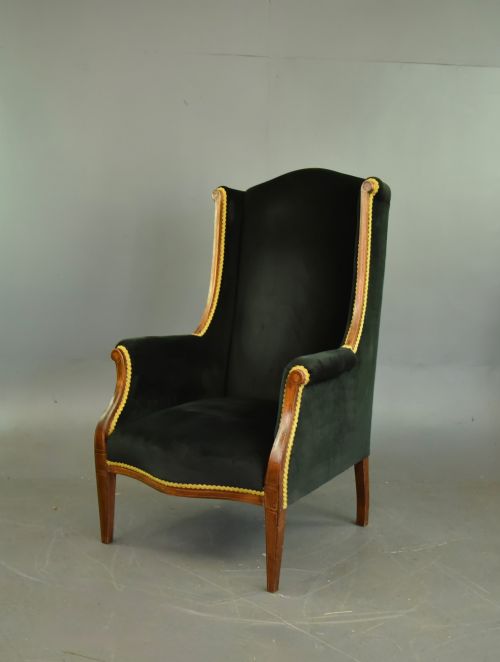
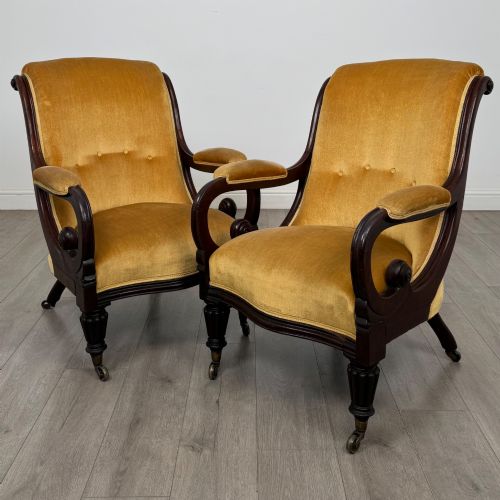
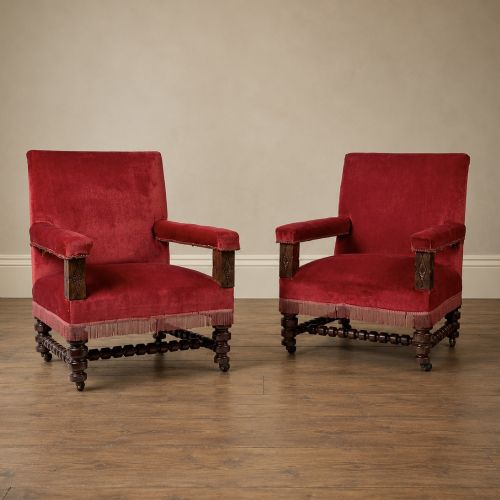
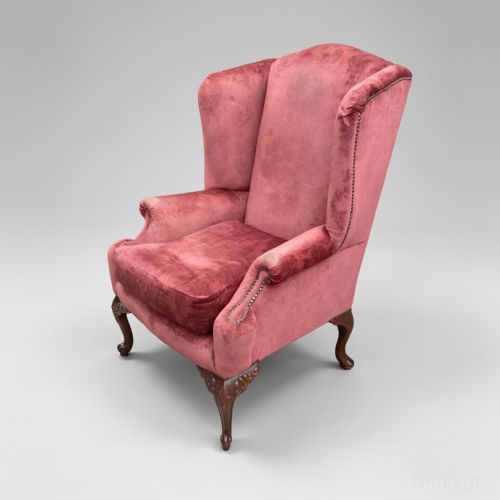
Velvet fireside armchair examples combine timber frames with plush textile upholstery, offering low seating designed for warmth and comfort beside a hearth.
Velvet Fireside Armchair
A velvet fireside armchair provides low, comfortable seating designed for sitting close to a hearth. These chairs appear in periods ranging from the eighteenth century through the Victorian and Edwardian eras, reflecting stylistic shifts from Georgian proportions to more ornate nineteenth-century designs.
The versions most commonly met on this page span Victorian, Edwardian, and nineteenth-century pieces alongside revival styles such as Queen Anne, Louis XV, and George III. Makers and workshops from these periods utilise traditional forms like wingbacks, bergères, and button-backed armchairs.
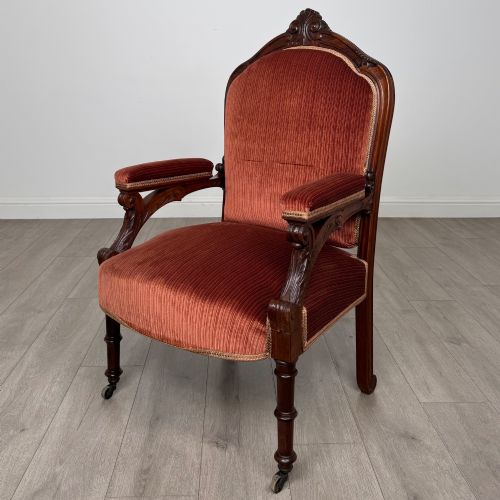
Framing materials support the textile upholstery, with woods such as mahogany, walnut, oak, and rosewood appearing frequently across the selection. Brass and textile details accompany these timber frames, completing the construction of the seating.
How they were made
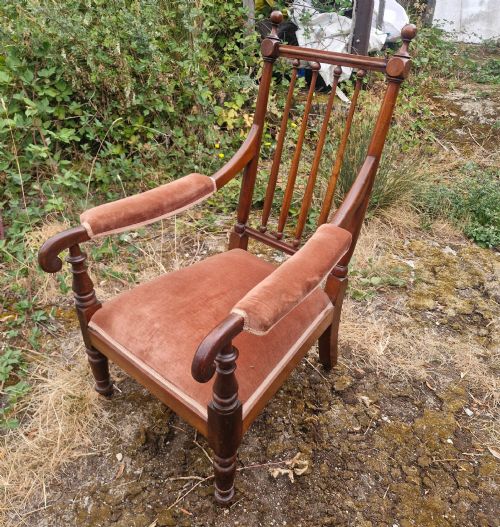
Craftsmen built the underlying structures using solid timbers like mahogany, walnut, oak, and rosewood, shaping frames through joinery and carving. Spindle backs, cabriole legs, and barley twist frames demonstrate the carpentry techniques employed during the nineteenth and early twentieth centuries.
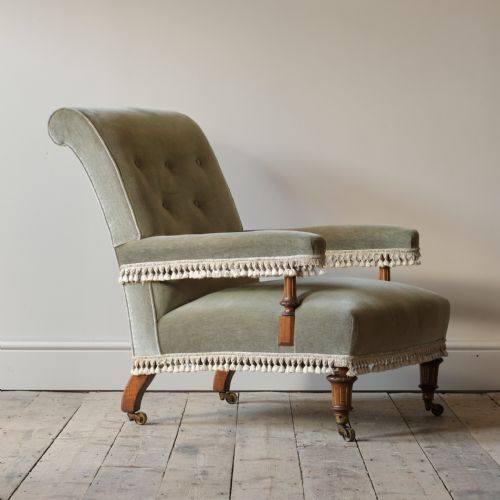
Upholstery involved securing textile coverings over padded foundations, with velvet and chenille twill providing tactile surfaces. Brass elements sometimes supplemented the wooden and fabric components for structural reinforcement or decorative accent.
What varies in quality
The standard of carving and timber selection separates baseline production from finer workshops. Dense hardwoods like rosewood and mahogany allow for crisp mouldings and durable structural joints that withstand decades of use.
Upholstery execution and frame rigidity dictate the overall integrity of the piece. Well-proportioned seating relies on balanced frame construction and careful attachment of textile coverings to maintain stability and comfort.
Gillows·Hampton and Sons
The Velvet Fireside Armchair Glossary
- Bergère
- An enclosed armchair with upholstered sides and back, typically featuring an exposed wooden frame. This French form gained popularity during the eighteenth and nineteenth centuries.
- Wingback
- An armchair with side panels or wings attached to the back, designed to shield the occupant from drafts. Early examples date to the Georgian period.
- Cabriole leg
- A furniture leg that curves outward in a convex arc and tapers inward in a concave arc, ending in a pad or foot. This shape appears on many Victorian and revival chairs.
- Barley twist
- A type of furniture turning resembling a twisted rope or barley sugar stick. Craftsmen carved or turned this decorative motif onto chair legs and uprights during the nineteenth century.
- Button back
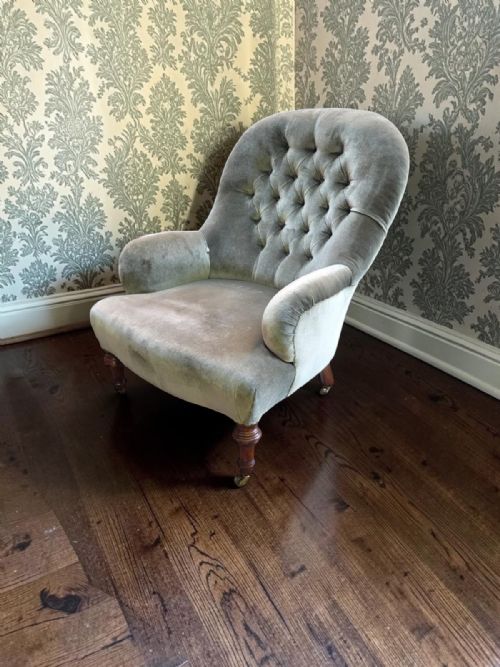
- An upholstery technique where buttons are pulled deep into the padding to create a quilted, diamond pattern. This method provides both structural tension and decorative relief.
Velvet Fireside Armchair: Frequently Asked Questions
What defines a velvet fireside armchair?
A velvet fireside armchair combines a low wooden frame with soft textile upholstery intended for warmth near a fireplace. These seats draw on Victorian, Edwardian, and earlier stylistic traditions.
Examples incorporate timber structures made from mahogany, walnut, or rosewood, paired with pile fabrics like velvet to create a comfortable seat.
How do I identify the period?
Dating relies on observing structural characteristics, timber choices, and stylistic revival cues. Nineteenth-century pieces often display walnut or mahogany frames with turned or carved details.
Earlier eighteenth-century influences appear in wingback forms and Georgian proportions, while Edwardian examples show lighter framing techniques and distinct upholstery treatments.
Where were these chairs used?
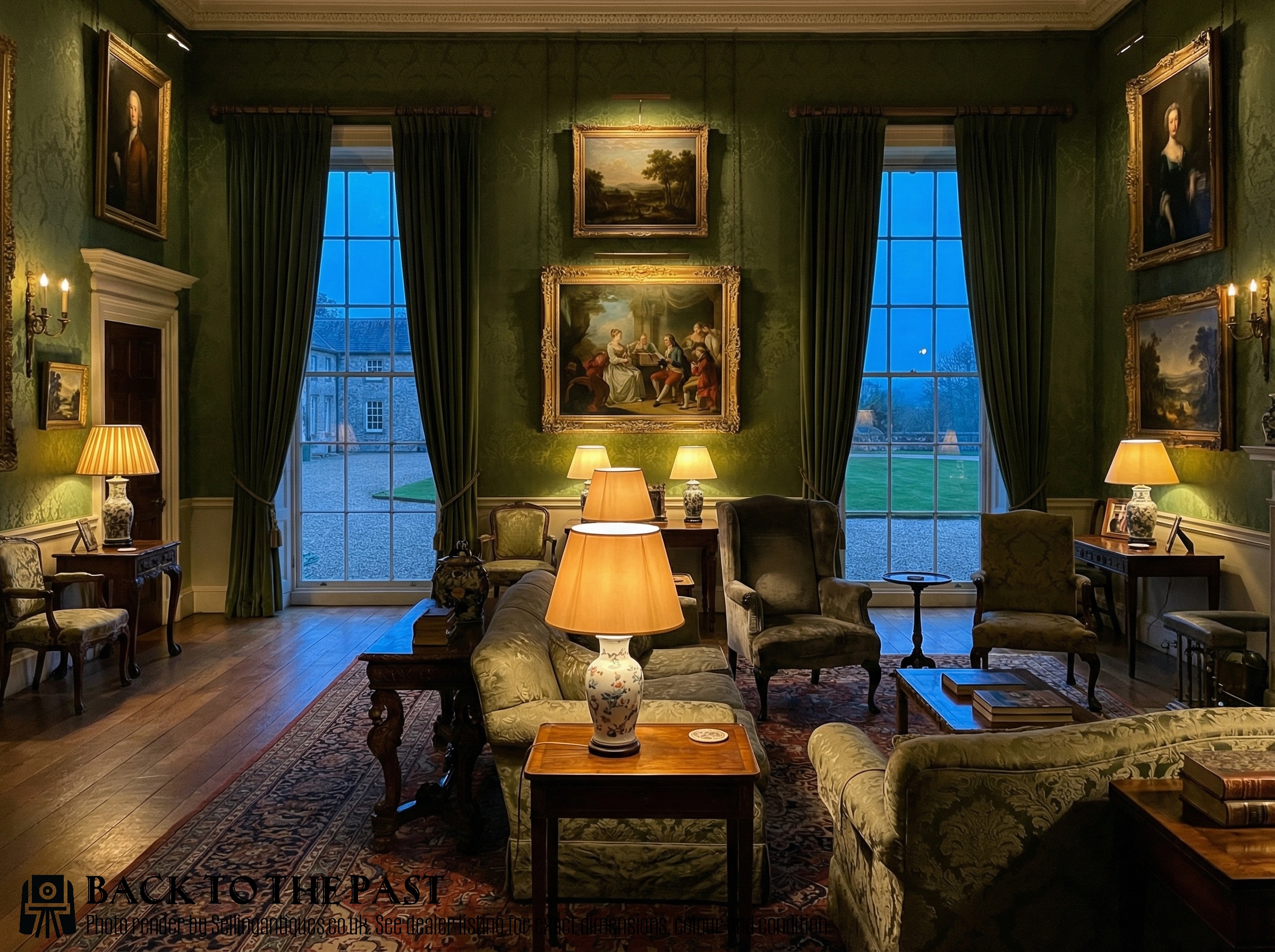
These armchairs served primarily in domestic reception rooms, bedrooms, and drawing rooms where hearths provided central heating. Their low profiles kept occupants close to the warmth of the fire.
Many variations, including nursing chairs and bedroom chairs, were tailored for specific domestic spaces and personal comfort during the Victorian era.
How do I care for velvet upholstery?
Maintaining velvet textile upholstery requires gentle brushing to preserve the pile direction and prevent crushing. Regular dusting keeps particulate matter from settling into the fabric weave.
Avoiding direct sunlight prevents the textile colours from fading, ensuring the fabric retains its depth and texture over extended periods of domestic use.