



Vase Splat Walnut Chair
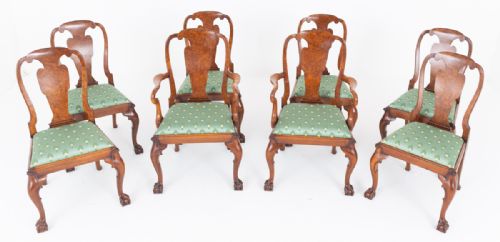
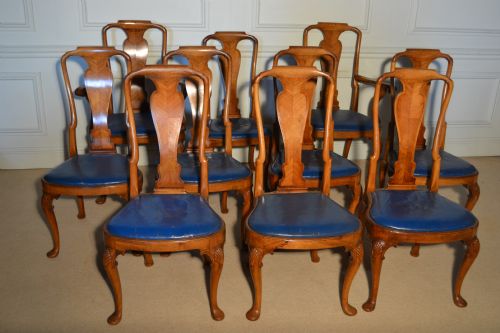
A vase splat walnut chair brings the restrained elegance of early eighteenth-century seating into a room through rich timber and a distinctive pierced backrest.
Vase Splat Walnut Chair
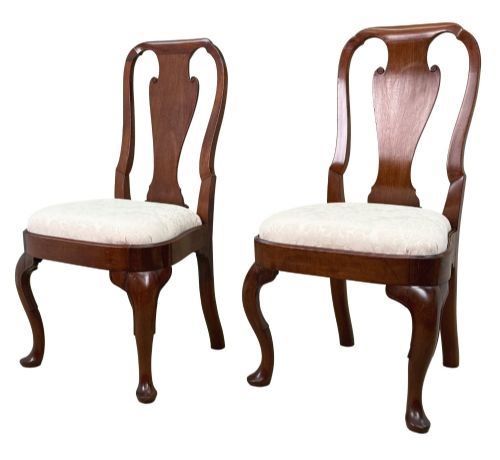
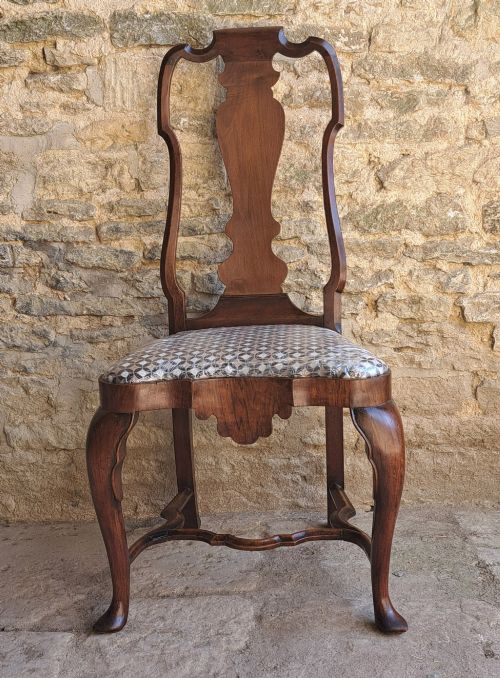
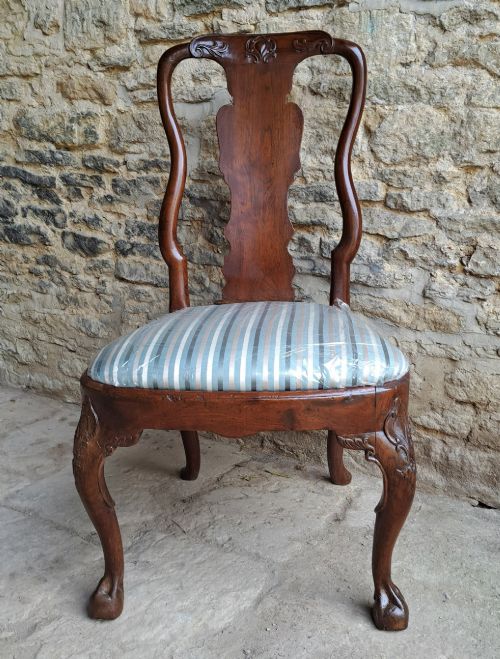
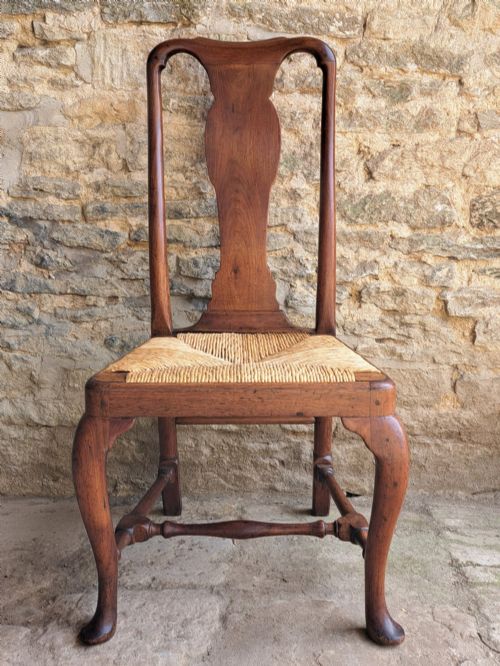
A vase splat walnut chair is defined by its characteristic central back panel shaped like a vase, flanked by upright stiles and supported by walnut framing. Buyers seeking this form will find examples spanning the eighteenth century, alongside later revival pieces produced around nineteen hundred and the early decades of the twentieth century.
The selections here encompass individual side chairs, matched pairs, and larger dining sets comprising both standard dining chairs and carver armchairs. Woods range from standard walnut and red walnut to highly figured burr walnut, often paired with upholstered seats in fabric, leather, textile, rush, or tapestry.
The dominant aesthetic draws heavily on Queen Anne, George I, and George II traditions, with occasional Dutch Rococo marquetry and high-backed variants. Most pieces encountered on this page belong either to the eighteenth century or to later revivals executed with traditional forms.
Materials and construction methods
Makers utilised solid walnut, red walnut, and burr walnut veneers over supportive secondary timbers to build these chairs, shaping the grain to follow the curves of the splat and frame. Cabriole legs, a defining structural element, required careful timber selection and joinery to support the weight of the sitter without heavy bracing.
Seating portions were constructed as drop-in or fixed pads, subsequently covered in materials such as leather, rush, fabric, tapestry, or plain textile. Decorative details on revival and period pieces sometimes included marquetry inlay, accentuating the natural figures of the walnut.
Some high-backed dining chairs require careful navigation through low doorways, proving that eighteenth-century posture demanded genuine dedication.
Distinctions in quality
Quality in these chairs rests upon the crispness of the carving on the splat and knees, the figure of the walnut timber, and the integrity of the original construction. Superior examples display fluent curves in the cabriole legs and finely proportioned backrests that balance decorative restraint with structural strength.
The distinction between eighteenth-century originals and later Queen Anne style revivals lies in the depth of patination, the hand-worked tool marks on hidden surfaces, and the seamless integration of joints over centuries of use.
Charles Tozer
The Vase Splat Walnut Chair Glossary
- Vase splat
- The central vertical wooden panel of a chair back shaped to resemble the silhouette of a classical vase. This feature provides both lumbar support and the primary decorative focus of the seat.
- Cabriole leg
- A furniture leg that curves out in a convex arc at the knee and tapers inward in a concave arc toward the foot. It draws inspiration from animal limbs and typifies eighteenth-century design.
- Burr walnut
- Wood taken from a walnut tree growth featuring swirling, knotted grain patterns prized for decorative veneer work. It creates rich, mottled patterns across chair backs and splats.
- Carver chair
- An armchair designed to match a set of dining chairs, traditionally utilised at the head of a table. These feature supportive armrests integrated into the primary frame.
- Marquetry
- The art of applying decorative pieces of veneer to a structure to form intricate pictorial designs. Dutch examples frequently employ this technique on high-backed chairs.
Vase Splat Walnut Chair: Frequently Asked Questions
What is a vase splat walnut chair?
A vase splat walnut chair is a form of seating featuring a solid walnut frame and a central backrest shaped like a vase. These chairs emerged prominently during the early eighteenth century under Queen Anne and George reigns.
Over time, cabinetmakers and later revival workshops continued to produce the form, incorporating materials like burr walnut and upholstered drop-in seats.
How do I date a walnut chair?
Dating involves examining the construction methods, timber patination, and stylistic nuances of the frame. Eighteenth-century pieces display hand-cut joinery and aged surfaces developed through centuries of use.
Revival pieces from around nineteen hundred often utilise more uniform machine production techniques while copying the earlier Queen Anne or George II aesthetic precisely.
Can I use these for daily dining?
Many buyers incorporate antique or revival dining sets into modern daily routines. The sturdy walnut construction and supportive high backs are well suited for regular seating around a dining table.
Upholstered pads in leather, fabric, or rush can be maintained or recovered to suit contemporary domestic environments while preserving the antique frame.
What is the difference between a side chair and a carver?
A side chair is built without armrests, designed to sit neatly along the sides of a dining table when not in use. A carver chair includes integrated armrests for added comfort.
Dining sets often combine several side chairs with a pair of carvers intended for the heads of the table, sharing the same vase splat design.