



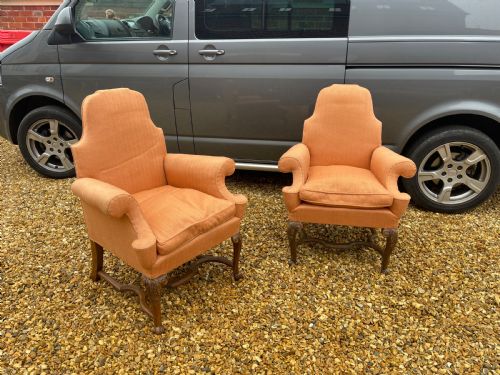


Period Queen Anne Chair
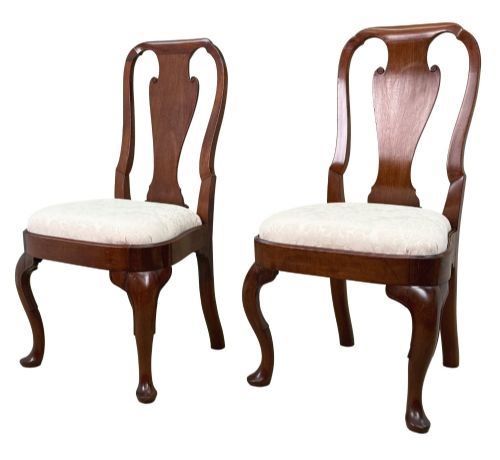
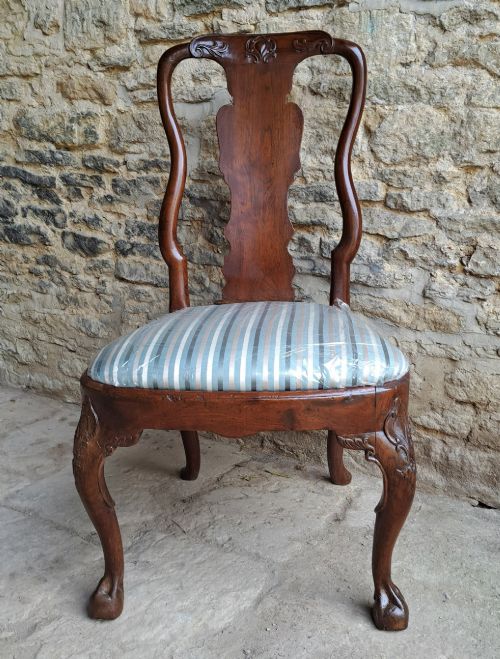
A period queen anne chair brings subtle grace to a room through its characteristic vase-shaped splat and cabriole legs.
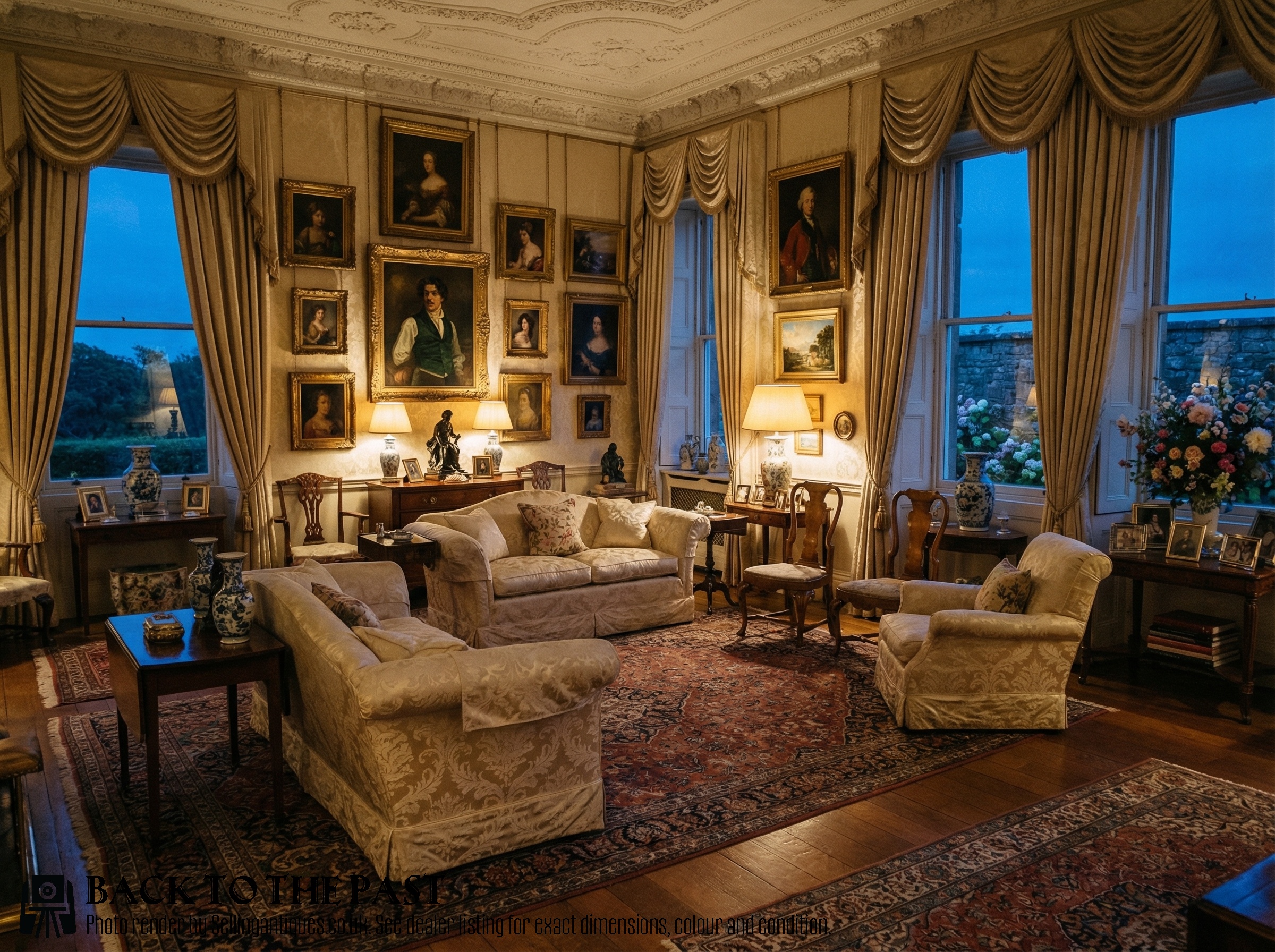
Period Queen Anne Chair
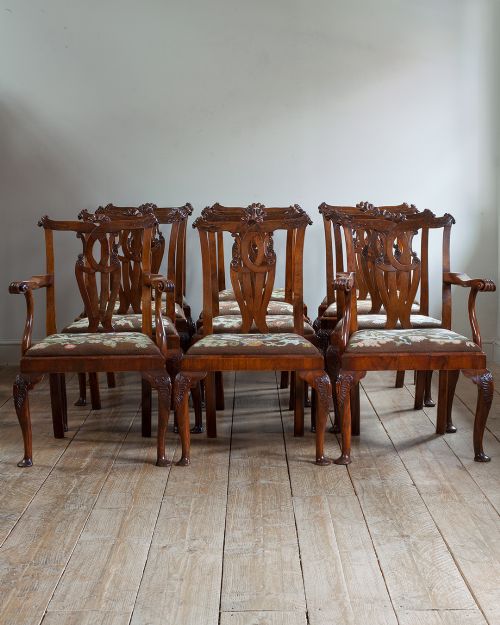
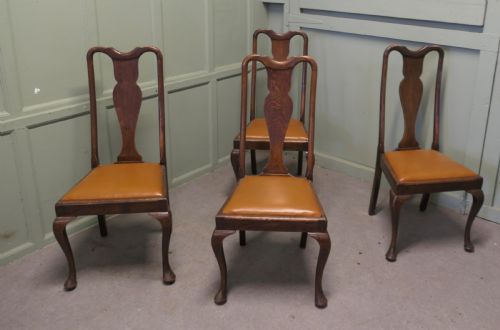
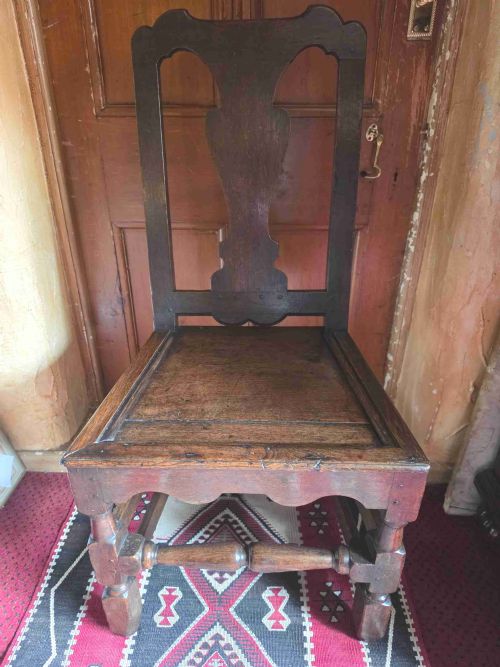
A period queen anne chair is an essential find for those seeking early eighteenth-century seating, appearing frequently alongside revival pieces from the twentieth century. These furnishings span several forms including side chairs, dining chairs, armchairs, and high-back seating designed for the home. The selection ranges from authentic early eighteenth-century examples in walnut and oak to later interpretations from the nineteenth and twentieth centuries.
Buyers encounter genuine period examples dated to the eighteenth century alongside revival iterations produced in the nineteen-twenties and nineteen-thirties. Forms include sets of dining chairs as well as pairs of side chairs and wing armchairs upholstered in fabric or textile. Elm, mahogany, and cane also appear across the listings, reflecting both original construction methods and subsequent revival periods.
Construction and Materials
Timbers such as walnut, oak, elm, and burr walnut form the primary structural framework of these chairs, shaped into curved splats and legs. Craftsmen utilised solid hardwoods, sometimes pairing walnut with secondary timbers or applying japanned finishes for decorative effect.
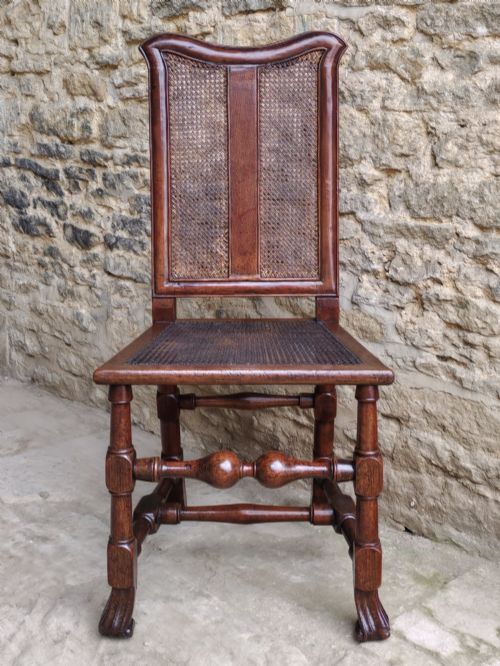
Upholstery materials include various textiles and fabrics, often featuring floral designs on seats, while some pieces retain caned panels or await re-upholstery. Joinery techniques from the eighteenth century through the revival eras relied on sturdy frame construction to support the distinctive contoured backs.
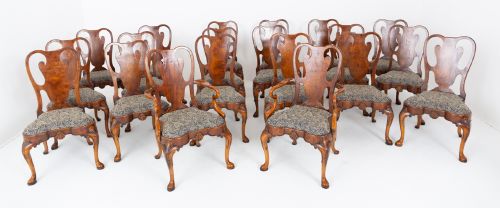
One remarkably patient household can seat twenty guests simultaneously on an matching set of elm dining chairs.
Evaluating Quality and Origin
Quality in a period queen anne chair rests upon the crispness of the carved splat, the integrity of the timber grain, and the harmony of the cabriole proportions. Genuine period pieces from the eighteenth century demonstrate distinct handling of walnut or oak compared to twentieth-century revival interpretations.
The sophistication of the silhouette, whether a high-back profile or a winged armchair, dictates the visual presence of the piece. Matching sets of dining chairs display uniform craftsmanship across multiple seats, whereas individual side chairs rely on singular decorative details like parcel gilding or stamped maker attribution.
Charles Tozer
The Period Queen Anne Chair Glossary
- Cabriole leg
- A furniture leg that curves outward at the knee and tapers inward toward the foot, mimicking animal limbs. This form provides structural support without heavy bracing.
- Splat back
- A central vertical strip of wood down the middle of a chair back, shaped to support the sitter. In these pieces, it frequently takes a vase or fiddle contour.
- Japanned
- A style of European decorative finishing that imitates East Asian lacquer work. It involves layered resin finishes applied to wooden furniture.
- Wingback
- An armchair featuring side panels or wings attached to the arms and back. These panels originally served to shield the sitter from drafts.
- Caning
- A woven lattice pattern made from peeled rattan or cane strips used for chair seats and backs. It offers lightweight flexibility.
Period Queen Anne Chair: Frequently Asked Questions
How do I identify a true period queen anne chair?
Authentic pieces originate from the early eighteenth century and display period-specific timber patination, hand-cut joinery, and walnut or oak construction.
Revival pieces, often produced in the twentieth century, utilise similar forms but exhibit modern machining and later secondary woods.
What rooms suit a set of dining chairs?
Dining chairs function effectively around a traditional dining table, providing coordinated seating for multiple guests.
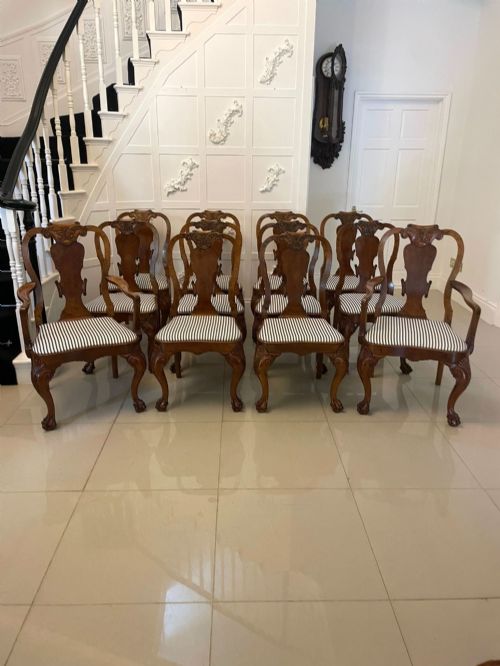
Sets ranging from small groupings to large assemblies of twelve or twenty chairs accommodate various interior layouts.
Are wing armchairs comfortable for daily use?
Wing armchairs provide structured back support and sheltered seating suitable for reading or fireside relaxation.
Some available examples require re-upholstery, allowing buyers to select fabrics that match existing interior schemes.
How should I care for antique walnut furniture?
Walnut surfaces require protection from direct sunlight and excessive humidity to prevent timber splitting or fading.
Regular dusting with a dry cloth maintains the finish without stripping the natural patination built up over centuries.