
Vanity Stool Seat
A vanity stool seat brings practical comfort to a dressing table or piano, uniting period craftsmanship with daily utility.
Vanity Stool Seat
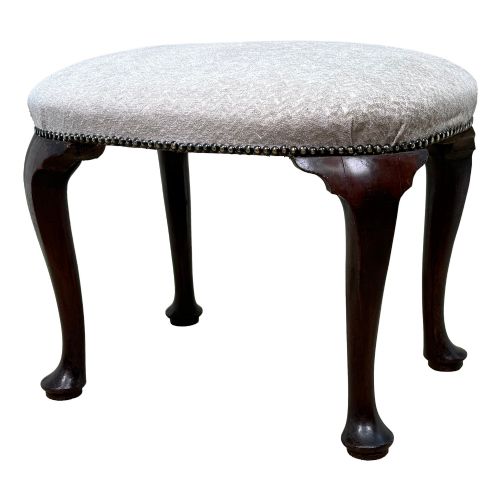
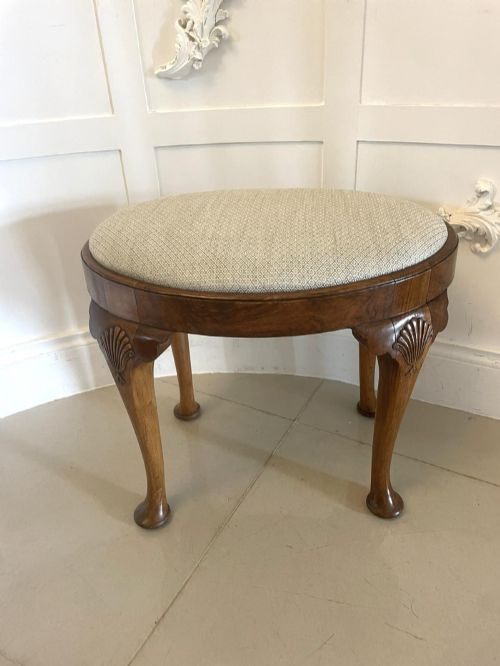
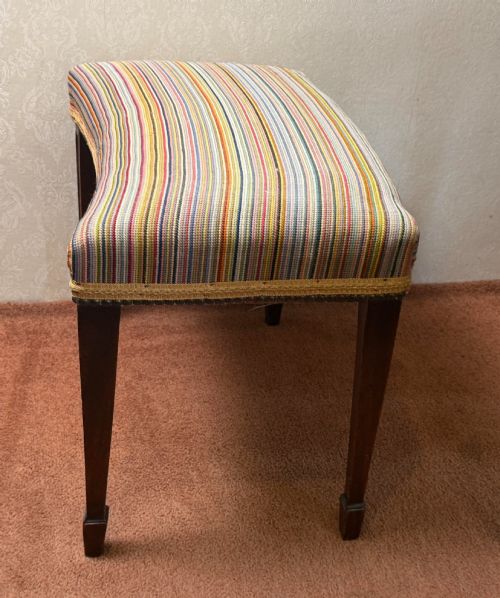
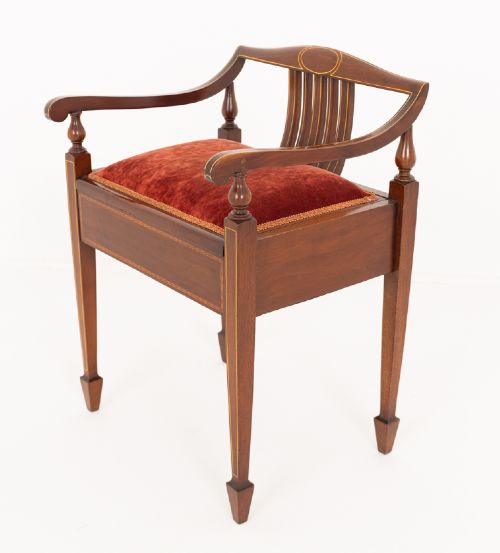
A vanity stool seat is a low form of seating designed primarily for dressing tables, bedrooms, and music rooms. When you search for a vanity stool seat, you encounter forms spanning from the eighteenth century through to the Art Deco period, with Victorian and Edwardian examples appearing most frequently.
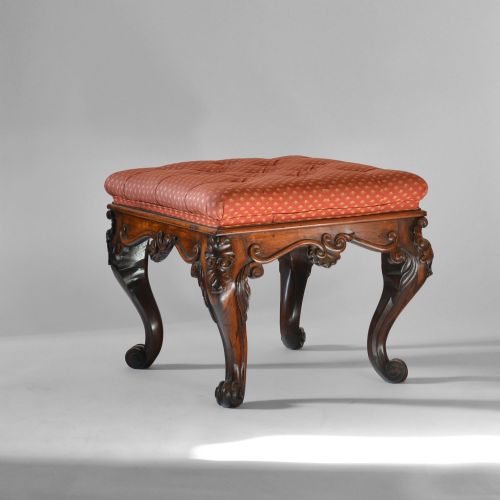
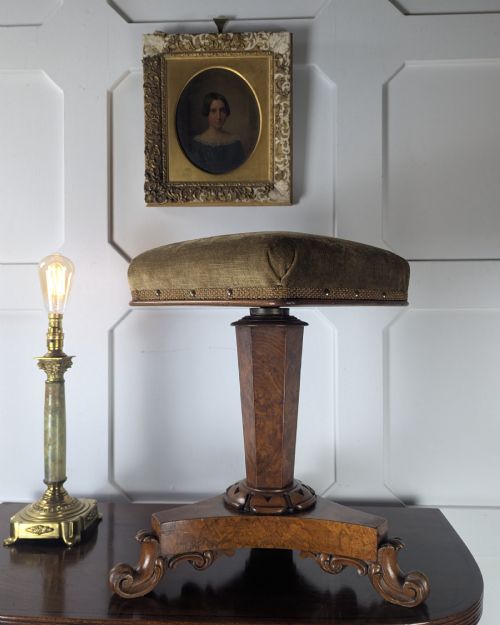
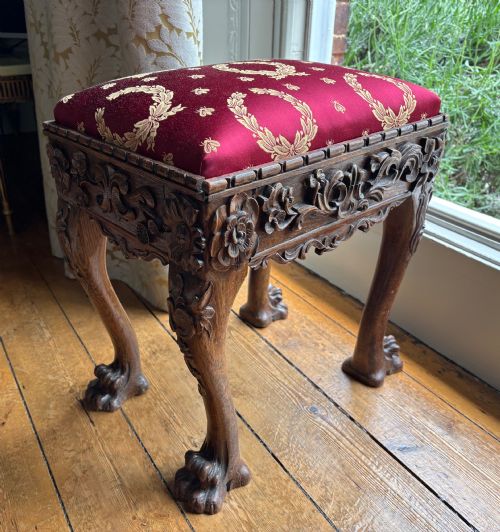
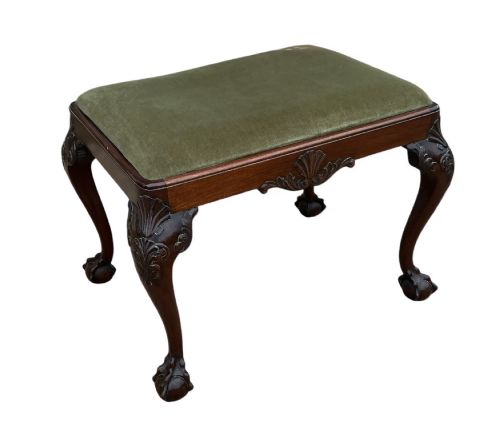
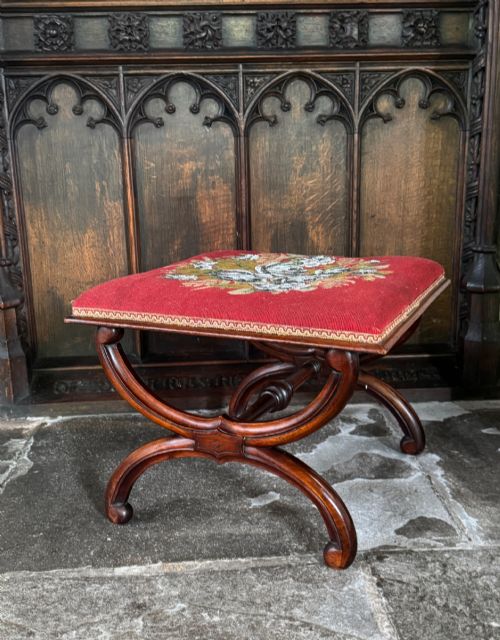
The selection ranges from simple mahogany and oak frames to elaborate walnut and rosewood designs reflecting revival styles such as Queen Anne, Chippendale, and Sheraton. Many pieces double as piano stools or dressing chairs, offering adjustable heights, revolving mechanisms, or X-frame structures.
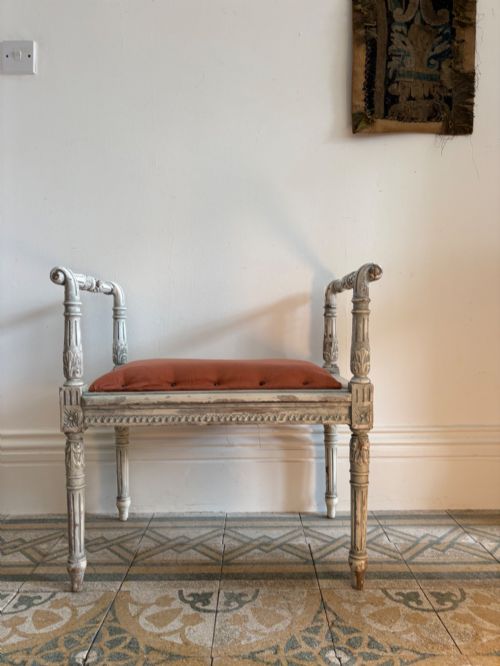
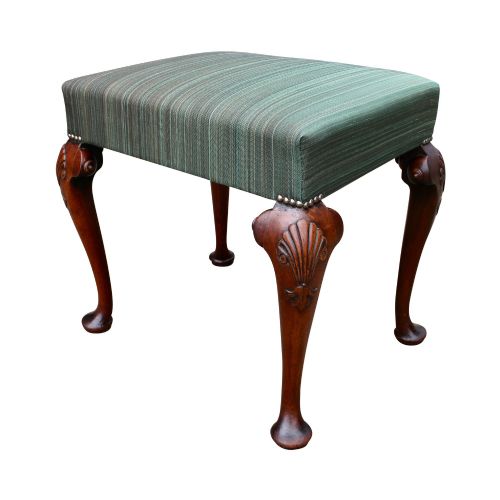
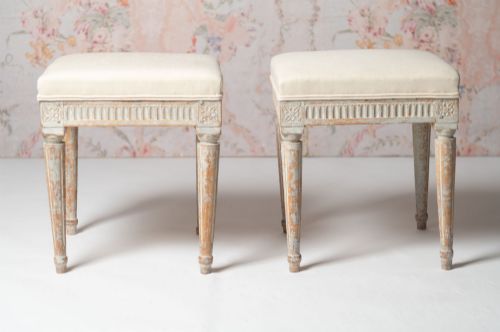
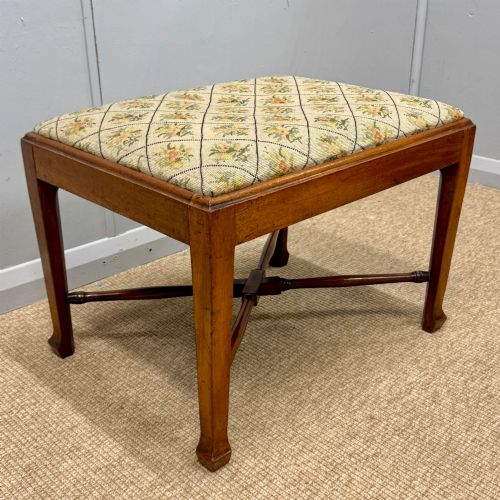
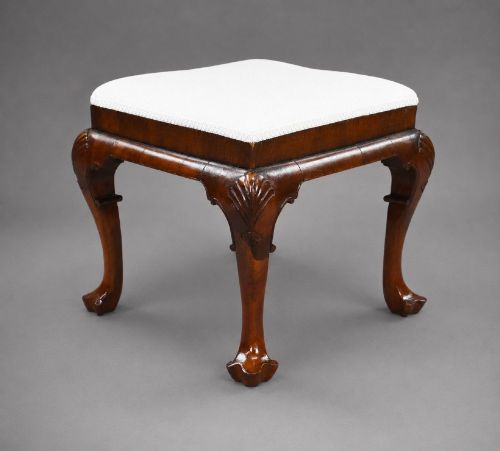
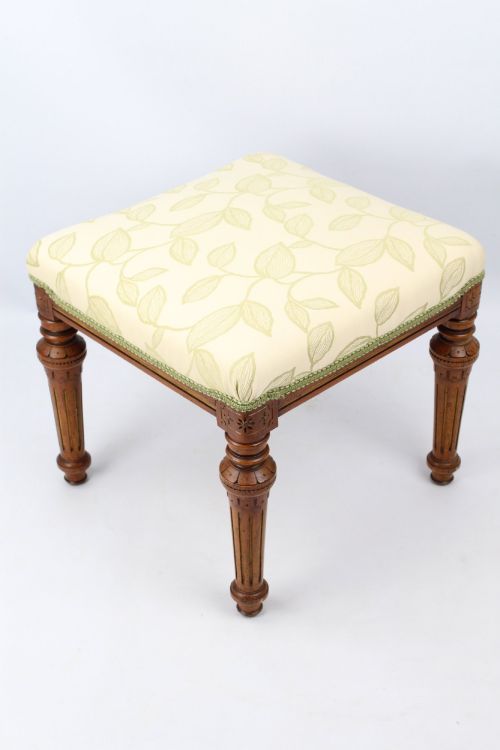
Origin points vary widely across these listings, including English, French Empire, Swedish Gustavian, and Anglo-Indian workshops. Buyers commonly find upholstered tops covered in silk, velvet, fabric, or beadwork, supported by cabriole legs, turned supports, or square tapering legs.
How they were made
Cabinet makers constructed these frames using dense hardwoods like mahogany, walnut, rosewood, satinwood, and oak, often shaping them with carved details or gilding. Wood selection dictated the method of construction, allowing craftsmen to carve intricate cabriole legs or slender tapered supports.
Upholstery techniques involved securing textile, velvet, silk, or leather over padded foundations, occasionally incorporating intricate beadwork. Structural integrity relied on traditional joinery, cross stretchers, and mechanical components for adjustable piano stools.
Materials across these listings include mahogany, walnut, rosewood, oak, satinwood, fabric, velvet, silk, leather, and brass.
What varies in quality
Quality in a vanity stool seat reveals itself in the crispness of the wood carving and the selection of figured timbers such as burr walnut or grained mahogany. Superior examples display thoughtful proportions, robust joinery, and harmonious revival detailing rather than hurried assembly.
The sophistication of the seat mechanism, whether an adjustable screw for a piano stool or a stable X-frame construction, marks the distinction between standard utilitarian seating and finer workshop production.
Harry and Lou Epstein
The Vanity Stool Seat Glossary
- Cabriole leg
- A furniture leg that curves outward and then tapers inward, mimicking an animal's leg. This design appears frequently on Queen Anne and Georgian style seating.
- X-frame stool
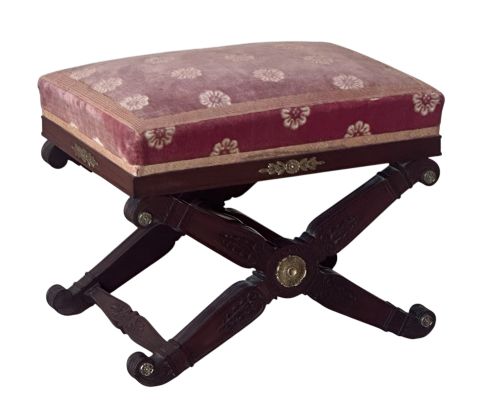
- A seating form featuring intersecting diagonal supports that form an X shape when viewed from the side. This architectural structure derives from ancient folding chair designs.
- Cross stretcher
- Wooden rails connecting the lower legs of a stool for added structural stability. They often intersect at the centre in an X shape.
- Revolving piano stool
- A seat fitted with a mechanical screw mechanism allowing the user to rotate and alter their seating height. These items often date from the Georgian and Victorian eras.
Vanity Stool Seat: Frequently Asked Questions
How do I identify a piano stool?
Piano stools usually incorporate a mechanical screw adjustment or a revolving top designed to alter the seating height for musicians.
They often share the compact proportions of dressing stools but prioritise functional height mechanisms over decorative upholstery.
Where should I place a vanity stool?
These compact seats fit naturally beneath dressing tables, in bedrooms, or beside pianos where space is at a premium.
Their diverse revival styles also allow them to function as decorative occasional seats in hallways or living spaces.
What is an X-frame stool?
An X-frame stool utilises intersecting diagonal wooden supports to create a sturdy, architectural base.
This form draws inspiration from historical French Empire and classical designs, offering a distinct profile compared to standard four-legged stools.