


Uzbekistan Suzani Tapestry
An uzbekistan suzani tapestry brings Central Asian colour and needlework into a room, offering embroidered textiles designed to hang on walls or cover spaces.
Uzbekistan Suzani Tapestry
An uzbekistan suzani tapestry is a traditional Central Asian embroidered textile created across various regional traditions. Buyers searching this phrase encounter wall hangings, needlework pieces, and ceremonial horse covers that reflect Uzbek and Central Asian styles.
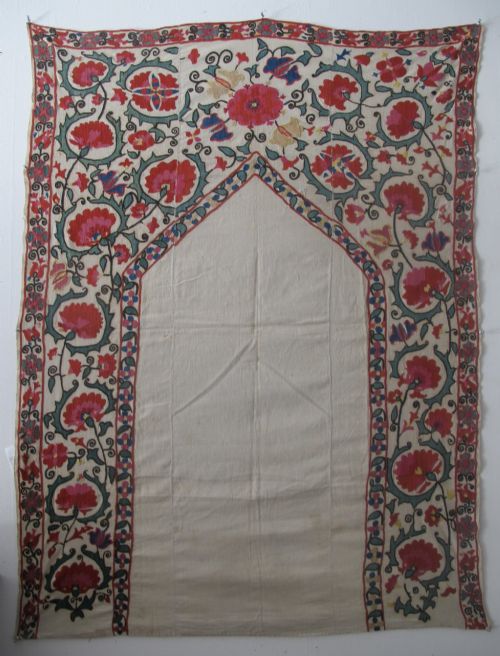
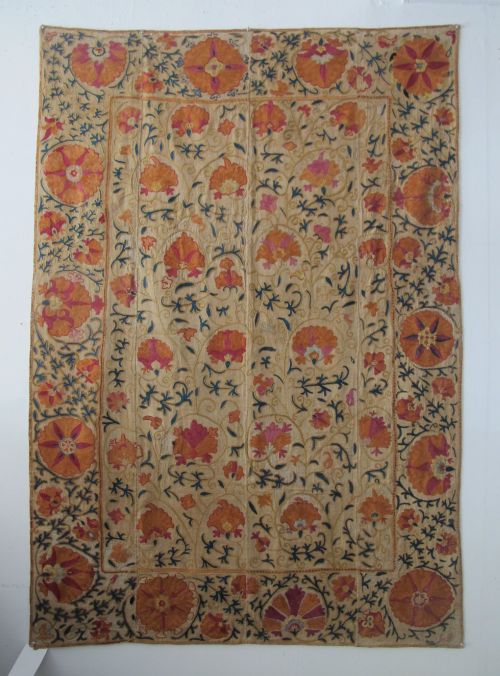
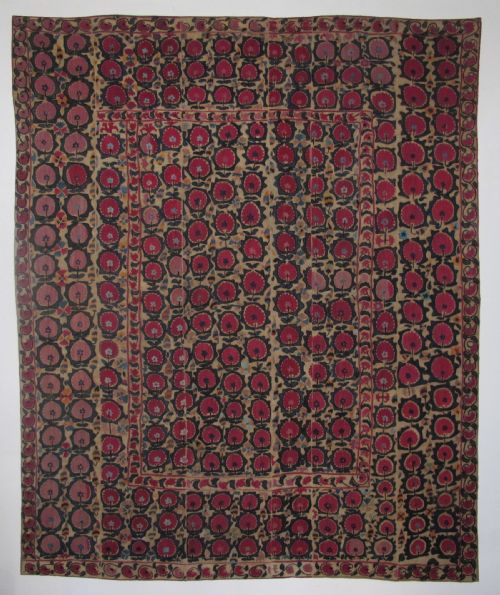
The selections available here span from the mid-nineteenth century to the early twentieth century. Common forms include full-size suzanis, smaller nim suzanis, and specific formats such as prayer designs.
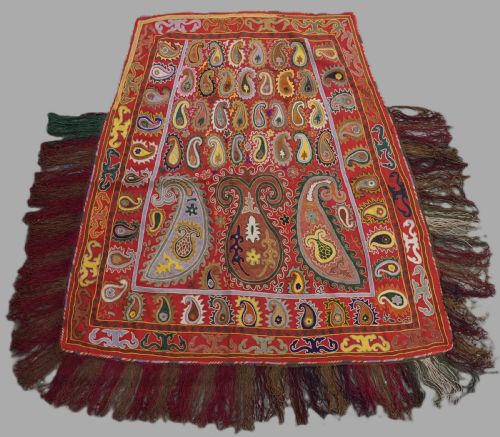
Regional origins shape these textiles profoundly, with pieces originating from Bokhara, Shakhrisabz, Tashkent, and Uratube. Lakai tribal pieces also appear, demonstrating distinct nomadic needlework traditions.
How they were made
Makers constructed these textiles by working silk thread onto woven foundations of cotton or wool. Artisans executed dense embroidery to cover the ground fabric with intricate floral and geometric patterns.
The embroidery technique relies on specialised stitches applied by hand across large cloths. Workshops and tribal makers utilised vibrant dyed threads to build up complex pictorial arrangements.
The listings span four decades of nineteenth-century production alongside early twentieth-century examples, using silk, cotton, and wool.
What varies in quality
The density and precision of the silk embroidery dictate the visual impact of each textile. Full work pieces demonstrate extensive needlework coverage across the entire cotton ground.
The complexity of the regional design and the vibrancy of the surviving dye colours distinguish exceptional examples. Variations in scale, from intimate nim suzanis to large ceremonial formats, reflect the original purpose of the textile.
The Uzbekistan Suzani Tapestry Glossary
- Suzani
- An embroidered tribal textile originating from Central Asia, traditionally worked in silk thread on a cotton ground. These pieces served as dowry items and household decorations.
- Nim Suzani
- A smaller version of the standard suzani wall hanging, often measuring around half the scale. These smaller formats were utilised for specific domestic spaces.
- Prayer Format
- A textile layout featuring a distinct architectural arch or mihrab design used for devotional contexts. This specific arrangement guides the visual focus of the embroidery.
- Full Work
- A descriptive term for embroidery that densely covers the entire foundation fabric without leaving large blank areas. This style requires considerable time and material investment.
- Lakai
- A Central Asian tribe known for distinct nomadic embroidery styles and ceremonial horse covers. Their work often employs energetic geometric motifs and bold colour combinations.
Uzbekistan Suzani Tapestry: Frequently Asked Questions
How were suzanis used?
These textiles functioned primarily as wall hangings, decorative covers, and ceremonial items within Central Asian homes. Families also created them as part of a bride's traditional dowry.
Nomadic groups such as the Lakai utilised specific embroidered pieces like saddle covers for ceremonies and festive occasions. Today, collectors mount them on walls as decorative art pieces.
What is a nim suzani?
A nim suzani is a smaller variant of the standard embroidered wall hanging, translated literally as half suzani. These compact pieces were produced in regions like Bokhara and Shakhrisabz.
They offer the same intricate silk needlework and regional designs as larger examples but fit more easily into modern residential spaces.
How do I date a suzani?
Dating relies on examining the structural characteristics, dye types, and regional embroidery styles recorded across nineteenth and early twentieth-century examples. Pieces from around eighteen-fifty often display specific floral compositions unique to workshops in Uratube and Bokhara.
Later pieces from the early twentieth century reflect evolving tribal influences and shifts in cotton ground preparation.
Where were suzanis made?
Artisans produced these textiles across various historical centres in Uzbekistan, including Tashkent, Bokhara, Shakhrisabz, and Uratube. Each region developed distinct aesthetic traditions and needlework patterns.
Nomadic tribes such as the Lakai also contributed unique ceremonial textiles influenced by their specific cultural heritage.
How do I care for a textile?
Protect antique embroidered textiles by mounting them away from direct sunlight to preserve the dyed silk threads. Gentle vacuuming through a mesh screen helps remove dust without disturbing the delicate cotton ground.
Professional textile conservation remains the safest method for addressing any structural stabilisation needs.