
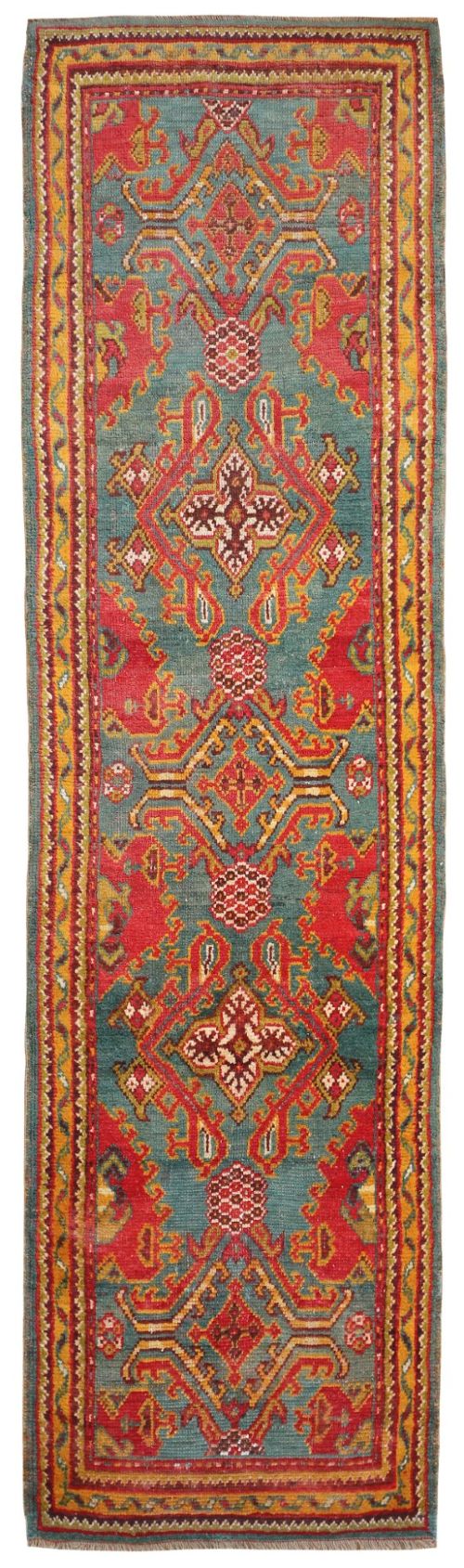



Ushak Wool Rug
An ushak wool rug brings warmth and historic pattern to a room, offering the softer palette and relaxed geometry collectors prize.
Ushak Wool Rug
When you search for an ushak wool rug, you encounter floor coverings originating from Western Anatolia, spanning formats from small rugs to grand carpets and runners. The pieces gathered here belong primarily to the late nineteenth and early twentieth centuries, labelled under periods such as Victorian, 19th Century, and specific decades from the 1870s to the 1920s.
The most common formats you will meet on this page are large carpets and runners, alongside kilims and occasionally upholstered armchairs incorporating these textiles. Styles range across Ottoman, Anatolian, Turkish, and Oushak designations, reflecting the traditional regional weaving heritage of these floor coverings.
Buyers look for these items to anchor a room with muted, sophisticated tones and large-scale floral or medallion motifs. The inventory balances substantial room-sized carpets with narrow runners suited to hallways and landings.
How They Were Made
These textiles rely predominantly on wool and cotton foundations, with certain examples utilising softer angora wool for a more pliable texture. Weavers knotted the pile by hand onto warp and weft threads, incorporating natural dye materials that yielded the characteristic faded and pastel hues seen across the pieces.
Structural elements extend beyond floor coverings into furniture production, where textile fragments are integrated into wood and brass chair frames. The construction methods prioritise resilience, allowing large carpets and room-sized formats to withstand generations of domestic use.
Listings span periods from the 1870s to the 1920s, featuring wool, cotton, and angora wool constructions.
What Varies in Quality
The division between standard and superior pieces rests on the handled quality of the wool and the subtlety of the colour palette. Finer examples display an even, low pile and harmonious fading across the field, whereas coarser specimens show heavier wear or harsher dye retention.
Scale and proportion separate the ordinary from the exceptional, particularly in large format carpets and oversized runners where maintaining geometric symmetry across a vast surface requires high technical skill.
The Ushak Wool Rug Glossary
- Kilim
- A flat-woven carpet or rug produced without a pile, traditionally utilised for lighter floor coverings or wall hangings.
- Runner
- A long, narrow carpet format specifically designed for hallways, corridors, and staircases.
- Angora wool
- A finer, softer fleece material sourced from specific goats, noted for its pliable handle and lustrous appearance in select rugs.
- Medallion
- A central decorative motif placed in the middle of the rug field, surrounded by field patterns and border guards.
- Ottoman
- Pertaining to the artistic and cultural traditions of the Ottoman Empire, influencing the design motifs found in these Anatolian textiles.
Ushak Wool Rug: Frequently Asked Questions
Where were these rugs made?
These pieces originate from Ushak in Western Anatolia, a historic centre for Turkish carpet production known for distinctive large-scale floral and medallion designs.
Weavers in this region produced floor coverings for both domestic use and international export, shaping the aesthetic recognised today as traditional Turkish Oushak work.
How do I care for an antique rug?
Protect the textile by placing it in low-traffic areas or spaces with minimal direct sunlight to preserve the natural dyes and soft wool fibres. Regular gentle vacuuming without a rotating brush roll prevents dust accumulation within the pile.
Professional cleaning tailored to antique wool is recommended to maintain the structural integrity of the cotton and wool foundations over time.
What size do these rugs usually come in?
The inventory encompasses a wide spectrum of dimensions, ranging from compact area rugs to substantial carpets measuring over four metres in length. Narrow runners are also common, designed to fit traditional hallways and narrow spaces.
Oversized formats appear frequently, catering to large reception rooms that require a dominant floor covering.
How do I tell different periods apart?
Dating relies on stylistic shifts, structural materials, and documented retailer histories associated with individual pieces from the nineteenth and early twentieth centuries. Victorian and nineteenth-century examples often exhibit deeper tones, while pieces from the 1910s and 1920s tend toward softer pastels.
Consulting the specific decade assigned to each item helps establish its chronological placement within the broader Ottoman weaving tradition.