

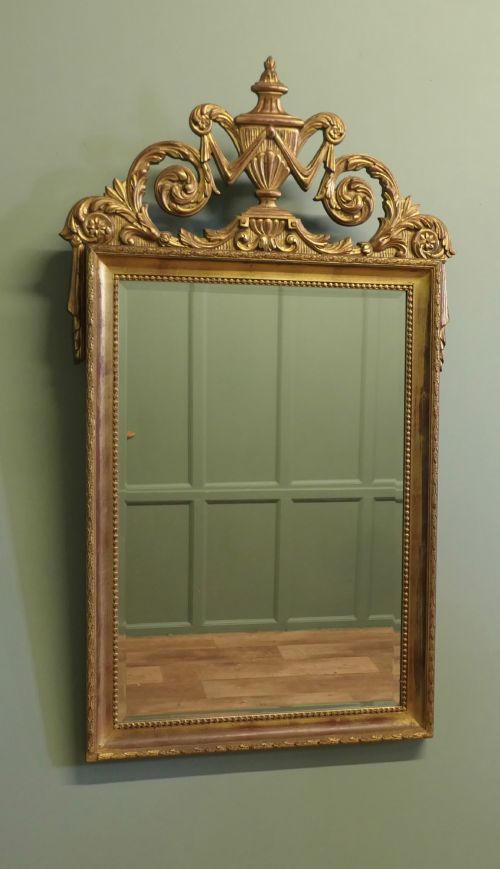
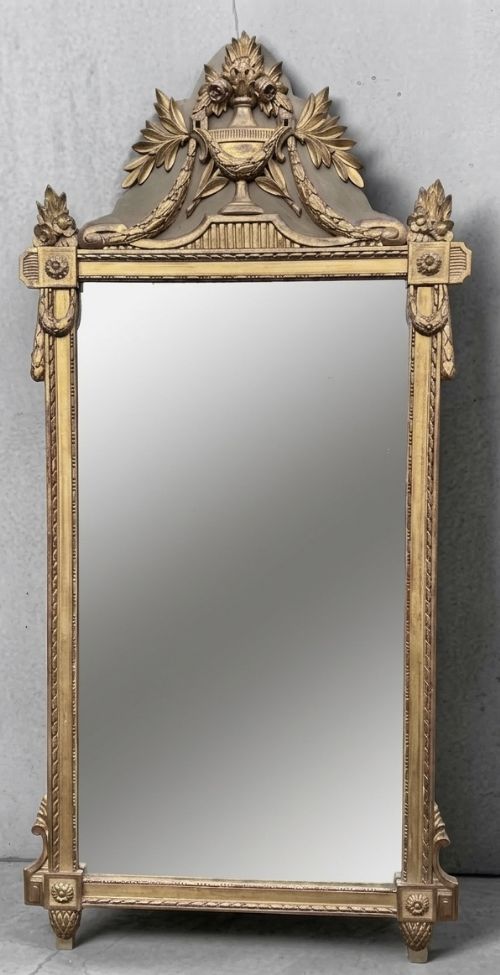
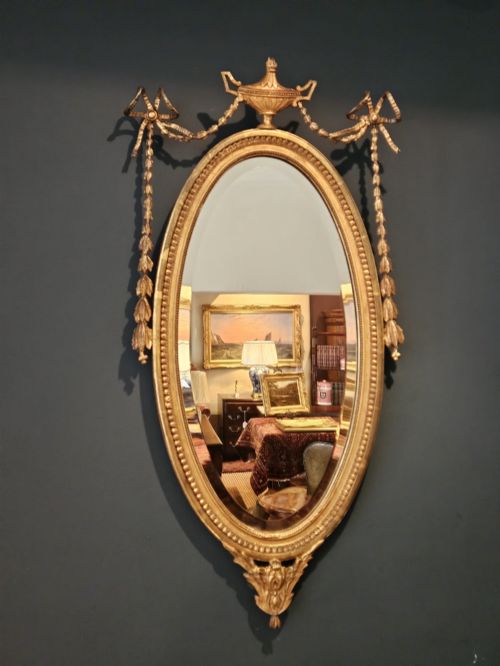

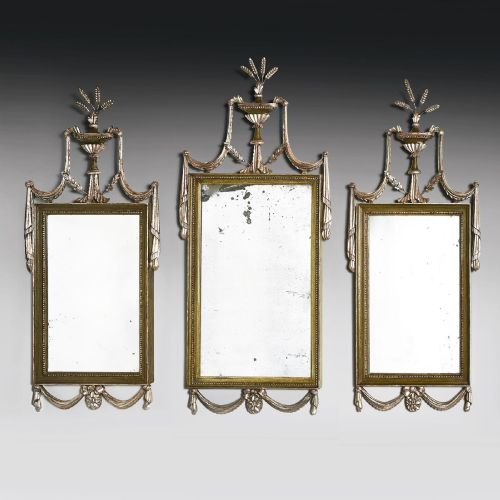





Urn Crested Wall Mirror
An urn crested wall mirror brings neoclassical dignity to a room, framing light with a carved motif that anchors traditional interiors.
Urn Crested Wall Mirror
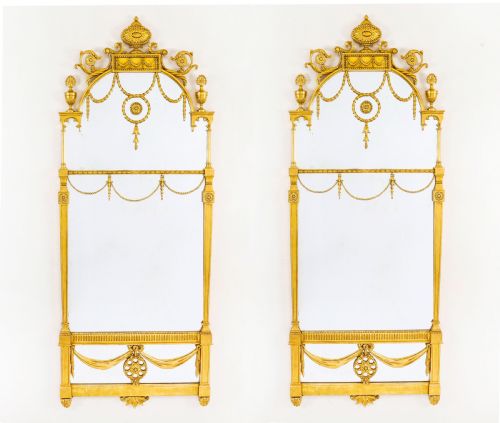
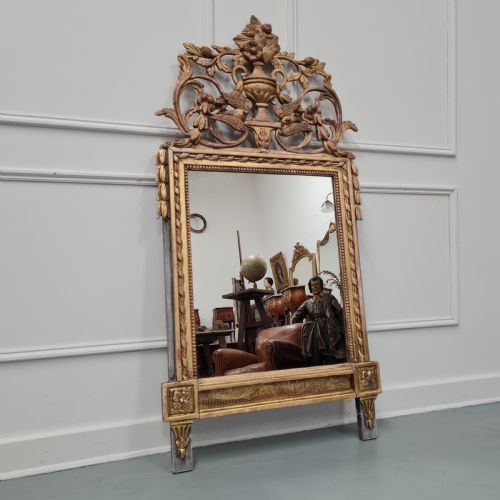
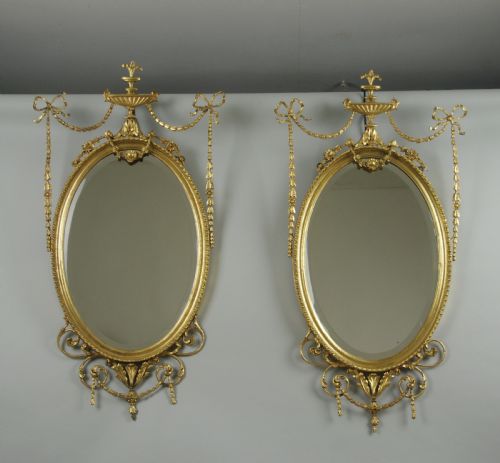
An urn crested wall mirror is a distinguished looking-glass topped by a carved or moulded urn, frequently accompanied by trailing swags, drapery or classical foliage. When you search for this phrase, you encounter wall mirrors and overmantel mirrors shaped by neoclassical, Adam revival and Regency influences.
The versions most commonly met on this page date from the nineteenth century, spanning Victorian and Edwardian interpretations alongside French styles. These pieces range from compact oval frames to large proportions suited for hanging above a fireplace.
Makers and designers drew heavily on eighteenth-century classical motifs, producing revival pieces that employed traditional silhouettes. Surviving examples demonstrate how deeply later craftsmen valued the formal symmetry of the neoclassical vocabulary.
Materials and construction
Carved wood provides the primary structural framework for many pieces, frequently paired with gesso and composition mouldings to build up the intricate relief work of the urn and swags. Giltwood, gold leaf and parcel-gilt finishes then coat these surfaces, catching the light across the frame.
Alternative treatments include ebonised wood and painted surfaces, sometimes rendered in two-colour gilt or silvered green paint. Mirror glass is set within these borders, occasionally preserved as original bevelled or border glass plates that show age through oxidation.
Urn Crested Wall Mirror Retail Price Guide 2026
Typical asking prices for urn crested wall mirror among the pieces listed under this phrase on Sellingantiques today, from the lower quarter to the upper quarter. They describe what is for sale here now, not the wider market.
Listings feature periods spanning from the late eighteenth century through the Victorian and Edwardian eras into the early twentieth century.
Assessing quality and execution
Quality rests upon the crispness of the modelling in the gesso and carved details, particularly around the delicate urn and swag cresting where lesser pieces appear blunt. Hand-carved elements display a depth and fluidity that mass-produced composition ornament cannot replicate.
The integrity of the gilding and the preservation of the original wood ground dictate the visual strength of the piece. Superior examples maintain balanced proportions between the mirror plate and the ornamental crest, ensuring the frame complements rather than overpowers the glass.
Gillows Of Lancaster
The Urn Crested Wall Mirror Glossary
- Gesso
- A plaster-like mixture applied to wood frames as a base for gilding or painting. It allows craftsmen to carve and stamp intricate low-relief decorations before applying gold leaf.
- Composition
- A moulded material made from whiting, resin, glue and oil, pressed into metal dies to form repetitive ornaments like swags and husks. It was widely used in nineteenth-century revival frames.
- Giltwood
- Timber that has been coated with gold leaf over a prepared ground. It remains one of the defining finishes for neoclassical and revival mirrors.
- Overmantel mirror
- A large horizontal mirror designed specifically to hang above a fireplace mantelpiece. These pieces often incorporate elaborate urn crests to draw the eye upward.
- Parcel-gilt
- A finish where only specific portions of a wooden object are highlighted with gold leaf, leaving the underlying ebonised or natural wood exposed elsewhere.
Urn Crested Wall Mirror: Frequently Asked Questions
Where should I hang an urn crested wall mirror?
These mirrors work best positioned above a fireplace mantelpiece, a console table or in a hallway where their vertical cresting draws the eye upward. Their formal symmetry makes them natural focal points in reception rooms.
Ensure the wall fixings can support the weight of the timber and gesso frame, particularly for larger nineteenth-century overmantel versions.
How do I identify an Adam revival mirror?
Adam revival pieces display classical motifs such as urns, swags, paterae and bellflowers, echoing the eighteenth-century neoclassical designs of the Adam brothers. They typically feature crisp gesso or carved wooden ornamentation on gilt frames.
Distinguishing original eighteenth-century work from nineteenth-century revival pieces depends on examining the construction methods, backboards and the ageing of the gesso underneath the gold leaf.
How should I care for a giltwood frame?
Dust the frame gently with a soft, dry brush to prevent the accumulation of dirt within the intricate crevices of the gesso and carving. Avoid using commercial cleaning sprays or damp cloths, which can damage the delicate gold leaf.
Keep the mirror away from direct sunlight and fluctuating heat sources to protect the wooden ground from warping and the gesso from cracking.