

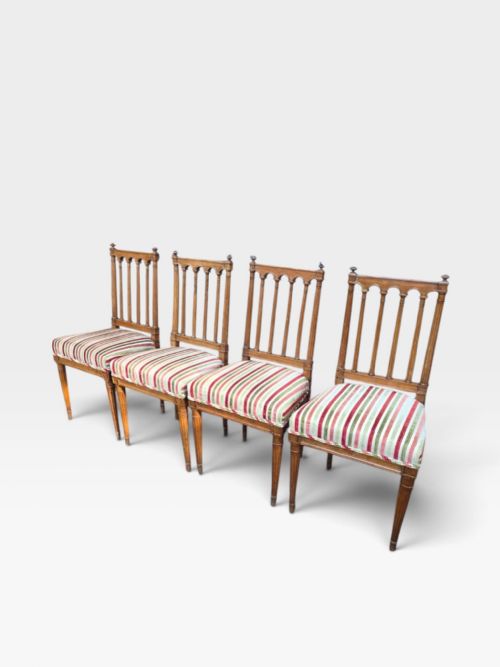
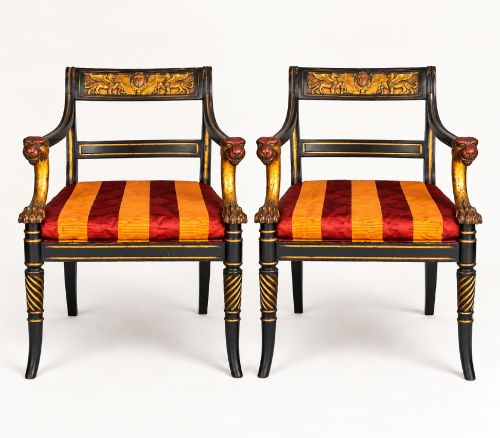
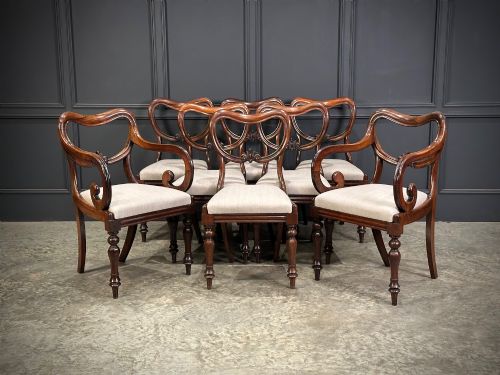
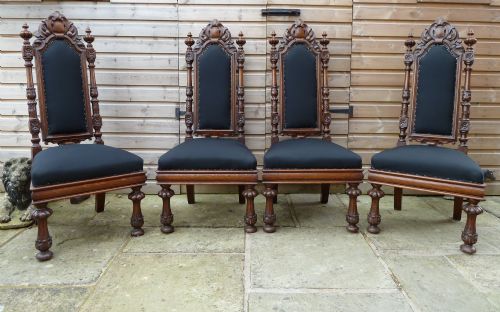
Upholstered Wooden Chair
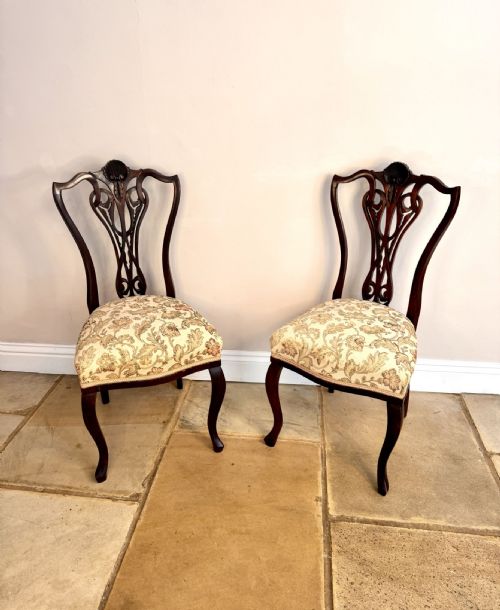
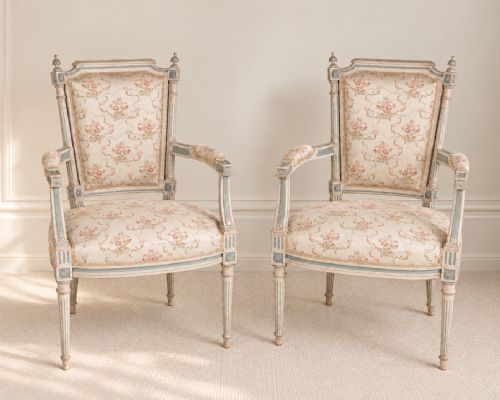
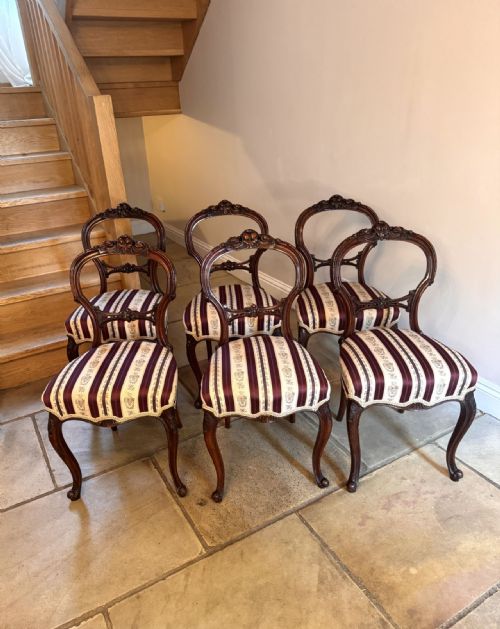
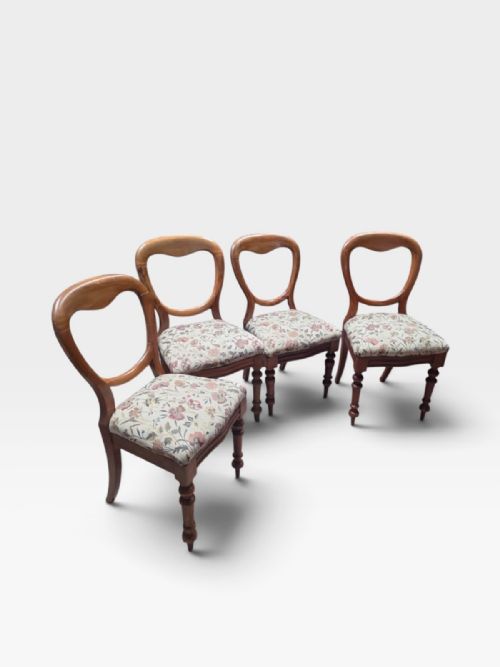
An upholstered wooden chair brings character and period comfort to a room, ranging from mahogany balloon backs to walnut library seats.
Upholstered Wooden Chair
When you search for an upholstered wooden chair, you encounter a wide selection of dining chairs, armchairs, and library seats spanning the eighteenth, nineteenth, and early twentieth centuries. These pieces encompass formal dining sets, occasional salon chairs, and individual desk or library armchairs.
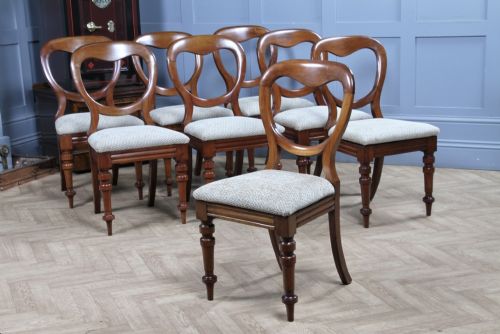
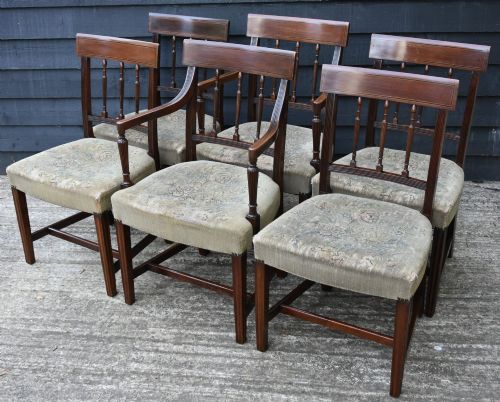
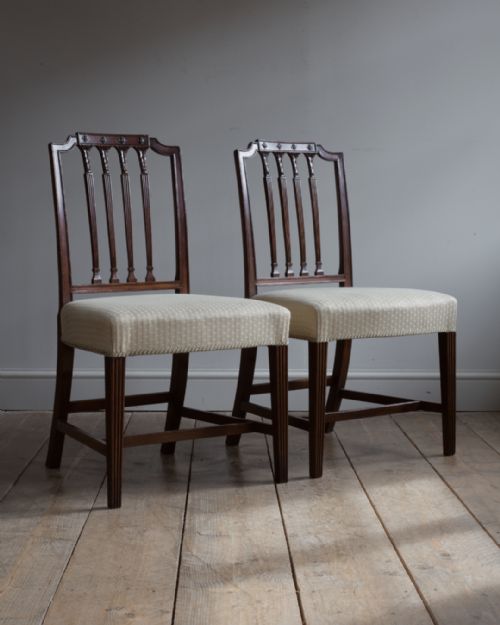
The version you are most likely to meet on this page is the nineteenth-century Victorian mahogany dining chair, often shaped with a balloon back or carved frame. Alongside these, sets of Regency mahogany dining chairs and Edwardian inlaid designs appear frequently.
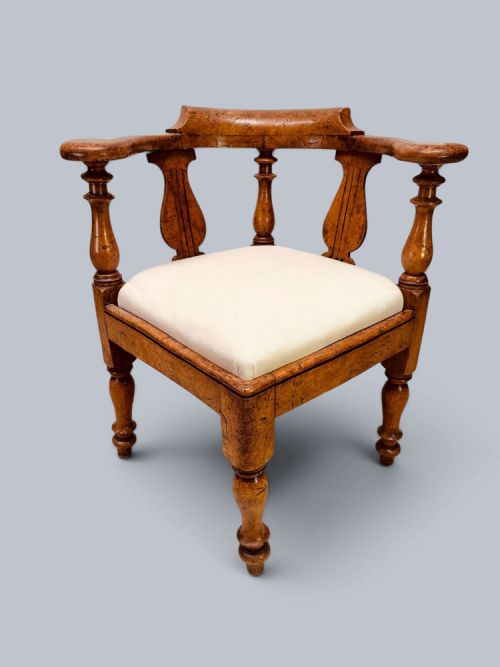
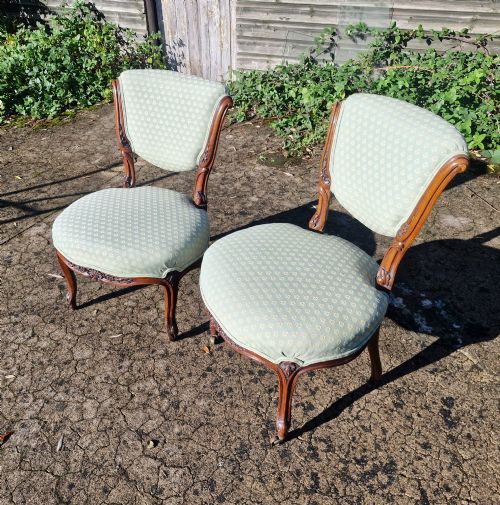
Beyond standard dining seats, the selection includes specialised forms such as music chairs, slipper chairs, open armchairs, and spindle-back designs. Materials range from mahogany and walnut to oak and elm, paired with various textiles and velvet upholstery.
Materials and Construction
Cabinetmakers constructed these frames primarily from dense hardwoods like mahogany, walnut, oak, and elm, often utilising brass for inlay or castors. Timbers were selected for their grain and strength, allowing intricate carved details on splats, rails, and cabriole or tapered legs.
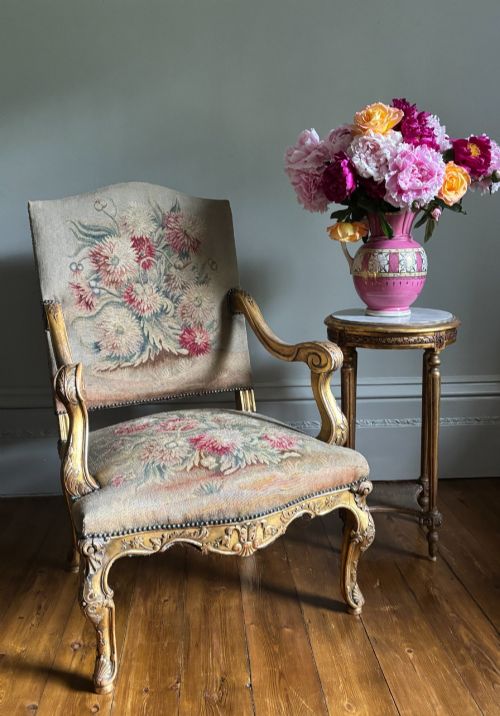
Upholstery techniques involved layering textiles, velvet, and fabric over supportive stuffing secured to wooden frames. Many pieces exhibit period details such as pierced splats, inlaid woodwork, spindle backs, and carved walnut or mahogany show-wood.
Upholstered Wooden Chair Retail Price Guide 2026
Typical asking prices for upholstered wooden chair among the pieces listed under this phrase on Sellingantiques today, from the lower quarter to the upper quarter. They describe what is for sale here now, not the wider market.
Music chairs permitted nineteenth-century pianists to swivel into position with effortless grace.
Distinctions in Quality
The distinction between standard examples and top-tier pieces rests on the crispness of the carved woodwork and the fidelity of period styling. Chairs that retain their original timber patination, robust frame construction, and balanced proportions command greater regard among collectors.
Coherence within larger sets of dining chairs also influences the standing of a group, where uniform timber selection and matching upholstery elevate the entire assembly. Individual armchairs and library seats derive distinction from uncommon structural forms, such as brass inlay or documented maker attribution.
Howard and Sons
The Upholstered Wooden Chair Glossary
- Balloon back
- A rounded, oval-shaped wooden chair back popular during the Victorian period. This design curves outwards to support the spine.
- Bar back
- A horizontal wooden slat across the upper back of a chair, often seen on William IV and Regency dining seats. It provides a clean, architectural profile.
- Carver
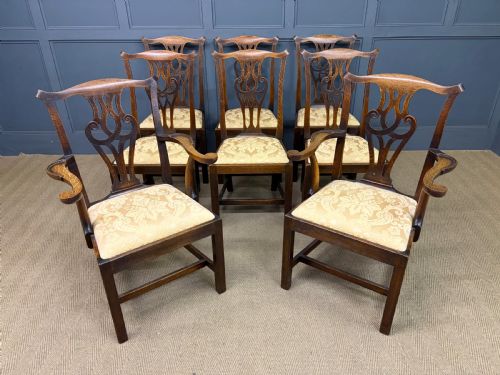
- An armchair designed to match a set of dining chairs, typically placed at the head of a table. These pieces feature integrated armrests.
- Pierced splat
- A vertical wooden strip in the centre of a chair back that has been cut through to create decorative open patterns. Georgian and Chippendale styles frequently utilise this technique.
- Spindle-back
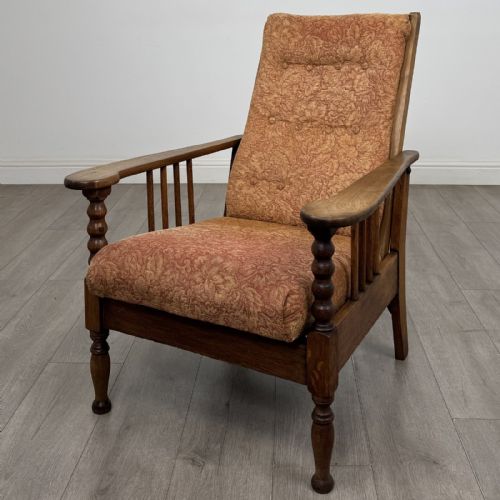
- A chair back constructed from multiple thin, turned wooden rods arranged vertically. This method offers lightweight structural support.
Upholstered Wooden Chair: Frequently Asked Questions
How do I date an antique wooden chair?
Dating relies on observing the combination of timber species, construction methods, and stylistic details such as leg profiles and back splats. Comparing these elements against documented historical periods provides a reliable timeline.
Changes in furniture design reflect the prevailing tastes of reigns and centuries, from Georgian mahogany to Edwardian revival styles.
Can I mix different styles around a dining table?
Mixing different styles of wooden chairs around a dining table creates a layered, collected interior. Pairing carvers at the ends with side chairs along the length maintains visual balance.
Matching timber tones or similar period origins helps unify diverse seating arrangements within a dining space.
How should I care for antique upholstery?
Antique upholstery requires gentle vacuuming with a soft brush attachment to remove surface dust without straining delicate textile fibres. Professional cleaning is recommended for antique fabrics and velvet to preserve the underlying stuffing.
Keeping upholstered chairs away from direct sunlight prevents fading in older textiles.
What is the difference between a side chair and an armchair?
A side chair is built without armrests, designed primarily to sit compactly at a dining table or against a wall. An armchair includes integrated arm supports for added comfort during prolonged sitting.
Armchairs often served specific functions in libraries, desks, or as carvers in dining sets.