
Upholstered Wing Back Chair
An upholstered wing back chair offers draught-excluding side panels and deep padding designed for fireside comfort across Georgian, Victorian and later eras.
Upholstered Wing Back Chair
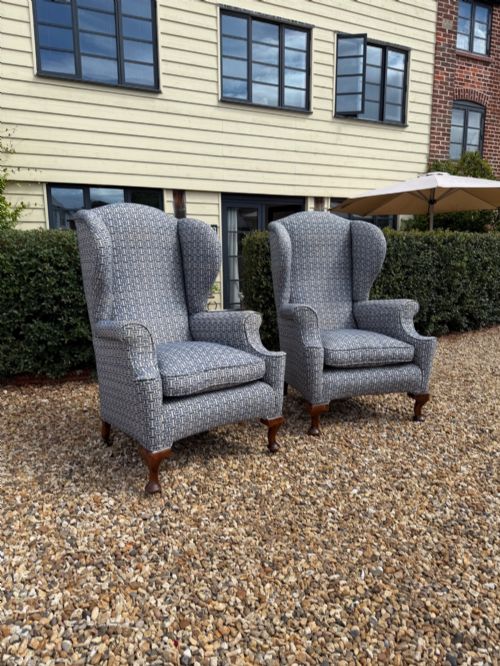
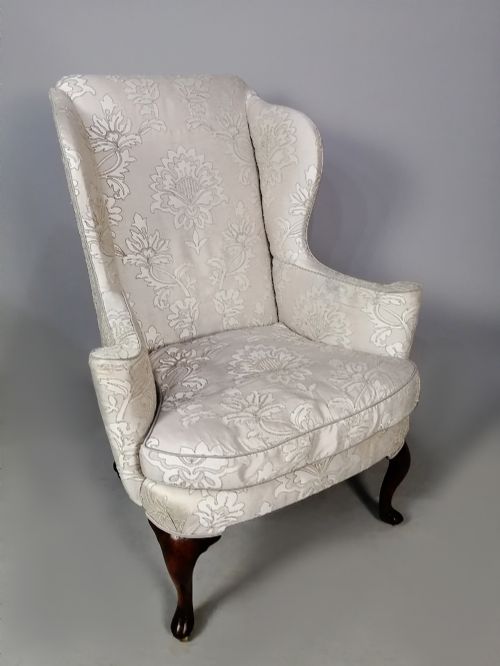
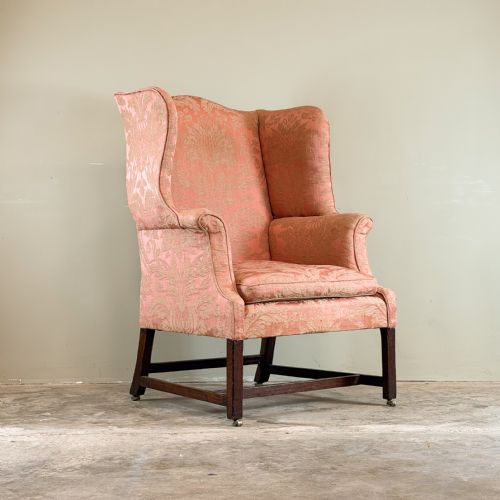
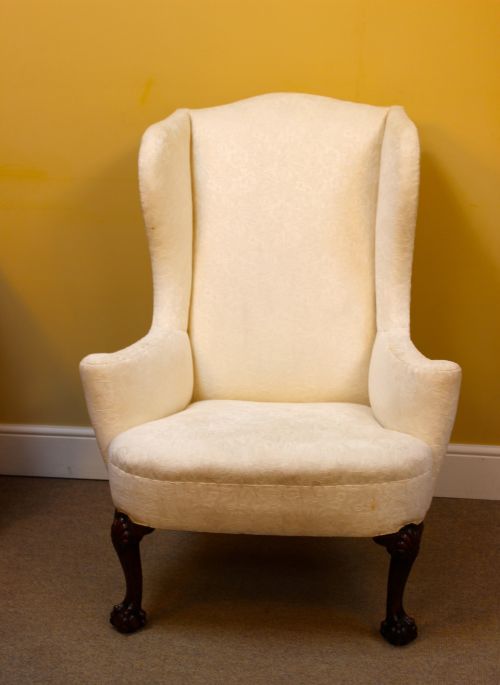
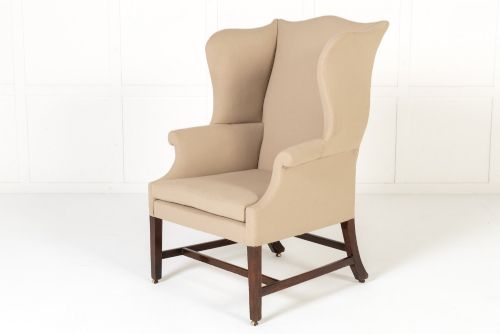
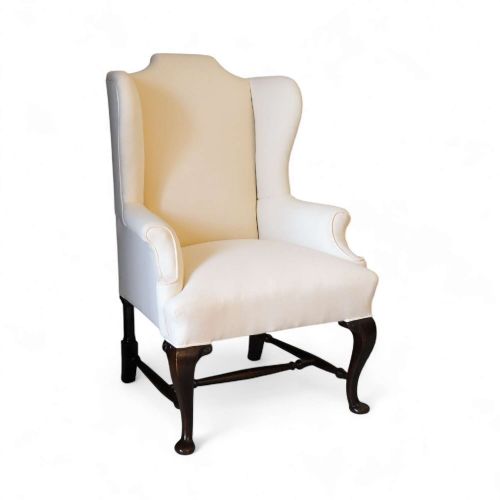
An upholstered wing back chair serves as a traditional fireside seat designed to protect the occupant from draughts while retaining heat from an open hearth. The form centres on a high back flanked by projecting side wings, sweeping down to closed arms and supported by timber legs.
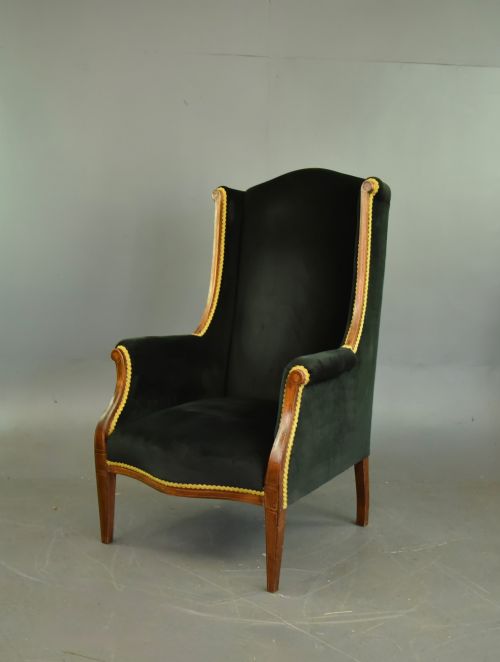
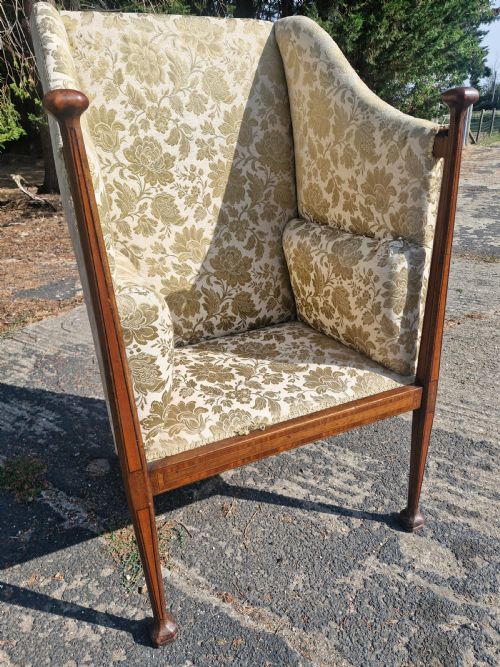
The selections available span eighteenth-century Georgian masterpieces through nineteenth-century Victorian interpretations to early twentieth-century Edwardian and country house pieces. Walnut and mahogany frames dominate the earlier centuries, while later pieces often display lighter Edwardian proportions or comfortable revival styles.
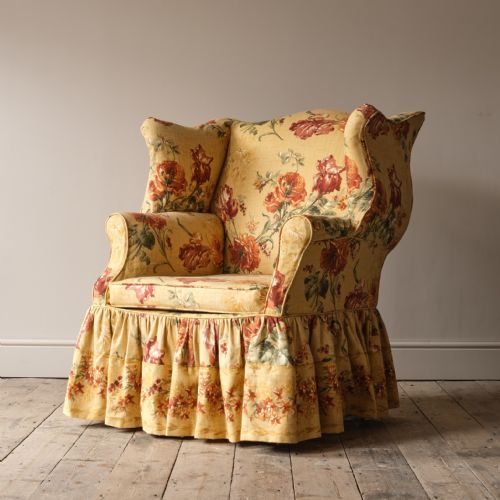
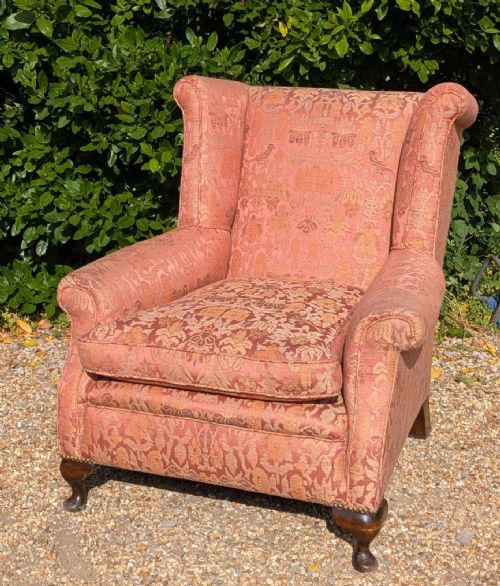
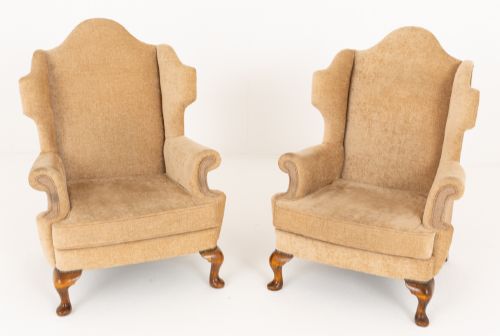
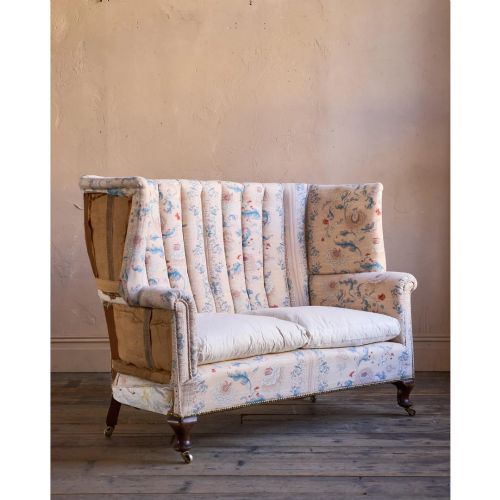
Buyers frequently encounter variants such as barrel-backed chairs, where the wings curve seamlessly into the backrest, alongside generous two-seater sofas and paired armchairs. Many pieces retain period upholstery fabrics or arrive ready for recovering in modern textiles.
How they were made
Traditional construction relies on sturdy hardwood frames typically fashioned from mahogany, walnut or general timber, joined with standard cabinet-making techniques to bear the weight of heavy internal padding. The characteristic wings and backrests are built up using internal webbing and stuffing.
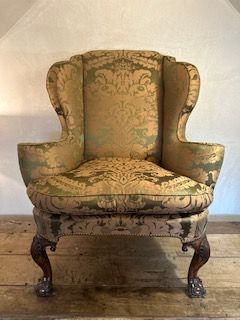
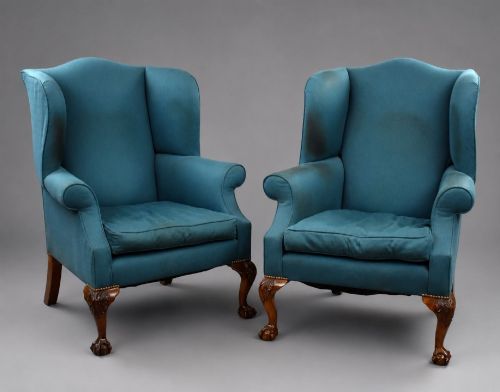
Early and mid-period pieces often employ natural stuffing materials such as horsehair, wool or feather filling, secured beneath textile layers, calico, velvet, leather or patterned fabric. Exposed wooden elements frequently feature carved details such as ball and claw feet, fluted legs or plain cabriole supports.
Early side wings were originally devised not for decoration, but to trap the heat of the parlour fire and keep ears safe from sudden drafts.
What varies in quality
Quality rests heavily upon the integrity of the wooden frame and the original proportions of the wings and back, which dictate the overall silhouette and supportive posture. Chairs possessing harmonious curves and balanced scale exhibit superior design lineage compared to rigid or heavy-handed revivals.
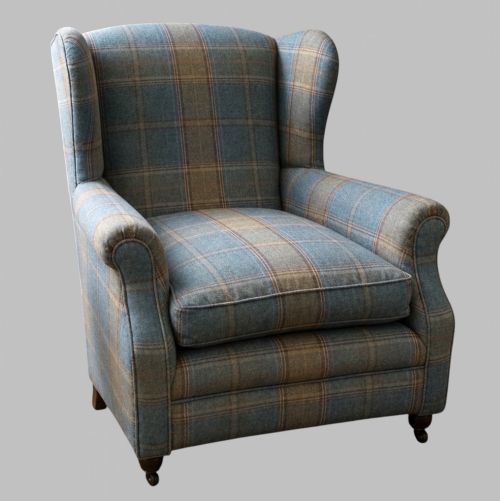
The standard of internal stuffing and the choice of exterior covering material - ranging from supple leather to heavy chenille twill or plaid fabric - affect both the comfort and the historic authenticity of the seating. Pieces retaining uncompromised structural woodwork and well-maintained joinery represent the upper tier of the range.
Howard And Sons·Whytock And Reid
The Upholstered Wing Back Chair Glossary
- Wing back
- A high-backed armchair featuring integrated side panels designed to shield the face and torso from cold draughts. These projecting panels form the signature silhouette of the seating type.
- Barrel back
- A seating variation where the upholstered wings curve continuously into the backrest to form a rounded, cocoon-like enclosure. This shape offers enhanced insulation around the shoulders.
- Cabriole leg
- A furniture leg featuring a double curve, typically arching outward at the knee and tapering inward toward the foot. It frequently terminates in pad, claw and ball, or hoof feet on period pieces.
- Bergère
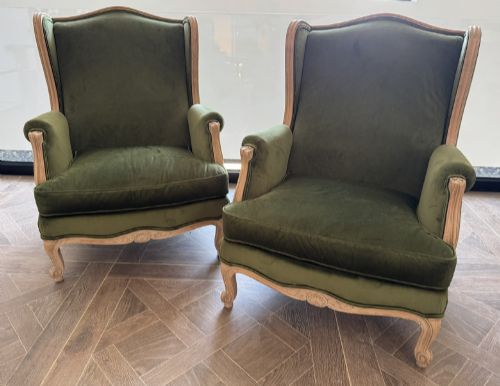
- An enclosed upholstered armchair with wooden framing exposed around the arms and back. Edwardian iterations often incorporate this lighter aesthetic.
- Webbing
- Woven strips of dense material stretched across the interior frame to support the heavy internal stuffing and springs. It forms the foundation of traditional upholstery construction.
Upholstered Wing Back Chair: Frequently Asked Questions
How do I identify a Georgian wing chair?
Georgian examples typically display dense mahogany or walnut frames with characteristic proportions, hand-carved cabriole legs, and traditional stuffing materials beneath period textiles.
Closer inspection often reveals period joinery methods and subtle design cues distinct from later nineteenth-century revivals or Edwardian reproductions.
Are these chairs suitable for modern living rooms?
Their substantial forms and high backs make them functional fireside or reading seats that anchor modern living spaces. Many pieces arrive upholstered in contemporary wools, plaids or cottons while retaining antique frames.
Their scale suits large reception rooms, libraries and studies where deep padding and draught-excluding wings provide practical comfort.
How do I choose between leather and fabric upholstery?
Leather upholstery offers a durable, aged finish seen frequently on library and nineteenth-century styles, acquiring a natural patina over time. Fabric choices, including velvet, chenille, calico or plaid, provide softer textures and colour variety.
Selection depends on the desired interior aesthetic and whether the piece requires traditional stuffing or modern feather filling.