
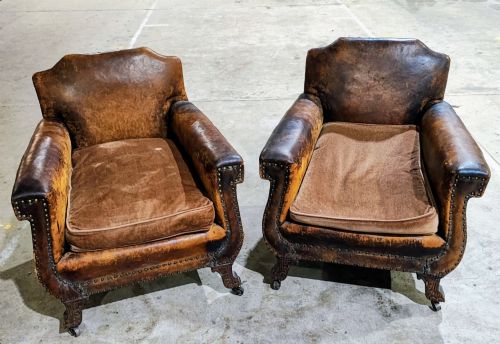
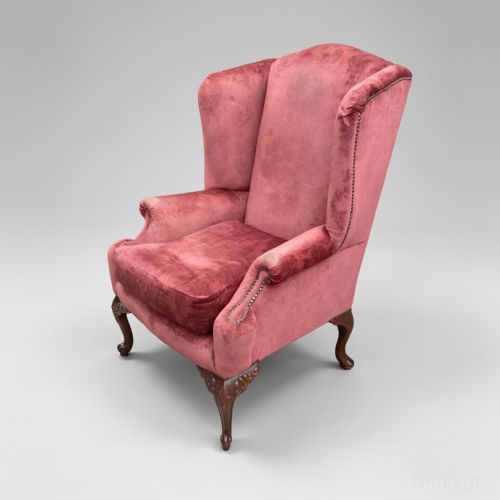
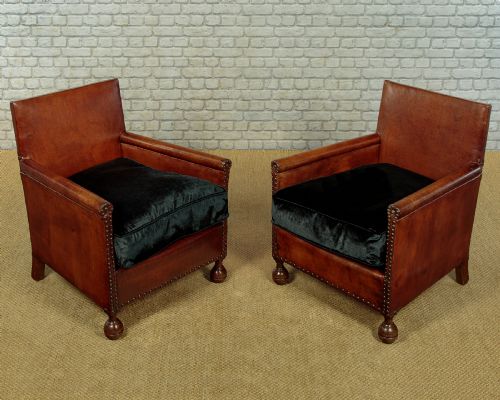
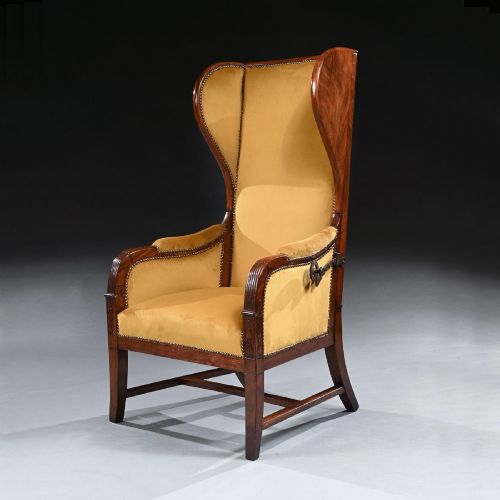


Studded Velvet Armchair
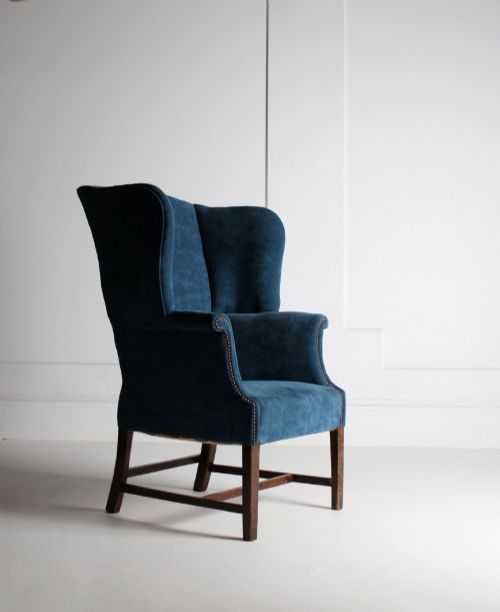
A studded velvet armchair brings rich texture and upright comfort to a room, offering deep seats framed in timber and brass.
Studded Velvet Armchair
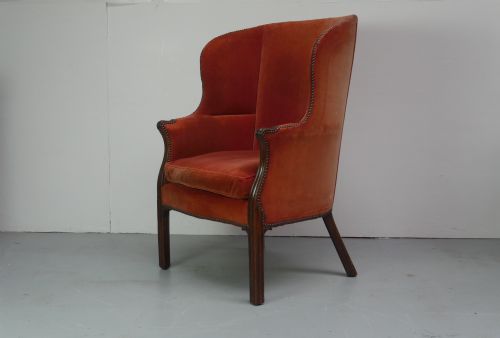
A studded velvet armchair is a substantial seating form designed for parlours, libraries, and drawing rooms, appearing across periods from the eighteenth century through the twentieth. When you search for a studded velvet armchair, you encounter robust wingbacks, barrel backs, and club forms spanning Victorian, Edwardian, and Art Deco styles.
The selections available here range from nineteenth-century mahogany wing chairs and George III style interpretations to early twentieth-century country house seating and French Empire reclining models. These pieces combine upholstered frames with timber structures in mahogany, walnut, and general timber.
Victorian and Edwardian pieces dominate the offerings, often presenting traditional buttoning, nailhead trim, and sturdy wooden legs. Buyers find both individual reading chairs and pairs suited to balancing a fireside arrangement.
Materials and construction methods
Makers built the structural frames of these armchairs using dense hardwoods such as mahogany and walnut, ensuring longevity and stable weight distribution. Turnings and carved decorations emerged directly from the timber base.
Upholstery relied on heavy textile coverings like velvet, paired with supportive interior stuffing and secured along the edges with brass studs or decorative nailheads. These metal tacks functioned both as structural fasteners and visual outlines.
Music hall chairmen once surveyed their patrons from high-backed seating adorned with polished brass studs.
Assessing quality in seating
Quality rests in the precision of the timber carving and the integrity of the frame construction, separating utilitarian workshop output from ambitious cabinetmaker commissions. Heavier structural woods and balanced proportions indicate superior original design.
The execution of the upholstery work, the tautness of the velvet covering, and the regularity of the brass stud placement signal the standard of finish. Original timber patination and crisp detailing elevate an individual chair above standard production pieces.
The Studded Velvet Armchair Glossary
- Wingback armchair
- A large fireside seat featuring protective side panels designed to shield the occupant from drafts. These high-backed chairs often rest on cabriole or square tapered legs.
- Barrel back
- An upholstered seating form featuring a continuous semicircular backrest that wraps around to form the arms. This enclosed design provides intimate comfort and support.
- Mahogany
- A durable tropical hardwood prized for its reddish-brown colour and fine grain, frequently utilised in fine British seating frames. It accepts carving cleanly and ages with a deep lustre.
- Walnut
- A rich brown timber valued for its strength and decorative grain patterns during the nineteenth century and earlier periods. It formed the basis for many formal coronation and parlour chairs.
- Brass studs
- Small metallic tacks driven into the wooden frame to secure upholstery edges firmly in place. They create a decorative border following the contour of the arms and back.
Studded Velvet Armchair: Frequently Asked Questions
Where should I place an armchair?
These large seats suit studies, drawing rooms, and spacious bedrooms where they provide a distinct focal point.
Position them away from direct sunlight to protect the pile of the velvet and prevent timber fading.
How do I care for velvet upholstery?
Gentle brushing with a soft clothes brush removes dust from the pile without crushing the fibres.
Avoid harsh cleaning solvents and consult a specialist restorer for deep cleaning requirements.
What defines an Edwardian chair?
Edwardian seating typically displays lighter proportions and borrows freely from earlier Georgian and Victorian design motifs.
These pieces reflect the domestic comforts of the early twentieth-century country house interior.
Are these chairs comfortable for daily use?
The deep seats and supportive backs of these armchairs make them practical for reading and relaxing.
Their substantial wooden construction ensures they remain stable under everyday seating demands.
How do I identify a Victorian piece?
Victorian examples often feature dark mahogany or walnut frames, prominent turned legs, and elaborate buttoning.
They reflect the eclectic revival styles popular during the nineteenth century.