




Upholstered Storage Ottoman
An upholstered storage ottoman combines practical container space with soft seating, spanning periods from Regency to Art Deco.
Upholstered Storage Ottoman
When you search for an upholstered storage ottoman, you are looking at practical seating that conceals a compartment beneath the lid. These pieces serve as blanket boxes, piano stools, and dressing stools, bringing concealed storage into living spaces and bedrooms.
The versions you are most likely to meet on this page date from the nineteenth century into the early twentieth century, spanning Victorian, Regency, William IV, and Art Deco styles. Woods such as mahogany, rosewood, walnut, and pine form the rigid frames of these dual-purpose items.
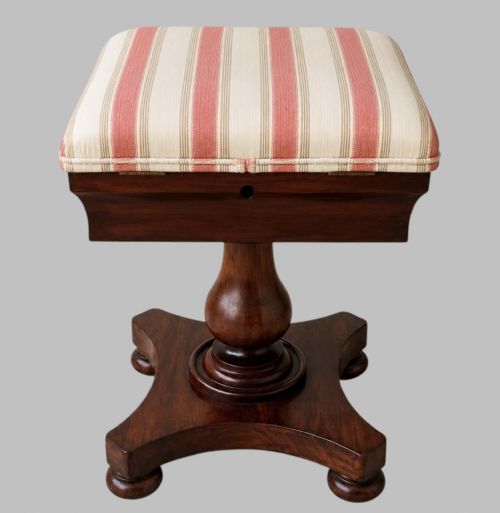
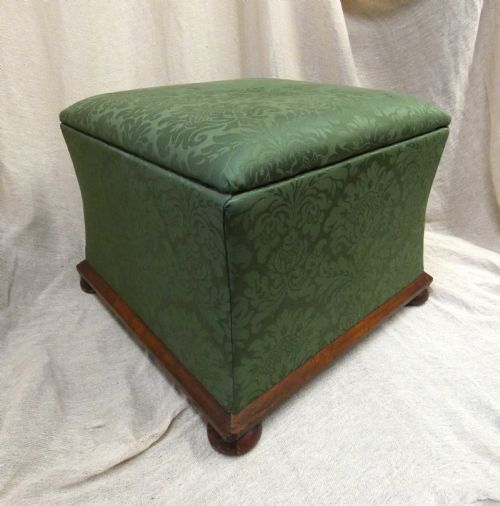
Makers shaped these storage seats in diverse forms, including drum shapes, waisted profiles, and concave designs. Lift-up lids and hinged boxes provide access to the interior compartments where textiles and household goods rest.
How they were made
Cabinet makers built the rigid carcasses from hardwoods like mahogany, rosewood, and walnut, alongside pine for utility boxes. Joints were joined firmly to withstand the dual demands of supporting a sitter and bearing the weight of stored items.
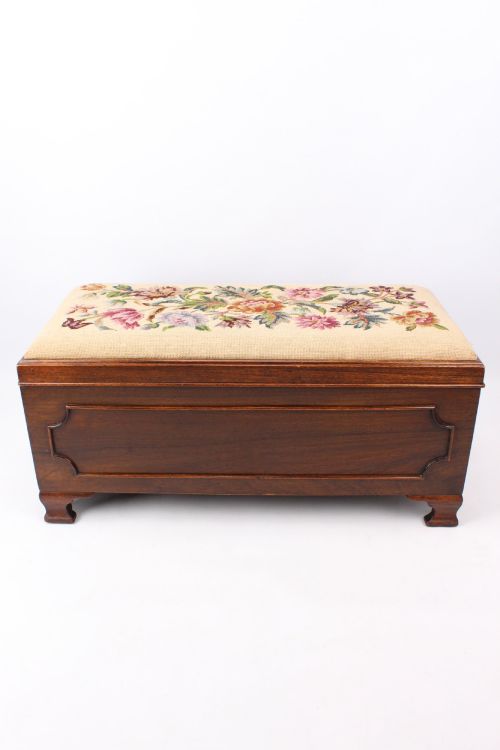
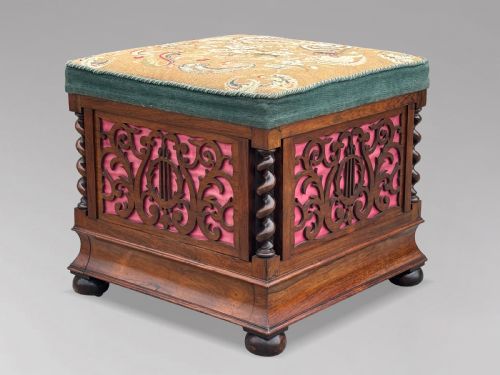
Upholstery techniques involved stuffing seats with traditional fillings and covering them in textiles including velvet, leather, tapestry, needlework, needlepoint, gros-point, and Liberty fabric. Brass hardware often secured hinges, castors, and decorative feet on finer examples.
One workshop produced a country house storage ottoman designed specifically to swallow up sprawling household textiles.
What varies in quality
The choice of primary timber sets the tone, with richly grained rosewood and figured mahogany sitting above plain pine carcasses. Finer pieces display refined proportions, such as waisted sides, concave shaping, or carved details like lions paw feet.
The execution of the top covering dictates visual appeal, distinguishing simple fabric tops from complex needlepoint, gros-point, or deep buttoning. Original upholstery and specialist textiles elevate a piece above standard utility versions.
Hallett & Sons
The Upholstered Storage Ottoman Glossary
- Ottoman
- A padded seat without a back or arms, often fitted with a hinged lid to allow internal storage. These items function as footstools, window seats, or dressing stools.
- Gros-point
- A type of coarse needlepoint embroidery used on upholstery tops, stitched on canvas to create durable and decorative patterns. It frequently appears on nineteenth century seat frames.
- Canterbury stool
- A low seat featuring divided compartments or side slats beneath the cushion for holding folios or papers. This form merges storage utility with a compact seating profile.
- Waisted
- A furniture profile that curves inward towards the centre before flaring out again towards the base or top. This contour adds elegance to nineteenth century stool frames.
Upholstered Storage Ottoman: Frequently Asked Questions
What is an upholstered storage ottoman?
An upholstered storage ottoman is a multi-functional piece of furniture featuring a padded seat atop a hollow box for keeping items hidden away.
These versatile items function as footstools, blanket chests, and dressing seats across various historic periods.
How were these ottomans used historically?
Historically, these items served multiple roles in domestic interiors, holding blankets, sewing supplies, and sheet music while providing extra seats.
They stood in bedrooms, drawing rooms, and antechambers to keep household items close at hand yet out of sight.
How do I identify a Victorian ottoman?
Victorian examples often feature dark hardwoods like mahogany and rosewood, alongside heavy upholstery styles such as deep buttoning or needlework tops.
Proportions tend to be substantial, utilising robust construction methods typical of the nineteenth century.
Are Art Deco ottomans different?
Art Deco pieces introduce geometric forms, such as drum shapes and walnut frames, breaking away from nineteenth century revival styles.
These later items maintain the dual purpose of seating and concealed storage with a cleaner, more streamlined aesthetic.