
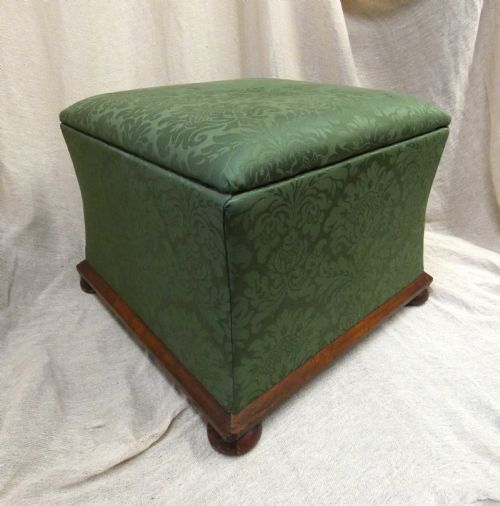


Upholstered Storage Chest
An upholstered storage chest combines a practical lidded box with a padded seat, offering a place to sit while concealing blankets or linen.
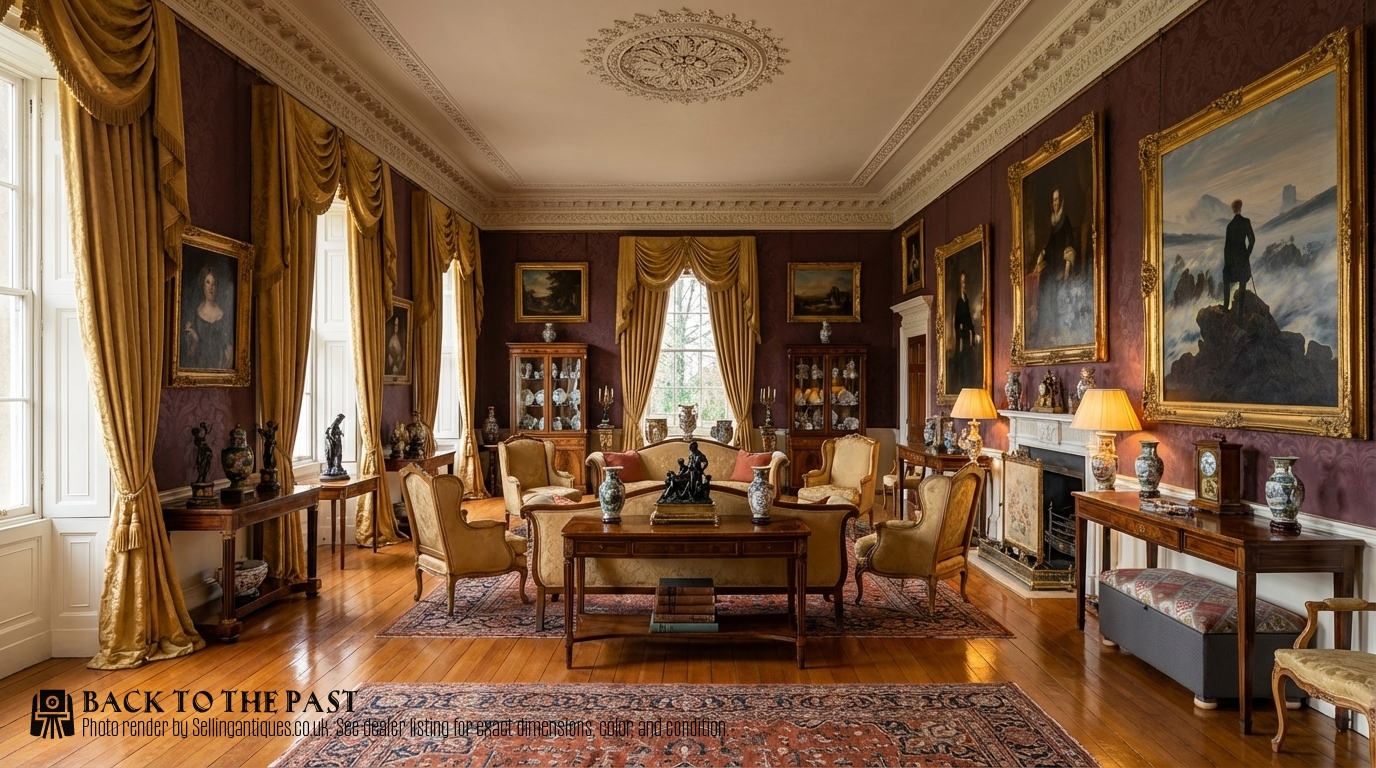
Upholstered Storage Chest
An upholstered storage chest provides both a seat and a compartment for textiles, appearing in forms such as ottomans, blanket boxes, and work boxes. When searching for an upholstered storage chest, a buyer encounters pieces originating from the Regency and Victorian periods, alongside later early twentieth century examples.
The objects take various structural shapes, ranging from simple pine kist boxes and birch blanket chests to sophisticated mahogany or rosewood ottomans featuring concave curves, waisted profiles, or lions paw feet. Many survive as ottomans and footstools, while others double as window stools or work boxes lined for specific tasks.
Makers and workshops of the nineteenth century built these chests from timbers like mahogany, rosewood, walnut, and pine, applying fabric or leather upholstery to the lid. The selection spans from large country house trunks to smaller walnut Canterbury stools and deep buttoned seating designed for domestic interiors.
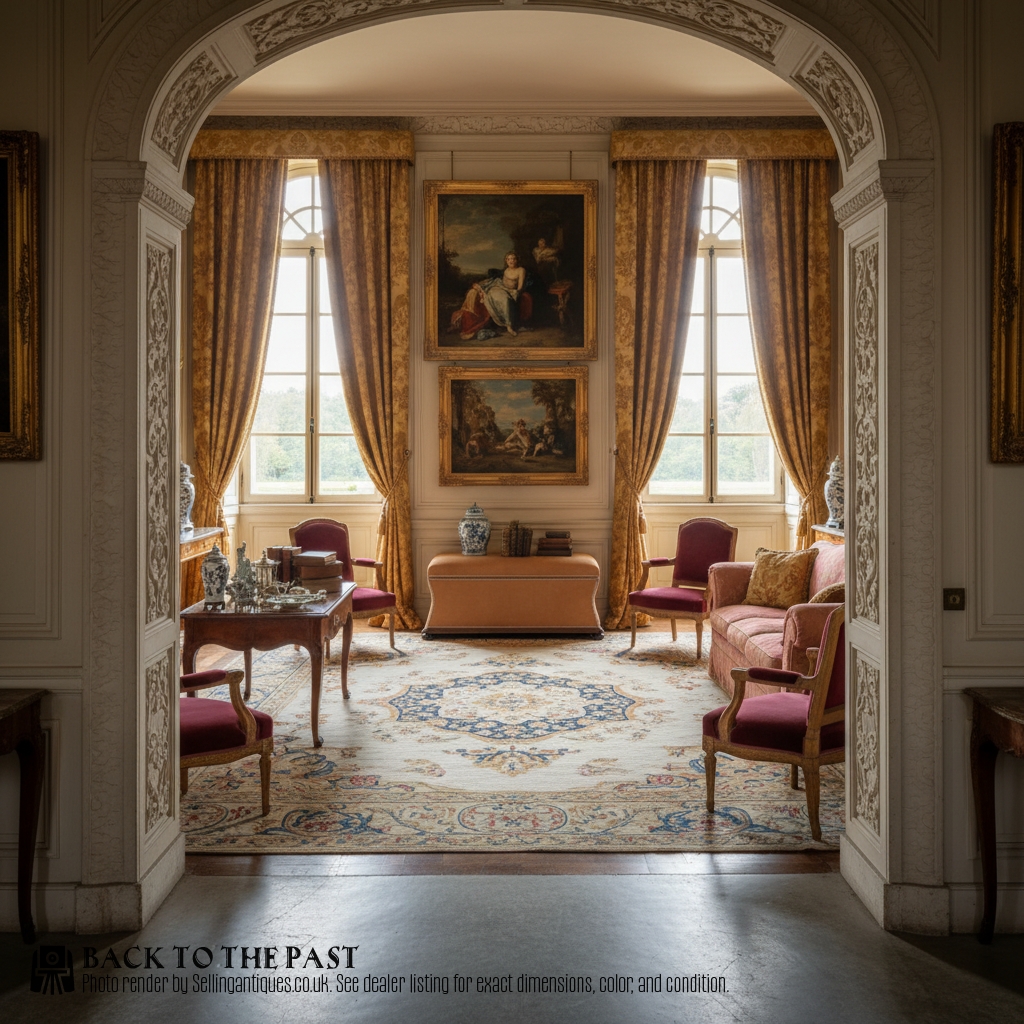
Materials and construction methods
Cabinet makers utilised solid woods and hardwoods such as mahogany, rosewood, walnut, birch, and pine to construct the carcass of each chest. Brass fittings and leather or fabric coverings completed the exterior, whilst specialised upholstery techniques secured the padding and textile top.
The construction incorporates framed timber panels, hinged lids, and carved or turned supports, including specific decorative details like lions paw feet. Surface treatments range from polished rosewood and mahogany finishes to painted or waxed pine boards on country house trunks.
Object types recorded include ottomans, blanket boxes, footstools, window stools, work boxes, and Canterbury stools.
Differentiating quality across pieces
The distinction between standard examples and finer pieces lies in the choice of cabinet timber and the complexity of the frame's silhouette. Rosewood and mahogany boxes with shaped concave sides or carved feet demonstrate greater craftsmanship than basic pine blanket trunks.
Upholstery finish and hardware integration also divide the range, as seen in deep buttoned leather or original gros-point needlework tops paired with robust brass hinges. The proportion of the piece, whether a grand country house ottoman or a compact work box, dictates the level of decorative detail applied by the maker.
Hallett & Sons
The Upholstered Storage Chest Glossary
- Ottoman
- A low upholstered seat or bench without a back or arms, featuring a hinged lid that opens to reveal a storage compartment. These pieces function as seating and trunk space combined.
- Blanket Box
- A large wooden chest traditionally utilised for storing blankets, linen, and textiles. Some variants incorporate upholstered lids for dual utility.
- Gros-Point
- A type of needlepoint embroidery worked on canvas using wool, frequently found on the top covers of nineteenth century stools and ottomans. It provides a durable and decorative textured surface.
- Regency
- An English design period spanning the early nineteenth century, characterised by classical motifs, scroll feet, and rich woods like rosewood and mahogany. Pieces from this era often display clean architectural lines.
- Canterbury Stool
- A low compartmentalised piece of furniture designed for holding sheet music or papers, occasionally combined with an upholstered seat. The form derives from the traditional Canterbury music stand.
Upholstered Storage Chest: Frequently Asked Questions
What is an upholstered storage chest used for?
An upholstered storage chest serves primarily to store household textiles such as blankets, linen, and toys while providing a cushioned surface to sit upon. Their dual function makes them practical additions to bedrooms, living rooms, and dressing areas.
Historically, variations like work boxes or window stools also accommodated specific domestic tasks or provided secondary seating by a window. The internal compartment keeps items out of sight while the padded top functions as a stool or bench.
How do I identify a Regency period piece?
Regency pieces typically feature dense cabinet timbers such as mahogany or rosewood, often accompanied by classical decorative elements. Details like lions paw feet and clean structural proportions point towards this early nineteenth century window.
By contrast, later Victorian examples introduce different woods like pine and walnut, alongside varied upholstery styles such as deep buttoning or gros-point needlework. Examining the secondary timbers and construction methods helps separate Regency work from later revivals.
Are these chests suitable for daily seating?
These chests were designed for domestic use as stools, window seats, and ottomans, meaning their frames are built to support seated weight. However, the internal hinges and historic upholstery require consideration depending on the frequency of daily use.
When living with an antique chest, one balances the preservation of original fabric or leather against practical seating requirements. Many examples remain structurally robust enough for regular sitting in a hallway or bedroom.
What is the difference between an ottoman and a blanket box?
An ottoman specifically designates an upholstered seat with a concealed storage cavity beneath the lid, whereas a traditional blanket box is primarily a wooden chest with or without a padded top. The focus of an ottoman leans towards its role as furniture.
Blanket boxes often appear as simpler pine or birch trunks intended for bedroom storage. Over time, many plain boxes received later upholstery to function as seating, blurring the distinction between the two forms.