

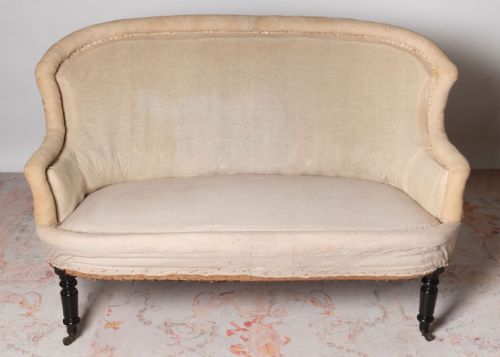
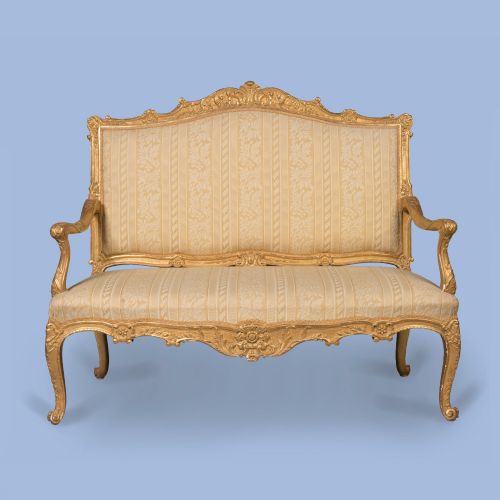
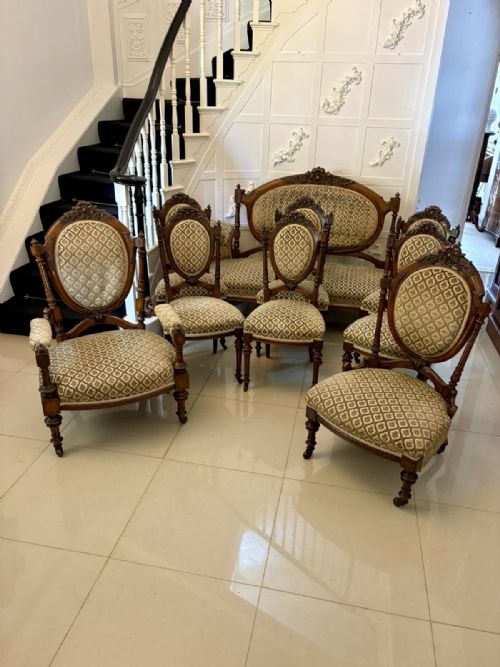
Upholstered Salon Sofa
When you select an upholstered salon sofa, you bring home a refined seating piece designed for formal entertaining and quiet repose.
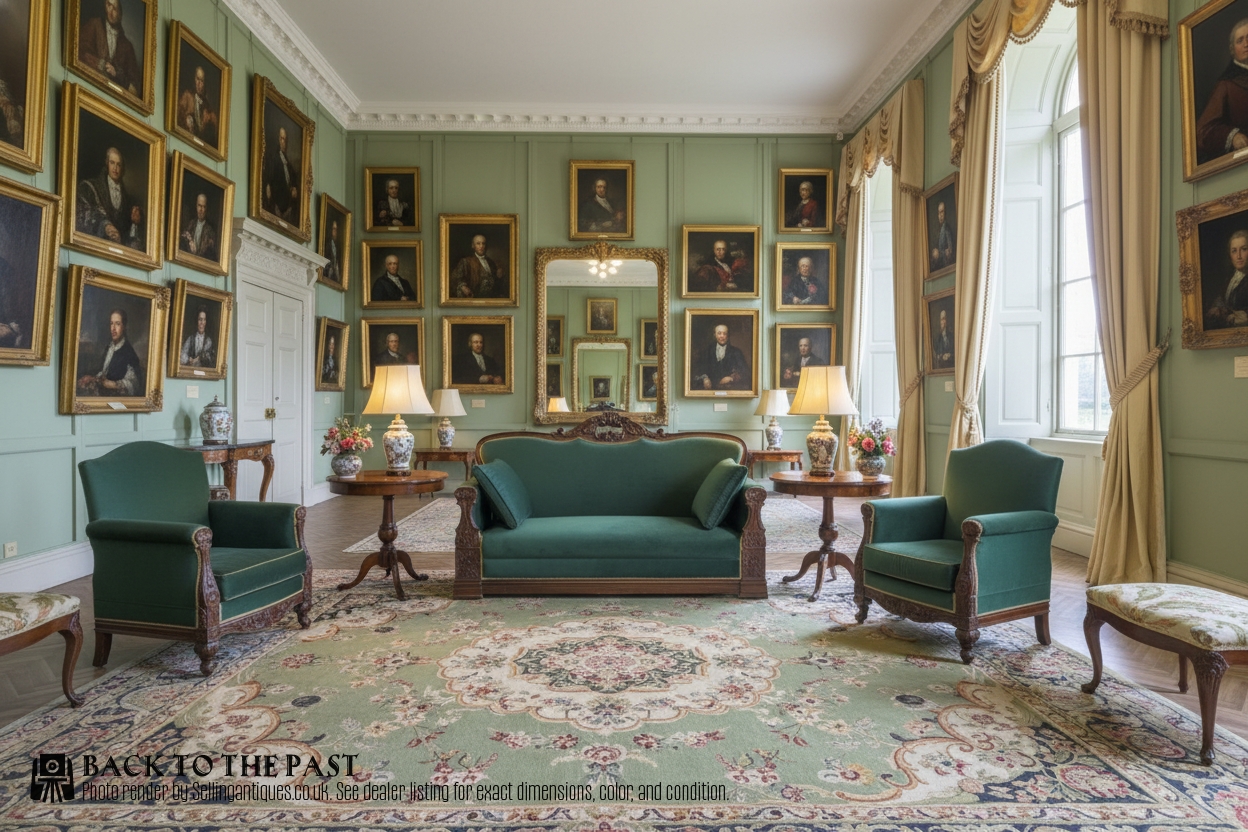
Upholstered Salon Sofa
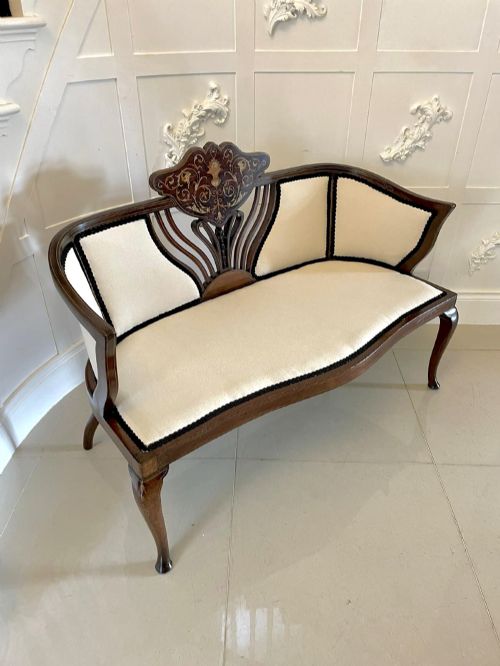
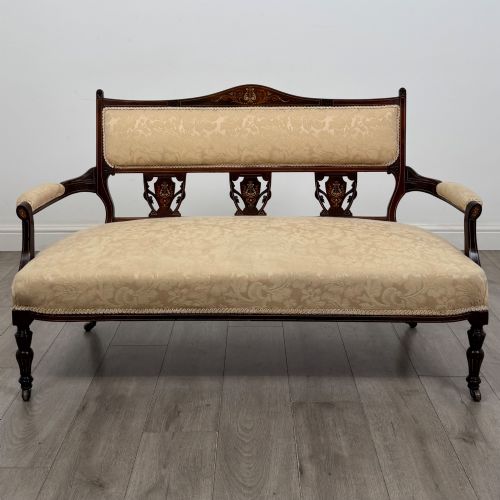
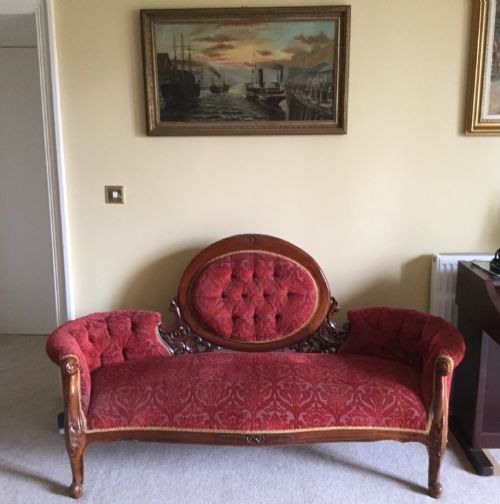
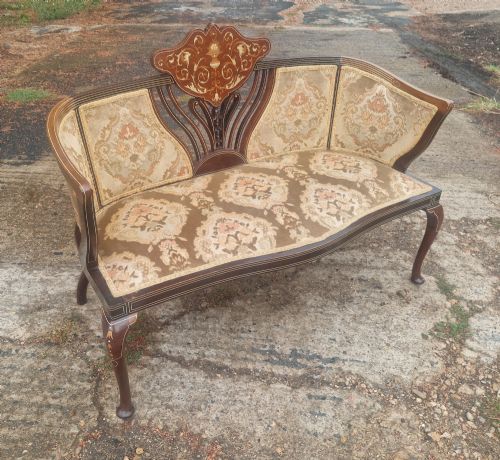
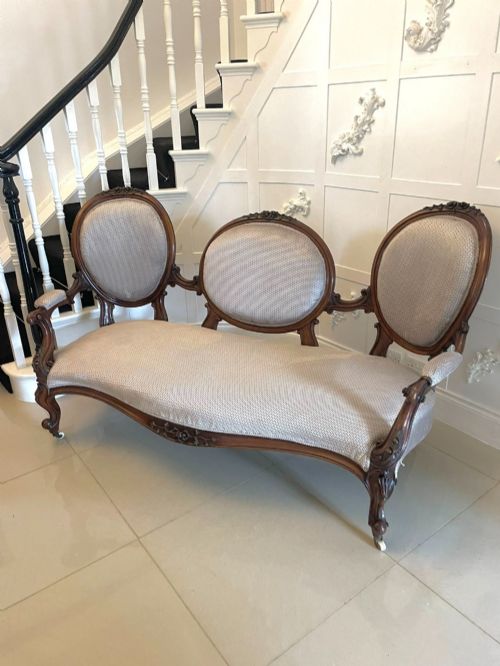
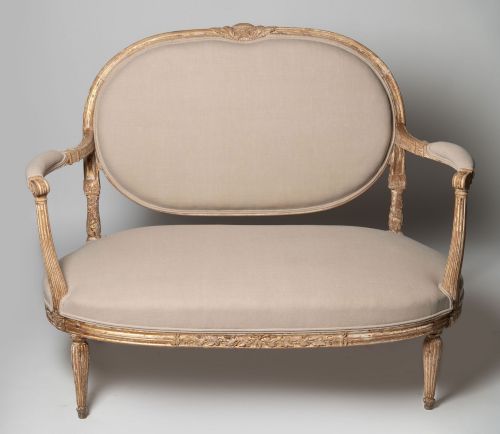
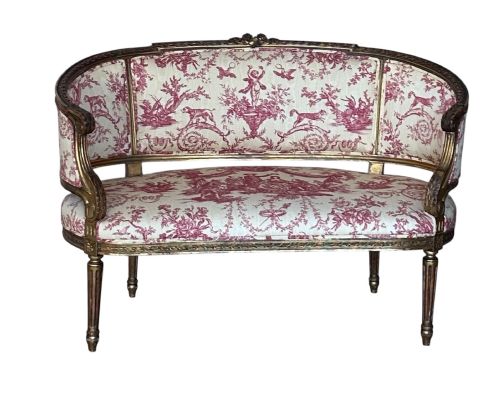
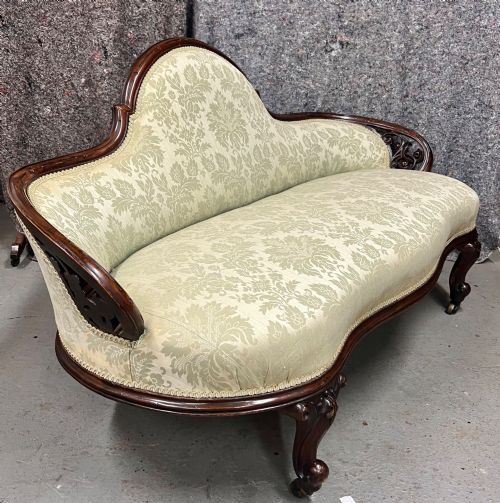
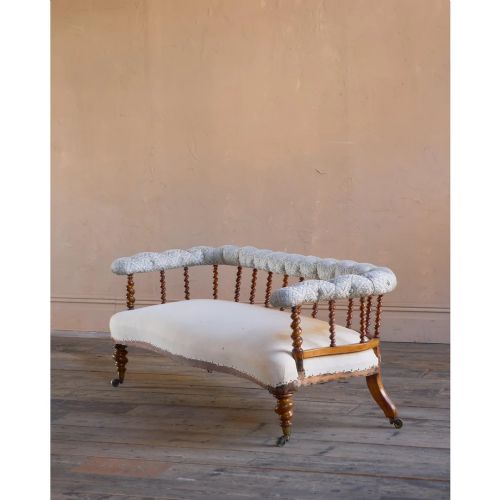
An upholstered salon sofa is a formal seating piece designed for drawing rooms, parlours, and reception spaces. These furnishings encompass distinct variations, from British Victorian walnut and mahogany frames to continental French giltwood canapés.
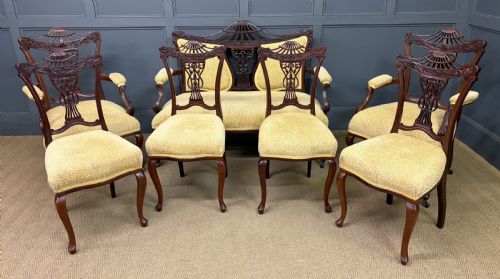
The pieces on this page are most commonly encountered in Victorian and Edwardian iterations, alongside French Louis XV style adaptations. You will find single settee options as well as larger parlour suites that include matching armchairs.
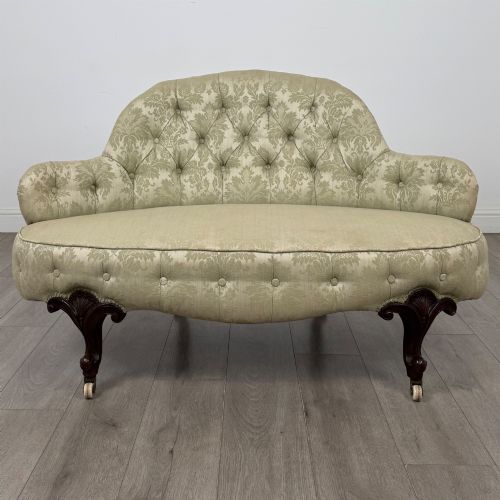
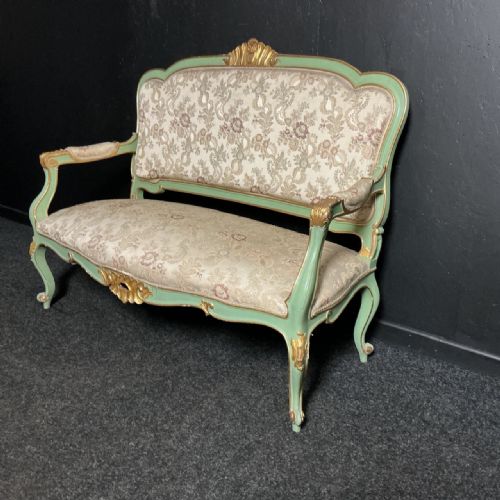
Victorian examples frequently showcase carved walnut or mahogany timbers paired with deep buttoning or patterned brocades. French variations often present giltwood or painted finishes upholstered in silk damask or modern textiles.
How they were made
Frames are constructed from sturdy hardwoods such as mahogany, walnut, rosewood, and ebonised timber, providing a durable structural skeleton. Giltwood and painted surfaces receive careful ornamental treatment to achieve decorative elegance.
Upholstery techniques rely on traditional sprung bases layered with textiles including velvet, brocade, silk damask, and modern upholstery fabric. Brass castors, ormolu mounts, and intricate marquetry inlay provide functional and decorative detail to the finished timber chassis.
Several pieces double as boudoir day beds, proving that Victorian guests occasionally needed a dramatic place to faint.
What varies in quality
The distinction between standard pieces and exhibition quality work lies in the depth of hand-carved ornamentation and the precision of timber inlay. Superior frames utilise dense walnut or figured mahogany with crisp, well-defined mouldings.
Upholstery execution and frame rigidity dictate the overall integrity of the seating. Pieces displaying robust joinery and meticulous textile application maintain their structural and visual appeal over generations of use.
C. Hindley & Sons
The Upholstered Salon Sofa Glossary
- Canapé
- An ornamental French sofa, typically featuring an exposed wooden frame with carved details. These pieces often reflect Louis XV or Louis XVI revival styles.
- Settee
- A medium-sized upholstered seat with a back and arms, designed for multiple occupants. This term appears interchangeably with salon sofa in many historical listings.
- Giltwood
- Timber treated with gold leaf or gold paint to create a lustrous metallic finish. This technique is frequently seen on French salon seating.
- Marquetry
- Decorative veneer work arranged in intricate patterns on the wooden frame. Craftsmen utilise contrasting woods to form geometric or floral designs.
- Ormolu
- Gilt-bronze mounts applied as decorative ornaments to furniture frames. These metal elements are characteristic of revivalist salon pieces.
Upholstered Salon Sofa: Frequently Asked Questions
What is a salon sofa?
A salon sofa is a decorative, formal seating piece created for reception rooms and parlours during the nineteenth and early twentieth centuries. These pieces combine comfortable upholstery with elegant wooden frames designed to complement matching chairs.
Unlike everyday seating, salon furniture prioritises aesthetic refinement for entertaining guests in a formal setting.
How do I identify a French style sofa?
French style sofas, such as Louis XV or Louis XVI revivals, typically feature curved exposed wooden frames, giltwood or painted finishes, and cabriole legs. They often showcase ornate floral carvings and sophisticated upholstery fabrics like silk damask.
British Victorian alternatives generally rely on darker mahogany or walnut timbers with buttoned backs and robust sprung bases.
Were these sofas used in bedrooms?
Historical evidence shows these versatile pieces serving various domestic functions, including end-of-bed seating, window benches, and boudoir loungers. Their decorative frames allowed them to transition smoothly from formal drawing rooms to private chambers.
Smaller formats function well as compact love seats in modern bedrooms or quiet reading corners.
How do I care for antique upholstery?
Maintaining antique upholstery requires gentle vacuuming with a soft attachment to remove dust without damaging fragile silk or brocade fibres. Avoid placing delicate fabrics in direct sunlight to prevent fading and textile degradation over time.
Wooden frames benefit from occasional dusting and mild beeswax polishing to preserve the finish of mahogany, walnut, or giltwood surfaces.