

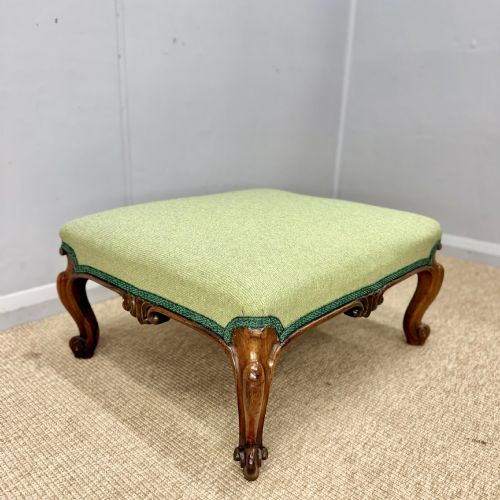


Upholstered Rosewood Footstool
An upholstered rosewood footstool brings solid timber frames and tactile textiles together for fireside comfort.
Upholstered Rosewood Footstool
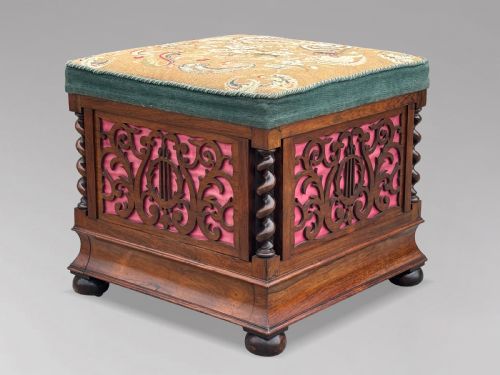
An upholstered rosewood footstool combines dense tropical hardwood frames with various textile coverings to support the feet in a drawing room or parlour. These pieces span several decades of the nineteenth century, including the Regency and Victorian eras, taking forms from low dressing stools to larger ottomans.
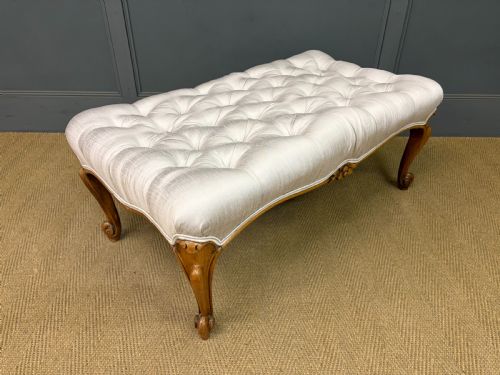
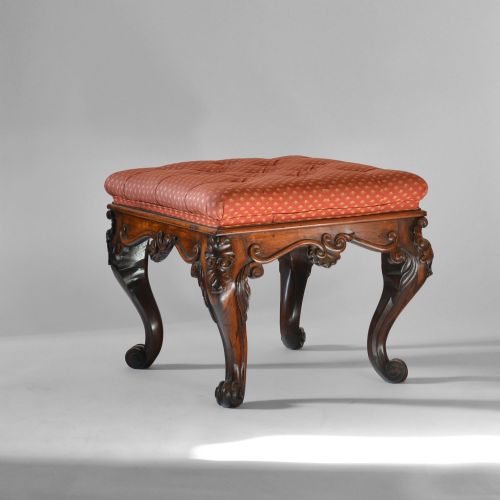
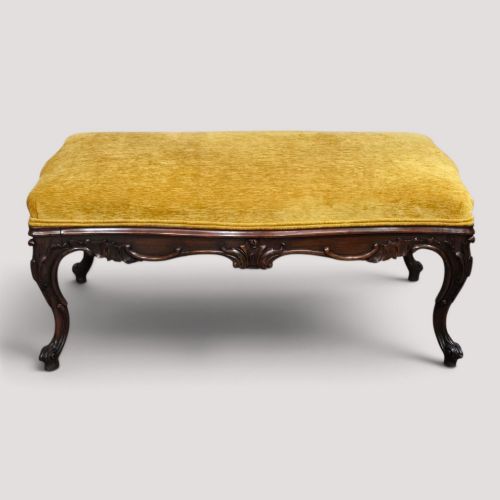
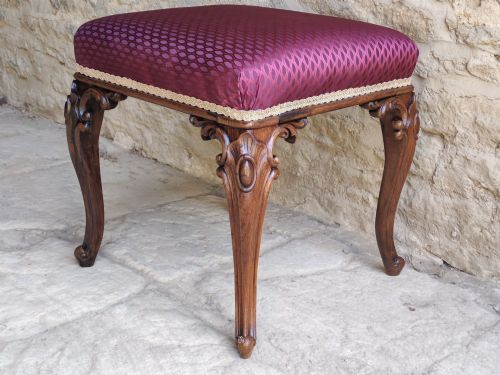
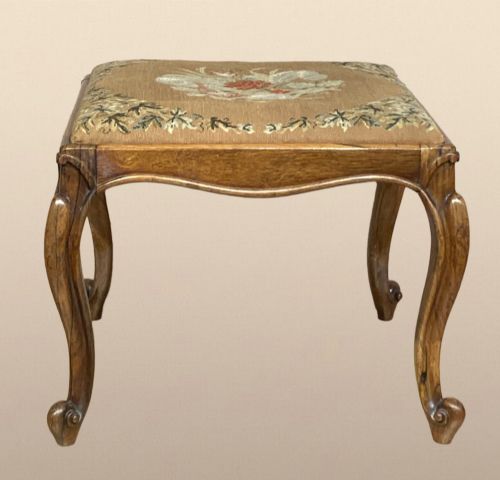
The version most commonly met on this page is the Victorian stool, often featuring carved details and cabriole legs. Buyers also encounter Regency and George IV examples, alongside Anglo-Indian variations that show distinct regional turning and carving.
Footstools serve both practical seating and decorative display functions within period interiors. They appear alongside matching armchairs or standalone near firesides and dressing tables.
Materials and construction
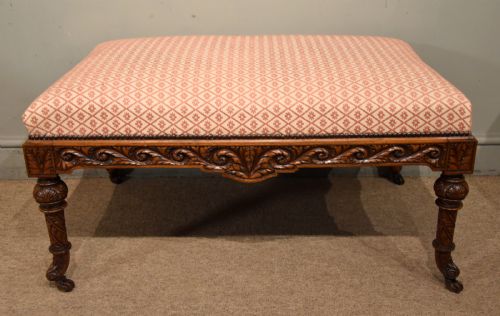
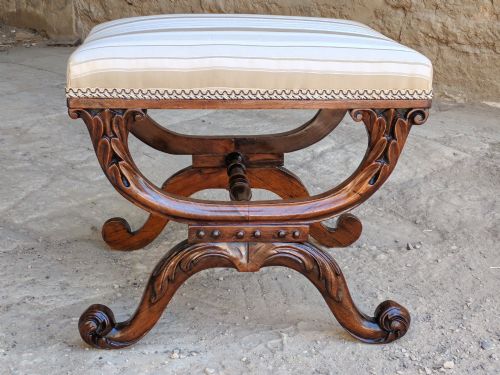
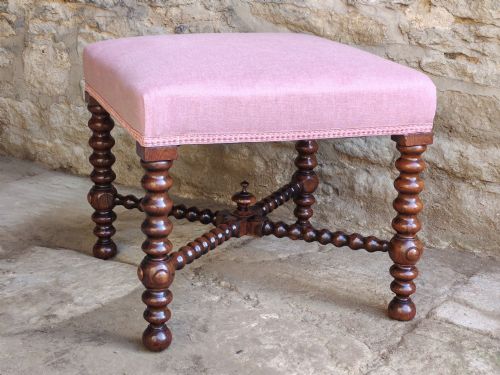
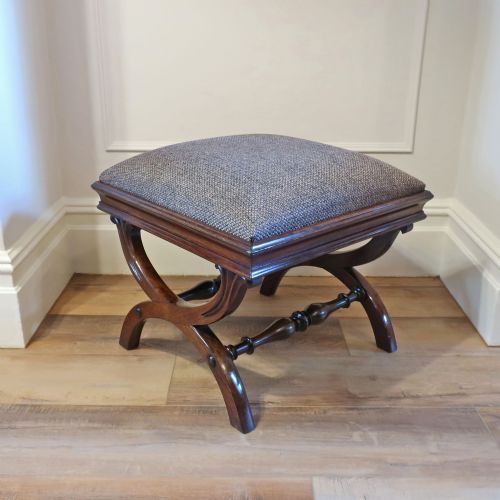
Makers utilised dense rosewood timber for the structural frames, often carving the wood into cabriole legs, bobbin turns or cross frames. This dark hardwood provided the strength required for frequent domestic use while offering a rich grain and deep colour.
Traditional upholstery techniques secured textile coverings over stuffing materials supported by webbing or canvas. Workshops finished these edges with brass nails, gimp braid or buttoned tufting.
Secondary elements include leather inserts, wool tapestry panels, velvet and modern fabric replacements applied during subsequent restoration work.
Listings feature pieces spanning the Georgian, Regency, William IV and Victorian periods, constructed from rosewood, timber, brass, leather, velvet and wool tapestry.
Judging the quality
Carving depth and sharpness separate standard production pieces from masterwork furniture. Crisp hand-chiselled details on rosewood cabriole legs indicate superior workshop output compared to softer, more generalised moulding.
Proportion and scale dictate the visual success of the piece, particularly between small dressing stools and large centre ottomans. Heavier framing requires balanced wooden supports to prevent visual clumsiness.
The integrity of the timber frame beneath the fabric determines structural longevity. Solid joinery without excessive movement ensures the piece holds firm under daily weight.
The Upholstered Rosewood Footstool Glossary
- Rosewood
- A dense, dark timber prized for its rich grain and heavy weight. It forms the primary structural material for these nineteenth-century frames.
- Cabriole leg
- A furniture leg that curves out and then narrows inward, emulating an animal's leaping leg. This shape appears frequently on Victorian examples.
- Ottoman
- A low upholstered seat or stool without a back or arms, often built with internal storage space. These larger forms accommodate multiple users or serve as centre tables.
- Bobbin leg
- A turned wooden support shaped like a string of bobbins or spools. This technique defines specific mid-nineteenth-century styles.
- Tapestry
- A heavy textile woven with decorative designs, frequently utilised for period upholstery. It provides a durable and colourful surface for foot placement.
Upholstered Rosewood Footstool: Frequently Asked Questions
What periods do these footstools date from?
The pieces span the Georgian, Regency, William IV and Victorian eras, covering the early to late nineteenth century.
Specific dates within listings range from approximately eighteen-twenty through to eighteen-eighty.
How were these stools used originally?
They served primarily as footrests placed in front of armchairs and sofas in formal drawing rooms. Smaller versions functioned as dressing stools before vanity tables.
Larger ottoman variants provided flexible seating options in the centre of rooms or at the foot of beds.
Are the fabrics original to the pieces?
Many examples feature newly applied fabric, velvet or wool tapestry fitted by recent restorers. Surviving historical textiles remain less common due to natural wear.
Listings occasionally note whether upholstery represents a recent update or retains older needlework.
How do I distinguish Regency from Victorian styles?
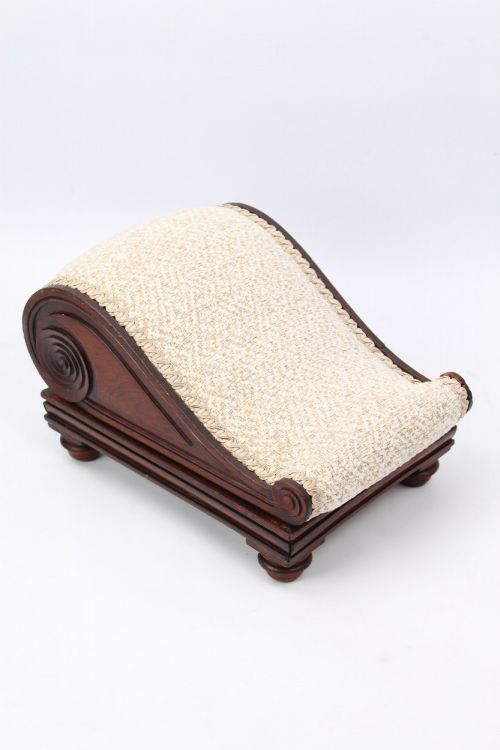
Regency pieces often display cleaner classical lines, sometimes incorporating leather tops and box frames. They reflect early nineteenth-century neoclassical tastes.
Victorian pieces lean towards heavier carving, cabriole legs and buttoned upholstery, showing the stylistic shifts of the later nineteenth century.