



Claw Foot Footstool
A claw foot footstool gives you a solid piece of history to rest your feet on, rooted in centuries of furniture design.
Claw Foot Footstool
When you search for a claw foot footstool, you are looking at low seating designed to support the feet, often featuring carved animal paw terminals on the legs.
The versions you are most likely to meet on this page span several eras from the eighteenth century through to the twentieth century, taking forms such as dressing stools, occasional stools, and ottomans.
Makers across these periods worked within distinct stylistic revivals, incorporating Chippendale, Queen Anne, and Italian Renaissance influences alongside Victorian and Art Deco pieces.
Materials and construction
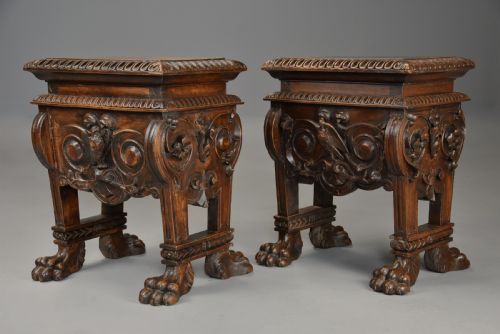
Carpenters and cabinetmakers utilised dense hardwoods such as mahogany, walnut, oak, and rosewood to carve structural frames and detailed legs.
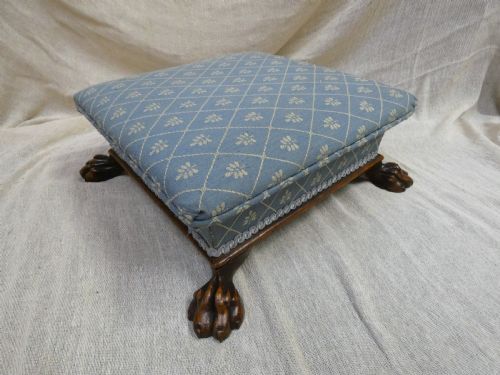
Upholstery completed the pieces, with workshops covering seats in textiles including velvet, damask, and general fabric over supportive stuffing.
Claw Foot Footstool Retail Price Guide 2026
Typical asking prices for claw foot footstool among the pieces listed under this phrase on Sellingantiques today, from the lower quarter to the upper quarter. They describe what is for sale here now, not the wider market.
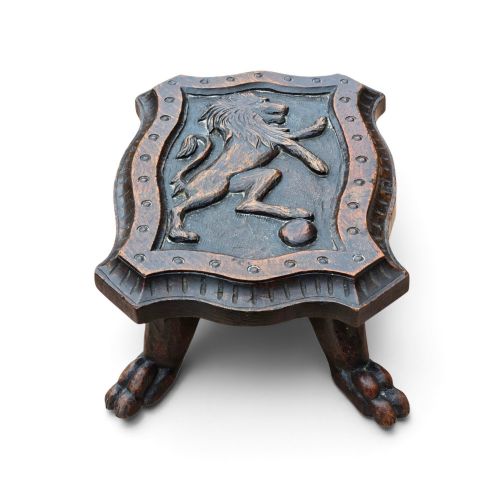
Heraldic lions occasionally lend their paws to support your tired feet after a long day.
Judging quality
The standard of carving on the wooden paws or claw-and-ball feet sets the finer examples apart from simpler utilitarian pieces.
Depth of detail in the frame ornamentation and the quality of the textile upholstery determine the overall grade of the stool.
The Claw Foot Footstool Glossary
- Cabriole leg
- A furniture leg that curves out and then tapers inward, mimicking an animal's leg. This shape forms the foundation for many claw foot footstools.
- Claw-and-ball foot
- A foot carving depicting a bird's talon gripping a spherical ball. It appears frequently on eighteenth-century and revival furniture.
- Damask
- A reversible figured fabric woven on a loom with patterns visible on both sides. It provides a durable and decorative seat covering.
- Ottoman
- A low upholstered seat or bench without a back or arms. These pieces often provide larger surface areas than standard footstools.
Claw Foot Footstool: Frequently Asked Questions
What is a claw foot footstool?
A claw foot footstool is a low seat featuring legs that terminate in carved animal paws or talons. These pieces function as foot supports or small occasional seats.
They appear across multiple centuries and stylistic revivals, constructed primarily from timbers like mahogany and walnut.
How do I date a footstool?
Dating relies on examining the timber species, the style of carving on the legs, and the construction methods used in the frame. Stylistic revivals often copy earlier eras, so wood age and joinery provide key clues.
Comparing the piece against documented examples from periods like the Georgian or Victorian eras helps narrow down its origin.
Are these stools comfortable?
Comfort depends entirely on the upholstery padding and the height of the specific stool. Many historical examples focus heavily on firm support rather than modern cushioning.
Ottomans and larger footstools generally offer more surface area for resting feet compared to compact dressing stools.
How do I care for wooden frames?
Wooden frames require protection from direct sunlight and moisture to prevent the timber from drying out or cracking. Regular dusting with a soft cloth maintains the finish.
Applying appropriate furniture wax occasionally helps nourish hardwoods like mahogany and walnut without damaging the grain.