



Carved Scroll Footstool
These carved scroll footstool pieces offer solid timber frames and traditional upholstery, combining period character with practical low seating.
Carved Scroll Footstool
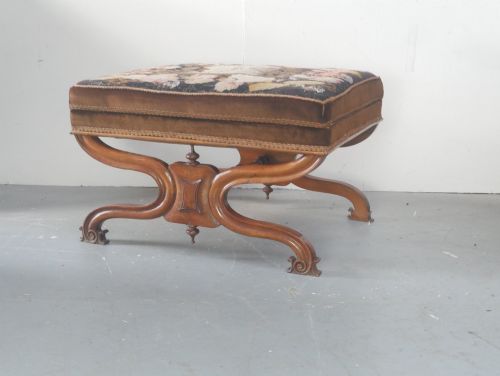
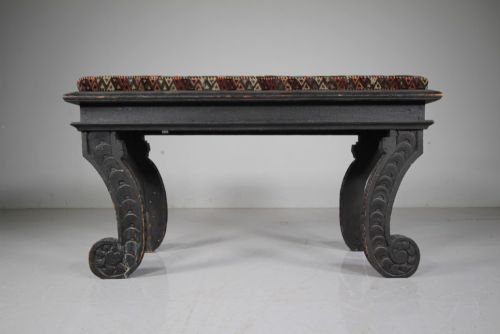
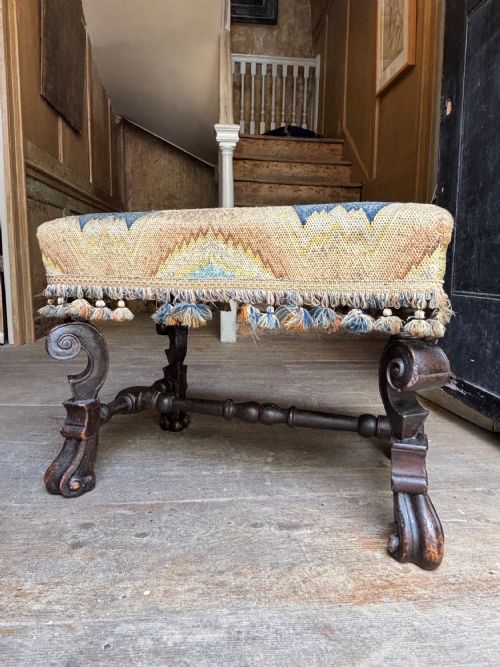
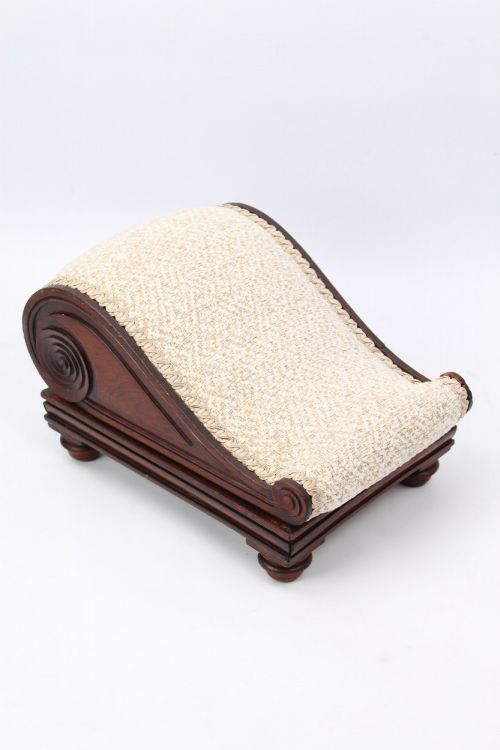
The most common examples on this page date from the nineteenth century, utilising dense timbers like rosewood, walnut, and oak alongside painted pine. These pieces incorporate distinct structural silhouettes, including X-frames and cabriole legs paired with carved scroll details.
Upholstery plays a central role in these items, with surviving examples featuring textile covers such as tapestry, damask, velvet, and various traditional fabrics. Their forms serve both functional foot support and decorative low seating within period interiors.
How they were made
Cabinetmakers constructed these frames using solid hardwoods like rosewood, walnut, and oak, often employing hand-carving techniques to shape the characteristic scrollwork and cabriole legs. Painted pine also appears among the listings, demonstrating alternative regional timber choices.
Upholstery methods involved traditional stuffing and securing of textiles like tapestry, damask, velvet, and assorted fabrics directly to the wooden foundations or X-frame structures. Brass elements occasionally supplement the wooden joinery and decorative scheme.
Carved Scroll Footstool Retail Price Guide 2026
Typical asking prices for carved scroll footstool among the pieces listed under this phrase on Sellingantiques today, from the lower quarter to the upper quarter. They describe what is for sale here now, not the wider market.
Some nineteenth-century makers clearly had strong opinions on legs, offering everything from dainty cabriole curves to rugged Scottish baronial timber.
What varies in quality
The sophistication of the timber carving dictates much of the distinction between pieces, with deeply undercut scrollwork and crisp architectural lines marking out superior execution. Simpler turned members or plain painted pine structures sit at the more utilitarian end of the spectrum.
The choice of primary wood and secondary materials influences the standing of a piece, with dense imported rosewood and figured walnut commanding greater presence than standard domestic hardwoods. Intricate X-frame geometries and substantial scale further elevate the stature of individual stools.
The Carved Scroll Footstool Glossary
- X-Frame
- A structural form utilising intersecting diagonal stretchers or legs shaped like the letter X. This ancient design provides inherent stability and often supports folding or fixed upholstered seats.
- Cabriole leg
- A furniture leg featuring a double curve, typically arching outward and then bending inward toward a pad or scroll foot. The profile imitates the hind leg of an animal.
- Damask
- A reversible figured fabric woven on a jacquard loom with patterns formed by contrasting warp and weft threads. It provides a formal, lustrous surface texture suited to traditional upholstery.
- Scottish Baronial
- A nineteenth-century revival style drawing upon medieval Scottish castle architecture and heavy furnishings. Pieces in this idiom display robust proportions and dark timber.
Carved Scroll Footstool: Frequently Asked Questions
What is a carved scroll footstool used for?
These pieces function primarily as low seating or foot supports designed to complement larger armchairs and sofas in a traditional room layout.
Their decorative timber frames and upholstered tops also allow them to stand alone as ornamental accents beneath windows or beside fireplaces.
How do I date a nineteenth-century stool?
Dating relies on examining the timber species, joinery methods, and the specific stylistic vocabulary employed in the carved scroll motifs.
Comparing the silhouette against known periods like the Regency or Victorian eras helps narrow down the decade of production.
What is an X-frame stool?
An X-frame stool utilises intersecting diagonal members that form a supportive cross beneath the upholstered seat.
This classic architectural configuration appears in Neoclassical and later nineteenth-century interpretations.