





Upholstered Revolving Stool
An upholstered revolving stool is a sturdy seat designed for musicians and dressing rooms, prized for its clever height adjustment and tactile comfort.
Upholstered Revolving Stool
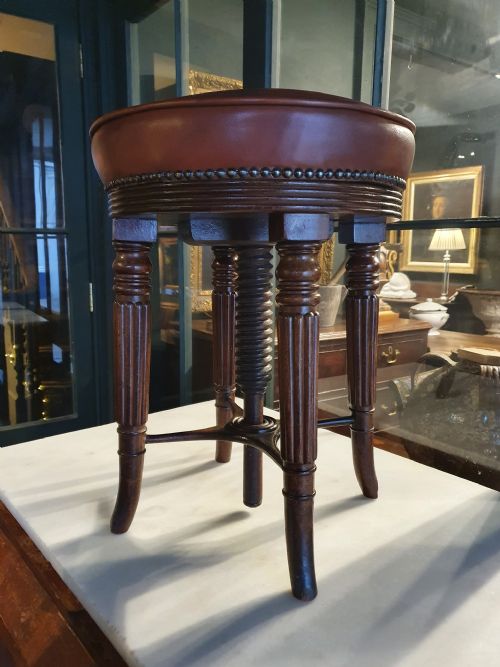
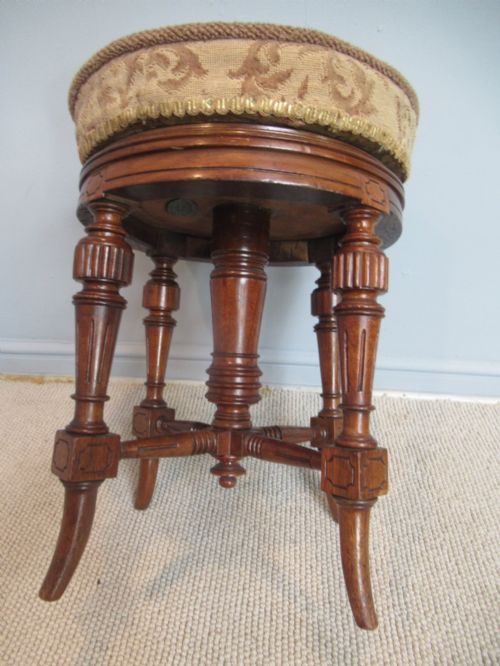
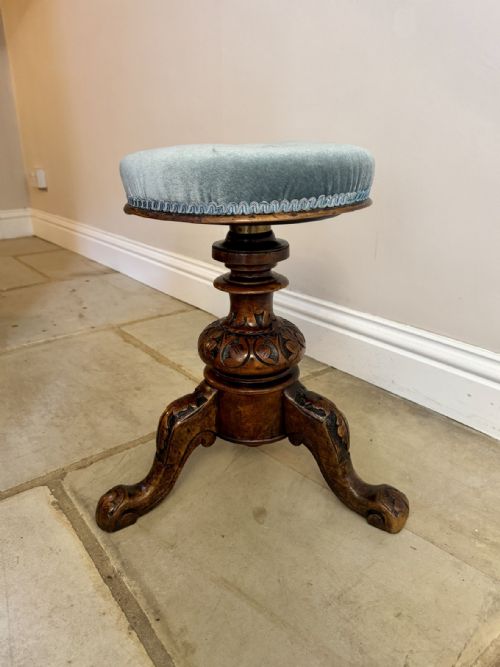
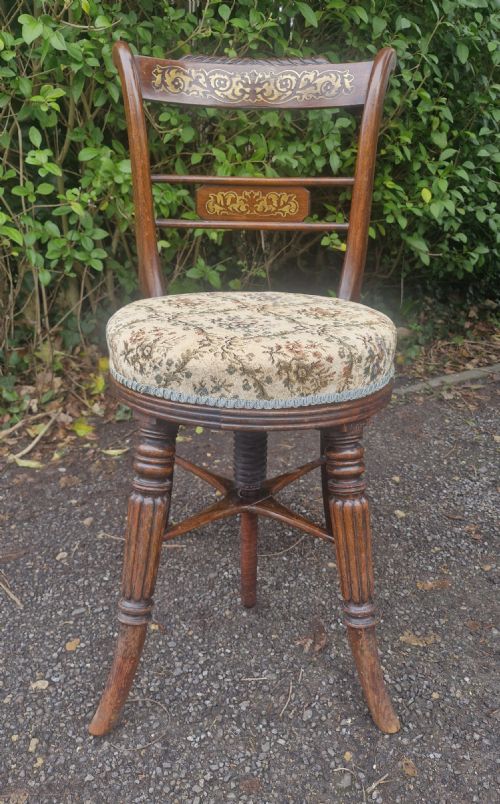
An upholstered revolving stool serves primarily as a piano or music seat, combining a swivel mechanism with soft padding for long sessions at the keyboard. The forms range from simple round pedestal stools to music chairs with backs, originating predominantly from the nineteenth century.
Victorian walnut and mahogany examples dominate the selection, often featuring adjustable screw mechanisms known as rise and fall actions. Makers such as James Shoolbred and H Brooks and Co contributed notable variations during this era, alongside earlier Georgian and Regency designs.
Buyers will encounter diverse styles spanning William IV rosewood pieces to French Chateau and Edwardian satinwood variants. These seats function equally well as dressing table stools or accent seating in traditional rooms.
How they were made
Timbers such as mahogany, walnut, and rosewood form the structural framework, shaped by turners and joiners into robust pedestal bases and cabriole legs. Brass components frequently facilitate the internal screw threads and decorative inlay work.
Upholstery relies on traditional textiles, velvet, and leather stretched over padded seats to provide durable comfort. Carved detailing and gilt paint finish the woodwork on finer examples from the Victorian period.
Listings span the nineteenth century, utilising solid mahogany, walnut, and rosewood paired with velvet, leather, and textile upholstery.
What varies in quality
The smoothness of the revolving and height-adjusting mechanism dictates the daily utility of the piece, distinguishing superior engineering from stiff movement. Precision in the wood carving and the choice of dense timbers like rosewood or figured walnut elevate the visual standard.
The choice of upholstery fabric and the integrity of the internal padding reflect the original cost and status of the stool. Pieces bearing maker stamps or attributed to established cabinet makers command distinct attention.
James Shoolbred·H Brooks and Co
The Upholstered Revolving Stool Glossary
- Rise and fall
- A mechanical screw action inside the pedestal that permits the seat height to be adjusted by turning the top.
- Music stool
- A specialised seat designed for keyboard players, frequently featuring a revolving top for ease of movement.
- Pedestal base
- A central pillar support resting on tripod or quadrapod feet, commonly found on nineteenth-century swivel stools.
- Satinwood
- A pale, lustrous hardwood utilised in decorative furniture, particularly during the late nineteenth and Edwardian periods.
- Simulated rosewood
- A painted or stained finish applied to a cheaper secondary timber to imitate the distinctive grain of genuine rosewood.
Upholstered Revolving Stool: Frequently Asked Questions
How do I adjust the height on these stools?
Most of these pieces use a central wooden or metal screw mechanism hidden beneath the upholstery. Turning the seat clockwise or anti-clockwise raises or lowers the top.
Older examples move smoothly when the screw thread remains clean and well-maintained over the decades.
Can I use a music stool at a dressing table?
These pieces suit dressing tables well because their compact footprint and adjustable height fit modern vanity spaces. The revolving top allows effortless pivoting while sitting.
Original nineteenth-century examples often served dual purposes in period homes depending on the room.
How do I date a Victorian revolving stool?
Dating relies upon timber choices, carving styles, and structural markers recorded in the specific design. Walnut and rosewood pieces from the mid to late nineteenth century display distinct aesthetic shifts.
Maker stamps and patent marks found underneath sometimes provide exact chronological reference points.
Are music chairs different from piano stools?
Music chairs include a backrest for added support during long practice sessions, whereas standard stools feature only a seat. Both types share the revolving mechanism and upholstered top.
Both forms appear frequently across Victorian and Edwardian manufacturing periods.