

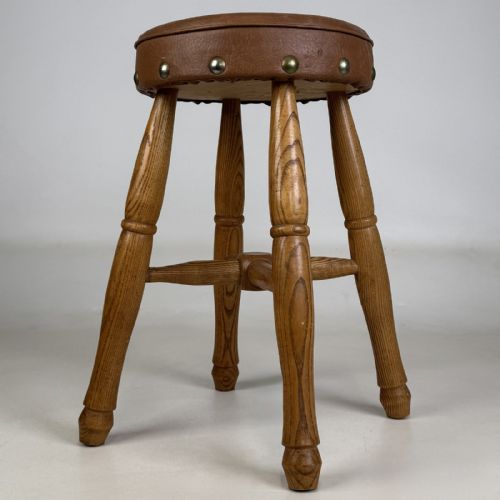
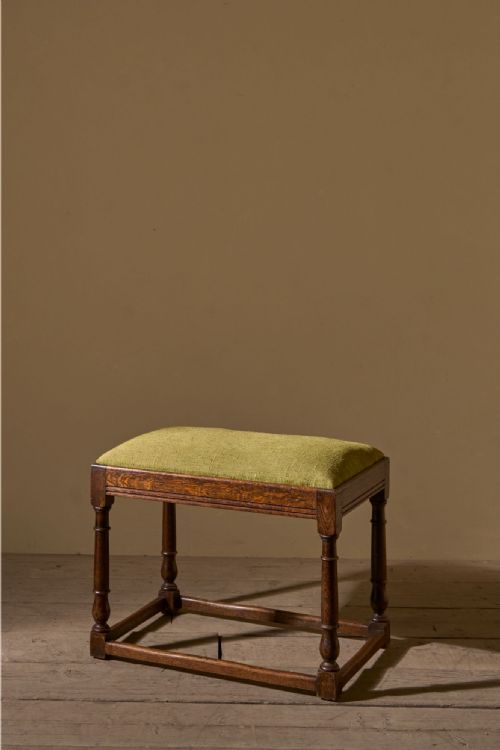
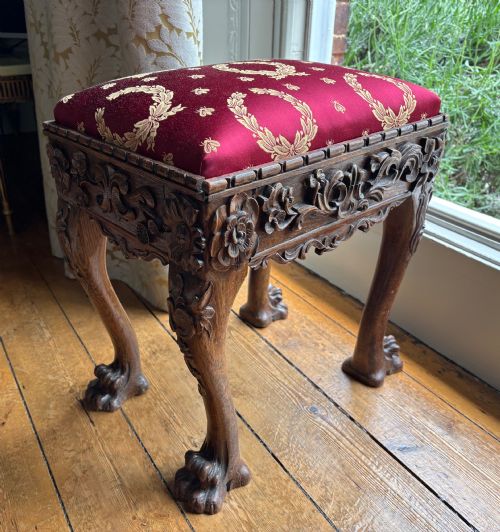
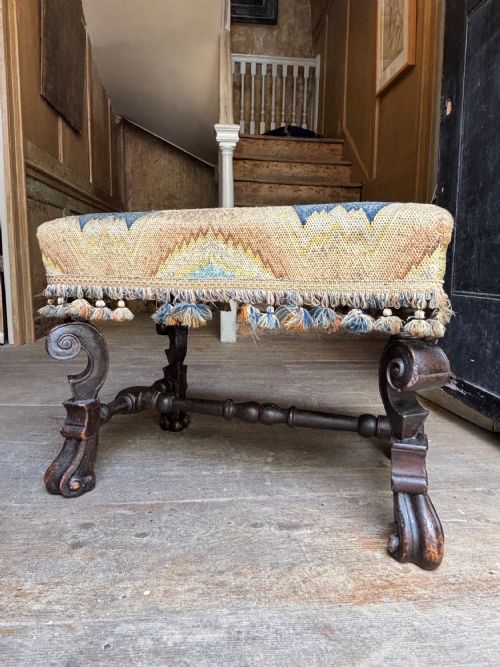

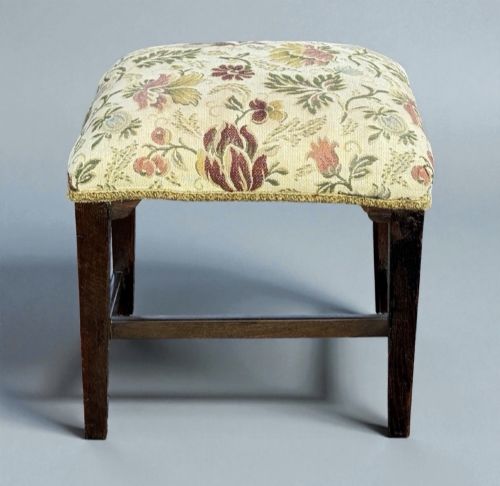


Upholstered Oak Footstool
An upholstered oak footstool brings tactile comfort and centuries of woodworking craft to a room, offering a sturdy timber frame paired with a soft textile top.
Upholstered Oak Footstool
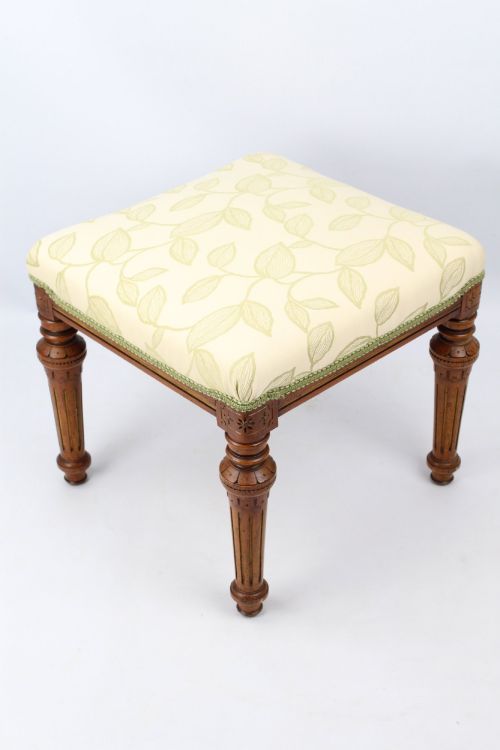
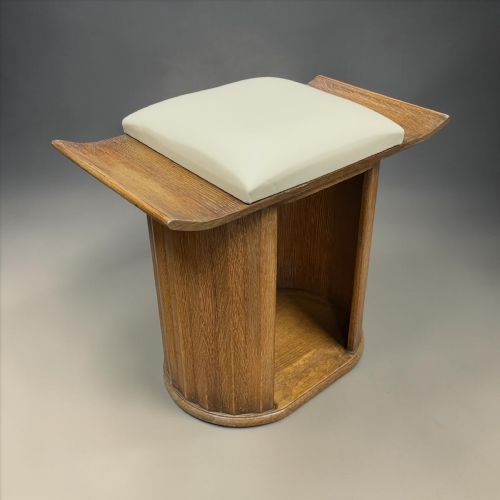
When you search for an upholstered oak footstool, you encounter a varied selection spanning from seventeenth-century Carolean designs to twentieth-century Art Deco and Arts and Crafts examples. These pieces function as low seats, dressing stools, and footrests, combining a solid oak framework with upholstered pads.
The nineteenth century and early twentieth century provide the bulk of the offerings on this page, often channelling earlier Jacobean, William and Mary, or Georgian revivals. Frameworks range from simple joint stools and heavy centre stools to elaborate spiral-carved and X-frame structures.
Makers and designers referenced in the titles include Liberty, Harry & Lou Epstein, James Shoolbred, David Langstaff, and pieces in the manner of Augustus Pugin. These makers and revivals demonstrate how cabinetmakers continually reinterpreted historic oak seating for contemporary interiors.
Materials and construction techniques
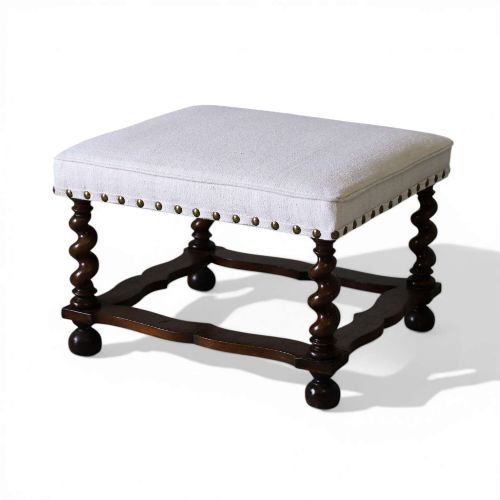
The primary structural material is oak, occasionally joined by walnut, shaped through traditional joinery such as mortise and tenon joints. Carved details, barley-sugar turnings, and oyster veneers decorate the timber frames of particular periods.
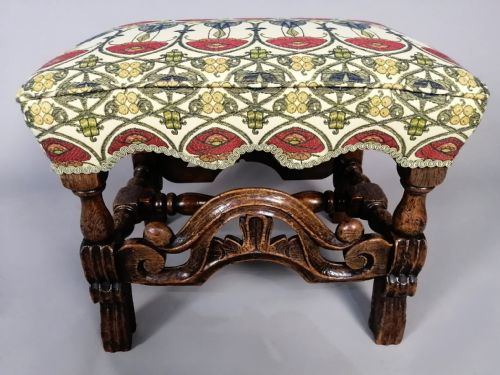
Upholstery materials recorded in the evidence include heavy green linen, red damask, tweed linen, leather, tapestry, and general fabric and textile coverings. These textiles are fixed to the timber frames to create padded seats for resting feet or sitting.
Upholstered Oak Footstool Retail Price Guide 2026
Typical asking prices for upholstered oak footstool among the pieces listed under this phrase on Sellingantiques today, from the lower quarter to the upper quarter. They describe what is for sale here now, not the wider market.
Listings feature oak footstools spanning the seventeenth to the twentieth centuries, utilising materials like leather, linen, brass, and tapestry.
Evaluating the craftsmanship
Quality rests in the crispness of the timber carving and the integrity of the joinery in the oak frame. Finer examples display deeply undercut mouldings, precise turning on legs and stretchers, and carefully selected grain.
The choice of upholstery material and the fidelity of revival styles also distinguish the pieces. Items associated with documented makers or specific historic design movements carry distinct artisanal provenance.
Harry & Lou Epstein·James Shoolbred·Liberty·David Oakleafman Langstaff
The Upholstered Oak Footstool Glossary
- Carolean
- Pertaining to the reign of King Charles II, characterised by exuberant baroque carving and rich ornamentation. This style heavily influenced later nineteenth-century revival pieces.
- Barley-sugar
- A spiral-turned decorative woodworking motif resembling a twist of confectionery. It appears frequently on the legs and stretchers of seventeenth-century and revival stools.
- Joint stool
- A sturdy wooden stool built with pegged mortise and tenon joints rather than turned legs glued into holes. These form an early baseline for domestic seating.
- Oyster veneer
- Thin circular slices cut across branches or small trunks of wood to create an oyster-shell pattern on furniture surfaces. It requires high skill to lay across stretches of timber.
- Damask
- A reversible figured fabric woven on a loom, featuring patterns formed by contrasting warps and wefts. It provides a formal, textured surface for period upholstery.
Upholstered Oak Footstool: Frequently Asked Questions
What is a joint stool?
A joint stool is an early form of wooden seating constructed with pegged mortise and tenon joinery. These pieces were built to withstand heavy daily use in domestic settings.
Over time, many of these timber frames received upholstered pads to serve as footstools or low seats.
How do I identify a revival piece?
Revival pieces combine historic design motifs from periods like the seventeenth century or the Georgian era with the manufacturing methods of the nineteenth or twentieth century. Look at the wear on the timber and the style of the fixings to gauge age.
Titles often cite specific design influences or revival eras to help distinguish them from original period items.
What fabrics were used for upholstery?
Historical upholstery on these footstools includes heavy green linen, red damask, tweed linen, leather, and tapestry. These materials were selected for durability and to complement the interior fashions of their respective eras.
Many surviving pieces retain later reupholstery that reflects twentieth-century or contemporary tastes.
How can I style an oak footstool at home?
An oak footstool works well as a movable seat beside a fireplace, a low perch at a dressing table, or a functional footrest before an armchair. The warm tones of the oak timber anchor neutral and richly coloured interiors alike.
Their compact size allows them to fit easily into living rooms, hallways, and bedrooms.