




Turned Leg Dressing Stool
A turned leg dressing stool brings useful character to a bedroom, combining functional seating with period timber and traditional upholstery.
Turned Leg Dressing Stool
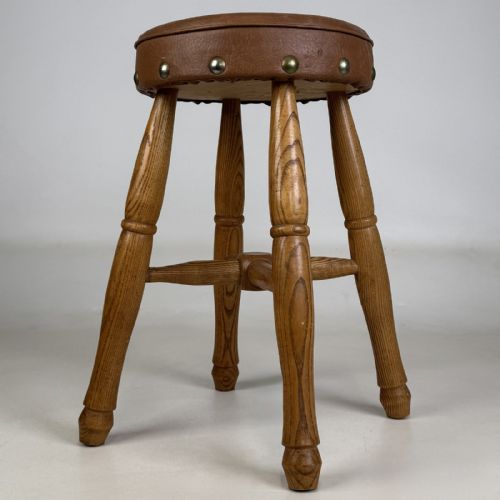
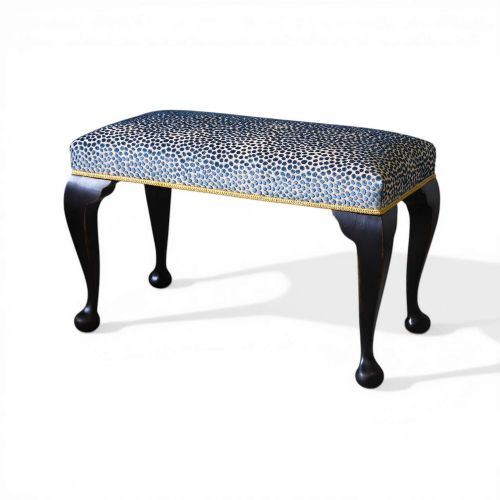
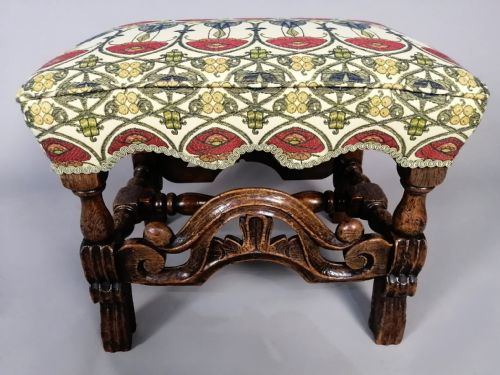
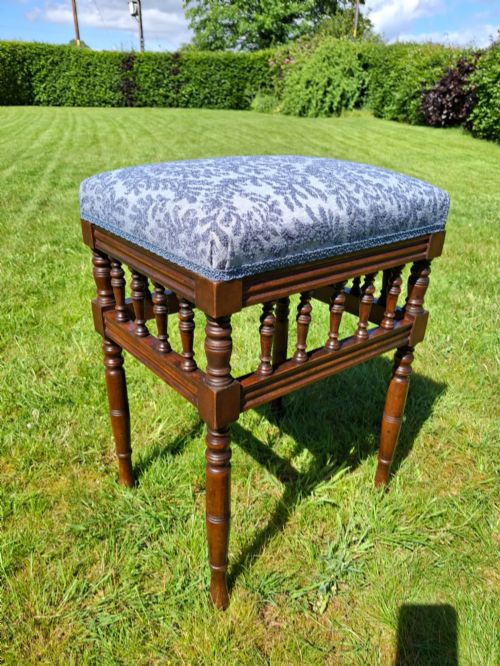
A turned leg dressing stool is a compact seating piece designed for use at a dressing table or vanity. The selection here spans periods from the Georgian era through the Victorian and Edwardian periods up to the 1920s.
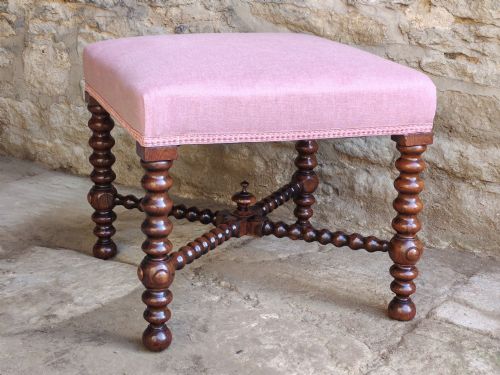
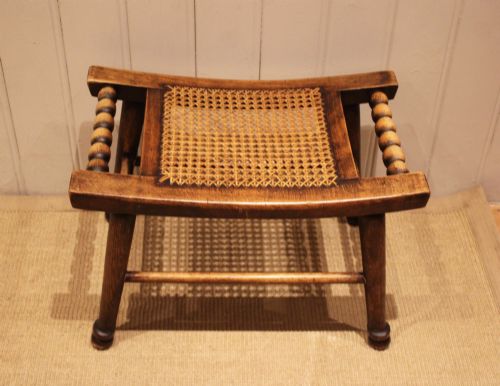
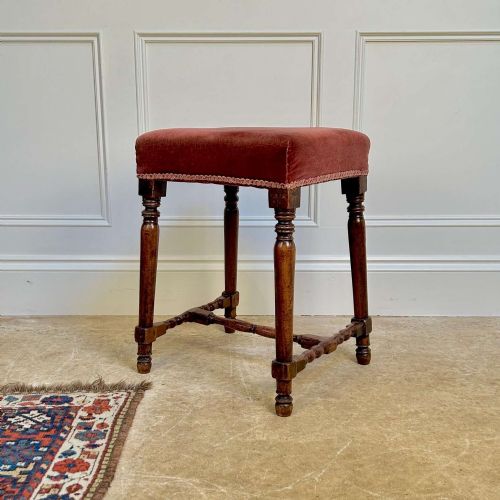
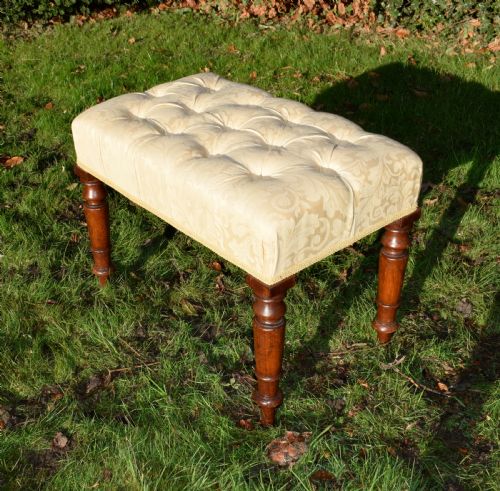
Most examples appear in timbers like mahogany, oak, rosewood and walnut, paired with upholstered seats in fabric, leather, tapestry or cane. Makers utilised standard turning lathes to shape the legs, producing simple cylindrical columns or decorative bobbin and spiral profiles.
Beyond dressing tables, these small seats function effectively as piano stools, footstools or window seats. The evidence shows forms ranging from simple beech frames to substantial mahogany and rosewood designs.
Distinctions in quality and finish
Quality in these stools depends on the selection of timber and the precision of the wood turning. Finer examples display dense, well-figured mahogany or rosewood with crisp, balanced lathe work on the legs.
The standard of upholstery and the complexity of the frame construction also separate standard pieces from finer ones. Solid hardwood frames with hand-turned details and durable traditional coverings represent the better end of the range.
Turned Leg Dressing Stool Retail Price Guide 2026
Typical asking prices for turned leg dressing stool among the pieces listed under this phrase on Sellingantiques today, from the lower quarter to the upper quarter. They describe what is for sale here now, not the wider market.
The furniture forms include piano stools, window seats and square footstools, demonstrating a wide variety of domestic uses beyond dressing tables.
J. Shoolbred
The Turned Leg Dressing Stool Glossary
- Turned leg
- A leg shaped on a lathe by rotating the timber against cutting tools. This method produces cylindrical, tapered or decorative profiled supports.
- Bobbin leg
- A series of rounded wooden spheres or discs carved along the length of a furniture leg. This style appears frequently on mid-nineteenth century pieces.
- Ebonised wood
- Timber stained or treated to imitate ebony. This dark, polished finish was popular during the Victorian period.
- Cane work
- Woven plant material used to form seats or panels. It provides a lightweight and flexible surface.
- Upholstery
- The padded covering applied to a furniture seat. Materials in this selection include leather, tapestry, chenille and tweed linen.
Turned Leg Dressing Stool: Frequently Asked Questions
What is a turned leg dressing stool used for?
These compact seats were primarily placed before dressing tables to provide comfortable seating during grooming. Their modest proportions also make them suitable as piano stools or small footstools.
Today, they function easily in bedrooms or hallways as versatile occasional seats that take up very little floor space.
How do I identify a Victorian stool?
Victorian examples often feature dense mahogany frames, sometimes with deep buttoned upholstery or turned supports resting on castors. The timber finish tends to be dark and polished.
Examining the construction methods underneath the upholstery helps confirm the nineteenth-century origin.
Are these stools comfortable to sit on?
Comfort depends entirely on the upholstery style, whether it is a firm padded leather top, a buttoned fabric cushion or a springy cane panel. Many period pieces were built with supportive horsehair stuffing beneath the top textile layer.
Replacing or refreshing modern padding inside the historic frame is a straightforward process if needed.
What timbers were used for these stools?
Cabinetmakers primarily worked with mahogany, oak, rosewood and walnut for the structural frames. Softer woods like beech also appear, sometimes ebonised to resemble more expensive materials.
Each timber offers a distinct grain pattern and weight that helps date the piece.