
Upholstered Footstool Bench
An upholstered footstool bench brings together timber frames and textile tops to ground a room with practical, low-slung seating.
Upholstered Footstool Bench
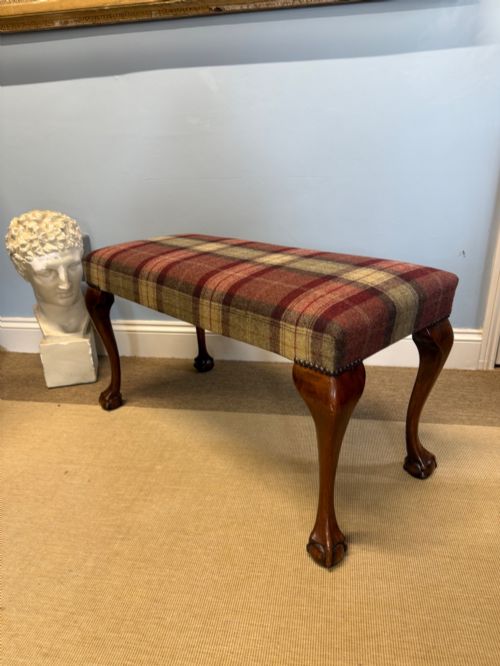
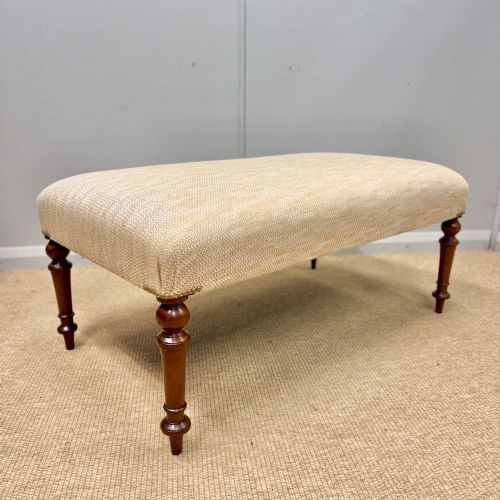
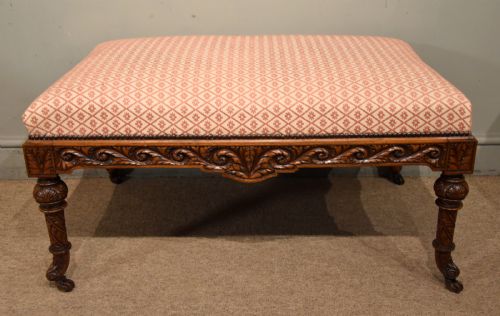
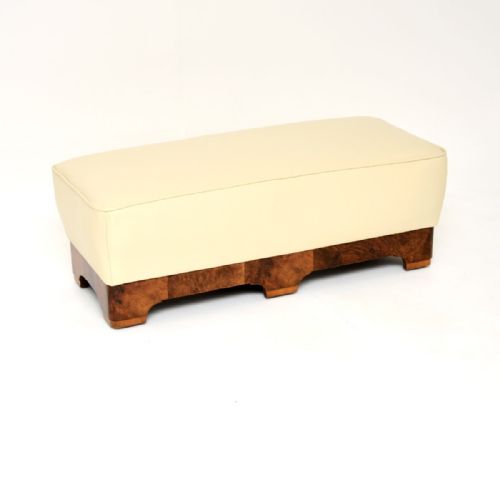
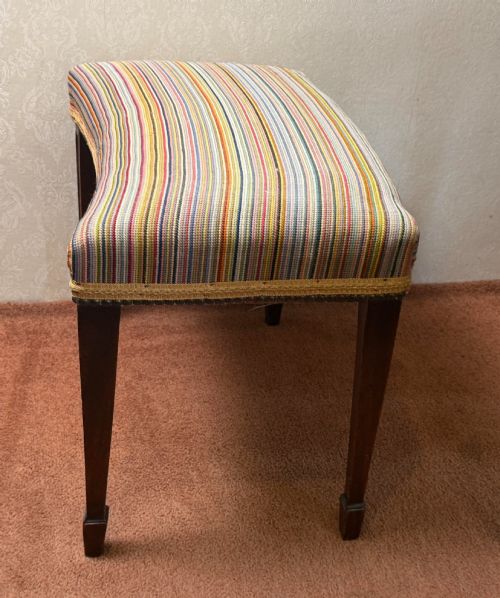
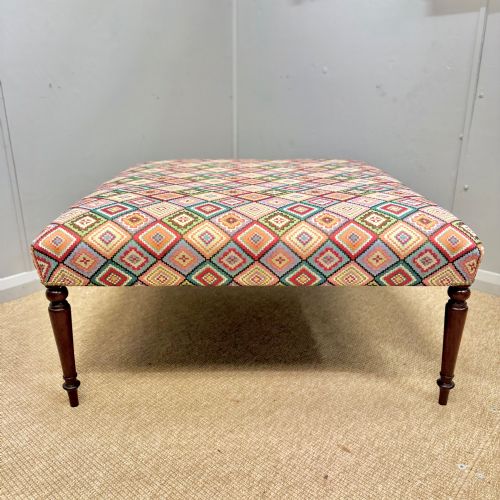
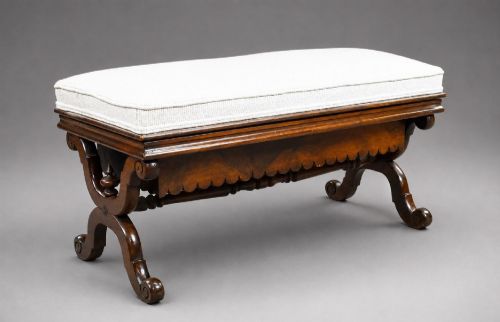
When you search for an upholstered footstool bench, you encounter a variety of timber frames carrying padded tops, ranging from long nineteenth-century piano stools to low occasional benches. The pieces span periods from the seventeenth century through to the Art Deco era, encompassing Georgian, Victorian, and Edwardian revivals alongside earlier carved designs.
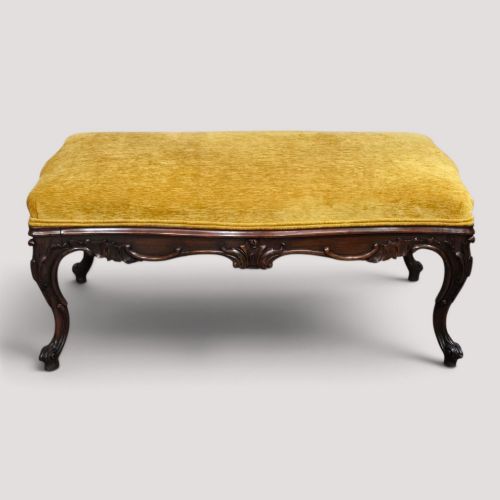
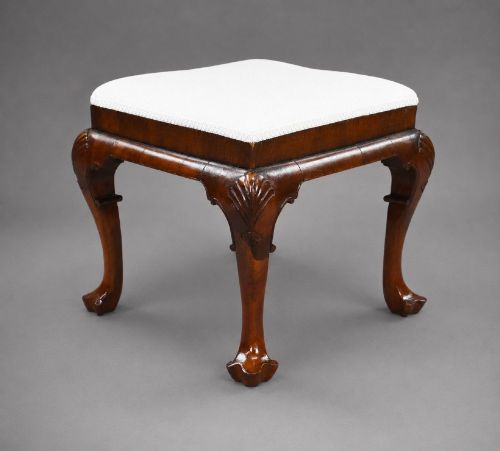
The most common formats on this page are nineteenth-century walnut and mahogany frames, often featuring cabriole or square tapering legs. Longer benches frequently date from the Victorian period, while compact dressing table stools and low ottomans appear across both Edwardian and 1930s examples.
Makers and origins stretch across English workshops and continental makers, producing everything from rosewood dressing stools to painted window seats. The forms serve multiple domestic functions, operating variously as piano seats, foot-rests, or low benches positioned at the foot of a bed.
Materials and construction
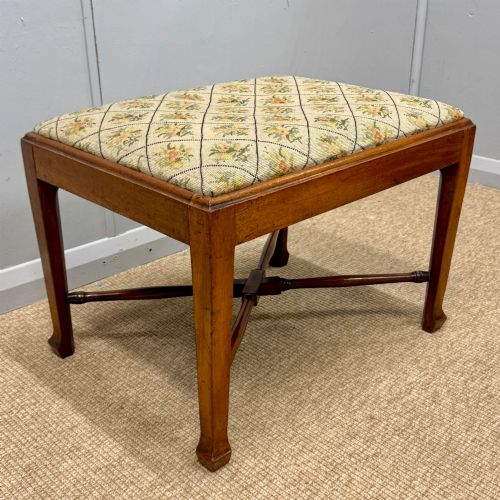
Makers built the structural frames of these pieces using dense hardwoods such as mahogany, walnut, and rosewood, occasionally employing maple, pine, or giltwood for decorative impact. Turnery, carving, and cross stretchers provide structural stability to the legs, while brass castors frequently support larger nineteenth-century examples.
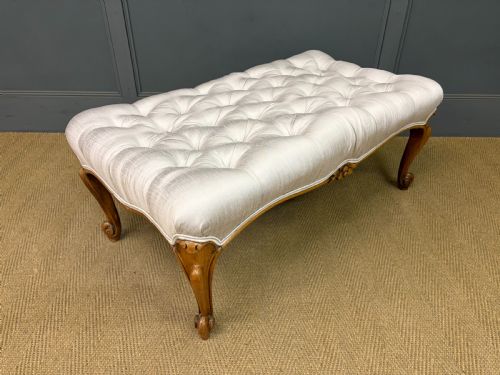
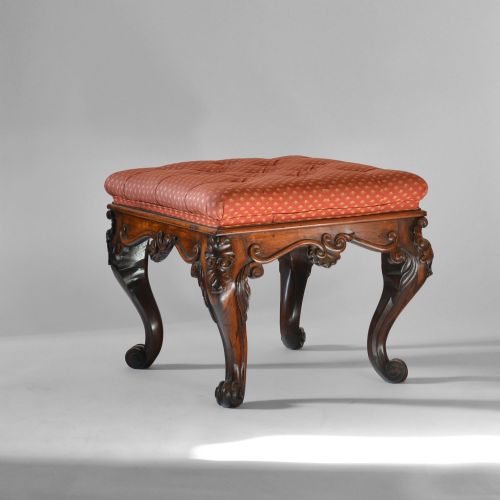
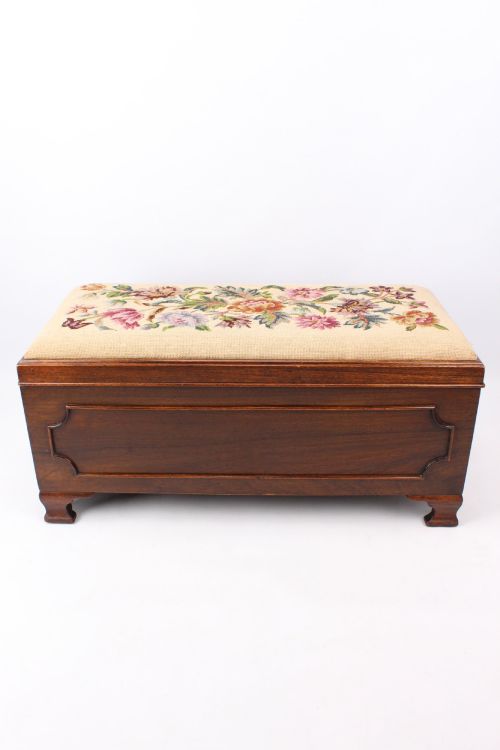
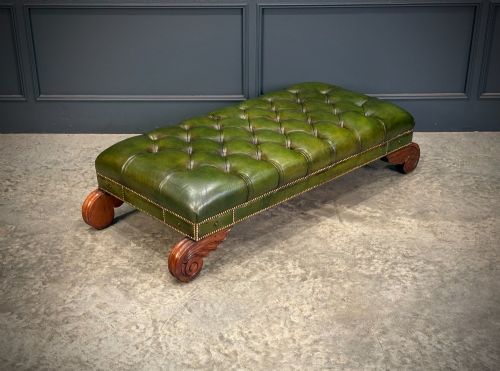
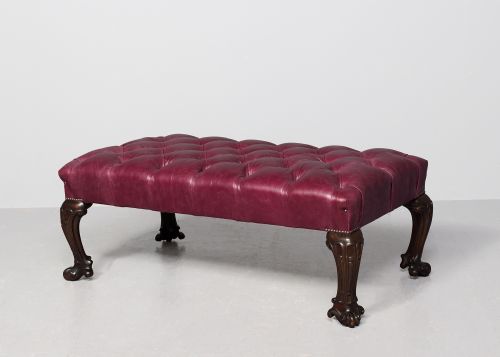
Upholstery techniques rely on traditional webbing and stuffing beneath textile covers, which include buttoned leather, needlework, wool, and modern fabric replacements. Frames often display period details like carved cabriole legs, twist-rope turnings, or geometric buttoning executed across the padded surface.
Listings feature mahogany, walnut, rosewood, and leather across nineteenth and twentieth-century forms.
Judging quality
The distinction between ordinary and superior pieces rests in the sharpness of the timber carving and the integrity of the underlying frame construction. Finer examples show crisp detailing on cabriole or turned legs and robust joinery that sustains the weight placed upon a low bench.
Material selection dictates much of the visual character, with burr walnut, figured mahogany, and rosewood lifting a piece above standard utility furniture. Original or sympathetic upholstery choices preserve the proportion of the padding, ensuring the textile complements rather than obscures the timber moulding beneath.
Harry & Lou Epstein
The Upholstered Footstool Bench Glossary
- Cabriole leg
- A furniture leg that curves outward at the knee and tapers inward toward the foot, echoing animal limbs. This form appears frequently on eighteenth and nineteenth-century walnut and mahogany frames.
- Cross stretcher
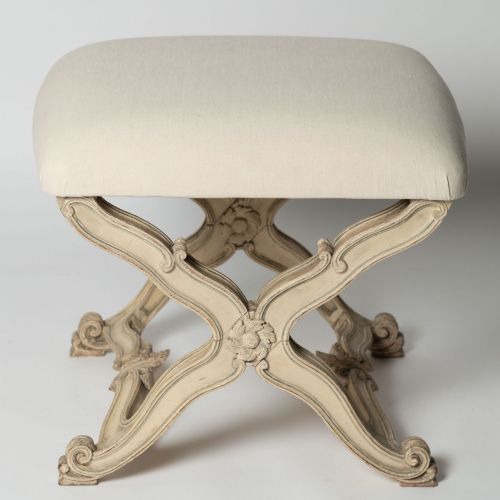
- A pair of intersecting timber braces connecting the legs beneath a stool for added rigidity. They often feature central turnings or finials.
- Needlework
- Hand-stitched textile work utilising wool or silk yarn, frequently encountered as historical seat covers on period stools.
- Ottoman
- A low, upholstered seat or bench without a back or arms, designed for resting feet or sitting.
- Buttoned
- An upholstery technique where indentations are formed across the padded surface using deep tufting secured with fabric-covered buttons.
Upholstered Footstool Bench: Frequently Asked Questions
How were long stools used historically?
Long stools and benches typically served in drawing rooms and dressing rooms for accommodating multiple sitters or supporting lengthy garments. Their low profiles also suited placement beside piano instruments or large windows.
Over time, owners adapted these substantial frames to function as low coffee tables or foot-rests positioned before larger upholstery pieces.
What timber types should I expect?
Makers predominantly utilised mahogany and walnut throughout the eighteenth and nineteenth centuries for strength and rich grain patterns. Rosewood and maple also appear, particularly on decorative dressing stools and exotic revival pieces.
Secondary woods like pine support painted window seats, while brass hardware frequently equips heavier nineteenth-century examples for mobility.
How do I identify a Victorian piece?
Victorian frames often display heavier proportions, rich walnut or rosewood timbers, and deep buttoned leather or textile upholstery. Turned or cabriole legs fitted with brass castors remain characteristic of the era's larger footstools.
Carved details tend to be robust and sculptural, reflecting the varied revival styles popular during the nineteenth century.
Can these benches support daily seating?
Solid hardwood frames constructed with traditional joinery provide the structural integrity required for regular domestic use. Checking the firmness of the webbing and internal padding ensures the top remains supportive.
Pieces featuring reinforced cross stretchers or sturdy cabriole legs handle weight distribution effectively in active living spaces.